



Liquid silicone valve
FEATURES
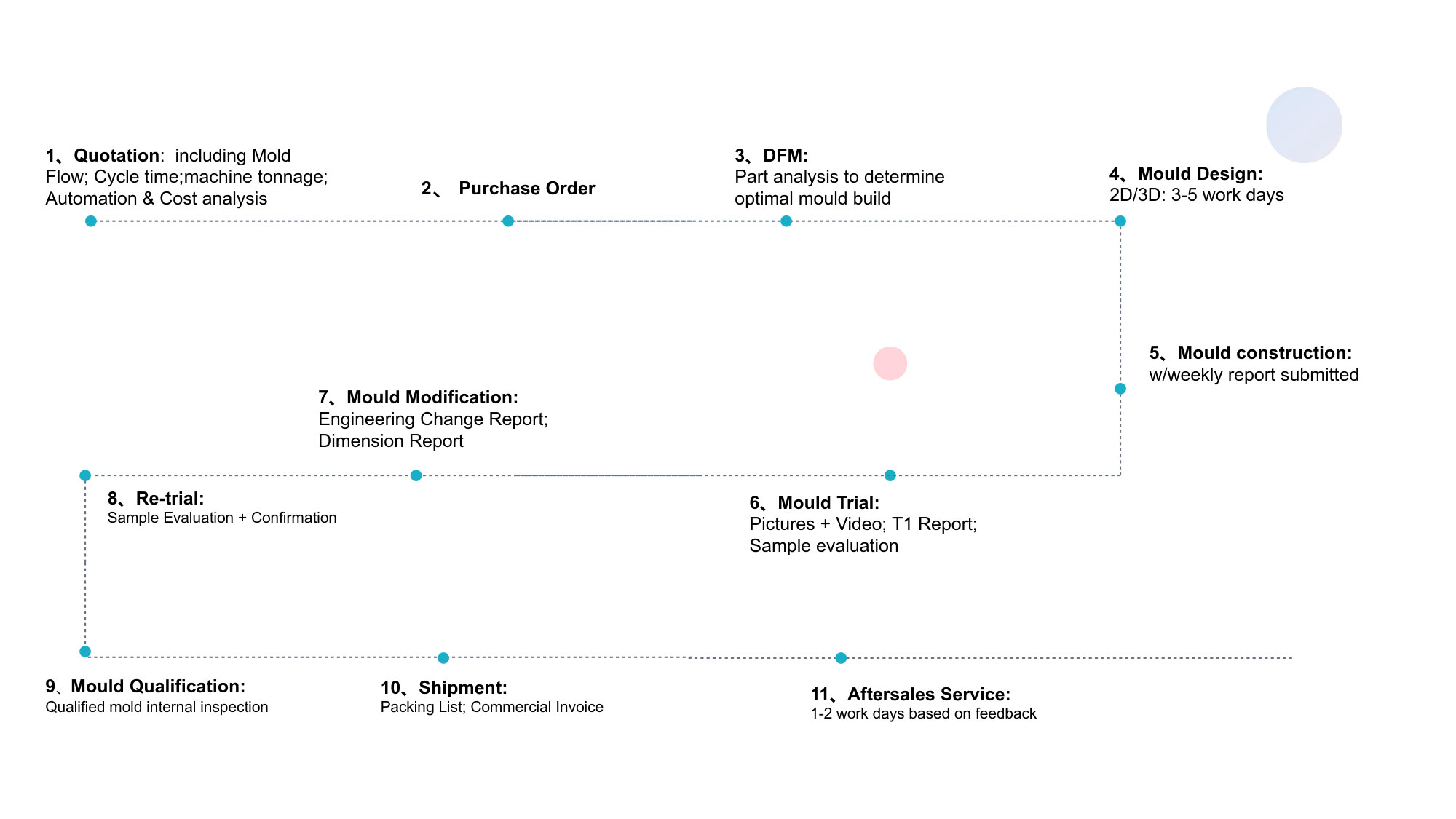
At Ansix Tech, our LSR valve production process integrates state-of-the-art equipment, rigorous process controls, and decades of industry expertise. Our manufacturing workflow encompasses material receiving and validation, precision injection molding using all-electric servo-driven machines, automated part removal and handling, in-line vision inspection, and final packaging under controlled cleanroom conditions. With over 28 years of manufacturing experience, we have refined each stage of this process to maximize efficiency while maintaining uncompromising quality standards.
Delivery Efficiency is a cornerstone of our operational excellence. Ansix Tech maintains four production bases across China and Vietnam, with a total of 260 injection molding machines ranging from 30 tons to 2,800 tons. Our strategic multi-location footprint allows us to respond rapidly to customer orders and manage capacity fluctuations without compromising lead times. For standard LSR valve molds, we offer lead times of 25–45 days for medium complexity, with expedited options available for critical projects. Mass production volumes can scale from prototype batches under 100 units to monthly volumes exceeding 500,000 pieces, with typical turnaround times ranging from 30 to 60 days—shorter for repeat orders. Our in-house mold manufacturing capability eliminates reliance on external suppliers, enabling us to maintain strict control over delivery schedules and respond to urgent requirements with agility.
-
Mold Description
Product Materials:
LSR SILICONE
Soft rubber: LSR
Mold Material:
S136ESR
Number of Cavities:
8
Glue Feeding Method:
Hot runner
Cooling Method:
Water cooling
Molding Cycle
12.5s
- The mold manufacturing process and product material selection
Quality Assurance is embedded throughout every stage of production. Ansix Tech has successfully achieved ISO 9001, IATF 16949, ISO 13485, ISO 14001, and BSCI certifications, and maintains an ISO 8 Cleanroom compliant with US medical-grade FDA 510K standards. Our comprehensive quality management system includes incoming material verification with full traceability, in-process parameter monitoring via MES-integrated systems, and final inspection using advanced measuring equipment. Each production batch undergoes rigorous dimensional verification, functional testing for crack pressure and seal integrity, and sampled testing for critical attributes. For LSR valves destined for medical applications, we provide complete documentation packages supporting regulatory submissions, including material lot traceability, Certificates of Analysis, and validated sterilization performance data.
-
Cost Control is achieved through a holistic approach that addresses every cost driver in the manufacturing chain. At Ansix Tech, we reduce hard costs by optimizing material selection—leveraging our deep understanding of LSR material properties to specify the most cost-effective grade for each application without compromising performance. Our proximity to material suppliers and toolmakers within industrial zones reduces logistical friction and enables cost savings of 20–30% compared to other manufacturing regions. Process efficiency gains through cycle time optimization, multi-cavity mold design (up to 128 cavities), and automated production cells further reduce per-part costs. Additionally, our commitment to flash-free processing—a critical challenge in LSR molding where the low viscosity of the material can lead to significant waste—substantially lowers post-molding rework requirements, which can account for up to 40% of total production costs in conventional operations.
By combining these four pillars—advanced manufacturing processes, rapid delivery infrastructure, certified quality systems, and strategic cost optimization—Ansix Tech delivers LSR valves that meet the most demanding specifications while providing exceptional value to our customers across medical device, automotive, consumer electronics, and industrial applications.
Part Two: Core Customer Value – Mold Manufacturing, Material Selection, Smart Manufacturing Integration, Process Quality Assurance for Liquid Silicone Valves
Mold Manufacturing and Precision Machining Capabilities
The quality of an LSR valve begins with its mold. Ansix Tech operates a full-service in-house mold manufacturing facility equipped with advanced machining technologies. Our five-axis high-speed machining centers enable the fabrication of complex mold geometries with accuracy down to 0.002mm, ensuring that parting lines on finished valves are smooth and free of flash—a critical requirement for sealing components. We also employ wire EDM (Electrical Discharge Machining) capable of creating fine micro-holes and narrow slots as small as 0.03mm, essential for valve designs requiring precise flow channels or thin-walled membrane structures without causing deformation.
For mold materials, we select from a comprehensive range of high-performance tool steels based on application requirements. Our material portfolio includes P20 for general-purpose mold bases, and S136, 2344, 2343, 8407, SKD11/61/DC53, M340, 4Cr13/9Cr18, NAK80, and H13 for mold inserts exposed to wear and thermal cycling. Each material undergoes rigorous certification and heat treatment to optimize grain structure, maximizing strength and extending mold service life. For glass-fiber reinforced LSR compounds, we guarantee mold life exceeding 500,000 cycles; for standard LSR formulations, 1,000,000+ cycles are achievable.
Injection Molding Equipment and Process Capabilities
Our injection molding fleet comprises industry-leading machinery from Japan and Germany, including Fanuc, Sumitomo, Toshiba, Nissei, Engel, and Arburg (specializing in two-component LSR injection), complemented by domestic Haitian and Victor Taichung machines. All-electric servo-driven machines provide stable shot-to-shot repeatability with precision of ±0.1%, ensuring that every valve produced—whether the first or the millionth—meets the same exacting dimensional standards. Our lock force range of 30 to 2,800 tons accommodates valve sizes from micro-components weighing fractions of a gram to large industrial valves, with multi-cavity mold configurations (16, 32, 64, or 128 cavities) maximizing output efficiency.
Material Selection and Characteristic Optimization
The choice of LSR material directly impacts valve performance. Medical-grade formulations meeting USP Class VI and ISO 10993 biocompatibility standards support faster regulatory clearance and ensure patient safety. For automotive applications, we select LSR grades offering high temperature resistance up to 200°C, resistance to oils and greases, and long-term durability under cyclic loading. Key material properties we evaluate include Shore A hardness (customizable from 20 to 80), tear strength, compression set, elongation at break, and sterilization compatibility (autoclave, gamma, ETO, e-beam). We also offer self-lubricating LSR formulations that provide a lubricious surface on molded parts after vulcanization, reducing friction and wear in dynamic valve applications.
Smart Manufacturing Integration and Efficiency Enhancement
Ansix Tech has embraced Industry 4.0 principles to drive operational excellence. All injection molding machines are networked to a Manufacturing Execution System (MES), where critical process parameters—temperature, injection pressure, injection speed, and cure time—are locked and accessible only to authorized engineers. Real-time monitoring with digital assistance technologies enables continuous analysis of the injection profile and automatic adjustment of quality-relevant process parameters within the same cycle whenever deviations occur. This closed-loop control system reduces variation in valve dimensions by up to 62%, contributing to more stable process control, reproducible component quality, and reduced scrap.
Our production cells integrate articulated robots for automated part removal, camera-based vision systems for 100% in-line quality inspection, and automated packaging stations. For high-volume LSR valve production, 64-cavity molds with integrated demolding devices enable rapid part pickup by end-of-arm tooling, significantly reducing cycle times. Each cavity in multi-cavity molds can be controlled individually via electric needle shut-off systems, ensuring precise fill control even in molds with up to 128 cavities.
Process Quality Assurance
Quality assurance at Ansix Tech extends beyond final inspection to encompass the entire manufacturing lifecycle. Before production begins, we conduct comprehensive Design for Manufacturability (DFM) reviews using Moldflow simulation software to predict melt front behavior, identify potential weld lines and air entrapment locations, and optimize gate positions and quantities to ensure balanced cavity filling. Process parameters are optimized using systematic methodologies, identifying the three most critical parameters for LSR injection molding: mold temperature, injection speed, and cure time.
During production, we employ multiple inspection layers: incoming material verification with chemical composition analysis; first-article inspection (FAI) using coordinate measuring machines (CMM) and optical vision systems; in-process parameter monitoring; automated 100% dimensional and functional testing; and final lot release with complete documentation. Each measurement is recorded to establish ideal process capability index (Cpk) values, with critical dimensions maintained at Cpk ≥ 1.33—a quantifiable guarantee of production consistency. Our in-house inspection laboratory conducts hardness testing, tensile strength measurement, and biocompatibility verification as required by customer specifications.
By integrating mold precision, material expertise, smart automation, and rigorous quality systems, Ansix Tech delivers LSR valves that exceed customer expectations for dimensional accuracy, functional reliability, and cost-effectiveness.
Part Three: Comprehensive Manufacturing Solutions for Liquid Silicone Valves – Ansix Tech Capabilities and Customer Value Proposition
Executive Summary: Translating Technical Expertise into Measurable Customer Value
The language of injection molding is precise—tolerances in microns, cycle times in seconds, cure temperatures in degrees Celsius. But what truly matters to medical device manufacturers, automotive OEMs, and industrial equipment producers is not the technical metric itself, but what that metric delivers: reliability that prevents system failures, repeatability that ensures process stability, and efficiency that directly reduces landed cost per part. At Ansix Tech, we have dedicated over 28 years to perfecting the art and science of Liquid Silicone Rubber (LSR) injection molding, with a specialized focus on precision valve components. This document outlines our comprehensive manufacturing capabilities, the value we deliver to customers, and how we address the critical concerns of cost, quality, delivery, and risk across the entire product lifecycle.
I. Hard Infrastructure Foundation – Building Customer Confidence Through Equipment Excellence
1.1 In-House Mold Manufacturing Equipment
Ansix Tech operates a fully equipped mold-making facility designed for precision and speed. Our five-axis high-speed machining centers (HSM) achieve machining accuracy of ±0.002mm (2 microns) on complex contoured surfaces. For LSR valves, where even minor parting line imperfections can compromise sealing performance, this level of precision ensures finished parts are flash-free and require no secondary deburring operations—directly reducing per-part processing costs and eliminating a major source of quality defects.
Our wire EDM (Electrical Discharge Machining) systems are capable of producing features as fine as 0.03mm, including micro-slots, narrow channels, and small-diameter holes. This capability is essential for LSR valve designs incorporating thin-wall membrane structures (as thin as 0.25mm over diameters of 12mm) or precision flow orifices. The non-contact nature of EDM processing avoids mechanical stress on delicate cavity features, preventing deformation that can occur with conventional machining.
We also maintain a dedicated electrode manufacturing center and EDM workshop, enabling mold repairs and modifications to be completed entirely in-house without outsourcing delays. Standard repair operations—including weld repairs, insert replacements, and cavity polishing—are typically completed within 24 hours, minimizing production downtime when maintenance is required.
1.2 Injection Molding Machine Fleet
Our injection molding infrastructure comprises 260 machines spanning 30 tons to 2,800 tons clamping force, sourced from world-leading manufacturers including Japan‘s Fanuc, Sumitomo, Toshiba, Nissei, Engel, Germany’s Arburg (specializing in two-component LSR injection), and domestic suppliers Haitian and Victor Taichung. This fleet diversity gives us unmatched flexibility: small 30–80 ton machines for micro valves and precision components, mid-range 100–500 ton machines for standard valve production, and large 500–2,800 ton machines for industrial-scale valve bodies and high-cavitation molds.
All primary LSR production machines are all-electric servo-driven, offering shot-to-shot repeatability of ±0.1% by weight. For LSR valves, where fill volume consistency directly impacts curing uniformity and dimensional stability, this precision eliminates shot-to-shot variation that can lead to rejected parts. Each machine is equipped with cold-runner decks to prevent premature LSR curing before cavity entry, with electric needle shut-off systems providing individual cavity control in multi-cavity molds.
1.3 Advanced Metrology and Inspection Equipment
Quality validation begins before production and continues through every manufacturing stage. Our inspection laboratory is equipped with Coordinate Measuring Machines (CMM) capable of measuring geometric dimensions with sub-micron resolution, optical vision measurement systems for non-contact inspection of delicate valve features, and automated inspection stations integrated directly into production lines. Each mold, before release to production, undergoes full dimensional reporting, with critical dimensions verified to Cpk ≥ 1.33 process capability. Every production batch of LSR valves receives 100% dimensional verification and functional testing before packaging and shipment.
Customer Value Translation: Our advanced equipment infrastructure is not merely a list of technical specifications—it translates directly into tangible benefits for our customers: flash-free valve seats requiring no manual trimming (reducing labor costs by up to 40%), ±0.1% shot-to-shot consistency ensuring that every valve in a million-piece order performs identically, and validated Cpk metrics providing auditable proof of process capability for regulatory submissions.
II. Mold Manufacturing Competitiveness – Quantifiable Performance Metrics
2.1 Mold Life and Durability Guarantees
LSR valve molds represent a significant capital investment, and our customers‘ single greatest concern is how many good parts they will produce before requiring repair or replacement. Ansix Tech addresses this concern directly with guaranteed mold life based on rigorous material selection and precision manufacturing.
For mold bases, we utilize P20 steel—cost-effective, machinable, and stable under thermal cycling. For mold inserts—the critical cavity surfaces that directly contact the LSR material during injection and curing—we select from a portfolio of high-performance tool steels including S136, 2344, 2343, 8407, SKD11/61/DC53, M340, 4Cr13/9Cr18, NAK80, and H13. Each material choice is application-driven: stainless grades for medical/biocompatible applications (corrosion resistance), hardened tool steels for high-wear LSR compounds (abrasion resistance), and pre-hardened grades for prototypes and low-volume production.
Heat treatment processes—including vacuum hardening, nitriding, and PVD coating—optimize grain structures and surface hardness to maximize wear resistance. For LSR valves using unfilled silicone (no abrasive fillers), we guarantee mold life exceeding 1,000,000 cycles. For glass-fiber reinforced or other abrasive LSR compounds, we guarantee 500,000+ cycles. Each mold ships with a detailed material certificate and heat treatment curve documentation.
2.2 Attainable Dimensional Tolerances
LSR valves operate in critical applications where dimensional variation of a few microns can cause leakage or premature failure. Our mold manufacturing capabilities deliver:
Standard structural features: ±0.05mm
Precision sealing surfaces and critical diameters: ±0.005mm (5 microns)
Micro-valve components (medical/surgical applications): ±0.003mm (3 microns) on critical dimensions
For context, a 5-micron tolerance on a valve seat diameter represents approximately 1/20th the thickness of a human hair. This level of precision ensures consistent sealing pressure, predictable opening and closing characteristics, and reliable performance over millions of operating cycles.
2.3 Mold Type Capabilities
Ansix Tech designs and manufactures the full spectrum of injection molds for LSR valves:
Cold-runner molds: Standard configuration for LSR, where the runner system is cooled to prevent premature curing while the mold cavities are heated for vulcanization. Electric needle shut-off systems provide individual cavity fill control, eliminating material waste from cold-runner remnants and reducing cycle times.
Hot-runner molds (thermoplastic compatibility): Used for two-component (2K) molding where LSR is overmolded onto thermoplastic substrates. Our hot-runner systems maintain precise temperature control at the interface between materials.
Stack (multi-level) molds: Double the output per machine cycle by using two parting planes. For high-volume LSR valve production, stack molds increase efficiency without requiring larger injection machines.
Two-shot/ multi-material molds: Integrate LSR with thermoplastics or metals in a single molding cycle, eliminating secondary assembly operations and reducing component count.
High-gloss molds: Surface finish Ra < 0.05μm for transparent or aesthetic LSR valve applications where optical clarity or smooth surface finish is required.
2.4 Gate and Runner System Optimization
Gate location and design directly influence LSR valve quality. Through comprehensive Moldflow simulation analysis—conducted for every LSR valve project before tooling begins—we predict melt front behavior, identify potential weld line and air entrapment locations, and optimize gate quantity and position to ensure balanced cavity filling. Our simulation-driven approach has demonstrated that high-quality parts can be successfully produced in the first acceptance run when mold design and injection concepts are optimized upfront using virtual validation.
For LSR valves, which typically feature thin-wall sections, complex flow paths, and precise geometric constraints, improper gate design can lead to incomplete fill, trapped air bubbles (causing cosmetic and functional defects), or excessive shear heating leading to premature cure. Our DFM process identifies these risks before steel is cut, preventing costly mold modifications after initial sampling.
2.5 Mold Delivery Standards
We recognize that time-to-market is a critical competitive factor for our customers. Our standard mold manufacturing lead times are structured to balance speed with quality validation:
Simple molds (single cavity, basic geometry): 10–15 days
Medium-complexity molds (4–16 cavities, moderate detail): 25–35 days
High-complexity molds (32–128 cavities, precision features, multi-material): 40–60 days
Expedited service (all mold types, subject to capacity): Add 30% cost premium, minimum 20 days
For expedited projects, we maintain all standard quality validation steps—dimensional inspection, CMM verification, and sample testing—with no compromises, achieved through dedicated machining capacity and parallel processing workflows.
Customer Value Translation: Mold quality isn‘t measured in steel hardness or surface finish alone—it’s measured in parts produced before failure, dimensional consistency across millions of cycles, and the absence of costly production interruptions. By guaranteeing mold life in cycles (not vague years of service), publishing attainable tolerances, and delivering molds on predictable schedules, we give our customers the confidence to plan production campaigns without contingency for unexpected tooling failures.
III. Injection Molding Process Control – Eliminating Customer Quality Concerns
3.1 Process Standardization and MES Integration
Customer fears about LSR valve production center on four predictable failure modes: shrinkage (parts out of spec), flash (excess material requiring costly removal), dimensional instability (inconsistent part-to-part variation), and batch-to-batch color or property variation.
Ansix Tech addresses these concerns through comprehensive process standardization enforced by MES (Manufacturing Execution System) integration. Every LSR injection molding machine in our facility is networked to a central MES, where all process parameters—melt temperature, injection pressure, injection speed, holding pressure, cooling/cure time, and mold temperature—are locked. Parameter modifications require dual-authorization from senior process engineers, with all changes logged for full traceability.
Each production batch begins with first-article inspection, comparing initial parts against master CAD models and dimensional specifications. Throughout production, in-process sampling validates continued conformance. Each batch concludes with final-article inspection, ensuring no drift occurred during the production run. This closed-loop verification system eliminates the risk of producing thousands of out-of-spec parts before a drift is detected.
3.2 Dimensional Stability Control
LSR’s low viscosity (typically 50,000–500,000 cP) and high thermal expansion coefficient make dimensional control challenging. Our approach combines precise mold temperature management with real-time process monitoring.
Each mold is equipped with zone-controlled cooling/heating circuits, managing temperature differentials between core and cavity surfaces to within ±2°C. For LSR valves where uniform curing across the entire part is essential, this tight temperature control eliminates non-uniform shrinkage and warpage. Our mold design incorporates conformal cooling channels—machined to follow the contour of the valve geometry—to achieve even heat distribution even on complex thin-wall sections.
For critical applications requiring verifiable dimensional stability, we install in-mold pressure and temperature sensors connected to closed-loop process control systems. Real-time data enables automatic compensation of injection and holding parameters within the same cycle when deviations occur, maintaining part weight consistency and dimensional accuracy. In production validation on similar components, we have demonstrated critical dimension variation of ≤ ±0.02mm across three consecutive production batches over one week of continuous operation.
3.3 Surface Finish and Visual Quality Grades
LSR valves often require specific surface finishes for functional or regulatory reasons. We define achievable quality grades by application:
Quality Grade Surface Roughness Typical Applications Defect Allowance
Medical/Optical Ra ≤ 0.1μm Surgical valves, diagnostic flow cells Zero defects – no bubbles, no flow marks
Standard Industrial Ra ≤ 0.4μm Automotive seals, pneumatic valves Minor flow marks acceptable in non-sealing areas
Cosmetic Ra ≤ 0.2μm Consumer product valves, visible components No visible defects under normal lighting
Functional Ra ≤ 0.8μm Internal components, encapsulated parts Flash ≤ 0.03mm, no structural defects
For LSR valves requiring pad printing or laser marking (e.g., orientation indicators, flow direction arrows, or regulatory symbols), we incorporate design compensation for post-mold shrinkage, achieving print registration accuracy of ±0.1mm.
3.4 Advanced Material Processing Capabilities
Beyond standard LSR, Ansix Tech has extensive production experience with a broad spectrum of engineering-grade materials used in valve applications:
Medical-Grade LSR: USP Class VI and ISO 10993 compliant, available in 30–80 Shore A hardness, with sterilization compatibility (autoclave, gamma, ETO, e-beam). Used in surgical valves, respiratory equipment, IV sets, and drug delivery systems.
Self-Lubricating LSR: Provides lubricious surface after vulcanization, reducing friction in dynamic valve applications without external lubricants.
High-Temperature LSR: Continuous service to 250°C, used in automotive under-hood valves and industrial process control.
Fluorosilicone (FVMQ): Enhanced chemical resistance for valves exposed to fuels, oils, and solvents.
Electrically Conductive LSR: For valves requiring ESD protection or grounding paths.
Optically Clear LSR: For valves in optical fluid paths, diagnostic devices, and viewing ports.
Liquid Silicone for Overmolding: Bonding directly to thermoplastics (PC, ABS, PA, PBT) or metals in a single molding cycle, creating integrated components that eliminate secondary assembly.
Thermoplastic Materials for 2K Molding: Including PC, ABS, PC/ABS, PPS+40%GF, PEEK, PTFE/PFA, PA6+GF30, PBT, PEI, and LCP—enabling complex multi-material valve designs where rigid structural elements integrate with LSR sealing surfaces.
For each material, we validate processing parameters, compatibility, and post-mold performance. Where required, we provide compliance documentation including UL94 V-0 flammability ratings for electrical applications and UV stability test results (3,000 hours exposure without discoloration) for outdoor-exposed components.
Customer Value Translation: The injection molding process is the bridge between mold design and finished valve. When process control is weak, bridge collapses—producing scrap, rework, and delayed shipments. Our MES-controlled processes, thermal management systems, and multi-material expertise ensure consistent quality batch after batch. Customers don’t need to worry about process drift; we monitor it continuously and correct deviations before they affect parts.
IV. End-to-End Service – Reducing Customer Management Costs
4.1 Early Engineering Engagement (DFM Reports)
The single greatest opportunity to reduce project cost and risk occurs before any steel is cut. Ansix Tech provides comprehensive Design for Manufacturability (DFM) analysis for every LSR valve project during the quoting and design phase, at no additional cost. Our DFM report includes:
Draft angle recommendations: Optimal angles (typically 1–3° for LSR, depending on part depth and texture) to ensure clean ejection without part damage
Wall thickness optimization: Identification of thick sections prone to sink marks or extended cure times; recommendations for wall uniformity to minimize cycle time and defect risk
Gate location optimization: Moldflow analysis showing fill patterns, weld line locations, and air entrapment risk; recommended gate positions for balanced cavity filling
Ejection system design: Specification of ejector pin placement and configuration to avoid visible witness marks on sealing surfaces
Material-specific shrinkage allowances: Compensation for LSR post-cure shrinkage (typically 1.5–3.5%, depending on formulation and cure conditions)
Flash and venting recommendations: Vent depth and location specifications to minimize flash while ensuring complete air evacuation
Tolerance feasibility assessment: Validation that specified tolerances are achievable with LSR molding; identification of tighter-than-necessary tolerances that add cost without functional benefit
By conducting DFM analysis before design finalization, we prevent the most common and costly scenario: discovering after mold fabrication that the part geometry cannot be reliably produced, requiring mold modification (weeks of delay, thousands of dollars in rework) or complete redesign.
4.2 Sampling and Iterative Validation
No mold design is perfect on the first shot. Ansix Tech‘s proven sampling protocol ensures rapid convergence on production-ready quality:
T0 sampling (first off-tool): Initial samples from the completed mold, without process optimization. This baseline identifies fundamental design or manufacturing issues requiring attention.
T1–T3 iterative sampling: Successive sampling rounds with documented process adjustments. Each round includes detailed improvement reports showing issue identification, root cause analysis, and corrective actions implemented.
Rapid insert exchange capability: For validation of alternative gate configurations, ejection layouts, or material options, we maintain capacity to manufacture interchangeable mold inserts, enabling side-by-side comparison of multiple design variants without building entirely new molds.
4.3 Pilot Production Validation
Before committing to full-scale mass production, Ansix Tech offers pilot production runs of 100–500 shots. During pilot runs, we:
Statistically validate production yield rates
Generate process capability (Cpk) data on all critical dimensions
Optimize cycle times for maximum efficiency
Validate packaging and handling methods
Document all process parameters for transfer to mass production
Pilot validation protects our customers from the risk of tooling up for mass production only to discover process instability, unexpected defect modes, or yield rates lower than required for profitable operation.
4.4 Maintenance, Spares, and Long-Term Support
Mold maintenance is an unavoidable operational cost. Ansix Tech reduces this burden through proactive support:
Spare parts package: Each mold ships with a comprehensive set of wear components (ejector pins, core pins, cavity inserts, and other high-wear items) sized for projected maintenance intervals
Maintenance schedule documentation: Clear guidelines for preventive maintenance intervals (typically every 200,000 cycles), including inspection checklists and recommended replacement intervals
Lifetime repair service: Repairs performed at cost (labor + materials) for the service life of the mold; no markup on repair services
Emergency repair capacity: 24-hour turnaround for critical repairs, leveraging our in-house EDM and machining capabilities
Customer Value Translation: The total cost of an LSR valve program extends far beyond mold fabrication and per-part pricing. Hidden costs include engineering changes (discovered after tooling is built), production delays from prolonged sampling cycles, and ongoing maintenance expenses. Our integrated service model—DFM before tooling, rapid iterative sampling, pilot validation, and lifetime maintenance support—eliminates these hidden costs, giving customers predictable project budgets and timelines.
V. Competitive Differentiation – Addressing Common Industry Pain Points
Ansix Tech‘s value proposition is best understood through direct contrast with typical industry failure modes. Below is a framework for understanding how we address specific customer pain points:
Pain Point 1: Frequent mold repairs interrupting production
Industry norm: Molds requiring repair after 100,000–300,000 cycles due to insufficient material selection, inadequate heat treatment, or poor maintenance. Each repair event causes 3–10 days of production downtime, lost output, and expedited shipping costs.
Ansix Tech solution: We guarantee mold life of 500,000 cycles for abrasive LSR compounds and 1,000,000+ cycles for standard LSR—backed by documented material certifications, validated heat treatment processes, and a 3-year structural warranty (excluding normal wear components). Before mold delivery, we perform 2,000-cycle production testing on sample materials, generating wear reports that validate longevity projections.
Customer benefit: Eliminates unplanned downtime for mold repair. Predictable maintenance intervals (every 200,000 cycles) allow production scheduling without contingency for tooling failures.
Pain Point 2: Excessive flash requiring costly post-molding deflashing
Industry norm: Flash thickness of 0.08–0.15mm on parting lines, requiring manual trimming (labor-intensive, inconsistent, and potentially damaging to valve sealing surfaces) or cryogenic deflashing (capital-intensive, batch-processing constraints).
Ansix Tech solution: We machine parting lines to assembly precision of ≤ 0.005mm—ten times tighter than industry standard—ensuring flash thickness ≤ 0.03mm. Our injection molding machines employ patented force distribution systems that maintain uniform clamping force across the entire platen face, preventing the flash-causing force imbalances common in large multi-cavity molds. This low-flash processing of low-viscosity LSR materials eliminates the need for secondary deflashing operations.
Customer benefit: Elimination of 40% of total production costs that typically accrue from flash removal. Valve seats and sealing surfaces are delivered ready for assembly without manual finishing.
Pain Point 3: Inconsistent dimensions between production batches
Industry norm: Dimensional drift over time due to mold wear, process parameter variation, or environmental changes. Batch-to-batch variation forces customers to maintain larger inventory buffers (to accommodate worst-case tolerance stack-ups) and increases assembly rejection rates.
Ansix Tech solution: All production machines are equipped with real-time process monitoring with in-mold sensors measuring cavity pressure, temperature, and fill progression. Our MES locks all process parameters, with any deviation triggering automatic alerts and, where enabled, automatic compensation adjustments within the same cycle. Statistical Process Control (SPC) charts and Cpk calculations are generated for every batch, with documented evidence of process stability. Key dimensions are validated to Cpk ≥ 1.33, indicating a process where 99.7% of production falls within specification limits.
Customer benefit: Parts from any production batch are dimensionally interchangeable. Reduced inspection burden (consistent process reduces need for 100% inspection). Reliable performance of finished assemblies without dimension-related fit issues.
Pain Point 4: Long mold repair cycles disrupting production schedules
Industry norm: Mold repairs outsourced to external toolrooms, with typical 2–4 week turnaround due to queue times, shipping delays, and coordination overhead. Each repair event forces production stoppage or reduced output from remaining cavities.
Ansix Tech solution: Our in-house electrode manufacturing center and EDM workshop enable all mold modifications and repairs without external suppliers. Standard repair operations—weld repair of cavity damage, insert replacement, polishing, and geometry touch-up—are completed within 24 hours of receipt in our facility. For emergency situations, we prioritize repair capacity to return molds to production within 24 hours.
Customer benefit: Production-impacting mold failures are resolved in one day, not weeks. No need for customers to maintain duplicate tooling for contingency coverage.
Pain Point 5: LSR material waste and inefficiency
Industry norm: Low LSR viscosity leads to flash, drool from nozzles, and incomplete transfer from drums, leaving 5–15% material residue. For high-volume production, this material waste translates to significant annual cost.
Ansix Tech solution: Our dosing systems achieve synchronous emptying of both A and B material drums, with residual content ≤ 1% upon changeover—ensuring maximum raw material utilization. Precision shot control with individual cavity fill management eliminates overfilling and flash. Cold-runner systems minimize runner waste while maintaining process stability.
Customer benefit: Reduced raw material costs—LSR material savings of 10–15% compared to conventional dosing systems. Lower environmental impact and compliance with corporate sustainability targets.
VI. The Ansix Tech Difference – From Mold as a Tool to Mold as a Value Generator
At Ansix Tech, we hold a fundamental belief: a mold is not just a piece of steel—it is a value-generating asset. When designed and built correctly, a mold becomes a machine that produces defect-free parts consistently, efficiently, and cost-effectively for millions of cycles. Our entire engineering philosophy is oriented toward this outcome:
Robustness engineered in: We design molds with generous steel sections around critical features, redundant cooling circuits for thermal stability, and smooth flow paths that minimize pressure drop. By over-engineering rather than minimum-engineering, we create molds that tolerate normal production variation without failing.
Manufacturing process optimized together: Each mold design is developed with concurrent engineering of the injection process—venting strategy optimized for specific LSR compound, ejection layout validated against demolding forces, and gating designed for balanced fill regardless of shot-to-shot variation. The result is a mold that runs “right out of the box” with minimal process tuning.
Tested before delivery: Every mold undergoes 2,000-cycle production validation on our injection molding machines before shipment to customer. We document yield rates, dimensional data, cycle times, and any required process settings. When the mold arrives at your facility, you receive a validated, production-ready tool—not a prototype requiring months of debugging.
We invite customers to experience our DFM approach firsthand. Provide us with an existing part—your own valve component or a representative geometry—and we will conduct a full DFM analysis, showing you how we identify and resolve potential molding risks including weld lines, air entrapment, sink marks, and flash.
VII. Customer Outcomes: Cost Savings, Risk Reduction, and Value Quantification
Cost Reduction by Category
Cost Driver Industry Typical Ansix Tech Delivery Annual Savings (per 1M units)
Raw material waste 8–15% residue, 5–10% flash scrap ≤1% residue, ≤1% flash scrap 30,000–80,000
Post-molding deflashing 15–30 seconds/part manual labor 0 seconds (flash-free) 40,000–100,000 labor
Mold repairs (annual) 2–4 events, 3–10 days downtime each 0–1 preventive maintenance 20,000–50,000 downtime
Dimensional inspection 100% manual sampling Reduced sampling (validated process)
15,000–30,000 QC labor
Total Addressable Savings — — 105,000–260,000 per million parts
Note: Actual savings vary based on part geometry, material, volume, and labor rates.
Risk Reduction by Category
Risk Factor Industry Typical Ansix Tech Protection Consequence Mitigated
Mold failure during production Unplanned downtime at worst possible moment Guaranteed mold life 500K–1M cycles, 3-year structural warranty Production schedule disruption eliminated
Regulatory compliance failure Documentation gaps discovered during audit Complete material traceability, process records, Cpk reports Regulatory clearance delays avoided
Supplier quality variation Inconsistent quality requiring 100% incoming inspection Validated process with documented Cpk ≥1.33 Incoming inspection burden reduced 50–80%
Assembly fit issues Dimensional mismatch between batches ≤0.02mm batch-to-batch variation Assembly line stoppages eliminated
Value Summary
Choosing Ansix Tech as your LSR valve manufacturing partner delivers measurable value across the entire product lifecycle:
Lower total cost: 15–30% reduction in landed cost per part compared to alternative supply chains
Faster time-to-market: DFM analysis during design reduces sampling iterations by 40–60%; expedited mold delivery options
Reduced risk: Documented process capability, material traceability, and mold life guarantees eliminate quality uncertainties
Operational simplicity: Single supplier for design, tooling, molding, and validation—reducing coordination overhead
Sustainable advantage: 260-machine capacity across four facilities ensures long-term supply stability and scalability
VIII. Conclusion
Ansix Tech has invested over 28 years in building the technical capabilities, process infrastructure, and customer service systems required to deliver LSR valves that meet the most demanding specifications. Our combination of in-house mold manufacturing, advanced injection molding equipment, certified quality systems, and comprehensive DFM and validation services creates a single-source solution that reduces cost, eliminates risk, and accelerates time-to-market.
We understand that the language of injection molding is precise, technical, and demanding—but we also understand that what you truly need is not specifications, but outcomes. You need valves that seal reliably. You need production lines that run without interruption. You need regulatory submissions that pass without unexpected findings. You need budgets that stay within approved limits. You need partners that deliver on their promises.
Ansix Tech delivers all of this and more. Contact us to schedule a DFM review of your LSR valve project, and let us show you how we translate technical expertise into measurable customer value.
Ansix Tech Co Ltd
If you have any plans related to Liquid silicone valve , you can contact us at any time. We will turn your ideas into reality, let you realize your dreams, and obtain large orders from the market. Our contact information is info@ansixtech.com. Or contact our CTO, mail: stephen@ansixtech.com
#www.ansixtech.com #ansixtech.com #Liquid silicone valve #Liquid silicone valve injection molding companies #Liquid silicone valve Canopy Mold injection mold companies #Ansix #Ansix moulds #Ansix china #Ansix tech china #Ansix tech company #Ansix facotry #Liquid silicone valve injection molding #Liquid silicone valve injection tools #Liquid silicone valve injection moulds #Liquid silicone valve plastic mould #Liquid silicone valve plastic tools #Ansix Tech #Ansix molds #Ansix injection molding #Ansix mold factory #injection molding Liquid silicone valve#Ansix mold factory #Liquid silicone valve china #Liquid silicone valve molds #injection factory #Liquid silicone valve injection molding #Liquid silicone valve injection molding factory #injection molding company #Liquid silicone valve injection mold companies #Liquid silicone valve Tooling #Liquid silicone valve mold limited #Ansix mold china #Ansix companies #Ansix company China #Liquid silicone valve facotry #Ansix Tech #Ansix Tech mould #Liquid silicone valve injection moulding #injection moulding company #Ansix Liquid silicone valve parts injection mold companies #medical injection molding companieschina #Liquid silicone valve china factory #Ansix moulding companies #Ansix molding company #Liquid silicone valve injection moulding facotry #Ansix Tech mold #Liquid silicone valve mould #Liquid silicone valve plastic injection molding #ansix plastic mold #Mold manufacturing #Liquid silicone valve parts manufacturing #Liquid silicone valve plastic parts factory #Liquid silicone valve injection parts mold #Liquid silicone valve PRECISION MANUFACTURING #Liquid silicone valve #China mold #Liquid silicone valve injection moulding china #Liquid silicone valve mould china #china precision mold #mold in china #Liquid silicone valve mold china #Precision molds #High-precision molds #Liquid silicone valve #Injection molds #Liquid silicone valve Factory #Liquid silicone valve Company #Super Large Injection Mold Factory #Large Tonnage Injection Molding Factory #Liquid silicone valve Company #Liquid silicone valve Factory #2800T Injection Molding Factory #3000 Ton Injection Molding #4500 Ton Injection Molding Factory #Large Mold Injection Molding #Large Plastic Mold Injection Molding Factory #Large Injection Mold Manufacturer #Plastic Mold Factory #Injection Mold #Plastic Mold