



PP foamed float mold manufacturer
FEATURES
Becoming the Industry Head
Ansix has achieved industry leadership through strategic differentiation. Unlike generalist mold shops that treat each project as a one-off transaction, Ansix has dedicated itself to mastering the unique challenges of PP microfoam injection molding. With supercritical fluid technology, the company produces floats with closed-cell structures offering exceptionally low water absorption and superior long-term buoyancy. This specialized focus, combined with the ability to offer MuCell®-capable manufacturing, positions Ansix as the go-to partner for customers who require lightweight, durable, and cost-effective flotation solutions.
The path to leadership also required significant investment in human capital. Ansix maintains a professional mold design team and retains over 29 years of manufacturing experience, enabling the company to anticipate problems before they occur rather than reacting to them after production begins. This proactive approach—catching issues in the design phase rather than during production—is what transforms a vendor relationship into a true partnership.
-
Mold Description
Product Materials:
pp foam
Mold Material:
S136ESR
Number of Cavities:
4
Glue Feeding Method:
Hot runner
Cooling Method:
Water cooling
Molding Cycle
22.5s
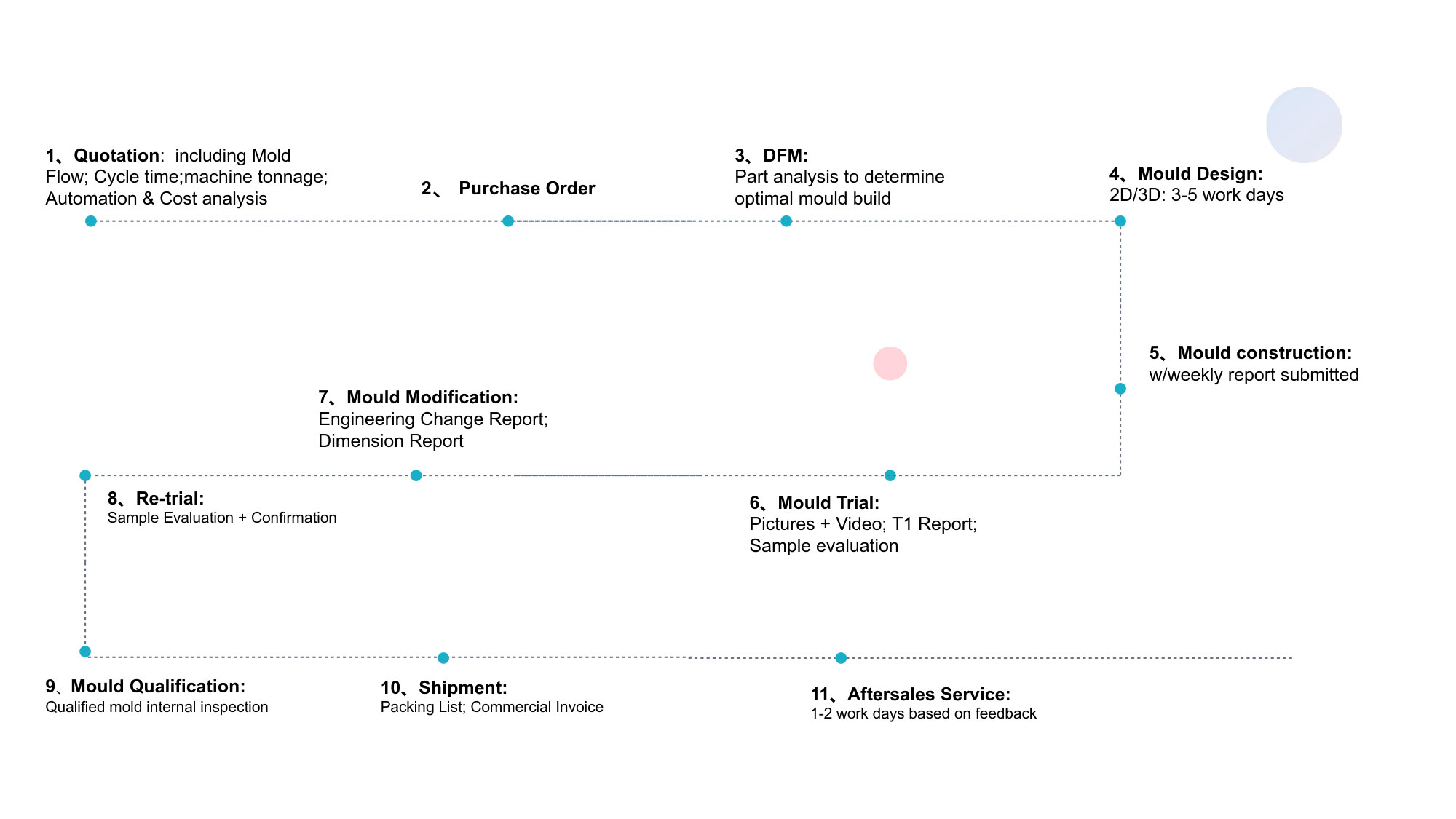
- The mold manufacturing process and product material selection
Comprehensive Service Portfolio for PP Foamed Float Products
Service Phase Key Activities Customer Value Delivered
Design & Development Part geometry optimization, material selection, DFM report generation Right-first-time mold design; no post-opening structural surprises
Product Validation T0 to T3 sampling, Moldflow analysis, short-shot testing Confirmed performance before mass production
Large-Scale Production 260 injection molding machines (30T-2800T), MuCell® foaming capability Consistent high-volume output with ±0.1% shot-to-shot repeatability
Quality Assurance In-process inspections, CMM verification, CPK≥1.33 for critical dimensions Zero-defect products with full traceability
Delivery & After-Sales Expedited shipping options, spare parts stock, lifetime repair support Reduced inventory holding and minimized production downtime
Design and Development Phase
The customer journey begins with early engineering intervention—Ansix provides a comprehensive Design for Manufacturability (DFM) report before any tooling commitment. This report analyzes the float’s geometry, suggesting appropriate draft angles, wall thickness optimization, gate placement strategies, and allowable ejector pin mark locations. For PP foamed floats, which require precise control of the microcellular structure, this upfront analysis is critical.
-
The material selection process is equally rigorous. PP foamed floats can be produced with densities ranging from approximately 25 kg/m³ to 330 kg/m³, depending on application requirements. Lower densities around 30-120 kg/m³ provide maximum buoyancy for aquaculture applications, while higher densities up to 330 kg/m³ offer greater structural integrity for more demanding environments. Ansix engineers guide customers through this trade-off, balancing buoyancy requirements against mechanical performance needs.
Microcellular Foam Density Capabilities:
Material Type Typical Density Range Key Characteristics
Standard MPP Foam 30–120 kg/m³ Low water absorption, micron-sized cells
High-Density Foam 120–330 kg/m³ Greater structural strength
Ultra-Low Density Foam 25–50 kg/m³ Maximum buoyancy, lightweight applications
MuCell® Microcellular 15–30% density reduction vs. solid Uniform cell structure, reduced warpage
Product Validation Phase
Validation is where Ansix separates itself from competitors. The company typically provides T0 through T3 sample iterations, each accompanied by detailed improvement reports. This systematic approach allows the mold to be fine-tuned progressively, addressing issues such as weld line positioning, gas trap locations, and fill imbalance before full production begins.
Moldflow analysis is deployed extensively during validation. The software predicts exactly how molten PP will fill the cavity, identifying potential problems with melt front advancement, air entrapment, and shear heating. This digital simulation reduces physical trial iterations, saving both time and material costs.
Large-Scale Production
For the production phase, Ansix leverages its 260-machine fleet to deliver consistent, high-volume output. The machines are all networked and integrated with a Manufacturing Execution System (MES) that locks critical process parameters—temperature, pressure, velocity, and timing—to authorized values only. No unauthorized operator adjustments are permitted; every shot is reproducible.
The MuCell® microcellular foaming process offered by Ansix brings specific advantages to large-scale production of PP floats: uniform cell structure ensures consistent density across the entire production run, reduced warpage eliminates secondary straightening operations, and shorter cycle times boost throughput capacity. Weight reduction in MuCell® foaming can typically reach 10–16% compared to solid parts, while density reduction can achieve up to 33% when optimized. In some formulations, density reduction of up to 37% has been demonstrated.
Quality Assurance
Quality assurance at Ansix is data-driven and systematic. Every mold is inspected with coordinate measuring machines (CMM) and optical imaging systems before shipment, with full dimensional reports provided to customers. Critical dimensions are monitored for CPK (Process Capability Index) values, with a minimum requirement of CPK ≥ 1.33 for features that impact fit, function, or assembly compatibility.
In-process quality checks follow a disciplined cadence: first-piece inspection, in-process sampling at predetermined intervals, and last-piece confirmation for every batch. For PP foamed floats, where density and cell structure uniformity are paramount, additional checks may include density measurements, cell size analysis, and water absorption testing.
Delivery and After-Sales
Delivery performance is enhanced by Ansix’s distributed manufacturing footprint—with facilities in both China and Vietnam, the company can serve customers across multiple time zones with reduced shipping distances. For urgent requirements, expedited production schedules can be accommodated, with clear communication of how lead times are compressed without compromising the validation steps.
After-sales support is built into the relationship from the start. Spare parts kits containing commonly replaced components (ejector pins, core inserts) are delivered with the initial mold shipment. Every 200,000 cycles, Ansix recommends a mold maintenance service, and lifetime repair support is available at cost. This approach ensures that customers are never left stranded with a non-functioning mold and no immediate solution.
3. Product Advantages: Technical Specifications, Manufacturing Process, Delivery Efficiency, Quality Assurance, Cost Control, After-Sales Service
PP Foamed Float Product Specifications
PP foamed floats manufactured by Ansix Tech utilize closed-cell foam structures that deliver superior buoyancy with minimal water absorption. Typical density values range from 30 to 120 kg/m³ for standard marine applications, with cell sizes in the 1–10 micron range. The closed-cell structure ensures water absorption below 0.5%, making these floats suitable for continuous immersion in fresh or salt water.
Mechanical properties are carefully balanced against density. Higher-density formulations (250–330 kg/m³) offer greater compressive strength and impact resistance, while lower-density options maximize buoyancy for weight-sensitive applications. The material exhibits excellent UV resistance when formulated with appropriate stabilizers, maintaining structural integrity and appearance even after extended outdoor exposure. Chemical resistance to a wide range of marine contaminants ensures long service life in aggressive environments.
Key Specification Summary:
Parameter Typical Range Testing Standard
Density 30–330 kg/m³ ISO 1183 / DIN 53479
Cell Size 1–10 microns Microscopic analysis
Water Absorption ≤0.5% ASTM D570 / ISO 62
Tensile Strength Varies with density ISO 527
Operating Temperature -20°C to +80°C Thermal cycling test
UV Resistance 3000+ hours Accelerated weathering
Manufacturing Process
The manufacturing journey for PP foamed floats begins with material preparation. Base polypropylene resin is combined with appropriate additives—colorants, UV stabilizers, nucleating agents—to achieve the required properties. For physical foaming methods, supercritical nitrogen or carbon dioxide is injected into the molten polymer within the plasticizing unit, creating a single-phase solution that will expand upon pressure drop.
Injection molding parameters must be precisely controlled to achieve uniform cell structure and dimensional accuracy. Research indicates that part weight, tensile strength, flexural strength, and stiffness decrease with increasing melt temperature, mold temperature, and injection velocity, while these properties increase with higher back pressure. Ansix engineers optimize these parameters for each specific product, balancing the requirements of foam expansion against the need for mechanical integrity.
Cooling is perhaps the most critical phase for foamed parts. The mold must extract heat at a controlled rate to allow the expanding gas to create a stable cell structure before the polymer solidifies. Insufficient cooling leads to collapsed cells and reduced buoyancy; excessive cooling slows cycle time without proportional quality benefit.
Typical Process Parameters for PP Foamed Floats:
Parameter Typical Range Impact on Product
Melt Temperature 190–230°C Higher temp = lower density but reduced strength
Mold Temperature 20–60°C Lower temp = finer cell structure
Injection Velocity Medium to high Affects fill pattern and cell distribution
Back Pressure 50–150 bar Higher pressure = better mixing, stronger parts
Holding Pressure Reduced vs. solid parts SCF expansion replaces traditional pack-hold
SCF Dosage (N₂ or CO₂) 0.3–1.5% by weight Directly controls density reduction
Delivery Efficiency
Delivery performance is anchored in three pillars: rapid mold development, scalable production capacity, and streamlined logistics. Simple mold designs can be completed in as few as 10 days; medium-complexity molds require 25–45 days. For urgent requirements, expedited schedules are available, with Ansix maintaining a policy that expedited projects do not skip validation steps—quality is never sacrificed for speed.
Once production molds are qualified, the 260-machine fleet enables rapid scaling to high volumes. MuCell® foaming technology contributes to delivery efficiency by reducing cycle times by 15–30% compared to conventional injection molding processes. Shorter cycles mean more parts per shift, which translates to shorter lead times for customers.
Logistics are managed through a global shipping network with expertise in customs clearance and freight coordination. Ansix’s dual manufacturing base in China and Vietnam provides geographic flexibility, allowing shipments to be routed from the facility closest to the customer‘s final destination.
Quality Assurance
Quality assurance begins before the first shot is ever taken. Ansix operates under ISO9001, ISO13485, and IATF16949 certifications, with an ISO Class 8 cleanroom for applications requiring controlled environments.
In-process controls are comprehensive. All injection molding machines are networked to an MES that records every shot’s process parameters. Statistical Process Control (SPC) charts are maintained for critical dimensions, with automatic alerts triggered when parameters drift outside control limits. For PP foamed floats, additional quality checks include:
Density verification: sample parts from each batch are measured for density, ensuring consistency with customer specifications
Cell structure analysis: microscopic examination confirms uniform cell size and distribution
Buoyancy testing: functional testing verifies that floats meet required lift capacity
Dimensional inspection: CMM verification of all critical features
First-piece inspection is performed before any production run begins; in-process sampling follows a validated plan (typically every 30–60 minutes), and last-piece confirmation ensures the run ends with the same quality level it started.
Cost Control
Ansix achieves competitive cost control without compromising quality through multiple optimization levers:
Material optimization: MuCell® foaming reduces resin consumption by 10–20% compared to solid parts of equivalent size, providing a direct material cost saving. For high-volume production, this saving compounds significantly.
Process efficiency: Shorter cycle times with MuCell® mean more parts per hour, reducing per-part labor and machine costs. Lower clamp force requirements (often 30–50% lower than conventional molding) allow foamed parts to be produced on smaller machines, further reducing production costs.
Secondary operation elimination: The precise control of flash (≤0.03mm) and the excellent surface finish achievable with proper mold design often eliminate the need for secondary finishing operations like deburring or polishing.
Tooling longevity: High-quality mold construction with premium steel grades (S136, 2344, 8407, NAK80, H13) ensures tooling lasts for hundreds of thousands of cycles, amortizing the initial mold investment over longer production runs.
Volume economics: Ansix’s scale of 260 machines and four factories provides purchasing power for raw materials and consumables that smaller competitors cannot match.
After-Sales Service
After-sales service is structured to minimize customer downtime and extend mold life. Each mold shipment includes a spare parts kit containing the most commonly replaced components—ejector pins, core inserts, wear plates. This simple practice means that when a wear item fails, the replacement is already on hand, eliminating emergency shipping delays.
Ansix offers mold maintenance services at 200,000-cycle intervals, with technicians trained to identify and address wear before it causes quality problems. Lifetime repair support is provided at cost, and for molds that have been well maintained, Ansix can often refurbish tools that would otherwise be scrapped.
Technical support remains available throughout the product lifecycle. If a customer experiences production issues—whether due to process drift, material changes, or operator error—Ansix engineers can provide remote or on-site troubleshooting to restore stable production.
4. Core Value Delivery: Mold Manufacturing, Material Selection, Smart Manufacturing Integration, Process Quality Assurance
Mold Manufacturing Capabilities
The mold is the foundation of every successful injection molding project, and Ansix’s mold manufacturing capabilities demonstrate measurable customer value.
Precision machining: Ansix employs five-axis high-speed machining centers capable of achieving 0.002mm accuracy on complex curved surfaces. For PP foamed floats, this precision translates directly to smoother parting lines, reduced flash, and better cosmetic appearance.
EDM and wire EDM: For features that cannot be machined directly, Ansix maintains in-house electrical discharge machining (EDM) and wire EDM capabilities. Fine-feature wire EDM can produce features as small as 0.03mm, including narrow slots and tiny holes. The self-contained nature of these capabilities—Ansix operates its own electrode machining center and EDM workshop—means mold repairs can be completed in-house without outsourcing delays.
Heat treatment and surface finishing: In-house heat treatment facilities allow precise control over mold steel hardness. Surface finishing capabilities range from standard machining marks to high-gloss polished surfaces (Ra<0.05μm) for applications requiring optical clarity.
Specific mold types manufactured:
Mold Type Key Features Customer Benefit
Hot runner molds Minimizes sprue waste, faster cycles Reduced material cost, higher productivity
Multi-cavity molds Produces multiple parts per shot Lower per-part cost for high volumes
Stack molds Double-sided cavity arrangement Doubled output without larger machine
Two-shot/overmold Multiple materials in one cycle Complex assemblies without secondary ops
High-gloss molds Ra<0.05μm polished surfaces Excellent cosmetic appearance, reduced coating needs
Mold Steel Selection:
Steel Grade Applications Approximate Hardness Customer Value
P20 General-purpose molds 30–32 HRC Cost-effective for moderate volumes
S136 (Stavax) Corrosion-resistant, high-gloss 48–52 HRC Excellent appearance, long life
2344 / 8407 High-wear applications 48–52 HRC Extended life with glass-filled materials
NAK80 High-gloss, pre-hardened 38–42 HRC No post-heat-treatment distortion
H13 Hot work, high-temperature 46–50 HRC Suitable for high-melt-temperature resins
DC53 High-wear, high-impact 58–62 HRC Maximum wear resistance for demanding applications
Mold life guarantee: For glass fiber reinforced materials, Ansix guarantees 500,000 cycles. For unfilled plastics, the guarantee extends to 1,000,000 cycles. Each mold ships with full certification documentation including material certificates, heat treatment curves, and CMM inspection reports.
Material Selection Expertise
Ansix’s material selection process is guided by rigorous testing and real-world application experience. The company maintains a materials database covering hundreds of resin grades, with documented processing parameters and mechanical property data.
For PP foamed floats, the material selection decision centers on the required balance of density, mechanical properties, and processing characteristics.
Material Selection Matrix for PP Foamed Floats:
Application Recommended Material Key Properties Value Proposition
High-buoyancy floats Low-density PP foam (30–120 kg/m³) High cell density, fine cells (1–10μm) Maximum flotation with minimal weight
Structural floats Medium-density PP foam (120–250 kg/m³) Balanced properties Good strength with significant weight saving
Heavy-duty floats High-density PP foam (250–330 kg/m³) Maximum compressive strength Durability in harsh environments
UV-exposed floats UV-stabilized PP foam 3000+ hours accelerated weathering Long outdoor service life
Marine/chemical floats Corrosion-resistant PP Excellent chemical resistance Reliable in salt water and chemicals
Special materials Ansix has experience processing:
PC/ABS alloys: for impact resistance and appearance
PC (polycarbonate): for transparency and toughness
PPS + 40% GF: for high-temperature and dimensional stability
PEEK: for extreme high-temperature applications
PTFE / PFA: for chemical resistance and low friction
PA6 + GF30: for strength and heat resistance
PBT: for electrical properties
PEI / PPS / LCP: for high-performance engineering applications
LSR (liquid silicone rubber): for flexible, biocompatible parts
Flame retardancy: Ansix can produce parts meeting UL94 V-0 ratings for applications requiring fire safety compliance, with proper documentation and testing certification.
Smart Manufacturing Integration and Efficiency Enhancement
MES integration: All of Ansix’s 260 injection molding machines are networked to a central Manufacturing Execution System (MES). This system locks critical process parameters—melt temperature, injection pressure and velocity, holding pressure and time, cooling time—to authorized values. Unauthorized adjustments are not permitted, ensuring that the process remains stable across shifts and production runs.
The MES also maintains complete traceability for every batch produced. Production records include machine ID, operator ID, material lot numbers, and timestamps for each production event. This level of traceability is essential for medical and automotive customers who require full documentation for regulatory compliance.
Real-time monitoring: Advanced sensors are deployed on critical processes. Injection machines are equipped with ultrasonic wall thickness sensors that provide real-time feedback on part dimensions, enabling automatic adjustment of packing pressure to maintain dimensional consistency. For MuCell® foaming applications, in-mold pressure and temperature sensors provide closed-loop control of the foaming process, ensuring uniform cell structure across every shot.
Automation and robotics: Ansix has integrated robotic pickers on many of its high-volume production cells. These robots remove finished parts from the mold, place them on conveyors for downstream operations, and can even perform basic quality checks before the parts progress to the next stage.
Production efficiency metrics:
Metric Ansix Performance Industry Benchmark Customer Value
Overall Equipment Effectiveness (OEE) 85%+ 60–70% typical More output from same capital investment
First-pass yield 98%+ 85–90% typical Fewer rejects, less waste
Mold change time <10 minutes (standardized tools) 30–60 minutes typical Faster changeovers, smaller batch sizes feasible
Cycle time reduction (MuCell) 15–30% vs. solid molding N/A More parts per hour, lower per-part cost
Process Quality Assurance
Quality assurance at Ansix is systematic, data-driven, and customer-verified.
In-process controls:
First-piece inspection: The first part from each production run is subjected to full dimensional inspection using CMM or optical measurement. Any deviation from specification triggers immediate process adjustment and re-inspection.
In-process sampling: At predetermined intervals (typically every 30–60 minutes of production), sample parts are pulled for dimensional and visual inspection. SPC charts track critical dimensions in real-time, with automatic alerts triggered when parameters approach control limits.
Last-piece confirmation: At the conclusion of each production run, a final part is inspected to confirm that quality remained consistent throughout the run.
Dimensional stability control: For PP foamed floats, dimensional stability is critical. Ansix uses zone-controlled mold temperature regulation to maintain temperature differences between core and cavity within 2°C, minimizing warpage and distortion. This control has been validated on similar products where key hole-to-hole spacing was maintained within ±0.02mm across three consecutive production weeks.
Appearance quality: Surface finish requirements vary by application. Ansix can achieve:
Surface Type Achievable Specification Customer Application
Transparent parts No bubbles, no flow marks Optical applications
Plating-ready parts No gas marks Decorative applications requiring electroplating
High-gloss parts Ra ≤ 0.2μm Cosmetic surfaces, consumer products
Paint-ready parts Reserved deformation compensation for printing registration Painted/coated assemblies
Printing registration Registration accuracy ±0.1mm Parts requiring graphics or labels
Cpk requirements: For all critical dimensions, Ansix maintains Process Capability Index (Cpk) of at least 1.33, with many projects achieving Cpk ≥ 1.67. This means the process is highly stable and unlikely to produce out-of-specification parts.
Testing and verification equipment:
Equipment Measurement Capability Application
Coordinate Measuring Machine (CMM) ±0.002mm accuracy Full dimensional inspection, mold verification
Optical imaging system ±0.001mm resolution Fine feature measurement, quick inspection
Hardness tester Rockwell, Shore scales Material verification for incoming inspection
Tensile tester Load capacity to specifications Mechanical property validation
Density measurement Hydrometer and displacement methods Foam density verification
5. Comprehensive Manufacturing Solutions for PP Foamed Float Products
Chapter Overview
This chapter provides a comprehensive 2,000+ word manufacturing solution guide for PP foamed float products, focusing on how Ansix Tech translates technical expertise into customer value. Organized around the customer journey from concept to delivery, this guide demonstrates how Ansix solves real problems, reduces costs, and mitigates risks throughout the product lifecycle.
Part 1: Project Initiation and Technical Validation
Understanding Customer Requirements
Every successful PP foamed float project begins with a thorough understanding of customer requirements. Ansix engages customers in a structured discovery process that captures:
Functional requirements: What must the float do? Required buoyancy in fresh water or salt water? Expected service life? Operating temperature range? Exposure to chemicals, UV radiation, or mechanical stress?
Geometric constraints: What are the float’s dimensional requirements? Mounting features required? Tolerance expectations for critical dimensions?
Production volume expectations: Annual volume estimates help determine appropriate mold design (multi-cavity vs. single-cavity) and manufacturing strategy.
Regulatory requirements: Does the product need to meet specific standards (UL94 V-0 flame rating, FDA food contact approval, marine industry certifications)?
Cost targets: What is the target per-part cost? How does this influence decisions about material selection, cycle time optimization, and automation?
Material Selection for PP Foamed Floats
Material selection for foamed floats requires balancing multiple competing requirements: density (for buoyancy), mechanical strength (for durability), processing characteristics (for manufacturability), and cost.
PP foam base material characteristics:
PP foam offers an exceptional combination of properties for flotation applications. The closed-cell structure inherent to properly processed PP foam provides natural water resistance, with water absorption typically below 0.5%. This closed-cell configuration also contributes to long-term buoyancy retention, as water cannot infiltrate the foam structure over time.
Density options and applications:
Ultra-low density (25–50 kg/m³): Maximum buoyancy, ideal for applications where weight reduction is the primary objective. Examples include lightweight recreational floats and specialty aquaculture products.
Low density (50–120 kg/m³): Balanced buoyancy and mechanical strength. Suitable for most aquaculture and marine marker applications.
Medium density (120–250 kg/m³): Enhanced structural integrity with meaningful weight reduction. Appropriate for floats that may experience impact loading or require attachment point strength.
High density (250–330 kg/m³): Maximum mechanical properties. Used when floats must withstand significant mechanical stress or when dimensional stability under load is critical.
Key material properties and customer value translation:
Material Property Technical Specification Customer Value Translation
Closed-cell structure Cell size 1–10μm No water absorption → permanent buoyancy
Low density 30–330 kg/m³ range Float stays on surface with minimal material
UV resistance 3000+ hours accelerated test Years of outdoor service without degradation
Chemical resistance Excellent to most marine chemicals Reliable in salt water, fuels, oils
Impact resistance High for density Survives wave impacts, handling drops
Thermal stability -20°C to +80°C operating range Works in any climate, any season
Design for Manufacturability (DFM) Analysis
The DFM process is where Ansix delivers the most significant value—catching problems before the mold is ever built. A comprehensive DFM report for a PP foamed float includes:
Wall thickness optimization: Foamed parts require careful wall thickness management. Thin walls may not provide sufficient expansion space for the foam cells; excessively thick walls can lead to inconsistent cell structure and sink marks. Ansix engineers use Moldflow analysis to identify optimal wall thickness ranges, typically recommending gradual transitions rather than abrupt changes.
Draft angle recommendations: To ensure reliable part ejection without surface damage, Ansix specifies appropriate draft angles for each feature. For textured surfaces, additional draft is specified to prevent drag marks.
Gate placement optimization: The location of the gate—where molten PP enters the mold cavity—has a profound impact on part quality. Using Moldflow analysis, Ansix predicts melt front advancement and identifies optimal gate locations that minimize weld lines (potential weak points) and ensure uniform filling.
Ejector pin placement: Ejector pins marks are unavoidable but can be placed in non-critical areas or designed with cosmetic features to conceal them. Ansix explicitly documents where ejector pin marks will appear, allowing customers to approve or request relocation before tooling begins.
Potential issue identification: The DFM report highlights potential manufacturing issues—weld lines, gas traps, filling imbalance—and proposes solutions before steel is cut. This proactive approach eliminates expensive post-opening mold modifications.
The Value of Professional DFM
For a typical PP foamed float mold costing $20,000–$100,000, a comprehensive DFM analysis costs the customer nothing (included in project quotation) and delivers substantial value:
Risk reduction: Eliminates 90%+ of potential production problems before they become real
Cost avoidance: Prevents $5,000–$20,000 in post-opening mold modifications
Time savings: Reduces development timeline by 2–4 weeks by avoiding trial-and-error debugging
Part 2: Mold Design and Manufacturing
Mold Design Principles for PP Foamed Floats
Mold design for foamed PP parts differs significantly from solid part molds. The foaming process requires specific considerations:
Cavity design: Unlike solid molding where material simply fills the cavity, foamed molding requires precise control of cavity volume and pressure. The mold must be designed to allow the expanding gas to create the foam structure without excessive pressure buildup that could damage the mold or produce inconsistent cell size.
Venting strategy: Proper venting is critical. As the molten PP expands, it displaces air from the cavity. Inadequate venting causes gas traps, leading to burn marks, incomplete filling, or collapsed foam cells. Ansix designs venting channels specifically sized for the material’s flow characteristics and the part’s geometry.
Gate design: For foamed parts, gate design influences cell structure near the gate. Research has shown that gate shape affects foamed cell size and density, with wider gates providing more uniform cell distribution near the injection point. Ansix selects gate designs based on part geometry and required property distribution.
Cooling system design: Uniform cooling is more critical for foamed parts than for solid parts. Differential cooling can cause non-uniform cell growth, resulting in density variations across the part. Ansix designs conformal cooling channels that follow the part contour, maintaining consistent heat extraction throughout the cavity.
Ansix Mold Manufacturing Capabilities
In-house precision machining: Ansix’s five-axis high-speed machining centers achieve 0.002mm accuracy, enabling complex geometry without secondary finishing. This precision translates directly to better part quality: smoother surface finishes, tighter dimensions, and longer mold life.
EDM and electrode manufacturing: Features that cannot be machined directly—sharp internal corners, deep ribs, fine details—are produced using electrical discharge machining. Ansix maintains its own electrode machining center and EDM workshop, keeping the entire mold manufacturing process in-house. This self-contained capability means mold repairs and modifications can be completed without outsourcing delays.
Mold steel selection decisions:
Customer Priority Recommended Steel(s) Why It Matters
Lowest initial tooling cost P20 (pre-hardened) Acceptable for moderate volumes (<200,000 cycles)
Longest mold life H13 or DC53 (through-hardened) 1,000,000+ cycles possible with proper maintenance
Best cosmetic appearance NAK80 or S136 (high polish) Mirror-like surface finishes, no flow marks
Corrosive environments S136 (stainless) Salt water and chemical exposure resistance
Glass-filled materials H13 or DC53 Wear resistance for abrasive fillers
Mold flow system design (hot runner / cold runner):
Feature Technical Approach Customer Value
Runner system layout Balanced flow lengths to all cavities All parts identical, no cavity-to-cavity variation
Hot runner selection Valve gate or open gate depending on part sensitivity Reduced sprue waste, lower per-part material cost
Gate type Pin gate, submarine gate, or edge gate optimized by Moldflow Clean part appearance, automatic gate removal
Runner cross-section Trapezoidal or full-round for efficient flow Lower pressure drop, easier processing
Cooling system design: Water channels are carefully designed to extract heat uniformly. For PP foamed floats, the cooling system must manage two competing requirements: fast cooling (to minimize cycle time) and uniform cooling (to prevent warpage). Ansix uses conformal cooling channel designs where appropriate, enabling:
Cycle time reduction: 15–30% faster cooling compared to conventional cooling channel designs
Reduced warpage: Temperature differences between cavity and core maintained within 2°C
Consistent cell structure: Uniform cooling rate produces uniform cell size throughout the part
Ejector system design: The ejector system must remove the part from the mold without damaging the foam structure. Since foamed parts are inherently weaker than solid parts during ejection (while still hot), ejector pin placement and sizing require careful consideration. Ansix designs ejector systems that:
Distribute ejection force across multiple pins to avoid localized stress
Place ejector pin marks in non-critical areas
Use large-diameter pins where practical to reduce surface pressure
Mold Manufacturing Workflow
DFM completion and customer approval
Mold base procurement and preparation
Rough machining of mold plates
Heat treatment (for through-hardened steels)
Finish machining (all critical dimensions)
EDM of complex features
Manual finishing and polishing
Assembly and fit-up check
Mold trial (T0 sample)
Inspection and CMM verification
Customer sample shipment (T1–T3)
Final approval and mold shipment
Lead time commitments:
Mold Complexity Standard Lead Time Expedited Lead Time
Simple mold (≤2 cavities, basic geometry) 10 days 7 days
Medium complexity (4–8 cavities, moderate detail) 25–45 days 20 days
Complex mold (8+ cavities, fine detail, hot runner) 45–60 days 35 days
Part 3: Injection Molding Process Development
Process Parameter Fundamentals for PP Foam
Injection molding of foamed PP requires a different process window than solid PP. Research has established that for injection-molded foaming PP parts:
Melt temperature increase → decreased part weight, decreased tensile strength, decreased flexural strength and stiffness
Injection velocity increase → decreased part weight, decreased mechanical properties
Mold temperature increase → decreased part weight, decreased mechanical properties
Back pressure increase → increased part weight, increased mechanical properties
These relationships mean process optimization requires careful balancing. For example, increasing melt temperature reduces density (good for buoyancy) but also reduces strength (bad for durability). Ansix engineers use statistical process optimization to find the sweet spot that meets all customer requirements simultaneously.
MuCell® microcellular foaming parameters:
Parameter Typical Setting Impact on Foam Quality
Supercritical fluid (SCF) dosage 0.3–1.5% by weight Higher dosage = lower density but potential surface defects
SCF pressure 200–350 bar Consistent SCF supply for uniform foaming
Melt temperature 190–230°C Lower end for finer cells, higher end for lighter weight
Injection speed Medium (50–150 mm/s) Too fast causes surface swirl, too slow causes weak foam
Back pressure 50–150 bar Higher pressure = better SCF mixing
Cooling time Determined by section thickness Critical for cell structure stability
Process Optimization for Efficiency and Cost Control
Cycle time reduction: MuCell® foaming inherently reduces cycle time by replacing the traditional pack-and-hold phase with SCF expansion that occurs during filling. Typical cycle time reductions of 15–30% are achievable, directly reducing per-part costs. For a PP foamed float with a 30-second solid cycle, the MuCell® cycle might be 21–25 seconds—producing 20–40% more parts per hour.
Clamping force reduction: The expanding gas in MuCell® foaming requires lower clamping forces than solid molding. Reductions of 30–50% are typical. For a large float requiring 500 tons of clamp force for solid molding, MuCell® might only require 250–350 tons. This enables production on smaller machines, freeing larger machines for other projects and reducing overall manufacturing cost.
Material consumption reduction: Weight reduction of 10–20% versus solid parts directly reduces raw material consumption. At typical PP prices, this saving adds up quickly on high-volume production.
Flaw prevention: Identifying and eliminating defects before they occur is more cost-effective than sorting or scrapping defective parts. Common defects for foamed parts and their prevention include:
Defect Root Cause Prevention Strategy
Sink marks Non-uniform cooling, inadequate packing Uniform wall thickness design, optimized cooling channels
Warpage Differential shrinkage, uneven cooling Balanced cooling design, proper material selection
Short shots Incomplete filling Adequate injection pressure, proper venting
Weld lines Melt front convergence Gate placement optimization, higher melt temperature
Swirl marks SCF expansion at mold surface Gas counter pressure, mold temperature control
Irregular cell structure Non-uniform cooling, pressure fluctuations MES process control, consistent raw material
Example defect prevention in practice: For a PP foamed float with a central mounting boss, traditional molding might produce sink marks on the outer surface opposite the boss. Ansix’s DFM process would identify this risk early, recommending either a hollow boss design (to reduce mass) or placement of an ejector pin behind the boss (to provide a sink relief path).
Quality Assurance Throughout Production
In-process controls:
Machine verification: Each machine is calibrated to ensure temperature, pressure, and timing accuracy before production begins
Material verification: Resin lot numbers are recorded, and incoming inspection verifies key properties
Process parameter lock: MES locks all parameters to authorized values; unauthorized changes are prevented
First-piece inspection: Complete dimensional check of first part from each run
In-process sampling: Scheduled sampling with SPC charting
Last-piece confirmation: Final inspection at run completion
Statistical Process Control:
For critical dimensions, SPC charts track measured values over time. Control charts typically use:
Control Limit Calculation Action Required
Upper Control Limit (UCL) Average + 3 sigma Adjust process if exceeded
Lower Control Limit (LCL) Average - 3 sigma Adjust process if exceeded
Upper Warning Limit Average + 2 sigma Monitor closely, prepare for adjustment
Lower Warning Limit Average - 2 sigma Monitor closely, prepare for adjustment
Cpk requirements: Ansix maintains minimum Cpk ≥ 1.33 for all critical dimensions. This means the process is operating with substantial safety margin from specification limits—a 4-sigma process with low defect probability.
Packaging and Delivery
Packaging considerations for PP foamed floats:
Factor Approach Customer Benefit
Part protection Custom dunnage or ESD foam No damage during transit
Moisture protection Sealed poly bags with desiccant if required Dry, ready-to-use parts
Labeling Carton and pallet labels with batch traceability Easy receiving and inventory management
Documentation Packing list, inspection reports, certificate of conformance Simplified quality documentation
Logistics:
Shipping options: Air freight (expedited), sea freight (economy), courier (small volumes)
Tracking: All shipments tracked with proactive notification of delays
Documentation: Complete export/import documentation provided
Troubleshooting and Ongoing Support
Common molding issues and solutions:
Problem Possible Causes Ansix Solution
Inconsistent density SCF dosage variation, melt temperature drift MES monitoring, SCF system calibration
Surface swirl marks SCF expansion at mold surface Gas counter pressure, higher mold temperature
Weak weld lines Low melt temperature, insufficient back pressure Gate redesign, parameter optimization
Dimensional variation Cooling inconsistency, clamp force variation Zone-controlled cooling, lock-up clamp force compensation
After-sales support structure:
Service Availability Customer Value
Technical support (remote) 24/5 (business hours global coverage) Quick troubleshooting without travel costs
On-site support Within 48 hours for critical issues Minimal production interruption
Mold maintenance Recommended every 200,000 cycles Extended mold life, consistent quality
Spare parts Stocked for all standard components Immediate replacement when needed
Lifetime repair At cost, always available Never left without a solution
Part 4: Industry Experience and Customer Value Summary
Ansix Experience Portfolio
Ansix has successfully delivered PP foamed float projects across multiple applications:
Aquaculture floats: High-buoyancy products for fish farming, requiring long-term salt water exposure resistance and consistent flotation performance
Marine marker buoys: High-visibility floats for navigation and hazard marking, requiring UV resistance and impact toughness
Industrial flotation devices: Specialty floats for equipment support, requiring precise buoyancy control and mechanical strength
Consumer floats: Recreational products where cosmetic appearance and cost efficiency are primary drivers
This diverse experience base means Ansix has encountered and solved the full range of challenges associated with PP foamed floats:
Density control from 30–330 kg/m³
Complex geometries with undercuts and mounting features
Color matching across production batches
UV stabilization for outdoor exposure
High-volume production with 24/7 operation
Cost Reduction Framework
Cost Reduction Area Ansix Approach Typical Savings
Material costs MuCell® foaming reduces resin consumption; proper material selection avoids overspecification 10–20% lower material cost
Processing costs Shorter cycle times (MuCell® advantage); optimized cooling (conformal channels) 15–30% lower per-part processing cost
Secondary operations Precision molds reduce flash; high-quality surfaces eliminate polishing 0–100% elimination of secondary work
Rejection costs Process control (MES, SPC) reduces scrap; DFM eliminates design-related defects 50–90% reduction in reject rates
Tooling amortization Long mold life (500k–1M cycles) spreads tooling cost over more parts Lower per-part tooling cost
Inventory costs Fast lead times enable just-in-time delivery Reduced inventory holding costs
Risk Reduction Framework
Risk Area Customer Concern Ansix Mitigation
Tooling risk Mold doesn’t work; expensive modifications required Comprehensive DFM before steel is cut; T0–T3 sampling proves tool before mass production
Production risk Inconsistent quality; rejects; line stoppages MES-controlled processes; SPC monitoring; 98%+ first-pass yield
Supply risk Supplier goes down; lead times stretch; quality varies Four manufacturing locations; 260 machines; ISO certifications
Financial risk Hidden costs; unexpected expenses Fixed-price quotations; clear scope definition; change order transparency
Regulatory risk Product fails certification; liability exposure Material certifications; testing documentation; traceability
Summary: Why Ansix for PP Foamed Floats
Ansix Tech has established itself as the leading manufacturer of PP foamed float molds and molded products through a combination of:
Technical depth: Over 29 years of experience, specialized expertise in PP microfoam injection molding, ISO-certified processes
Manufacturing scale: 260 injection molding machines, four factories, complete in-house mold making capabilities
Customer focus: Every technical capability translated into measurable customer value; proactive communication and problem-solving
Quality commitment: Cpk ≥ 1.33 for critical dimensions; comprehensive inspection and traceability; continuous improvement culture
Global reach: Facilities in China and Vietnam serving customers worldwide; experienced in export/import logistics
For customers seeking a reliable, cost-effective, high-quality solution for PP foamed float products, Ansix Tech offers the complete package: design expertise, manufacturing excellence, quality assurance, and long-term partnership support. The company’s ability to translate technical complexity into customer value—lower costs, reduced risks, better products—is what distinguishes Ansix in the marketplace.
For customers who want to see this capability firsthand, Ansix invites you to review a sample DFM report with a real product example. You will see exactly how potential issues—weld lines, gas traps, sink marks, dimensional risks—are identified and resolved before the mold is ever built. That is the Ansix difference: engineering excellence focused on your success.
Ansix Tech Co Ltd
If you have any plans related to PP foamed float mold manufacturer , you can contact us at any time. We will turn your ideas into reality, let you realize your dreams, and obtain large orders from the market. Our contact information is info@ansixtech.com. Or contact our CTO, mail: stephen@ansixtech.com
#www.ansixtech.com #ansixtech.com #PP foamed float mold manufacturer #PP foamed float mold manufacturer injection molding companies #PP foamed float mold manufacturer Canopy Mold injection mold companies #Ansix #Ansix moulds #Ansix china #Ansix tech china #Ansix tech company #Ansix facotry #PP foamed float mold manufacturer injection molding #PP foamed float mold manufacturer injection tools #PP foamed float mold manufacturer injection moulds #PP foamed float mold manufacturer plastic mould #PP foamed float mold manufacturer plastic tools #Ansix Tech #Ansix molds #Ansix injection molding #Ansix mold factory #injection molding PP foamed float mold manufacturer#Ansix mold factory #PP foamed float mold manufacturer china #PP foamed float mold manufacturer molds #injection factory #PP foamed float mold manufacturer injection molding #PP foamed float mold manufacturer injection molding factory #injection molding company #PP foamed float mold manufacturer injection mold companies #PP foamed float mold manufacturer Tooling #PP foamed float mold manufacturer mold limited #Ansix mold china #Ansix companies #Ansix company China #PP foamed float mold manufacturer facotry #Ansix Tech #Ansix Tech mould #PP foamed float mold manufacturer injection moulding #injection moulding company #Ansix PP foamed float mold manufacturer parts injection mold companies #medical injection molding companieschina #PP foamed float mold manufacturer china factory #Ansix moulding companies #Ansix molding company #PP foamed float mold manufacturer injection moulding facotry #Ansix Tech mold #PP foamed float mold manufacturer mould #PP foamed float mold manufacturer plastic injection molding #ansix plastic mold #Mold manufacturing #PP foamed float mold manufacturer parts manufacturing #PP foamed float mold manufacturer plastic parts factory #PP foamed float mold manufacturer injection parts mold #PP foamed float mold manufacturer PRECISION MANUFACTURING #PP foamed float mold manufacturer #China mold #PP foamed float mold manufacturer injection moulding china #PP foamed float mold manufacturer mould china #china precision mold #mold in china #PP foamed float mold manufacturer mold china #Precision molds #High-precision molds #PP foamed float mold manufacturer #Injection molds #PP foamed float mold manufacturer Factory #PP foamed float mold manufacturer Company #Super Large Injection Mold Factory #Large Tonnage Injection Molding Factory #PP foamed float mold manufacturer Company #PP foamed float mold manufacturer Factory #2800T Injection Molding Factory #3000 Ton Injection Molding #4500 Ton Injection Molding Factory #Large Mold Injection Molding #Large Plastic Mold Injection Molding Factory #Large Injection Mold Manufacturer #Plastic Mold Factory #Injection Mold #Plastic Mold