



Stacking drum vent cover D15 D17 W17 D20 D25 D38 vent plug vent valve leak prevention
FEATURES
With 260 injection molding machines across four production bases in China and Vietnam, we maintain robust production capacity to meet both sample prototyping and mass production demands. Standard lead times range from 10–15 days for prototypes to 25–45 days for production tooling. Rush orders can be accommodated with compressed timelines while maintaining rigorous quality validation protocols.
Quality Assurance
Our quality management system is certified to ISO9001, IATF16949, ISO13485, ISO14001, and BSCI standards. Every production batch undergoes comprehensive dimensional inspection using CMM and optical measurement equipment, with critical dimensions monitored to CPK ≥ 1.33. Each mold is validated with a 2,000-cycle wear test prior to delivery, accompanied by a full dimensional report.
Competitive Cost Control
Our cost advantage stems from vertical integration of mold manufacturing and injection molding under one roof, eliminating sub-supplier markups. We optimize part design for material efficiency, reduce cycle times through advanced cooling system design, and achieve high cavitation (multi-cavity molds up to 48 cavities) to lower per-unit costs. With 28 years of production experience, we continuously refine process parameters to minimize waste and energy consumption, passing those savings directly to customers.
-
Mold Description
Product Materials:
PP ABS PC
Mold Material:
S136ESR
Number of Cavities:
4
Glue Feeding Method:
Hot runner
Cooling Method:
Water cooling
Molding Cycle
12.5s
- The mold manufacturing process and product material selection
Core Value Proposition – Mold Manufacturing & Injection Molding
Transforming Technical Capabilities into Customer Value
Hard Power Infrastructure – Building Trust Through Measurable Equipment
Mold Processing Equipment: Our five-axis high-speed machining centers achieve ±0.002mm accuracy, translating to smoother parting lines and elimination of flash—saving 5–15 seconds of manual deflashing labor per part. Our slow wire EDM machines handle 0.03mm micro-holes and narrow grooves, preventing thin-wall deformation during machining.
Injection Molding Machine Fleet: We operate 260 all-servo electric injection molding machines with clamping forces from 30 to 2,800 tons, covering everything from miniature vent components to large industrial covers. Repeatable precision of ±0.1% ensures every part from the first shot to the 500,000th shot meets identical specifications.
Inspection & Testing: Every mold receives full dimensional inspection before delivery; all production batches are measured against CPK ≥ 1.33 standards.
-
Smart Manufacturing Integration & Efficiency Enhancement
Our facilities are integrated with MES (Manufacturing Execution Systems) that lock all process parameters—temperature, pressure, speed, cycle time—allowing adjustments only by authorized engineering personnel. This automation eliminates operator variability, ensures batch-to-batch consistency, and reduces production interruptions.
Process Quality Assurance
What customers truly care about is consistency, not just specifications. Our approach eliminates common frustrations: sink marks are eliminated through optimized gating design via Moldflow analysis; flash is controlled to within 0.03mm through precision-matched parting surfaces; dimensional stability is maintained by using mold temperature controllers with zone-specific control, keeping core and cavity temperature differences within 2°C to prevent warpage.
Customer-Centric Quality Validation
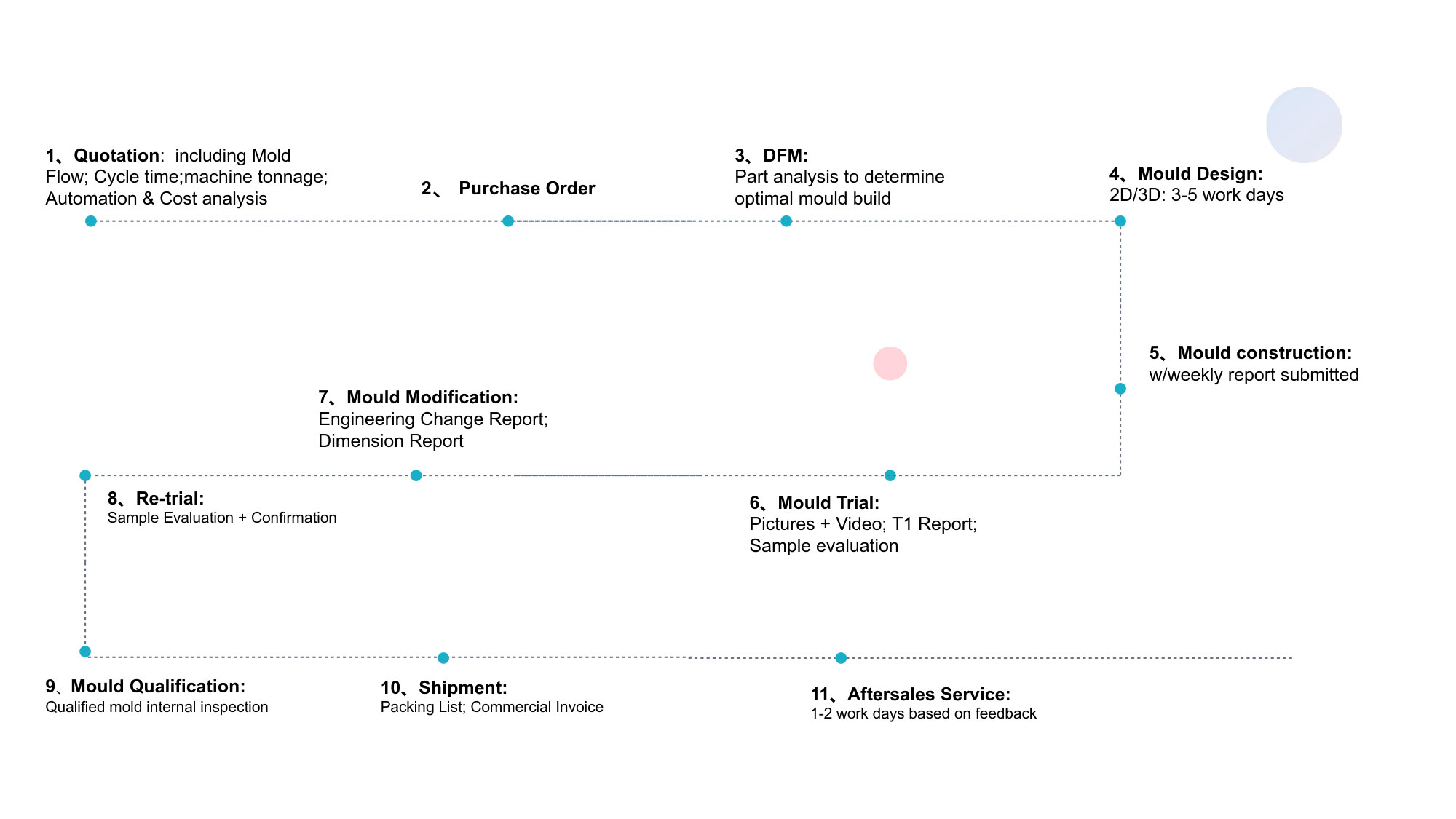
We don't just test after production—we build quality into every step. A Design for Manufacturability (DFM) report is provided before mold construction begins, analyzing draft angles, wall thickness optimization, gate location, and ejector pin mark placement to identify and solve potential issues before they become costly problems. Trial shots (T0 through T3) with improvement reports accompany each mold iteration. Small-batch validation runs of 100–500 shots with yield and CPK statistics confirm stability before mass production commences.
Part 3: Comprehensive Manufacturing Solution (2000+ Words)
Stacking Drum Vent Cover & Vent Plug Manufacturing Solution
Ansix Tech – Complete Mold Manufacturing and Injection Molding for Industrial Packaging Components
Executive Summary
Since our founding in Hong Kong in 1998, Ansix Tech has grown into a leading provider of end-to-end injection molding solutions, operating four production bases across China and Vietnam, with 260 injection molding machines and over 200 dedicated design engineers contributing to more than 30,000 molds built to date. This proposal outlines precisely how we convert advanced manufacturing capabilities into measurable customer value for Stacking Drum Vent Covers (D15, D17, W17, D20, D25, D38) and complementary vent plugs and valves with leak prevention functionality.
At Ansix Tech, we believe that a mold is not just a block of steel—it is a profit engine for your operation. Our mission is simple: Make Our Customers Successful. This document details our comprehensive solution across product specifications, material selection, mold design, manufacturing processes, quality control, and cost optimization, all structured to eliminate the common pain points our customers face: inconsistent dimensions, flash requiring secondary finishing, unpredictable mold life, and extended repair cycles.
Section 1: Product Specifications – Standard Sizes and Configurations
The Stacking Drum Vent Cover series encompasses the most widely adopted industrial closure standards, including D15, D17, W17, D20, D25, and D38 diameters. These sizes correspond to industry-standard thread configurations for plastic drums, jerrycans, and industrial containers, compatible with both DIN and ISO standards for internally threaded openings.
The vented components include multiple configurations: vented plugs in sizes D10, D15, D17, D26, and D38; vented liners; silicone vent systems; and valve-type vents that relieve both overpressure and vacuum conditions. Venting technology serves three critical functions: relieving overpressure caused by gassing of filling products (such as hydrogen peroxide), relieving under-pressure caused by cooling after hot filling of high-viscosity liquids, and preventing unsafe stacking conditions of lightweight packages due to pressure changes from temperature variations.
Customer Value Delivered: By sourcing all standard sizes from a single manufacturer, customers reduce vendor management costs. Compatible dimensions eliminate assembly mismatches, and consistent quality across sizes reduces inspection requirements.
Section 2: Raw Material Selection – Engineering the Right Foundation
2.1 Customer Problem: Selecting the wrong material leads to premature failure, poor chemical resistance, or excessive cost. Customers need materials that balance performance, durability, and cost for specific applications.
Ansix Solution: We offer a comprehensive material portfolio matched to specific application requirements:
HDPE (High-Density Polyethylene): Ideal for general chemical packaging applications. Offers excellent chemical resistance, impact strength, and durability for demanding industrial environments. Suitable for drums storing cleaning agents, agrochemicals, and industrial liquids. UV-stabilized grades available for outdoor storage applications.
PP (Polypropylene): Lower density than HDPE with superior flexibility and fatigue resistance. Ideal for applications requiring repeated opening and closing cycles. Food-contact grades available for packaging applications involving food-grade contents.
PA66+GF (Nylon 66 with Glass Fiber Reinforcement): Delivers high tensile strength, excellent wear resistance, and superior dimensional stability under load. The glass fiber reinforcement enhances structural integrity for vent plugs subjected to mechanical stress during installation and removal. Glass fiber-reinforced materials require high-hardness mold steels such as H13 or SKD61.
PC/ABS Blends: Provides high impact resistance combined with good heat deflection temperature. Suitable for applications requiring both toughness and aesthetic surface finish.
Specialty Engineering Plastics: For demanding applications, we support PPS, PEEK, PEI, LCP, and PTFE/PFA—materials that withstand extreme temperatures and aggressive chemicals.
Material Traceability and Certification: Every material batch is accompanied by full technical datasheets including material composition, specific grade identification (e.g., DuPont Zytel, Sabic, BASF), and third-party certification for flame retardancy (UL94 V-0 available) and UV resistance validated through 3,000-hour accelerated testing.
Customer Value Delivered:
Reduce testing costs—our material recommendations are validated through years of application experience
Eliminate risk of counterfeit materials—direct supply agreements with authorized distributors
Lower inventory costs—we maintain stock of commonly used materials with rapid replenishment
Section 3: DFM (Design for Manufacturability) – Solving Problems Before Mold Construction Begins
3.1 Customer Problem: Customers often discover design flaws only after mold construction is complete, leading to costly rework, delays, and compromised part quality. Common issues include difficult demolding, weld lines at critical sealing surfaces, sink marks on visible surfaces, and inadequate venting causing incomplete filling.
Ansix Solution: Before any steel is cut, our engineering team performs comprehensive Moldflow analysis using advanced CAE software. This virtual analysis predicts how molten plastic fills the cavity, identifies potential defects including air traps, weld lines, and uneven cooling, and optimizes gate location and quantity before physical production begins.
Key DFM Deliverables:
Draft Angle Analysis: We verify that all vertical surfaces incorporate adequate draft angles for clean ejection without surface drag marks. For threaded components such as vent plugs and drum bungs, we optimize thread profiles for both moldability and sealing performance.
Wall Thickness Optimization: Uniform wall thickness is critical for preventing sink marks and warpage. Where variations are unavoidable, we design gradual transitions rather than abrupt step changes.
Gate Location Optimization: Using Moldflow simulation, we position gates to ensure balanced cavity filling, minimize weld lines, and locate any unavoidable weld lines in non-critical areas away from sealing surfaces.
Ejector Pin Mark Placement: We identify allowable positions for ejector pin marks to ensure they do not interfere with sealing surfaces or aesthetic requirements.
Moldflow Report Deliverables: Each DFM analysis generates a comprehensive report including: fill time analysis, pressure distribution maps, temperature distribution, weld line location prediction, air trap identification, and recommended modifications.
Customer Value Delivered:
Save 3–6 weeks of development time—problems fixed in simulation before physical mold construction
Reduce mold modifications by 80%—designs optimized before production
Eliminate scrapped parts from first production runs—validation data provided upfront
Section 4: Mold Design – Engineering for High-Volume Production
4.1 Customer Problem: Poorly designed molds cause excessive downtime, inconsistent part quality, short mold life, and high maintenance costs. Customers need molds that run reliably for millions of cycles with minimal intervention.
Ansix Solution: We design every mold with four priorities: production efficiency, dimensional stability, maintenance accessibility, and long service life.
Cavitation Strategy: Depending on annual volume requirements, we design multi-cavity molds up to 48 cavities to maximize output per machine hour. For vent plugs and vent covers, typical configurations range from 8 to 32 cavities, balancing throughput against mold complexity.
Runner and Gating System Design:
Cold Runner Systems: For materials where regrind is acceptable, cold runner systems minimize initial tooling investment. Runner geometry is flow-balanced using computer simulation to ensure all cavities fill simultaneously.
Hot Runner Systems: For high-volume production where material savings justify initial investment, hot runner systems eliminate runner waste, reducing per-part material consumption by 15–30%. Our hot runner designs incorporate zone-specific temperature control with thermal isolation between the hot runner manifold and mold base to maintain consistent cavity temperatures.
Gating Options: We select optimal gate types based on part geometry and quality requirements: tunnel gates for automatic degating, fan gates for thin-wall sections requiring uniform flow, and direct sprue gates for large components.
Cooling System Design – The Key to Cycle Time Reduction:
Cooling typically accounts for 50–80% of the total injection molding cycle time. Our cooling system designs prioritize efficiency through: conformal cooling channels that follow part contours for uniform heat extraction; baffles and bubblers to direct coolant to hot spots; separate cooling circuits for core and cavity halves with independent temperature control; mold temperature controllers maintaining core/cavity temperature differentials within 2°C to prevent warpage. Using CAE cooling analysis, we simulate heat transfer to identify and eliminate hot spots before mold construction.
Ejection System Design: We design robust ejection systems that accommodate high-cycle production. Ejector pin layout is optimized to distribute ejection forces evenly, preventing part deformation. For vent plugs and covers with undercuts, we incorporate slide mechanisms or lifter systems with hardened wear plates rated for millions of cycles.
Mold Material Selection – Matching Steel to Production Requirements:
We apply industry best practices for steel selection based on three factors: production volume, plastic material properties, and part tolerance requirements.
Production Volume Recommended Mold Steel Customer Value
Under 300,000 cycles P20 (pre-hardened) Lower initial tooling investment
300,000 – 500,000 cycles 718H (upgraded P20) Balanced cost and durability
Over 500,000 cycles S136, H13, SKD61 (hardened) Extended mold life, reduced downtime
For glass fiber-reinforced materials such as PA66+GF, we specify high-hardness tool steels including H13, SKD61, DC53, or 2344 to withstand abrasive wear. For corrosive materials including PVC and flame-retardant compounds, we specify S136 or 2316 stainless steels. For optical transparency applications requiring high polish, we select NAK80 or S136 achieving mirror finish Ra < 0.05μm.
Customer Value Delivered:
Reduce downtime—balanced cooling eliminates warpage and reduces cycle times
Lower energy costs—optimized cooling minimizes required cooling duration
Extended mold life—correct steel selection prevents premature wear
Predictable maintenance—wear-prone components accessible for replacement
Section 5: Mold Manufacturing Process – Precision Execution
5.1 Customer Problem: Extended mold delivery timelines delay product launches. Poor machining quality causes dimensional inconsistencies between cavities. Customers need fast, accurate mold manufacturing.
Ansix Solution: Our mold manufacturing workflow employs advanced processing techniques including CNC machining, EDM (electrical discharge machining), and wire cutting to ensure accuracy and stability.
Five-Axis High-Speed Machining: Our five-axis CNC machining centers from Mikron, Makino, and Frank machine complex parting surfaces with seamless transitions. ±0.002mm accuracy eliminates gaps that cause flash—the thin plastic layers requiring costly manual deflashing. For multi-cavity molds, identical precision across every cavity ensures consistency from cavity 1 through cavity 48.
Slow Wire EDM: For features including 0.03mm micro-holes, narrow grooves, internal splines, and complex undercuts requiring thin-wall precision, wire EDM prevents deformation during machining. Thread-forming geometries for vent plugs achieve absolute precision.
EDM with Optimized Electrode Design: We manufacture graphite and copper electrodes in-house for rapid rework capability. Our EDM process parameters are optimized to achieve specified surface finishes without additional polishing requirements.
Automated Machining Ratio – 70% Automation: High automation reduces human error and ensures consistency across mold components. Customer value: predictable mold quality, faster delivery, reduced risk of assembly mismatches.
Standard Mold Delivery Timelines:
Mold Complexity Standard Delivery Rush Delivery (with conditions)
Simple single-cavity 10–15 days Contact sales
Medium complexity multi-cavity 25–45 days Contact sales
Complex hot runner systems 35–55 days Contact sales
Mold Validation Protocol: Before shipment, every mold undergoes: 2,000-cycle wear test with wear report; full dimensional inspection using CMM with CPK analysis; trial shots (T0 through T3) with improvement reports; material certificate and heat treatment curve documentation.
Customer Value Delivered:
Faster time to market—predictable mold delivery timelines
Reduced validation costs—trial samples accompany mold shipment
Eliminate rework—full dimensional inspection before shipment
Section 6: Injection Molding Production – Scaling from Prototype to Mass Production
6.1 Customer Problem: Customers struggle with inconsistent part dimensions between production runs, high scrap rates, and production delays. Process variation causes torque inconsistency for threaded components, leading to field failures.
Ansix Solution: Our production platform eliminates variation through process standardization and closed-loop monitoring.
Injection Molding Machine Fleet: We operate 260 injection molding machines with clamping forces from 30 to 2,800 tons. Main machine brands include Japan's Fanuc, Sumitomo, Toshiba, Nissei, Engel, Germany's Arburg (specializing in liquid silicone injection molding), and domestic brands Haitian and Victor Taichung Machinery.
All-Servo Electric Drive: All machines are equipped with all-servo electric drives delivering repeatable precision of ±0.1%. For vent caps requiring consistent thread fit, this translates to identical sealing performance across millions of parts.
Process Standardization with MES Integration: Every machine is connected to our MES (Manufacturing Execution System). All process parameters—temperature zones, injection pressure, holding pressure, screw speed, cooling time—are locked within the system, adjustable only by authorized engineering personnel. Each batch requires first-piece and last-piece inspection comparisons.
Closed-Loop Process Control: For critical dimensions, we install in-mold pressure and temperature sensors providing real-time feedback to the injection molding machine. The control system automatically compensates for material viscosity variations, maintaining consistent part dimensions throughout each production run.
In-Mold Sensors: Our advanced tooling incorporates ultrasonic wall thickness sensors that provide real-time feedback on cavity fill, automatically adjusting holding pressure to compensate for material variations and maintain CPK.
Cycle Time Optimization – Reducing Per-Part Cost:
Shorter cycle times directly reduce per-part manufacturing cost. Our optimization approach includes: conformal cooling channels reducing required cooling duration by 15–30%; mold temperature controllers with rapid heat-up and cool-down capability; automated part handling with sprue pickers and conveyor systems for lights-out production capability.
Typical Cycle Times for Stacking Drum Vent Components:
Component Type Typical Cycle Time (cold runner) Typical Cycle Time (hot runner)
D15 Vent Cover 8–12 seconds 6–9 seconds
D38 Vent Cap 12–18 seconds 9–14 seconds
Vent Plug 6–10 seconds 5–8 seconds
Customer Value Delivered:
Lower per-part cost—optimized cycle times reduce manufacturing cost
Consistent thread fit—servo-driven precision ensures proper torque
Reduced inspection—CPK data validates production stability
Lights-out capability—automated systems operate 24/7
Section 7: Quality Assurance – Eliminating Customer Anxiety
7.1 Customer Problem: Customers are concerned about dimensional inconsistency, batch-to-batch color variation, flash requiring secondary finishing, sink marks affecting appearance, and field failures from defective parts.
Ansix Solution: Our quality system addresses each of these concerns with documented, auditable processes.
Quality Management System: Certified to ISO9001, IATF16949 (automotive-grade quality), ISO13485 (medical device), ISO14001 (environmental), and BSCI (social compliance). We maintain an ISO 8 Cleanroom and GMP compliance meeting US FDA 510K medical-grade standards.
IQC – Incoming Quality Control: Every material batch is verified against specifications: material certificate verification, moisture content testing, color validation against master standard, property testing for critical applications.
IPQC – In-Process Quality Control: Operators perform first-piece inspection at production start, hourly patrol inspections, dimensional checks using go/no-go gauges, and visual inspection for surface defects.
OQC – Outgoing Quality Control: Each shipment undergoes final inspection including full dimensional measurement using CMM and optical measurement, color measurement using spectrophotometer, functional testing including thread torque, vent pressure testing, and leak testing where applicable, packaging verification confirming correct quantity and labeling.
SPC and CPK Monitoring: Critical dimensions are monitored using Statistical Process Control with CPK targeted at ≥ 1.33. Trend charts identify process shifts before they produce nonconforming parts.
Appearance Standards:
Application Achievable Surface Quality
Standard industrial parts SPI B-1 finish
High-visibility components SPI A-2 (high polish)
Transparent parts Bubble-free, flow-mark-free clarity
Plated parts No gas marks, uniform surface
Customer Value Delivered:
Zero-defect shipments—systematic quality gates catch issues before shipping
Reduced inspection cost—SPC data minimizes customer incoming inspection
No production interruptions—consistent quality eliminates line stoppages
Field reliability—functional testing validates end-use performance
Section 8: Cost Control – Maximizing Customer ROI
8.1 Customer Problem: Customers want to reduce total cost of ownership, not just initial purchase price. Hidden costs include material waste, secondary finishing, quality rejects, field failures, and production downtime.
Ansix Solution: Our multi-pronged cost optimization strategy addresses total cost of ownership from multiple angles.
Material Cost Optimization:
Multi-cavity molds up to 48 cavities spread tooling investment across more parts
Hot runner systems reduce runner waste by 15–30% (material savings pay for tooling within 6–12 months)
Material selection recommendations for application-specific needs (don't over-specify expensive materials)
Process Efficiency Optimization:
Optimized cooling reduces cycle times, increasing machine utilization
All-servo machines consume significantly less energy than hydraulic equivalents
70% automated machining reduces mold manufacturing costs
Waste Reduction:
±0.002mm mold accuracy eliminates flash, saving 5–15 seconds of manual deflashing per part
Process standardization reduces scrap rates to under 2% for validated applications
Regrind capability for compatible materials recovers value from runner systems
Extended Mold Life:
Correct steel selection for production volume prevents premature mold retirement
Hardened materials for glass fiber-filled applications withstand abrasive wear
Higher initial tooling investment amortized over longer production life
Tooling Cost Structure:
SPI Class Target Cycles Description Best For
Class 101 1,000,000+ Premium steel molds from premium materials Multi-cavity high-volume production
Class 102 500,000–1,000,000 High-quality steel molds Medium to high production with abrasive materials
Cost Savings Summary:
Material waste reduction: 15–30% with hot runner systems
Labor reduction: 5–15 seconds per part from flash elimination
Scrap reduction: <2% after process validation
Energy savings: All-servo machines vs. hydraulic
Section 9: Delivery and Logistics – Reliable Supply Chain
9.1 Customer Problem: Customers fear production interruptions from late deliveries. Offshore sourcing introduces lead time uncertainty and quality risk.
Ansix Solution: Our four-production-base strategy across China and Vietnam provides supply chain resilience.
Production Bases: Four facilities across China (Shenzhen, Dongguan, Hunan) and Vietnam with over 200,000 square meters combined floor area and more than 1,200 employees.
Production Capacity: 260 injection molding machines provide ample capacity for both sample prototyping and mass production. Annual capacity of billions of parts.
Lead Time Standards:
Service Type Standard Lead Time
Sample prototype 10–15 days (DFM + tooling + samples)
Production mold 25–45 days (complexity-dependent)
Production parts Based on volume; expedited options available
Supply Chain Management: Long-term relationships with reliable material suppliers ensure raw material quality and supply stability. Partner relationships with logistics companies ensure timely delivery and efficient logistics.
Inventory Management: We offer consignment inventory and vendor-managed inventory programs, reducing customer working capital requirements.
Customer Value Delivered:
Reduced inventory cost—consignment/VMI programs
No production interruptions—multiple production bases provide redundancy
Faster response—production located close to key markets
Section 10: Industry Experience and Proven Reliability
10.1 Customer Problem: Customers need confidence that their supplier has relevant experience and won't compromise quality for cost.
Ansix Solution: 28 years of industry experience across multiple sectors.
Company Heritage: Founded in Hong Kong in 1998, Ansix has grown from a single toolmaking shop to a global manufacturing enterprise.
Track Record: Over 30,000 molds built to date across industries including industrial packaging, automotive, medical device, consumer goods, and electronics.
Quality Certifications: ISO9001, IATF16949, ISO13485, ISO14001, BSCI, ISO 8 Cleanroom, GMP, and FDA 510K compliance where applicable.
Venting Application Expertise: Proven experience with vented closures for chemical packaging including applications for sodium hypochlorite, hydrogen peroxide, industrial cleaners, liquid fertilizers, and agricultural chemicals.
Case Study Application – Stacking Drum Vent Covers: For a major chemical packaging customer requiring leak prevention across temperature variations ranging from warehouse storage to truck transport, we designed molds and validated processes achieving consistent vent performance, elimination of liquid leakage, and dimensional stability across production batches.
Conclusion: Why Partner with Ansix Tech
When customers choose Ansix Tech for Stacking Drum Vent Covers and Vent Plugs, they gain:
One-stop solution – Mold design, mold manufacturing, injection molding, secondary operations, and assembly under one roof
Proven reliability – 28 years of experience, 30,000+ molds, serving global customers
Quality confidence – ISO9001/IATF16949/ISO13485 certified with CPK ≥ 1.33 monitoring
Cost leadership – Vertical integration, cycle optimization, waste reduction
Supply chain security – Four production bases across China and Vietnam
Technical partnership – DFM analysis before mold construction, continuous improvement after production start
We invite you to experience the Ansix difference. Contact us to schedule a DFM review for your existing product or new project. Let us show you how we translate advanced manufacturing capabilities into your competitive advantage in the marketplace.
Ansix Tech Co Ltd
If you have any plans related to Stacking drum vent cover D15 D17 W17 D20 D25 D38 vent plug vent valve leak prevention , you can contact us at any time. We will turn your ideas into reality, let you realize your dreams, and obtain large orders from the market. Our contact information is info@ansixtech.com. Or contact our CTO, mail: stephen@ansixtech.com
#www.ansixtech.com #ansixtech.com #Stacking drum vent cover D15 D17 W17 D20 D25 D38 vent plug vent valve#Stacking drum vent cover D15 D17 W17 D20 D25 D38 vent plug vent valve#Bottle cap inner stopper 18 20 24 28 Dental plastic inner stopper Cosmetic inner stopperbleinjection molding companies #Stacking drum vent cover D15 D17 W17 D20 D25 D38 vent plug vent valveCanopy Mold injection mold companies #Ansix #Ansix moulds #Ansix china #Ansix tech china #Ansix tech company #Ansix facotry #Bottle cap inner stopper 18 20 24 28 Dental plastic inner stopper Cosmetic inner stopperbleinjection molding #Bottle cap inner stopper 18 20 24 28 Dental plastic inner stopper Cosmetic inner stopperbleinjection tools #Bottle cap inner stopper 18 20 24 28 Dental plastic inner stopper Cosmetic inner stopperbleinjection moulds #Bottle cap inner stopper 18 20 24 28 Dental plastic inner stopper Cosmetic inner stopperbleplastic mould #Bottle cap inner stopper 18 20 24 28 Dental plastic inner stopper Cosmetic inner stopperbleplastic tools #Ansix Tech #Ansix molds #Ansix injection molding #Ansix mold factory #injection molding Stacking drum vent cover D15 D17 W17 D20 D25 D38 vent plug vent valve#Ansix mold factory #Bottle cap inner stopper 18 20 24 28 Dental plastic inner stopper Cosmetic inner stopperblechina #Bottle cap inner stopper 18 20 24 28 Dental plastic inner stopper Cosmetic inner stopperblemolds #injection factory #Bottle cap inner stopper 18 20 24 28 Dental plastic inner stopper Cosmetic inner stopperbleinjection molding #Bottle cap inner stopper 18 20 24 28 Dental plastic inner stopper Cosmetic inner stopperbleinjection molding factory #injection molding company #Bottle cap inner stopper 18 20 24 28 Dental plastic inner stopper Cosmetic inner stopperbleinjection mold companies #50mm Neck Edible Oil Bottle Preform (100ml250ml) Transparent PET Plastic Oil Bottle Preform#Bottle cap inner stopper 18 20 24 28 Dental plastic inner stopper Cosmetic inner stopperblemold limited #Ansix mold china #Ansix companies #Ansix company China #Bottle cap inner stopper 18 20 24 28 Dental plastic inner stopper Cosmetic inner stopperblefacotry #Ansix Tech #Ansix Tech mould #Bottle cap inner stopper 18 20 24 28 Dental plastic inner stopper Cosmetic inner stopperbleinjection moulding #injection moulding company #Ansix Bottle cap inner stopper 18 20 24 28 Dental plastic inner stopper Cosmetic inner stopperbleparts injection mold companies #medical injection molding companieschina #Bottle cap inner stopper 18 20 24 28 Dental plastic inner stopper Cosmetic inner stopperblechina factory #Ansix moulding companies #Ansix molding company #Bottle cap inner stopper 18 20 24 28 Dental plastic inner stopper Cosmetic inner stopperbleinjection moulding facotry #Ansix Tech mold #Bottle cap inner stopper 18 20 24 28 Dental plastic inner stopper Cosmetic inner stopperblemould #Bottle cap inner stopper 18 20 24 28 Dental plastic inner stopper Cosmetic inner stopperbleplastic injection molding #ansix plastic mold #Mold manufacturing #Bottle cap inner stopper 18 20 24 28 Dental plastic inner stopper Cosmetic inner stopperbleparts manufacturing #Bottle cap inner stopper 18 20 24 28 Dental plastic inner stopper Cosmetic inner stopperbleplastic parts factory #Bottle cap inner stopper 18 20 24 28 Dental plastic inner stopper Cosmetic inner stopperbleinjection parts mold #Bottle cap inner stopper 18 20 24 28 Dental plastic inner stopper Cosmetic inner stopperblePRECISION MANUFACTURING #Bottle cap inner stopper 18 20 24 28 Dental plastic inner stopper Cosmetic inner stopperble#China mold #Bottle cap inner stopper 18 20 24 28 Dental plastic inner stopper Cosmetic inner stopperbleinjection moulding china #Bottle cap inner stopper 18 20 24 28 Dental plastic inner stopper Cosmetic inner stopperblemould china #china precision mold #mold in china #Bottle cap inner stopper 18 20 24 28 Dental plastic inner stopper Cosmetic inner stopperblemold china #Precision molds #High-precision molds #Bottle cap inner stopper 18 20 24 28 Dental plastic inner stopper Cosmetic inner stopperble#Injection molds #Bottle cap inner stopper 18 20 24 28 Dental plastic inner stopper Cosmetic inner stopperbleFactory #Bottle cap inner stopper 18 20 24 28 Dental plastic inner stopper Cosmetic inner stopperbleCompany #Super Large Injection Mold Factory #Large Tonnage Injection Molding Factory #Bottle cap inner stopper 18 20 24 28 Dental plastic inner stopper Cosmetic inner stopperbleCompany #Bottle cap inner stopper 18 20 24 28 Dental plastic inner stopper Cosmetic inner stopperbleFactory #2800T Injection Molding Factory #3000 Ton Injection Molding #4500 Ton Injection Molding Factory #Large Mold Injection Molding #Large Plastic Mold Injection Molding Factory #Large Injection Mold Manufacturer #Plastic Mold Factory #Injection Mold #Plastic Mold