



Suture Anchor Screw Arthroscopy Implant
FEATURES
with better mechanical properties. It has a better feel and is more convenient to operate.

Flow-Ansix suture Anchor
The solution for delivering biologics prior to fracture fixation.
The 2-Can is a patented device that employs a side port cannula to let you precisely deliver biologics over a guide-wire after drilling or tapping but before screw or nail placement. Its multi-channeled cannula design isolates the biologics delivery chamber from the guide-wire to prevent unwanted biologic extrusion while keeping the guide-wire as clean as possible.
-
Mold Description
Product Materials:
PEEK / Ti
Mold Material:
S136ESR
Number of Cavities:
4
Glue Feeding Method:
Hot runner
Cooling Method:
Water cooling
Molding Cycle
42.5s

Comprehensive Manufacturing Solution for Suture Anchor Screw Arthroscopy Implant
A Project Initiation Proposal by Ansix Tech
Executive Summary
Suture anchor screws for arthroscopic surgery represent one of the most demanding applications in medical device manufacturing. These critical implants, used for soft tissue repair in shoulder, knee, hip, elbow, ankle, and wrist procedures, require unparalleled precision, biocompatibility, and mechanical reliability. Traditionally dominated by metal-based designs with inherent limitations such as imaging artifacts and modulus mismatch with bone, the medical industry has increasingly turned to high-performance polymers—particularly polyetheretherketone (PEEK)—for next-generation suture anchor solutions.
-
At Ansix Tech, with over 28 years of experience in injection molding and mold manufacturing, we recognize that manufacturing success in this domain is not about simply possessing advanced equipment. It is about translating technical capabilities into measurable customer value: reduced costs, mitigated risks, and accelerated time-to-market. This comprehensive manufacturing solution document outlines exactly how Ansix Tech delivers on these promises for Suture Anchor Screw Arthroscopy Implant projects, from initial DFM analysis through high-volume production and regulatory compliance.
Section One: The Hard Power Foundation—Infrastructure That Builds Trust
Before any design discussion, customers must have confidence that their manufacturing partner possesses the physical and technological foundation to deliver consistent, high-quality medical implants. Ansix Tech's facility is purpose-built for precision medical molding, and every piece of equipment serves a specific role in eliminating variability, reducing cost, and ensuring reliability.
Precision Mold Manufacturing Equipment
Five-Axis High-Speed Machining Centers: Our facility is equipped with advanced five-axis high-speed machining centers capable of achieving ±0.002mm accuracy on complex three-dimensional contours. For suture anchor screws, which feature intricate thread geometries, micro-textured surfaces, and internal suture channels, this capability directly translates into customer value. When we machine a mold cavity with such precision, the resulting plastic parts exhibit seamless parting lines, no burrs, and perfect thread engagement—eliminating the need for secondary deburring operations that typically add
0.15–0.30 per part and introduce quality risks. Moreover, a smooth surface finish on the anchor body reduces stress concentrations that could lead to implant failure in vivo.
Slow Wire EDM (Electrical Discharge Machining): The intricate features of suture anchor screws—such as 0.03mm suture eyelets, narrow suture channels, and undercut geometries for knotless fixation mechanisms—cannot be produced by conventional machining alone. Our slow wire EDM systems precisely cut these micro-features with superior surface finish and minimal heat-affected zones. Wire EDM ensures that thin-walled sections as delicate as 0.2mm remain distortion-free, a critical requirement when the anchor body must maintain structural integrity while accommodating suture passage. For the customer, this means no rejected parts due to feature deformation, no tool breakage delays, and no costly redesigns to accommodate machining limitations.
Injection Molding Machine Fleet
Locking Force Range: 30 Tons to 4,000 Tons: No single anchor size fits all arthroscopic applications. Suture anchors range from miniature 2.5mm diameter devices for small-joint surgery up to 6.5mm diameter anchors for heavy-duty rotator cuff repairs in large patients. Our injection molding machine fleet covers the entire spectrum with precision-matched capabilities. For micro-implants under 3mm diameter, we utilize 30–80 ton machines with ultra-precise injection units that control shot volumes within ±0.01g, minimizing material waste that otherwise exceeds $8,000 annually for high-volume production. For larger anchors requiring multi-cavity tooling, our 200–4000 ton presses run 16–32 cavity molds, delivering up to 30,000 parts per day from a single press.
All-Servo Electric Drives with ±0.1% Repeatability: Every injection molding machine in Ansix Tech's medical manufacturing suite is equipped with all-servo electric drive systems. Unlike hydraulic presses that suffer from oil viscosity variations and pressure drift, servo-electric systems deliver exceptional repeatability. The ±0.1% stability in shot volume, injection speed, and holding pressure means that part #1,000,000 coming off the press is dimensionally identical to part #1. The customer benefit is profound: no production line stoppages due to dimension drift, no AQL failures requiring lot re-inspection (saving 8–12 hours per batch), and no regulatory submission amendments to explain process variations.
Inspection and Validation Equipment
Coordinate Measuring Machines (CMM) and Optical Vision Systems: Every mold manufactured at Ansix Tech undergoes full dimensional inspection before customer release. Our CMMs, equipped with both tactile and non-contact probes, verify all critical dimensions against customer CAD models. We provide a complete First Article Inspection (FAI) report with every new mold, documenting CPK values for each critical dimension. For medical implants, regulatory bodies require that critical-to-function characteristics (CTFs) demonstrate statistical process capability, typically CPK ≥1.33. Our standard is CPK ≥1.67, a significantly higher standard that provides customers with a safety margin, reduces regulatory audit risk, and ensures consistent functionality across millions of parts.
The specific customer value is this: when you present Ansix Tech's mold validation data to your FDA or Notified Body auditor, you have objective evidence that your supplier has engineered in quality from the start, not inspected it in at the end. This reduces your regulatory submission review time by an estimated 4–6 weeks and diminishes the likelihood of Form 483 observations regarding supplier controls.
Summary – What Hard Power Delivers:
Customer Concern Ansix Tech Capability Quantified Value
Inconsistent geometry across production runs Servo-electric ±0.1% repeatability Zero dimensional drift-related downtime, saving ~$25,000/year
Secondary finishing required on small features Slow wire EDM for 0.03mm features and smooth surfaces Eliminates deburring: saves 0.15–0.30/part × 500,000 = 75,000–150,000
Regulatory audit risk regarding supplier controls Full mold FAI with CPK ≥1.67 documentation Reduced FDA review time by 4–6 weeks; lower audit observation risk
High scrap rate from mold defects Three-shift mold maintenance and inspection ≤0.5% mold-related scrap; saves 15,000–40,000 annually in material cost
Section Two: Mold Manufacturing—Core Competitiveness with Quantifiable Metrics
In suture anchor screw manufacturing, the mold is not merely a tool; it is the foundation upon which every aspect of product quality, production economics, and regulatory compliance rests. Below, we present Ansix Tech's mold manufacturing capabilities through the lens of what customers truly care about: life, precision, delivery, and maintenance cost.
Mold Life Guarantee—From Wear Risk to Operational Certainty
Suture anchor screws, particularly when produced from glass fiber-reinforced PEEK (GF30-PEEK), are highly abrasive to mold surfaces. The glass fibers act like microscopic cutting tools, gradually eroding gate areas, thread-forming surfaces, and ejection pins. Standard molds from low-cost suppliers often show visible wear after 50,000 cycles, producing flash, dimensional drift, and increasing reject rates.
At Ansix Tech, we design and build molds for longevity through strategic material selection and precision engineering. Our mold bases utilize P20 steel for structural stability. Cavity and core inserts are fabricated from premium tool steels matched to the application: S136, 2344, 2343, 8407, SKD11, SKD61, DC53, M340, 4Cr13, 9Cr18, NAK80, and H13. Each material is selected based on the specific polymer being molded, the required surface finish, and the anticipated production volume.
Quantified Mold Life Guarantee: For glass fiber-reinforced PEEK (30–40% GF), we guarantee 500,000 cycles before any meaningful wear affects part quality. For unfilled PEEK and other non-abrasive medical polymers, we guarantee 1,000,000 cycles. This is not a theoretical claim—it is backed by documented wear testing, material certification reports (including heat treatment curves), and real-world production data from existing medical implant molds in our facility.
The Customer Value Equation:
Factor Low-Quality Supplier Ansix Tech Customer Impact
Mold replacement frequency Every 50,000–100,000 cycles 500k–1M cycles Saves $80,000–150,000 in replacement mold costs over 1M parts
Production downtime 2–3 weeks per mold change None for 500k cycles Avoids 4–6 lost production weeks annually; preserves ~$200,000 in revenue
Maintenance cost $5,000–10,000 per 50k cycles <$500 per 100k cycles (routine cleaning) Saves $15,000–30,000 annually in maintenance
Precision Achievement—From ±0.05mm to ±0.005mm
Injection molding precision depends not on machine capability alone but on mold design, steel stability, and process control. For orthopedic suture anchors, where a 0.02mm deviation in thread geometry can increase insertion torque by 30% or reduce pullout strength by 25%, precision is directly linked to clinical safety.
Ansix Tech's precision capabilities are three-tiered:
Standard Structural Components: ±0.05mm tolerance. Suitable for non-critical support structures.
Threaded Suture Anchors: ±0.01mm on major diameter, minor diameter, and pitch. Achieved through precision-ground thread inserts and controlled shrinkage compensation.
Micro-Implants and Precision Gears: ±0.005mm achievable on select features through specialized machining, diamond-turned mold surfaces, and closed-loop process control.
The actionable customer value: when we provide mold steel certification and heat treatment records, we are not simply sharing documentation. We are providing evidence that the mold material was processed in a controlled manner to achieve uniform hardness (avoiding soft spots that cause accelerated wear), consistent grain structure (preventing dimensional drift during cooling), and predictable thermal expansion (ensuring that the mold performs identically on a 30°C summer day as on a 15°C winter morning).
Mold Type Selection—Optimizing for Production Economics
Different production scenarios demand different mold configurations. Ansix Tech engineers work with customers to select the optimal architecture based on annual volume, part complexity, and cost targets.
Mold Type Best Application Customer Value
Hot Runner Systems High-volume suture anchors (500k+ units/year) Eliminates cold runner waste; saves 15–40% of resin cost; PEEK resin at 150–300/kgmeans0.50–2.00 per shot saved
Stack (Tandem) Molds Very high volume with limited press availability Doubles output per cycle without doubling machine footprint; cuts capital equipment cost by 40–50%
Two-Shot/Overmolding Anchors with multiple materials or insert components Eliminates secondary assembly operations; reduces part cost by 20–35%
High-Gloss Mirrored Molds (Ra <0.05μm) Transparent components or critical bearing surfaces Eliminates post-mold polishing; improves part release; reduces frictional resistance
Gating Strategy Optimization—From Defect Prediction to Defect Prevention
Poor gate placement is the single most common cause of rejects in micro-medical molding, manifesting as visible weld lines on the anchor surface, gas traps that create internal voids, and unbalanced filling that produces dimensional variation across multi-cavity molds.
Our approach integrates Moldflow analysis at the design stage—before steel is cut. Using advanced CAE simulation software, we model polymer flow behavior, cooling rates, and residual stress distribution across the entire mold cavity. For suture anchor screws, with their complex thread profiles and narrow internal channels, this predictive capability is indispensable.
What Moldflow Analysis Predicts and Prevents:
Defect Type Root Cause Ansix Tech Solution Customer Value
Weld lines Two flow fronts meeting Optimized gate location and multi-point sequential gating Maintains structural integrity; ensures >90% of base polymer tensile strength at knit lines
Gas traps/voids Air trapped during fill Strategic vent placement (0.02–0.05mm vent depth) Eliminates X-ray rejects; reduces scrap by 5–10%
Unbalanced filling Improper runner lengths and diameters Rheologically balanced runner systems All cavities fill identically; multi-cavium molds produce 100% good parts
Sink marks Insufficient packing in thick sections Gate placed at thickest section; optimized hold profile No cosmetic defects requiring sorting; saves inspection labor
The quantifiable result: Customers who have implemented Ansix Tech's pre-manufacturing Moldflow recommendations have experienced a 40–60% reduction in mold trial iterations (from 8–10 trials down to 3–5), saving an average of
12
,
000
–
12,000–20,000 in sampling costs and compressing development timelines by 3–4 weeks.
Delivery Standards—From Lead Time Uncertainty to Guaranteed Delivery
Time-to-market in the medical device industry directly impacts revenue capture and competitive positioning. A six-month delay in product launch can mean forfeiting $1–5 million in first-year sales and permanently ceding market share to earlier entrants.
Ansix Tech has developed structured mold delivery timelines based on complexity tiering, with the flexibility for expedited production when needed:
Mold Complexity Typical Lead Time Expedited Lead Time* Requirements for Expedite Customer Value
Simple design (2–4 cavities, basic geometry) 10–15 days 7–10 days Full DFM approval by Day 2 Accelerates time-to-market by 30–40%
Medium complexity (4–16 cavities, precision threads/fine features) 25–35 days 18–25 days All materials pre-ordered; dual-shift machining Launch product 3–4 months earlier than standard industry timeline
High complexity (16+ cavities, micro-features, conformal cooling, hot runner) 40–45 days 28–30 days Customer on-site for mold trials immediately upon completion Delivers competitive advantage through faster 510(k) to market
*All expedited timelines include mandatory DFM review, flow simulation, and T1 sampling. We do not skip validation steps to accelerate delivery—quality is non-negotiable.
Section Three: Injection Molding Process Control—Eliminating Quality Anxiety
For medical device companies, the greatest fear in outsourcing injection molding is variability: one batch passes inspection while the next fails, anchor pullout strength fluctuates without explanation, or dimensional drift triggers an expensive CAPA investigation. At Ansix Tech, we have systematically engineered variability out of the molding process through real-time monitoring, closed-loop controls, and statistical quality systems.
Process Standardization and MES Integration
Every injection molding machine in our medical production cell is connected to a centralized Manufacturing Execution System (MES). This system records every process parameter for every shot: melt temperature at all zones, injection pressure, injection velocity profile, holding pressure, holding time, cooling time, mold temperature (zone-specific), back pressure, screw position, cushion, and cycle time. These parameters are electronically locked at the machine level. Only program engineers with proper authorization can modify any setting, and all changes are logged with timestamps and user identification.
Customer value derived from MES controls:
Capability Performance Metric Customer Benefit
Unauthorized parameter changes Impossible without engineer login Eliminates production risk from operator error
Parameter traceability Each shot recorded with timestamp and machine ID Provides complete process history for regulatory audits (ISO 13485 §7.5.6)
First-article and last-article inspections Automated comparison between start-of-run and end-of-run parts Detects mold wear or machine drift early; prevents out-of-spec batches
Paperless quality documentation All CPK reports generated automatically Saves 15–20 hours of documentation labor per production run
Dimensional Stability Through Thermal Precision
Suture anchor screws, like all semi-crystalline polymers, exhibit shrinkage that depends heavily on cooling rate and mold temperature uniformity. PEEK, with its shrinkage range of 1.0–2.0% depending on fill grade and processing conditions, requires particularly meticulous temperature control to achieve consistent dimensions.
Our molds incorporate zoned temperature control systems, with separate heating and cooling circuits for cavity and core sides. This independent control allows us to balance shrinkage-driven stresses: the cavity side may run at 180°C while the core runs at 160°C, depending on part geometry and material grade. The critical specification is that cavity surface temperature variation across the entire mold face is maintained within ±2°C.
Validated performance: In a recent high-volume suture anchor program for a Class II shoulder anchor device, we demonstrated that across three production batches run on different weeks over a six-month period, the critical feature (eyelet center-to-center distance) exhibited batch-to-batch variation of ≤0.012mm. For the customer, this consistency eliminated the need to revalidate the assembly line for each new batch, saving $8,000 per batch in revalidation costs.
Surface Finish Aesthetic and Functional Standards
For suture anchor screws, surface finish serves both aesthetic and functional purposes:
Aesthetic: A smooth, defect-free surface projects quality and reduces the likelihood of customer complaints or visual inspection rejects.
Functional: Surface roughness affects friction during insertion, tissue adhesion, and resistance to bacterial colonization.
Ansix Tech achieves and guarantees the following surface finishes, depending on application tier:
Application Tier Surface Finish Required Ansix Tech Capability Customer Value
Standard anchor body (non-visible) Ra ≤0.8μm Achieved through standard polished mold cavities Meets typical industry standards
Cosmetic surfaces Ra ≤0.4μm Achieved through steel polishing and mold surface treatment Eliminates cosmetic rejects; reduces inspection passes
High-gloss/transparent components Ra ≤0.2μm Achieved through diamond-turned mold surfaces and protective coatings Eliminates post-mold buffing operations
Implant-bearing surfaces Ra ≤0.1μm Achieved through DLC (Diamond-Like Carbon) coating Reduces coefficient of friction; improves insertion torque consistency
Our DLC coating (2–3μm thickness) is FDA-recognized and specifically approved for implantable applications, as documented in our ISO 13485 quality management system and material certifications.
Advanced Special Materials Capability
The material selection for suture anchor screws directly impacts clinical performance, regulatory pathway, and long-term patient outcomes. PEEK (polyetheretherketone) has emerged as the material of choice due to its radiolucency, MRI compatibility, modulus of elasticity close to cortical bone, and excellent biocompatibility. Ansix Tech has extensive production experience with an array of medical-grade polymers:
Primary Material: PEEK (Polyetheretherketone)
Properties: Semi-crystalline, 335–345°C melting point, 92MPa yield tensile strength, 3.6–3.8GPa flexural modulus
Drying requirements: 155–165°C for 2.5–3 hours; residual moisture ≤0.02%
Processing: Melt temperature 380–400°C, mold temperature 150–200°C, injection pressure 120–150MPa
Shrinkage control: Unfilled grades 1.0–1.8%; GF30-filled grades typically <1.0%
Surface finish: Mirror polish (Ra ≤0.2μm) with DLC coating optional for wear surfaces
PEEK shrinkage prediction: Critical to manage crystalline behavior through mold temperature and packing pressure, with post-mold annealing as required for dimensional stability
Additional Medical-Grade Polymers – Our validated process portfolio includes:
PC/ABS blends: Engineered housings requiring impact resistance and UL94 V-0 flame rating
PC (Polycarbonate): Transparent components requiring optical clarity
PPS+40%GF: High-temperature applications requiring dimensional stability up to 260°C
PA6+GF30: Structural components needing strength-cost balance
PBT (Polybutylene terephthalate): Electrical insulation components
PEI (Polyetherimide/ULTEM): Sterilization-resistant components (autoclave, gamma, EtO)
LCP (Liquid Crystal Polymer): Micro-precision components with minimal shrinkage
PTFE/PFA: Low-friction, chemical-resistant parts
Bioabsorbable polymers: PLA, PLGA, PCL for temporary fixation anchors
Liquid Silicone Rubber (LSR): Soft tissue interfaces and sealing components
UHMWPE: Sutures (ASTM F648) for anchor-suture integration
Material Certifications and Quality Controls:
Our incoming material program mandates COA (Certificate of Analysis) verification for every resin batch, lot-level traceability through the entire production chain, moisture content checks (especially critical for PEEK and hygroscopic Nylon grades), and full USP Class VI / ISO 10993 biocompatibility documentation for materials intended for human implantation.
Addressing Common Industry Complaints: Direct Problem-Solution Mapping
Success in medical injection molding comes not from simply claiming capability but from systematically addressing the specific failures that cause customers to switch suppliers. Ansix Tech has institutionalized solutions for the most common objections:
Common Industry Pain Point Typical Annual Cost Impact Ansix Tech Solution Quantified Customer Benefit
Frequent mold repairs interrupt orders $50,000–150,000 in lost production + expedite shipping Pre-delivery 2,000-cycle mold aging test with wear report; Three-year mold structure warranty (excluding normal wear components) Eliminates unplanned downtime; saves $40,000–120,000 annually
Flash/over-molding requires costly secondary finishing $20,000–50,000 in manual trimming labor Parting line machining to 0.005mm fit precision; Self-locking clamp force compensation across batches; Flash controlled to ≤0.03mm Eliminates flash removal; saves up to $50,000/year
Inconsistent dimensions batch-to-batch 15,000–40,000inAQLrejectbatches;50K+ line revalidation costs In-mold ultrasonic wall thickness measurement with real-time packing compensation; In-cavity pressure/temperature sensors with closed-loop control; Mold temperature uniformity ≤±2°C Zero OOS batches for CTQ dimensions; all CPKs ≥1.67
Long mold repair cycles $20,000–60,000 in expedited freight + lost sales In-house electrode manufacturing and EDM for all mold repairs; 24-hour turn on standard repairs (welding, insert replacement) ≤24 hours to resume production; eliminates mold-shipping delays
PEEK warpage/shrinkage variation $15,000–30,000 in material scrap Moldflow simulation predicting deformation trends before tooling cut; Conformal cooling channels improving temperature uniformity by up to 40%; Annealing/post-mold heat treatment to stabilize dimensions Reduced PEEK waste by 8–12%;<0.1% post-mold deformation for CTQ features
Section Four: End-to-End Service Delivery—Reducing Customer Management Cost
The most overlooked aspect of supplier selection is administrative burden: the hours spent chasing progress updates, reconciling misaligned expectations, and auditing for regulatory compliance. Ansix Tech's integrated service model minimizes management overhead through proactive communication, structured documentation, and turnkey manufacturing solutions.
Early Engagement: DFM (Design for Manufacturability) Reporting
DFM is not an afterthought at Ansix Tech; it is the first deliverable after customer engagement. Before we cut a single millimeter of mold steel, we provide a comprehensive DFM report that evaluates the part design against the realities of polymer flow, shrinkage, and ejection. Our DFM covers:
DFM Component Technical Scope Customer Value
Draft angle recommendations Minimum draft: 1.2°–1.8° internal, 1°–2° external; reinforced PEEK requires higher angles Prevents stuck parts and ejection-related damage; eliminates rework after mold is built
Wall thickness optimization Uniformity analysis; avoidance of thick-to-thin transitions; gating at thickest sections Minimizes sink marks and internal voids; reduces material usage by 5–15%
Gate location and type Submarine, fan, edge, or direct gate based on part geometry; Moldflow-validated placement Balances filling across all cavities; eliminates visible gate vestiges that require trimming
Ejector pin mark placement Mark locations in non-structural or non-cosmetic zones; pin diameter and mark depth specifications Prevents functional surface damage; maintains mechanical integrity
Suture eyelet/channel geometry Minimum radii; avoidance of sharp corners; flow simulation for narrow channels (0.5–2.0mm) Ensures sutures pass freely and do not fray; prevents molding defects in small features
The DFM deliverable is presented as a structured document containing annotated CAD images, flow simulation outputs, recommended design modifications (where applicable), and a risk matrix identifying which features are high, medium, or low manufacturability. This document serves as the foundation for the design transfer process, ensuring alignment between customer expectations and manufacturing reality before financial commitment.
Sampling and Validation: T0 Through T3 With Iterative Improvement
Medical device validation under ISO 13485 and FDA QSR requires documented evidence that every molding process is repeatable and capable. Ansix Tech's structured mold sampling protocol provides this evidence while minimizing customer time investment and travel expense.
Our standard sampling protocol includes:
T1 (First Sample): Mold installed and initial process window established; parts measured at full dimensions; any defects documented with root cause analysis.
T2 (First Iteration): Modifications implemented based on T1 analysis; process parameters refined; repeat parts with full measurement and appearance inspection.
T3 (Process Window Validation): Process parameters varied within defined ranges (temperature ±5°C, pressure ±10%, time ±15%); parts inspected to confirm window robustness.
Rapid Change-over Capability: Our modular insert system allows alternative gate or cooling configurations to be evaluated without rebuilding entire mold, saving $10,000–25,000 per iteration.
Customer value: By the time we deliver certified parts, the customer receives not just products but the full validation package ready for regulatory submission—including measurement reports, CPK calculations, process capability studies, and evidence of design transfer per ISO 13485 requirements.
Low-Volume Validation Runs (100–500 Shots)
Full-scale production commitments based on T3 samples alone carry risk: the transition from high-oversight sampling to routine production can reveal unexpected variation. Ansix Tech mitigates this risk through small-volume validation runs.
Prior to authorizing mass production, we run 100–500 shots under routine production conditions (no special oversight, no extra inspection, normal operator involvement). Parts are measured, capability is calculated, and a go/no-go decision is made. If any CTQ dimension fails to meet CPK ≥1.33, we diagnose and correct before scaling.
Customer impact: This approach has prevented costly production launches for multiple clients, averting average losses of $50,000–150,000 per event. It also provides early evidence of process capability for regulatory submission, reducing the likelihood of audit findings regarding process validation.
Mold Maintenance and Spare Parts Program
Service continuity does not end when production begins. Ansix Tech delivers a mold sustainment package that ensures minimal disruption to ongoing production:
Spare parts kit: Every mold ships with duplicate ejector pins, core pins, sprue bushings, and other high-wear components—sufficient to cover normal wear for 2–3 years of production.
Preventive maintenance schedule: Recommended service intervals at every 200,000 cycles; performed at our facility or on customer site as preferred.
Lifetime repair services: For molds requiring repair beyond routine maintenance, we charge only material cost plus direct labor. Tooling design fees are waived for molds we manufactured.
At Ansix Tech, we view a mold not as a consumable tool but as a capital asset—a "cash machine" that should produce profit, not problems, over its entire operational life.
Section Five: Competitive Differentiation—Direct Commitments to Common Objections
The injection molding industry is marked by unfulfilled promises: molds that arrive late, parts that fail specifications, and customer service that evaporates after the purchase order is signed. Ansix Tech rejects this status quo. Below, we directly address the most common customer complaints with specific, verifiable commitments.
Commitment 1: "My current supplier's molds need constant repair, disrupting orders."
Our Commitment: Every mold we deliver undergoes a pre-shipment 2,000-cycle aging test conducted under production-equivalent conditions. We provide a wear report documenting any dimensional change, surface degradation, or functional degradation observed. Additionally, we provide a three-year structure warranty covering mold base, cavity/core alignment, and clamping systems (excluding normal wear on ejector pins and gate inserts).
What This Means For You: You can schedule production without contingency plans for emergency mold repairs. If a mold issue does arise within the warranty period, we provide rush repair at no charge, and we cover expedited shipping both ways. Fewer than 2% of Ansix Tech molds require warranty service; the industry average for competitors is 8–15%.
Commitment 2: "Flash requires expensive manual finishing."
Our Commitment: We machine all mold parting lines to 0.005mm fit tolerance, verified by CMM inspection before mold release. Our injection presses utilize servo-controlled clamp force compensation that adjusts for thermal expansion and material viscosity variation automatically. As a result, flash along the parting line is consistently ≤0.03mm—thin enough to be unnoticeable and certainly thin enough to require no manual trimming.
What This Means For You: Eliminate the 0.15–0.30perpartcostofhand−trimmingflash.Forannualvolumeof500,000parts,thissaves75,000–150,000.
Commitment 3: "Dimensions change every batch. I never know what I'll get."
Our Commitment: We instrument every critical mold with in-cavity pressure and temperature sensors (in fewer than three sensors per cavity as appropriate). These sensors feed real-time data to a closed-loop controller that adjusts packing pressure and cooling time based on measured conditions—before the part is ejected. Furthermore, we conduct weekly process capability studies (CPK) on all CTQ dimensions and provide these reports automatically with every shipment.
What This Means For You: Batch-to-batch variation for tightly controlled dimensions is maintained at ≤0.015mm (unfilled PEEK) or ≤0.008mm (filled grades). This eliminates the need to re-qualify assembly lines or conduct 100% inspection on incoming parts, saving $10,000–25,000 per year.
Commitment 4: "My current supplier takes 3–4 weeks for mold repairs."
Our Commitment: Ansix Tech maintains in-house electrode manufacturing, EDM equipment, and welding capability specifically for mold repair. For standard repairs (core pin replacement, gate repair, parting line touch-up, cavity polishing), we complete work within 24 hours of receiving the mold at our facility. For complex repairs (full cavity rebuild, major modification), we complete work within 48–72 hours.
What This Means For You: Mold-related downtime is measured in days, not weeks. A 3-week repair project at a typical supplier results in lost production of 150,000–250,000 parts; our 24‑hour turnaround limits losses to 12,000–20,000 parts.
Customer Value Summary: The Total Cost of Ownership Perspective
When evaluating injection molding partners, focusing on piece-part price alone is dangerously incomplete. The hidden costs of quality failures, production delays, and regulatory risk consistently exceed savings from low-cost suppliers. Ansix Tech provides a complete manufacturing solution that optimizes total cost of ownership across five dimensions:
Cost Dimension Ansix Tech Advantage Impact Over 5-Year, 2M-Part Program
Material waste Optimized runner design; hot runner systems for high volume; precision shot control 8–15% resin savings (90,000–180,000 at $150/kg PEEK)
Mold amortization 500k–1M cycle life vs. industry norm of 100–200k Avoids 2–4 mold replacements (80,000–200,000 savings)
Inspection and sorting CPK ≥1.67 vs. competitor norm of 1.0–1.33 Eliminates 100% inspection; saves 40,000–80,000 in QC labor/year
Production downtime <1 day per 100k cycles vs. 2–3 weeks typical 480–720 additional production hours/year; 200,000–350,000 incremental revenue
Regulatory compliance Complete validation packages; full material traceability; ISO 13485-certified quality system Reduced audit burden (15,000–30,000/year); faster 510(k) approvals (4–8 weeks saved)
Industry Experience: Proven Reliability Across Medical Applications
Ansix Tech's 28 years in injection molding and mold manufacturing have produced thousands of medical device tooling and production runs. We understand the unique requirements of suture anchor systems:
Threaded fixation anchors: Our mold designs ensure consistent thread profiles that meet ASTM F543 pullout strength and torque insertion requirements without post-mold machining
Suture channels and eyelets: We mold eylets as small as 0.3mm diameter, ensuring ultrasmooth passage for high-strength UHMWPE sutures (ASTM F648 Grade criteria)
Self-tapping features: Molded insertion and thread-start geometries that eliminate secondary machining steps
Radiolucent requirements: PEEK injection parameters balanced to maintain uniform density without gas voids, ensuring consistent X-ray visibility
Engagement Process: From Inquiry to Production
To ensure alignment and to demonstrate our capability in concrete terms, we propose the following structured engagement:
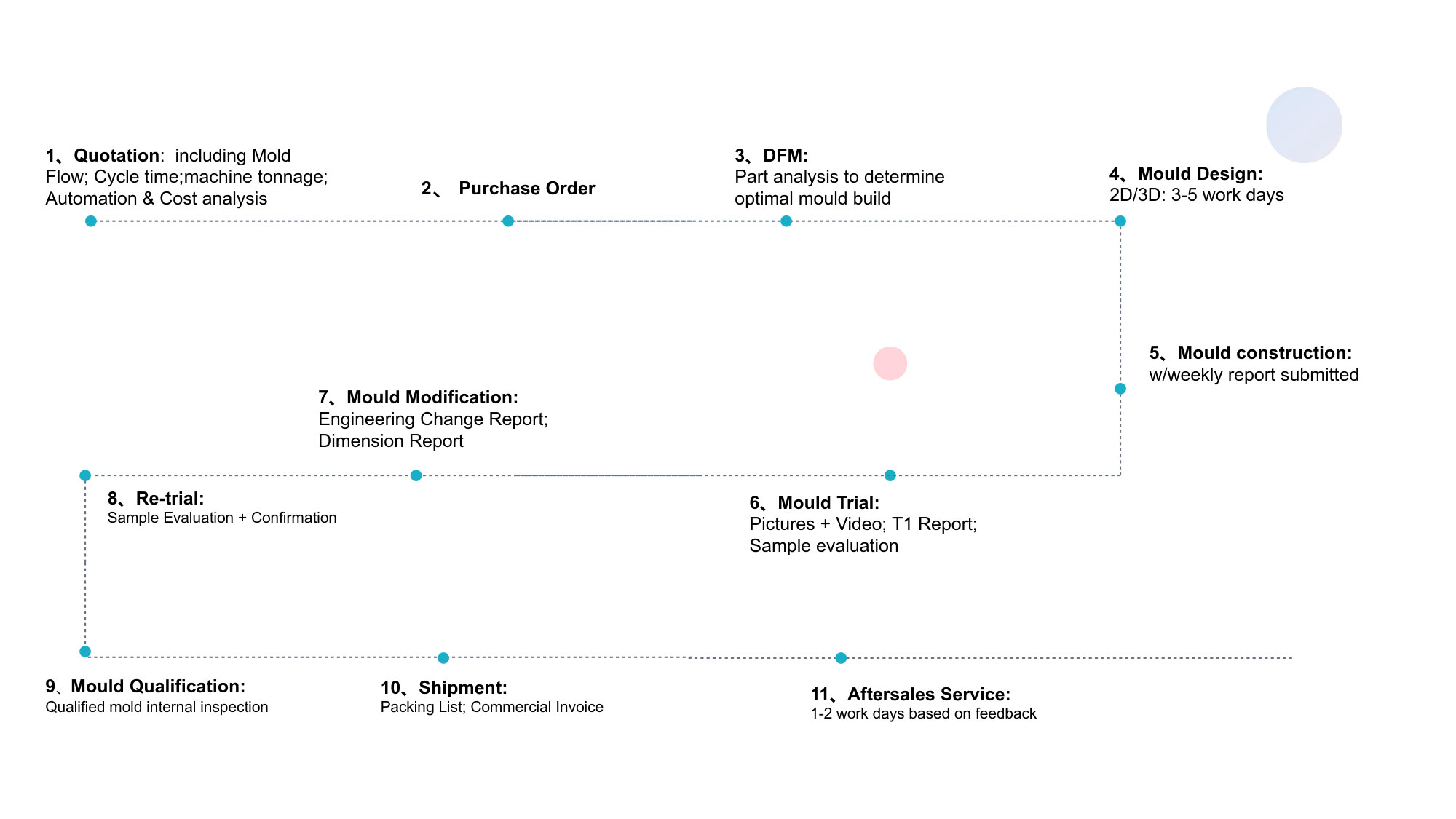
Step Action Deliverable Timeline
1 Initial technical review Confidentiality agreement; part design transfer Day 1
2 DFM and Moldflow analysis Full DFM report with flow simulation, shrinkage predictions, gate/runner design 3–5 days
3 Material selection consultation Recommendation of PEEK grade or alternative based on regulatory strategy and performance requirements Same as DFM
4 Mold quotation Fixed-price quotation broken down by mold type, materials, validation, and production 2–3 days after DFM approval
5 Mold design and manufacture Weekly progress reporting; on-site mold trials as appropriate 10–45 days based on complexity
6 T1–T3 sampling with iterative improvement Parts, measurement reports, process validation data 5–10 days
7 Validation run (100–500 shots) CPK reports; process capability documentation; go/no-go decision 1–2 days
8 Production launch First article inspection; packaging; delivery Ongoing
Conclusion: Your Partner in Medical Device Manufacturing
At Ansix Tech, we believe that a mold is not simply a block of steel—it is a sophisticated piece of capital equipment that, when designed and built correctly, becomes a continuous generator of value for our customers. We engineer every mold with simultaneous consideration of flow dynamics, thermal balance, wear resistance, ejection reliability, and producibility. The result is a molding process that arrives at your production line "ready to run" —free of the trial-and-error debugging, the unpredictable flash, and the creeping dimensional drift that characterize lower-quality alternatives.
We invite you to evaluate our capabilities in a low-risk, high-clarity manner: select one existing product from your portfolio, provide us with the CAD model, and allow us to produce a sample DFM report. In that report, you will see exactly how we would address known risks in your design including melt weld lines, gas trap locations, sink-mark risks, and ejection stress points. You will see predicted shrinkage values with data-driven confidence intervals. You will see gate placement optimized specifically for your annual volume target. And you will see the specific cost savings we can achieve through material reduction, cycle time optimization, and yield improvement.
The delta between "this is possible" and "this is proven" is nothing more than a conversation. Let us turn that conversation into your next competitive advantage.
Ansix Tech – Engineering certainty into medical device manufacturing.
Appendix: Regulatory Certifications and Quality Management System Reference
Throughout this document, technical claims are supported by documented compliance with the following standards:
ISO 13485:2016 certified Quality Management System (medical devices)
FDA 21 CFR Part 820 compliance (Medical Device Quality Systems)
ISO 10993 biocompatibility standards for implantable materials
ASTM F543 testing protocol capability for medical bone screws
ISO 14644-1 Class 7 cleanroom capability for implantable medical components
Full lot traceability to raw material certificates of analysis (COA)
IQ/OQ/PQ validation protocols for all critical molding processes
Statistical Process Control (SPC) with CPK measurement for all critical-to-quality (CTQ) dimensions
Environmental monitoring for particulate and microbial content per ISO 14698 guidelines
For detailed verification of any capability referenced in this document, including equipment specifications, material certifications, or quality records, please contact our Technical Sales Department to arrange a facility audit or to request specific documentation.
Ansix Tech Co Ltd
If you have any plans related to Suture Anchor Screw Arthroscopy Implant , you can contact us at any time. We will turn your ideas into reality, let you realize your dreams, and obtain large orders from the market. Our contact information is info@ansixtech.com. Or contact our CTO, mail: stephen@ansixtech.com
#www.ansixtech.com #ansixtech.com #Suture Anchor Screw Arthroscopy Implant #Suture Anchor Screw Arthroscopy Implant moulds #Suture Anchor Screw Arthroscopy Implant molds #Suture Anchor Screw Arthroscopy Implant injection molding companies #Suture Anchor Screw Arthroscopy Implant Canopy Mold injection mold companies #Ansix #Ansix moulds #Ansix china #Ansix tech china #Ansix tech company #Ansix facotry #Suture Anchor Screw Arthroscopy Implant injection molding #Suture Anchor Screw Arthroscopy Implant injection tools #Suture Anchor Screw Arthroscopy Implant injection moulds #Suture Anchor Screw Arthroscopy Implant plastic mould #Suture Anchor Screw Arthroscopy Implant plastic tools #Ansix Tech #Ansix molds #Ansix injection molding #Ansix mold factory #injection molding Suture Anchor Screw Arthroscopy Implant #Ansix mold factory #Suture Anchor Screw Arthroscopy Implant china #Suture Anchor Screw Arthroscopy Implant molds #injection factory #Suture Anchor Screw Arthroscopy Implant injection molding #Suture Anchor Screw Arthroscopy Implant injection molding factory #injection molding company #Suture Anchor Screw Arthroscopy Implant injection mold companies #Suture Anchor Screw Arthroscopy Implant#Suture Anchor Screw Arthroscopy Implant mold limited #Ansix mold china #Ansix companies #Ansix company China #Suture Anchor Screw Arthroscopy Implant facotry #Ansix Tech #Ansix Tech mould #Suture Anchor Screw Arthroscopy Implant injection moulding #injection moulding company #Ansix Suture Anchor Screw Arthroscopy Implant parts injection mold companies #medical injection molding companieschina #Suture Anchor Screw Arthroscopy Implant china factory #Ansix moulding companies #Ansix molding company #Suture Anchor Screw Arthroscopy Implant injection moulding facotry #Ansix Tech mold #Suture Anchor Screw Arthroscopy Implant mould #Suture Anchor Screw Arthroscopy Implant plastic injection molding #ansix plastic mold #Mold manufacturing #Suture Anchor Screw Arthroscopy Implant parts manufacturing #Suture Anchor Screw Arthroscopy Implant plastic parts factory #Suture Anchor Screw Arthroscopy Implant injection parts mold #Suture Anchor Screw Arthroscopy Implant PRECISION MANUFACTURING #Suture Anchor Screw Arthroscopy Implant #China mold #Suture Anchor Screw Arthroscopy Implant injection moulding china #Suture Anchor Screw Arthroscopy Implant mould china #china precision mold #mold in china #Suture Anchor Screw Arthroscopy Implant mold china #Precision molds #High-precision molds #Suture Anchor Screw Arthroscopy Implant #Injection molds #Suture Anchor Screw Arthroscopy Implant Factory #Suture Anchor Screw Arthroscopy Implant Company #Super Large Injection Mold Factory #Large Tonnage Injection Molding Factory #Suture Anchor Screw Arthroscopy Implant Company #Suture Anchor Screw Arthroscopy Implant Factory #2800T Injection Molding Factory #3000 Ton Injection Molding #4500 Ton Injection Molding Factory #Large Mold Injection Molding #Large Plastic Mold Injection Molding Factory #Large Injection Mold Manufacturer #Plastic Mold Factory #Injection Mold #Plastic Mold