



35mm diameter 54g PET preform, 75g transparent plastic preformtube preform
FEATURES
AnsixTech operates four production facilities across China and Vietnam, with a total of 260 injection molding machines ranging from 30 to 2,800 tons. Our standard lead time for mold manufacturing is 25–45 days for medium-complexity tools, with expedited options available to compress delivery to 20 days while maintaining complete validation cycles. For production orders, we maintain consistent output meeting demand schedules.
Quality Assurance
We have successfully achieved ISO9001, IATF16949, ISO13485, and ISO14001 certifications. Our quality control system includes comprehensive incoming material inspection (IV testing, moisture content <0.04%), in-process monitoring of key parameters (temperature, pressure, cycle time), and final inspection covering AA value (<10 ppm for water-grade applications), dimensional verification (critical neck finish dimensions with CPK ≥1.33), and visual clarity inspection.
-
Mold Description
Product Materials:
PET PETG
Mold Material:
S136ESR
Number of Cavities:
16
Glue Feeding Method:
Hot runner
Cooling Method:
Water cooling
Molding Cycle
12.5s
- The mold manufacturing process and product material selection
Our cost control strategy operates across four dimensions. Supply chain management leverages long-term partnerships with certified resin suppliers to secure competitive pricing. Production process optimization achieves cycle times reduced by 15%+ through conformal cooling implementation. Energy management utilizes all-electric drive systems with energy recuperation reducing electricity costs noticeably. Overhead control is managed through standardized MES workflows minimizing waste and maximizing labor efficiency.
Module 2: Core Customer Value Proposition
35mm Diameter 54g PET Preform & 75g Transparent Plastic Preform/Tube Preform – Mold Manufacturing, Material Selection, Smart Manufacturing Integration, Process Efficiency, and Quality Assurance
Mold Manufacturing and Material Selection
Our mold design approach begins with strategic material selection tailored to production volume and application requirements. For standard PET preform molds operating under 1 million cycles, we utilize P20 pre-hardened steel for the mold base and S136 stainless steel or H13 hardened tool steel for cavity and core components requiring superior wear resistance. For high-volume production exceeding 2 million cycles, we specify 2316 (Sweden ASSAB) or M340 corrosion-resistant steel for cavity components. The selection framework evaluates material performance against manufacturability, life-cycle cost, and end-use performance requirements.
-
Smart Manufacturing Integration and Efficiency Enhancement
Our injection molding machines are equipped with all-electric servo drives achieving repeatable precision of ±0.1% for injection pressure and holding pressure stability of +0.1 MPa. All machines are networked and fully integrated with our MES (Manufacturing Execution System), where all molding parameters—temperature, pressure, speed, and time—are locked and can only be adjusted by authorized engineers.
Process Quality Assurance
Quality assurance begins with our comprehensive DFM (Design for Manufacturing) analysis utilizing Moldex3D CAE simulation tools. We verify mold dimensions using CMM (Coordinate Measuring Machine) and optical inspection equipment, producing full dimensional reports for each mold prior to release with critical dimensions documented at CPK ≥1.33. All injection machines feature ultrasonic wall thickness sensors providing real-time feedback on wall thickness fluctuations, enabling automatic compensation of holding pressure to ensure consistent part geometry across every production batch.
Core Customer Value
Our value proposition focuses on solving critical customer concerns. For mold lifespan, we deliver mold structures guaranteed for 1 million cycles under normal operating conditions with standard materials. For dimensional consistency, our closed-loop process control ensures batch-to-batch variation under 0.02mm for critical dimensions. For delivery speed, we offer 25–45 day standard mold delivery with 20-day expedited options. For serviceability, we provide spare wear parts including ejector pins and core inserts delivered with the mold, on-site service within 48 hours, and lifetime repair at cost-priced rates.
Module 3: Standard Preform Grammage Range
Ansix Tech Standard PET Preform Grammage Range for 35mm Diameter Applications
For 35mm diameter neck finish preforms, Ansix Tech offers a comprehensive range of standard grammages tailored to various bottle volume and application requirements:
Lightweight Series (19g–28g): Suitable for 250ml–500ml water and non-carbonated beverage bottles
Standard Series (30g–45g): Suitable for 500ml–1.5L water, juice, and CSD (carbonated soft drink) bottles
Mid-Heavy Series (50g–65g): Suitable for 1.5L–3L CSD bottles, hot-fill applications, and edible oil bottles
Heavy-Duty Series (70g–85g): Suitable for 3L–5L large containers, industrial chemical packaging, and wide-mouth jar applications
Ultra-Heavy Series (90g–135g): Suitable for 5L–10L demijohns, bulk water containers, and specialized industrial applications
For the specific 35mm diameter 54g preform, this weight is optimal for 1.5L–2L carbonated soft drink bottles and hot-fill juice containers requiring reinforced sidewalls. The 75g transparent preform/tube preform is typically used for 3L–5L edible oil bottles, wide-mouth containers (83mm to 120mm neck sizes), and specialized tube preform applications requiring thick sidewalls and exceptional clarity.
*Note: All standard grammages can be customized with +/-2g tolerance to meet specific customer requirements. Color options include natural transparent, tinted, and custom-matched colors.*
Module 4: Mold Manufacturing & Injection Molding Production Solution
Comprehensive Manufacturing Solution for 35mm Diameter 54g PET Preform and 75g Transparent Plastic Preform/Tube Preform
Project Initiation at Ansix Tech – From Concept to Production Excellence
At Ansix Tech, we understand that every mold manufacturing project is a partnership where success is measured not by technical specifications alone, but by the tangible value delivered to our customers. This proposal outlines how we transform technical capabilities into measurable customer benefits—solving real production problems, reducing costs, and minimizing risks.
Section 1: Hard-Power Foundation – The Equipment That Builds Customer Trust
1.1 Mold Machining Equipment
Our mold manufacturing facility is equipped with state-of-the-art machining centers from Mikron, Makino, and Frank. We operate multiple 5-axis high-speed machining centers capable of machining complex curved surfaces with precision down to 0.002mm. This directly translates to smoother parting lines, zero sharp edges, and flash-free mold interfaces—eliminating secondary deburring operations that cost customers both time and money.
We maintain a full complement of slow wire EDM (Electrical Discharge Machining) equipment capable of producing 0.03mm fine holes and narrow slots. For PET preform molds requiring precise cooling channel geometries, our wire EDM capability ensures accurate placement of water lines, preventing hot spots and uneven cooling that cause preform warpage. Our electrode machining center and EDM workshop are co-located, enabling in-house mold repairs and modifications without outsourcing—typically restoring production within 24 hours of request.
Our precision surface grinding equipment achieves flatness tolerances within 0.002mm across the entire mold platen surface, ensuring uniform clamp force distribution during injection molding. This eliminates the uneven wear patterns that cause premature mold failure and inconsistent part quality.
1.2 Injection Molding Machine Fleet
Ansix Tech operates 260 injection molding machines with clamping force ranging from 30 tons to 2,800 tons, covering product weights from sub-gram precision components to multi-kilogram industrial parts. Our major machine brands include Japanese FANUC, Sumitomo, Toshiba, Nissei, Austrian ENGEL, and German ARBURG (specializing in liquid silicone rubber two-component molding), complemented by domestic Haitian machines.
For PET preform production, we utilize all-electric servo-driven injection molding machines that deliver injection pressure stability accuracy of +0.1 MPa and holding pressure repeatability within ±0.1%. This extreme consistency ensures every production shot produces identical preforms—batch after batch, day after day, year after year. Energy recuperation technology integrated into our all-electric machines reduces total energy consumption by up to 20% compared to hydraulic alternatives, directly lowering per-part production costs.
1.3 Inspection and Metrology Equipment
Every mold that leaves our facility undergoes 100% dimensional verification using CMM (Coordinate Measuring Machine) equipment, generating a complete dimensional report delivered to the customer prior to mold shipment. Key dimensions are documented with CPK ≥1.33, guaranteeing process capability that meets the most demanding quality standards.
Our optical inspection systems include high-resolution vision measurement equipment capable of detecting surface defects, measuring thread profiles to micron-level precision, and verifying critical neck finish dimensions—the sealing land, thread OD/ID, and tamper band geometry—that directly affect bottle closure performance. For AA (acetaldehyde) content verification, we maintain in-house testing equipment ensuring preforms meet <10 ppm for water-grade applications and tighter limits for sensitive beverage applications.
Section 2: Mold Manufacturing Core Competitiveness – Customer Trust Measured in Specifics
2.1 Mold Life Expectancy
Mold longevity directly impacts our customers’ return on investment. We specify mold base materials using P20 pre-hardened steel offering excellent machinability and durability. For cavity and core components, our material selection matrix aligns with production volume and application requirements. For standard applications requiring 500,000–1,000,000 cycles, we specify S136 stainless steel, 2316 (Sweden ASSAB), or M340 corrosion-resistant steel. For high-wear applications with glass-fiber reinforced materials or extreme production volumes, we utilize H13 hot-work tool steel, DC53 cold-work tool steel, or NAK80 pre-hardened steel—each delivering exceptional wear resistance and thermal stability. For optical-grade transparent parts requiring mirror finishes, we specify 4Cr13 or 9Cr18 stainless steel achieving surface roughness Ra <0.05μm. For high-temperature applications, we utilize 8407, SKD11, or SKD61 specialty steels. We provide complete material certification reports and heat treatment curves with every mold.
For PET preform molds, our guaranteed mold life under normal operating conditions exceeds 2 million cycles for premium material configurations, with regular preventive maintenance extending operational life beyond 5 million shots.
2.2 Achievable Tolerances
Our standard tolerance capability for conventional structural components is ±0.05mm. For precision components such as preform neck ring inserts and sealing surfaces, we routinely achieve ±0.005mm tolerances. This level of precision ensures consistent closure fit and eliminates leakage risks that plague molds produced with looser tolerances. Each mold component is inspected against its specification, and we provide detailed measurement reports confirming conformance.
2.3 Hot Runner Systems and Gate Solutions
For PET preform molds, we integrate advanced hot runner systems that minimize PET degradation and optimize cavity-to-cavity balance. Our hot runner systems feature temperature control zones distributed along the entire PET flow path within the hot runner, ensuring uniform melt temperature and minimizing stress on the material—directly reducing AA formation and preventing PET dust generation. Advanced hot runner technology achieves lower AA levels, reduces pressure drop, improves cavity-to-cavity balance, significantly reduces color changeover time, and virtually eliminates PET dust contamination.
For the 35mm diameter preform, our gate design is optimized through Moldex3D CAE simulation to predict filling behavior, weld line location, and gas trap positions before any steel is cut. We analyze multiple gate placement scenarios, selecting the configuration that achieves balanced filling across all cavities, eliminates visible weld lines, and minimizes stress-induced crystallinity that would reduce preform clarity. Our simulation capabilities extend beyond simple flow analysis to predict fiber orientation in reinforced materials, foaming behavior, and even in-mold decoration challenges.
*2.4 Cooling System Design for High-Volume Production*
The cooling system is the single most critical factor determining cycle time and preform quality. Our cooling channel design follows a systematic approach: conformal cooling channels created using advanced machining techniques follow the contour of the preform shape, eliminating hot spots that cause uneven crystallization and extended cooling times. For standard preform molds, our cooling system design achieves cycle time reductions exceeding 15% compared to conventionally cooled molds.
By maintaining active cooling for up to 85% of the overall cycle duration, we deliver faster cycles, increased output, reduced energy consumption, improved repeatability, and rapid setup. Zone temperature control using strategically positioned mold temperature controllers maintains core and cavity temperature differential within 2°C, eliminating the thermal gradients that cause preform warpage and dimensional instability.
2.5 Ejection System Design
For the 35mm diameter preform with 54g weight and the 75g tube preform, our ejection system is configured to prevent cosmetic defects while ensuring reliable part release. We position ejector pin marks in non-critical areas where they will not affect final bottle appearance or sealing function. For neck finish areas, we utilize stripper plate ejection to distribute ejection force evenly around the neck circumference, preventing ovality and thread deformation.
Section 3: Injection Molding Process Control – Eliminating Quality Concerns
3.1 Process Standardization and MES Integration
All 260 injection molding machines at Ansix Tech are networked and fully integrated into our MES platform. Every molding parameter—temperature (including barrel zones, nozzle, and hot runner), injection pressure, holding pressure, injection speed, screw rotation speed, back pressure, cooling time, and mold open/close speeds—is locked into the system at qualification. Parameter changes require engineer authorization with complete audit trail documentation. For every production batch, we perform first-article inspection and last-article comparison to confirm dimensional stability and appearance consistency throughout the run.
3.2 Dimensional Stability Control
Our closed-loop process control system includes real-time monitoring of cavity pressure curves using strategically positioned pressure sensors. When the system detects deviation from the established reference curve, automatic adjustments are made to injection and holding pressure to maintain consistent fill and pack behavior. For PET preforms requiring exceptional dimensional consistency, we implement mold-mounted temperature and pressure sensors enabling closed-loop control of the entire injection cycle. Our process capability for critical dimensions—neck finish thread profiles, sealing land diameter, preform length, and body wall thickness—achieves CPK ≥1.33, meaning customer production lines can run with confidence that every preform meets specification.
3.3 Appearance Quality Grading
For transparent PET preforms, we maintain appearance quality standards meeting the highest industry grades. Preforms are produced with no visible bubbles, flow lines, splay marks, or crystallized haze. The preform surface finish achieves Ra ≤0.2μm, delivering the clarity and brilliance demanded by premium beverage brands. Our hot runner design and material handling protocol minimize AA formation, ensuring preforms meet the most demanding organoleptic requirements for still water and sensitive beverage applications.
3.4 Special Material Processing Capabilities
Beyond PET, our injection molding capabilities span an extensive range of engineering thermoplastics. Our practical experience includes PC/ABS, PC, PPS+40%GF, PEEK, PTFE/PFA, PA6+GF30, PBT, PEI, PPS, LCP (liquid crystal polymer), and liquid silicone rubber (LSR). For each material family, we have developed optimized processing parameters and specialized mold designs addressing unique material behaviors—from PEEKs high melt temperature requiring hot runner insulation to LCPs low viscosity requiring precision gate sizing to prevent flash. For applications requiring UL94 V-0 flame retardancy or UV resistance with 3,000-hour accelerated weathering testing, we provide material qualification support including third-party test documentation.
Section 4: Full-Service Value Chain – Reducing Customer Management Costs
*4.1 Early-Stage Engineering Support – DFM Reporting*
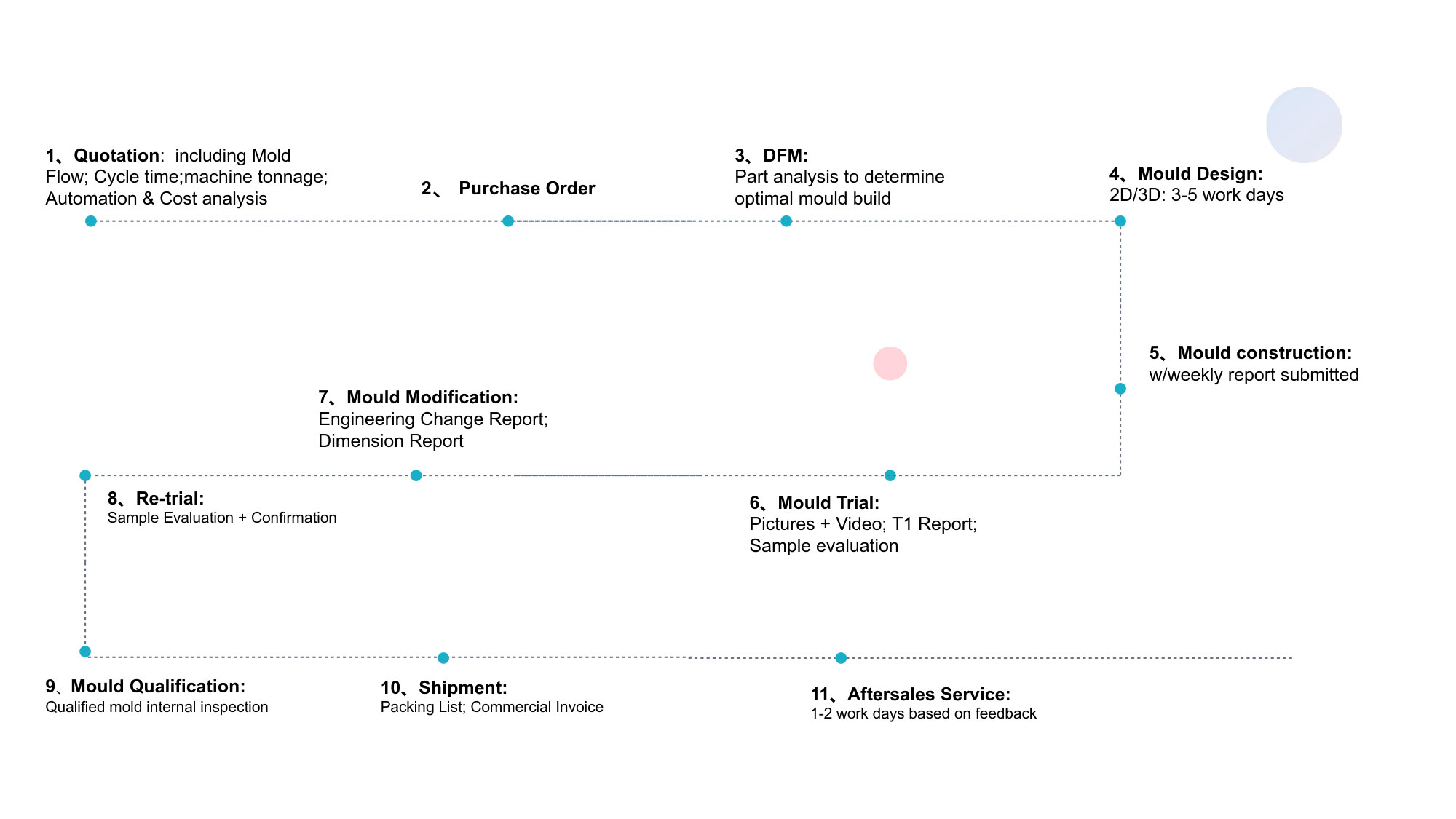
Before we cut any steel, our engineering team provides a comprehensive Design for Manufacturing (DFM) report evaluating the customer’s 3D model against production requirements. The DFM process is a collaborative phase where our engineers identify potential issues in wall thickness distribution, draft angle requirements, gate location, and ejector pin mark placement guidelines. The DFM report includes draft angle recommendations for the preform core and cavity to ensure clean part release without scratching, wall thickness optimization to prevent sink marks and trapped gases, gate location analysis recommending the optimal number and position of gates to achieve balanced fill, ejection system planning defining allowed ejector pin mark locations that will not affect final bottle appearance or sealing, cooling system layout showing conformal channel placement for uniform cooling, and material shrinkage predictions with compensation recommendations. This early validation prevents the costly cycle of mold rework and production trials that plague projects lacking proper DFM analysis.
4.2 Trial Molding and Sample Provision
Our trial program delivers T1 through T3 sample iterations, with each round accompanied by detailed improvement reports documenting modifications made and results achieved. For customers evaluating alternative designs, we can quickly exchange mold inserts to test different configurations without rebuilding entire molds. For T1 trials, samples are inspected against the dimensional and appearance specifications outlined in the DFM report. T2 trials incorporate feedback and improvements, with re-inspection confirming defect resolution. T3 trials serve as pre-production validation, confirming the mold is ready for volume production.
*4.3 Small-Volume Production Validation*
Before committing to full production volume, we offer 100–500 shot pilot production runs that allow customers to validate mold performance, process stability, and part quality on their own filling and blowing lines. We provide statistical capability reports including yield percentage at each post-molding operation, CPK data for critical dimensions tracked across pilot production, and material consumption verification confirming per-shot usage and scrap rates. Pilot production serves as the customer`s final approval gate before we scale to full production.
4.4 Maintenance and Spare Parts Services
Every mold delivered includes a complete set of spare wear components—including ejector pins, core inserts, and sealing elements—packaged with the tool. We recommend preventive maintenance inspections every 200,000 cycles, with our service team available for on-site mold inspection and refurbishment at customer facilities. For mold repairs required outside preventive maintenance, we provide lifetime repair services at cost-priced rates. For expedited repairs, our in-house electrode machining and EDM capacity enables component repair or replacement with 24-hour turnaround capability.
Section 5: Differentiated Value Proposition – Competitive Advantages Delivered
Customer Common Complaint Ansix Tech Solution
Molds require frequent repairs disrupting production schedules Each mold undergoes 2,000-cycle wear testing before delivery with complete wear report provided; we offer three-year mold structure warranty (excluding normal wear of consumable components)
Flash requires expensive secondary trimming operations Parting lines machined to 0.005mm fit tolerance; self-locking clamp force compensation maintains flash within 0.03mm across every batch—eliminating manual flash removal
Inconsistent dimensions from batch to batch Injection machines equipped with ultrasonic wall thickness sensors providing real-time feedback; closed-loop control uses mold-mounted temperature and pressure sensors
Long mold repair cycles disrupt production In-house electrode machining and EDM workshops enable standard repairs within 24 hours including welding and insert replacement
Summary – Mold as Value Generator, Not Just Capital Expense
For Ansix Tech, a mold is more than a tool—it is a capital investment engineered to generate returns through production uptime, part quality, and operational efficiency. We design every mold with simultaneous planning for retention of injection consistency, optimized venting paths to prevent trapped gases, and thermal balance ensuring the mold arrives at your production line requiring no trial-and-error tuning. We are prepared to demonstrate our DFM process on an existing customer product, showing how we eliminate weld lines, gas traps, and sink marks before they become production problems.
Module 5: Customer Value & Problem-Solving
Ansix Tech Mold and Injection Molding Solutions – Value Provided, Problems Solved, Quality Validation, Cost Reduction, Capacity Enhancement, and Delivery Assurance
Value Provided to Customers
Ansix Tech transforms molding expertise into measurable customer value across five dimensions. First, reduced total cost of ownership through molds designed for 2 million+ cycles requiring minimal maintenance. Second, faster time-to-market enabled by 25–45 day mold delivery supported by expedited options. Third, consistent quality delivered through MES-controlled processes achieving CPK ≥1.33 for critical dimensions. Fourth, risk reduction from comprehensive DFM analysis identifying potential issues before manufacturing begins. Fifth, single-source responsibility for design, manufacturing, and assembly reducing customer coordination overhead.
Problems Solved for Customers
We solve the most common manufacturing challenges. Long mold delivery times are addressed through optimized manufacturing workflows and expedited production options. Inconsistent part quality is eliminated by closed-loop process control with real-time parameter adjustment. High scrap rates are reduced through optimized hot runner design and balanced cavity filling. Frequent mold repairs are minimized by high-quality material specification and precision manufacturing. High energy costs are lowered by all-electric machines with energy recuperation technology. Complex logistics coordination is simplified through our full-service model covering design, tooling, molding, and assembly under one management umbrella.
Quality Validation Methodology
Our quality validation follows a four-stage protocol. Incoming material inspection tests resin IV, moisture content (<0.04%), and thermal stability. In-process quality monitoring includes real-time tracking of temperature, pressure, speed, and cycle time against locked MES parameters. Post-molding inspection covers dimensions (using CMM and optical vision systems), AA content (<10 ppm for water-grade), clarity and haze measurement, and mechanical property testing (drop impact, burst pressure). Final quality validation includes CPK documentation for all critical dimensions, pilot production verification with statistical reporting, and 2,000-cycle wear testing for high-volume molds prior to release.
Cost Reduction Strategy
Our cost reduction approach operates across the entire manufacturing chain. Material cost reduction includes optimized preform weight design eliminating unnecessary material usage, negotiation of long-term resin supply contracts for competitive pricing, and controlled regrind usage (maximum 25% regrind content while maintaining quality standards). Process efficiency gains include cycle time reduction through conformal cooling (15%+ reduction documented), automation of material handling and part collection reducing labor costs, and MES-driven optimization eliminating non-value-added setup time. Energy cost savings include all-electric machine deployment reducing consumption by up to 20% compared to hydraulic alternatives, energy recuperation systems capturing and reusing kinetic energy, and optimized thermal management reducing heating requirements.
Capacity Enhancement and Delivery Assurance
Our four production facilities across China and Vietnam provide 260 injection molding machines with total floor space exceeding 200,000 square meters and more than 1,200 employees. For emergency capacity requirements, we can redirect production volume to alternative facilities. For regular order fulfillment, we maintain demand planning processes ensuring raw material availability and production schedule alignment. For delivery verification, we provide customer-accessible production tracking and regular status updates throughout the production cycle.
Quality Certifications
Ansix Tech maintains full quality management system certifications including ISO9001 (general quality management), IATF16949 (automotive industry quality), ISO13485 (medical device quality), and ISO14001 (environmental management). Customer-specific quality requirements can be accommodated under existing certified frameworks. For regulated industries, we provide complete material traceability and process documentation supporting customer audits and regulatory compliance.
Module 6: Material Selection & Technical Specifications
Raw Material Selection and Material Properties – 35mm Diameter 54g PET Preform & 75g Transparent Plastic Preform/Tube Preform
PET Material Grades and Characteristics
For PET preform applications, intrinsic viscosity (IV) is the critical material parameter determining blow molding performance and final bottle properties. Our standard PET resin for the 35mm diameter 54g preform utilizes bottle-grade PET with IV of 0.80–0.84 dL/g. Within this range, IV=0.72–0.78 dL/g is typically suitable for mineral water bottles, while the higher IV range (0.80–0.84 dL/g) provides higher melt viscosity requiring higher injection temperatures and pressures but delivering longer molecular chains resulting in superior mechanical strength and stress crack resistance.
Specific PET Resin Grades
For water-grade applications, we recommend PET resin grades such as PET08012 (IV=0.80 dL/g) or equivalent, with AA content specification ≤1 ppm and color values meeting L≥83, B≥-0.5. For applications requiring fast reheat performance during the stretch blow molding stage, we utilize copolymer resins with IV=0.84 dL/g specially designed for optimized near-infrared absorption. For high-performance applications, we recommend WK851 PET resin with IV range of 0.83–0.87 dL/g, providing exceptional clarity, stress crack resistance, and toughness.
Material Drying Requirements
PET resin requires thorough drying prior to processing to prevent hydrolytic degradation. We maintain drying protocols achieving moisture content <0.04% using desiccant dryers with dew point monitoring and automated moisture verification. Insufficient drying results in IV degradation, visible splay marks, and reduced mechanical properties. For regrind usage, recycled PET content is limited to maximum 25% of total material input, with recycled material subject to the same drying and quality verification as virgin resin.
Transparent Plastic Options for 75g Preform/Tube Preform
For the 75g transparent plastic preform/tube preform requiring exceptional clarity and chemical resistance, we offer multiple material options. Standard transparent PET provides excellent clarity, gas barrier properties, and recyclability. For applications requiring enhanced chemical resistance or higher heat deflection temperature, we offer PETG (glycol-modified PET), which delivers superior clarity, gloss, and toughness with lower processing temperature requirements. For applications requiring exceptional impact strength, we specify PCTA or Tritan™ copolyester materials.
Module 7: Mold Manufacturing & Injection Molding Detailed Process
35mm Diameter 54g PET Preform & 75g Transparent Plastic Preform/Tube Preform – DFM Analysis, Mold Design, Manufacturing Process, Cooling System, Runner System, Ejection System, Validation, Production Optimization, Quality Control, Packaging, and Delivery
Mold Flow Analysis (DFM)
Our DFM workflow utilizes Moldex3D CAE analysis embedded directly into the design process, allowing prediction and optimization of performance before manufacturing begins. The analysis covers filling behavior identifying optimal gate location and number to achieve balanced cavity fill, weld line prediction confirming weld line placement in non-critical areas or elimination through optimized design, gas trap identification locating vent placement to prevent burn marks, cooling analysis modeling thermal distribution identifying hot spots requiring conformal cooling channel optimization, shrinkage prediction providing compensation recommendations for final part dimensioning, and structural analysis verifying mold component strength under cyclic loading conditions.
Mold Design Priorities
For the 35mm diameter 54g preform, our mold design prioritizes multiple critical factors. Cavity and core design incorporates uniform wall thickness distribution, transition radii to minimize stress concentration, and surface finish specifications achieving Ra ≤0.2μm. Neck finish design includes thread profile meeting closure manufacturer specifications, sealing land geometry optimized for leak-free closure sealing, and tamper band groove design accommodating standard closure tamper features. Venting design includes vent depth and width calculated for PET material characteristics, strategic vent placement aligned with gas trap prediction from mold flow analysis, and self-cleaning vent geometry preventing PET residue accumulation.
Mold Manufacturing Process Flow
Our complete manufacturing process follows a 9-step sequence from design to qualification. Step 1 is DFM analysis and design approval. Step 2 is material procurement and certification including raw material certificates and heat treatment documentation. Step 3 is rough machining using 5-axis CNC equipment removing bulk material and establishing basic geometries. Step 4 is heat treatment where applicable achieving optimal hardness/toughness balance through quenching and tempering. Step 5 is precision finishing machining achieving final dimensions within specified tolerances. Step 6 is electro-discharge machining (EDM) for complex features including cooling channel intersections and narrow slots. Step 7 is surface finishing including polishing achieving Ra ≤0.2μm, grinding achieving flatness tolerances, and texturing where required. Step 8 is assembly including component fitting, hot runner integration, and cooling circuit testing. Step 9 is mold qualification including dimensional inspection, trial molding, and CPK validation prior to release.
Mold Material Selection for High-Volume Production
For high-volume production exceeding 1 million cycles, we utilize premium materials selected for wear resistance, thermal stability, and durability. Cavity and core components are manufactured from 2316 (Sweden ASSAB) stainless steel providing excellent corrosion resistance and wear properties. For applications requiring optimal thermal conductivity, we specify beryllium copper alloys for localized cooling inserts where heat removal is critical. For neck ring components subject to high wear, we utilize H13 hot-work tool steel hardened to 48–52 HRC providing exceptional wear resistance.
Cooling System / Water Line / Runner System / Gate System / Ejection System Design
The cooling system represents the most critical subsystem for high-volume production, utilizing conformal cooling channels manufactured using advanced machining techniques. Our conformal cooling design follows the contour of the preform shape, eliminating hot spots that cause extended cooling times and uneven crystallization, reducing cycle times by 15%+ compared to conventional straight-drilled cooling channels, and improving dimensional consistency through uniform thermal management.
The runner system for PET preform molds utilizes hot runner manifolds with temperature control zones distributed along the entire PET flow path. Our hot runner design features insulation minimizing heat transfer to the mold base, multiple control zones maintaining uniform temperature across all cavities, leak prevention design eliminating PET seepage, and dust reduction technology minimizing particulate generation.
The gate system is optimized through mold flow analysis to achieve balanced cavity filling. Gate location is selected to promote balanced filling across all cavities, minimize flow length to reduce injection pressure requirements, avoid weld lines in cosmetic areas, and facilitate automatic degating.
The ejection system is designed with ejector pin placement in non-critical areas away from sealing surfaces and cosmetic areas, stripper plate ejection for neck finish areas preventing thread deformation, and balanced ejection force distribution preventing part distortion.
Preform Validation and Injection Molding Challenges
The primary challenges in PET preform molding include AA (acetaldehyde) generation, crystallinity control, dimensional consistency, and clarity preservation. AA generation is controlled through minimized melt residence time, optimized barrel temperature profile, and hot runner design preventing localized overheating. Crystallinity control is managed through cooling water temperature regulation, mold temperature differential control (core vs. cavity within 2°C), and cycle time optimization balancing productivity with proper crystallization.
Injection Molding Process Optimization for Efficiency and Cost Control
Our process optimization methodology follows multiple integrated approaches. Machine parameter optimization establishes baseline settings using DOE (Design of Experiments) methodology to identify optimal temperature, pressure, speed, and time parameters, then implements process window validation confirming stable operation across expected environmental variations. Cooling optimization implements conformal cooling channels, zone temperature control maintaining core/cavity differential under 2°C, and active cooling duration extended to 85% of total cycle. Automation integration includes robotic part extraction removing preforms without damage, conveyor integration for post-mold cooling and inspection, and automated sampling for quality verification.
Quality Control and Assurance
Our QC system implements layered verification at multiple control points. Incoming material testing includes IV measurement, moisture content (<0.04%), and AA content baseline. In-process monitoring includes real-time parameter verification against MES-locked setpoints and cavity pressure curve analysis for shot-to-shot consistency. Post-molding inspection includes dimensional verification (neck finish OD/ID, length, wall thickness distribution), visual inspection (clarity, bubbles, flow lines, crystallized haze), AA content measurement (<10 ppm for water-grade), and weight verification.
Packaging and Rapid Delivery Process
Preforms are packaged in moisture-barrier bags to prevent moisture absorption prior to blow molding. Standard packaging quantities are determined by preform size and weight. For the 35mm diameter 54g preform, standard bag counts range from 500 to 1,000 pieces per bag. For the 75g tube preform, bag counts are adjusted accordingly for optimal handling. Master cartons are labeled with complete traceability information including batch number, production date, material certification reference, and quantity verification. Production scheduling follows a weekly cadence with status updates provided at each manufacturing stage. For expedited shipments, we coordinate with logistics partners for express delivery options including air freight for urgent requirements.
Module 8: Ansix Tech Industry Experience & Reliability
Ansix Tech – 28 Years of Experience in PET Preform and Mold Manufacturing
Company Overview and Manufacturing Footprint
Ansix Tech was founded in Hong Kong in 1998 and has established subsidiaries in Shenzhen, Dongguan, Hunan, and Vietnam. With total manufacturing floor space exceeding 200,000 square meters and more than 1,200 employees, we provide comprehensive design and production services for plastic molds and injection molded products. Our annual revenue exceeds RMB 100 million, reflecting our position as a leading manufacturer in the precision injection molding industry.
Core Competencies and Service Scope
Our core business activities cover medical device components, automotive interior moldings (including INS/TOM/DOD processes), household appliances, daily necessities, kitchenware series, 3C consumer electronics, industrial control equipment, and mother/infant products. For PET packaging applications, we specialize in preform molds, PET bottle preforms, and closure systems. Our 260 injection molding machines include leading brands such as FANUC, Sumitomo, Toshiba, Nissei, ENGEL, ARBURG (primarily for liquid silicone rubber two-component molding), and domestic Haitian and Taiwan Chin Fong machines. This diverse fleet enables us to match machine capability precisely to product requirements.
Specialization in 33-Tooth 39g Skincare Bottle PET Packaging and PETG Preforms
Ansix Tech is a professional manufacturer specializing in 33-tooth 39g skincare bottle PET packaging blow molding and special tube preform PETG bottle preform design and production. We serve both standard catalog products and fully custom solutions from concept through production. Our typical project workflow includes prototype design and confirmation, DFM analysis and mold design, mold manufacturing and trial sampling, volume production qualification, and assembly and quality validation.
Industry Experience and Reliability Assurance
Our 28 years of manufacturing experience provide deep expertise in PET and PETG preform applications. We understand the interactions between preform design and blow molding performance, including stretch ratio requirements, material distribution optimization, and stress crack resistance validation. We understand material selection and drying protocols including IV testing methodology, moisture content control limits, and crystallinity verification. We understand process validation including parameter development using DOE methodology, capability studies confirming CPK ≥1.33, and ongoing verification protocols.
Reliability Assurance Framework
Ansix Tech`s reliability assurance operates across multiple dimensions. First, quality management system certified to ISO9001, IATF16949, ISO13485, and ISO14001. Second, process validation through MES-locked parameters, real-time monitoring, and automated corrective action for deviation. Third, material traceability from resin certification through in-process testing to final product documentation. Fourth, equipment validation through regular calibration of all injection machines, inspection equipment, and support systems. Fifth, personnel qualification through documented training records and skill verification.
Cost Reduction – Optimizing Hard Costs Across Materials, Processes, and Efficiency
Our cost reduction framework delivers value across multiple dimensions. Material cost optimization is achieved through preform weight optimization eliminating unnecessary material while maintaining performance, long-term resin supply agreements securing competitive pricing with leading suppliers, regrind utilization up to 25% content without quality degradation, and bulk purchasing leveraging our four-facility network for volume discounts. Process efficiency gains are driven by cycle time optimization through conformal cooling technology reducing cycle times by 15%+, automation integration for material handling and part collection reducing direct labor costs, MES-driven analytics identifying and eliminating non-value-added activities, and mold design for fast color change and rapid setup reducing downtime between production runs. Energy cost savings are achieved through all-electric injection molding machines reducing energy consumption by up to 20% compared to hydraulic alternatives, energy recuperation systems capturing kinetic energy, and optimized thermal management reducing heating requirements. Waste reduction comes from hot runner technology minimizing runner scrap, statistical process control reducing reject rates, and regrind management converting waste back into usable material.
Customer Success Metrics
Our satisfied customers span the medical device, automotive, consumer goods, and packaging industries. Typical customer metrics achieved include reduction in per-part production costs ranging from 15% to 25% for volume transfers, improvement in mold life expectancy beyond original specifications for redesigned tools, reduction in customer quality audit findings following process standardization, and reduction in project launch timeline from concept to volume production through integrated DFM approach.
For inquiries regarding 35mm diameter 54g PET preforms, 75g transparent plastic preforms/tube preforms, or any custom mold and injection molding requirements, please contact Ansix Tech at info@ansixtech.com. Our team will respond within 12 hours with initial capability assessment and proposed solution pathway.
Ansix Tech Co Ltd
If you have any plans related to 35mm diameter 54g PET preform, 75g transparent plastic preformtube preform , you can contact us at any time. We will turn your ideas into reality, let you realize your dreams, and obtain large orders from the market. Our contact information is info@ansixtech.com. Or contact our CTO, mail: stephen@ansixtech.com
#www.ansixtech.com #ansixtech.com #35mm diameter 54g PET preform, 75g transparent plastic preformtube preformform #35mm diameter 54g PET preform, 75g transparent plastic preformtube preformform #35mm diameter 54g PET preform, 75g transparent plastic preformtube preformform injection molding companies #35mm diameter 54g PET preform, 75g transparent plastic preformtube preformform Canopy Mold injection mold companies #Ansix #Ansix moulds #Ansix china #Ansix tech china #Ansix tech company #Ansix facotry #35mm diameter 54g PET preform, 75g transparent plastic preformtube preformform injection molding #35mm diameter 54g PET preform, 75g transparent plastic preformtube preformform injection tools #35mm diameter 54g PET preform, 75g transparent plastic preformtube preformform injection moulds #35mm diameter 54g PET preform, 75g transparent plastic preformtube preformform plastic mould #35mm diameter 54g PET preform, 75g transparent plastic preformtube preformform plastic tools #Ansix Tech #Ansix molds #Ansix injection molding #Ansix mold factory #injection molding 35mm diameter 54g PET preform, 75g transparent plastic preformtube preformform #Ansix mold factory #35mm diameter 54g PET preform, 75g transparent plastic preformtube preformform china #35mm diameter 54g PET preform, 75g transparent plastic preformtube preformform molds #injection factory #35mm diameter 54g PET preform, 75g transparent plastic preformtube preformform injection molding #35mm diameter 54g PET preform, 75g transparent plastic preformtube preformform injection molding factory #injection molding company #35mm diameter 54g PET preform, 75g transparent plastic preformtube preformform injection mold companies #35mm diameter 54g PET preform, 75g transparent plastic preformtube preformform#35mm diameter 54g PET preform, 75g transparent plastic preformtube preformform mold limited #Ansix mold china #Ansix companies #Ansix company China #35mm diameter 54g PET preform, 75g transparent plastic preformtube preformform facotry #Ansix Tech #Ansix Tech mould #35mm diameter 54g PET preform, 75g transparent plastic preformtube preformform injection moulding #injection moulding company #Ansix 35mm diameter 54g PET preform, 75g transparent plastic preformtube preformform parts injection mold companies #medical injection molding companieschina #35mm diameter 54g PET preform, 75g transparent plastic preformtube preformform china factory #Ansix moulding companies #Ansix molding company #35mm diameter 54g PET preform, 75g transparent plastic preformtube preformform injection moulding facotry #Ansix Tech mold #35mm diameter 54g PET preform, 75g transparent plastic preformtube preformform mould #35mm diameter 54g PET preform, 75g transparent plastic preformtube preformform plastic injection molding #ansix plastic mold #Mold manufacturing #35mm diameter 54g PET preform, 75g transparent plastic preformtube preformform parts manufacturing #35mm diameter 54g PET preform, 75g transparent plastic preformtube preformform plastic parts factory #35mm diameter 54g PET preform, 75g transparent plastic preformtube preformform injection parts mold #35mm diameter 54g PET preform, 75g transparent plastic preformtube preformform PRECISION MANUFACTURING #35mm diameter 54g PET preform, 75g transparent plastic preformtube preformform #China mold #35mm diameter 54g PET preform, 75g transparent plastic preformtube preformform injection moulding china #35mm diameter 54g PET preform, 75g transparent plastic preformtube preformform mould china #china precision mold #mold in china #35mm diameter 54g PET preform, 75g transparent plastic preformtube preformform mold china #Precision molds #High-precision molds #35mm diameter 54g PET preform, 75g transparent plastic preformtube preformform #Injection molds #35mm diameter 54g PET preform, 75g transparent plastic preformtube preformform Factory #35mm diameter 54g PET preform, 75g transparent plastic preformtube preformform Company #Super Large Injection Mold Factory #Large Tonnage Injection Molding Factory #35mm diameter 54g PET preform, 75g transparent plastic preformtube preformform Company #35mm diameter 54g PET preform, 75g transparent plastic preformtube preformform Factory #2800T Injection Molding Factory #3000 Ton Injection Molding #4500 Ton Injection Molding Factory #Large Mold Injection Molding #Large Plastic Mold Injection Molding Factory #Large Injection Mold Manufacturer #Plastic Mold Factory #Injection Mold #Plastic Mold