



97mm Neck PET Preform Plastic Preform Wide Mouth Preform Factory
FEATURES
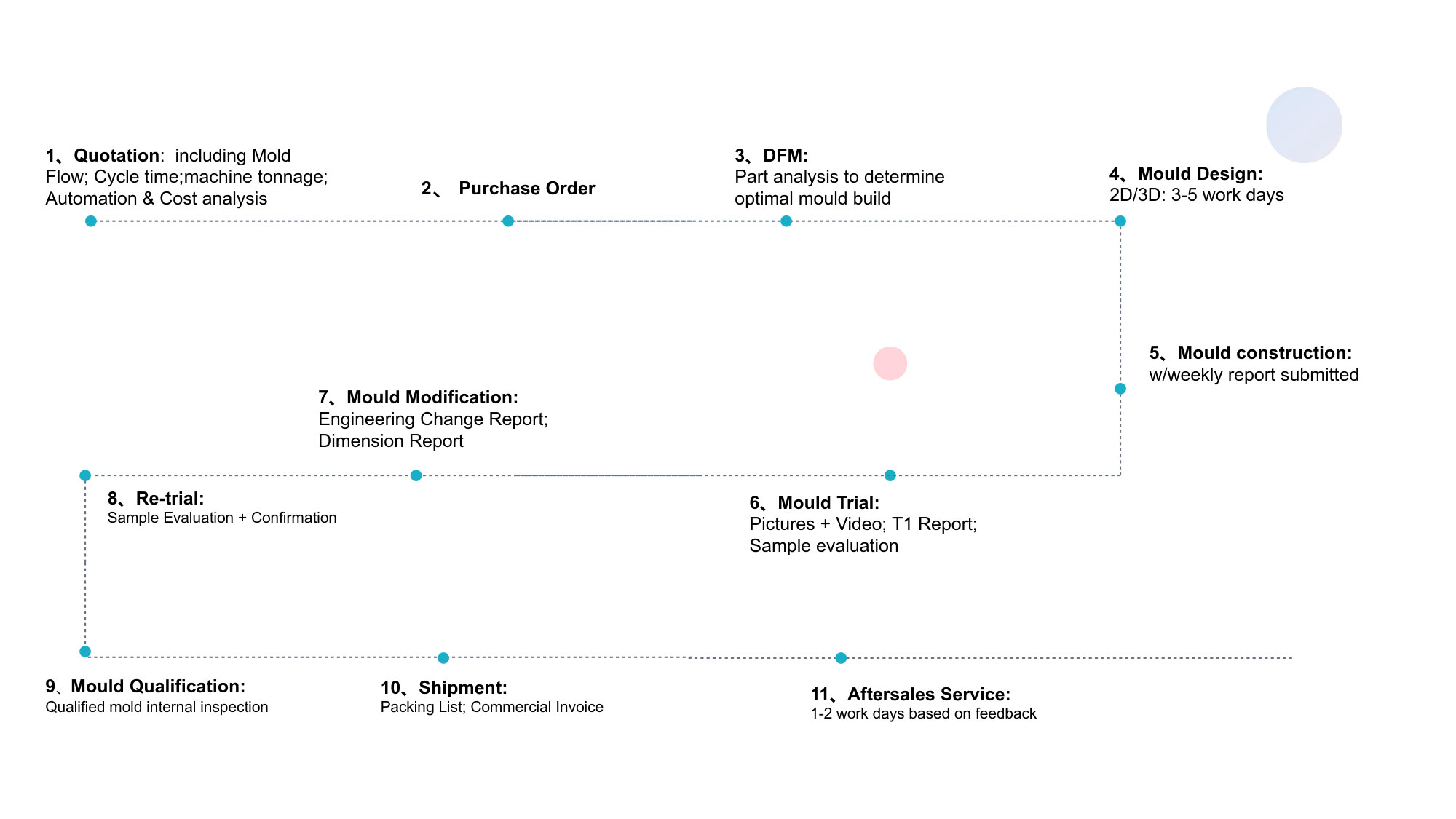
Manufacturing Process
The production of PET preforms follows a two-step injection stretch blow molding process. The first step involves injection molding the preform, which serves as the intermediate product that will later be heated, stretched, and blown into the final container shape.
Raw Material Preparation: PET resin must be thoroughly dried before injection molding. PET is highly hygroscopic and typically contains 0.1% to 0.3% moisture after transportation and storage. If not properly dried, moisture causes hydrolytic degradation during molding, leading to yellowing, embrittlement, and reduced intrinsic viscosity. The drying process is strictly controlled at 165°C to 175°C for 4 to 6 hours, with a dew point below -30°C. Dried material moisture content is maintained below 0.005% (50 ppm) to ensure optimal molding quality.
-
Mold Description
Product Materials:
PET PETG
Mold Material:
S136ESR
Number of Cavities:
8
Glue Feeding Method:
Hot runner
Cooling Method:
Water cooling
Molding Cycle
22.5s
- The mold manufacturing process and product material selection
Injection Molding: The dried PET material is heated to molten state and injected into the preform mold cavity under high pressure. Process parameters including melt temperature, injection speed, holding pressure, and cooling time are precisely controlled to ensure consistent weight distribution and wall thickness. For PET preforms, critical process parameters include cooling time, cycle time, melting temperature, injection time, and mold temperature.
Cooling and Ejection: After injection, the preform is cooled within the mold to solidify. The cooling stage typically accounts for the majority of the cycle time. Optimized mold cooling ensures uniform preform solidification, minimizing cycle time while delivering superior preform quality.
3. Delivery Efficiency
Ansix Tech operates with streamlined production scheduling and inventory management to ensure fast turnaround. For standard 97mm neck PET preform orders without custom mold requirements, typical lead time is within 15 days. For custom mold development, lead time ranges from 25 to 45 days depending on mold complexity and cavity count. Rush services are available for critical orders upon request.
-
With four production bases in China and Vietnam and a total of 260 injection molding machines ranging from 30 tons to 2,800 tons, Ansix Tech maintains substantial production capacity to handle both high-volume and small-batch orders simultaneously. The company employs over 1,200 staff members across more than 200,000 square meters of factory space.
4. Quality Assurance
Ansix Tech maintains a comprehensive quality control system and has successfully achieved multiple international certifications, including ISO9001, IATF16949, ISO13485, and ISO14001.
Key quality control measures for PET preforms include:
Quality Parameter Control Method Target Standard
Neck inner/outer diameter Calibrated gauges According to customer drawing
Preform weight Precision scale ±0.2g or as per agreement
Intrinsic Viscosity (IV) Laboratory testing 0.70–0.85 dL/g tracking within ±0.02 dL/g drift
Visual defects Bright light inspection No flow marks, sink, flash, or haze
Color consistency Spectrophotometer Adherence to color standards
Crystallization/blush Polarized light inspection No gate crystallization or blush defects
For high-precision applications, Ansix Tech employs advanced vision inspection systems capable of 360-degree preform rotation with multi-camera analysis measuring diameters, gate length, wall thickness, concentricity, and color variations to ensure flawless production.
5. Most Competitive Cost Control
Ansix Tech delivers cost advantages through multiple strategies:
Material Cost Optimization: Bulk purchasing of virgin PET resin from certified suppliers ensures competitive raw material pricing. The company also offers rPET and PLA alternatives for customers seeking sustainable, lower-cost options.
Process Efficiency: With 260 injection molding machines of various tonnages, Ansix Tech optimizes machine allocation to match product requirements precisely, avoiding over-specification and reducing energy consumption. All-electric servo-driven machines achieve repeatability of ±0.1%, ensuring consistent quality while minimizing scrap rates.
Multi-Cavity Mold Design: High-cavity-count molds (from 2 to 96 cavities) maximize output per cycle, significantly reducing per-unit production costs. Advanced hot runner systems eliminate runner waste and reduce material consumption.
Vertical Integration: In-house mold manufacturing and maintenance eliminate outsourcing costs and reduce repair lead times. Routine repairs can be completed within 24 hours without external dependency.
Economies of Scale: With over 28 years of manufacturing experience and annual revenue exceeding RMB 100 million, Ansix Tech leverages economies of scale to offer competitive pricing without compromising quality.
6. Mold Manufacturing and Injection Molding Material Selection – Core Customer Values
Mold Manufacturing: Ansix Tech utilizes state-of-the-art mold manufacturing equipment including:
Five-axis high-speed machining centers capable of machining complex curved surfaces to 0.002mm precision, ensuring smooth, burr-free parting lines
Slow wire EDM capable of machining fine micro-holes or narrow slots down to 0.03mm, preventing thin-wall deformation
Coordinate measuring machines (CMM) and optical imaging instruments for full dimensional inspection before mold delivery, with critical dimension CPK ≥ 1.33
Material Selection for Mold Components:
Mold Component Recommended Material Properties
Mold base P20 (pre-hardened) Cost-effective for standard applications
Cavity/Core S136, 2344, 2343, 8407, SKD11/61, DC53, M340, 4Cr13, 9Cr18, NAK80, H13 High wear resistance, excellent polishability
High-cavity production H13 with heat treatment Superior durability for 1M+ shot life
Corrosive environments 420SS stainless steel Excellent corrosion resistance
Material Selection for PET Preforms: For the preform itself, Ansix Tech uses 100% virgin PET resin meeting food-grade standards (BPA-free) with intrinsic viscosity (IV) values ranging from 0.70 to 0.85 dL/g depending on application requirements. Higher IV provides better mechanical strength and gas barrier properties, ideal for carbonated beverage applications. The company also supports alternative materials including PLA, PCR, and rPET for sustainability-focused customers.
7. Smart Manufacturing Integration and Efficiency Improvement
Ansix Tech has embraced Industry 4.0 principles to enhance manufacturing efficiency:
Intelligent Production Systems: All injection molding machines are network-connected to a MES (Manufacturing Execution System) that locks and monitors molding parameters including temperature, pressure, speed, and time. Only authorized engineers can adjust parameters, ensuring process stability.
Real-Time Monitoring: Closed-loop control systems with in-mold temperature and pressure sensors provide real-time feedback to automatically compensate for process variations. This ensures each shot maintains consistent quality regardless of environmental or material fluctuations.
Automated Quality Control: In-line vision inspection systems integrated with production lines automatically detect and reject defective preforms without interrupting machine operation, providing real-time data analysis and comprehensive reporting.
8. Process Quality Assurance
Ansix Tech's process quality assurance framework delivers measurable value to customers:
Dimensional Stability Control: Mold temperature is controlled with zone-specific controllers maintaining core and cavity temperature differences within 2°C, minimizing warpage and deformation. For typical products, critical dimensional fluctuations are maintained within ±0.02mm across three consecutive production batches.
Appearance Standards: Achievable quality levels include transparent parts with no bubbles or flow marks, plated parts with no gas marks, and high-gloss parts with surface roughness Ra ≤ 0.2μm.
Statistical Process Control (SPC): Critical dimensions are monitored using SPC charts with control limits established at ±3 sigma. Process capability indices (Cpk) are maintained at ≥ 1.33 for key dimensions, ensuring long-term production stability.
First Article Inspection (FAI): Before mass production begins, Ansix Tech conducts comprehensive first article inspection including full dimensional measurement, material property testing, and visual inspection, with detailed reports provided for customer approval.
9. Customer-Centric Core Values
Ansix Tech transforms technical expertise into tangible customer value:
What problems can Ansix solve?
Warpage, sink marks, and flash defects – eliminated through advanced mold flow analysis and precision mold manufacturing
Inconsistent dimensions across batches – solved via MES-locked parameters and closed-loop process control
High scrap rates – reduced through scientific molding and DOE-optimized processes
Long mold repair lead times – eliminated with in-house mold maintenance (24-hour turnaround for routine repairs)
How much cost can be saved?
Material savings: Hot runner systems reduce runner waste by up to 30%
Energy savings: All-electric servo machines reduce energy consumption by 25% compared to hydraulic equivalents
Labor savings: Automated handling and inspection systems reduce manual intervention by up to 40%
Maintenance savings: Preventive mold maintenance program extends mold life by 50% or more
How much risk can be reduced?
DFM analysis before tooling cuts reduces mold modification risks by up to 80%
T0 to T3 sampling with improvement reports ensures product readiness before mass production
100-500 shot pilot run validates process capability (Cpk ≥ 1.33) before full production commitment
Spare wear parts delivered with each mold eliminate production disruption risks
How does Ansix ensure quality validation? The company follows a four-stage validation protocol: (1) DFM analysis and mold flow simulation, (2) T0 to T3 sampling with dimensional and visual inspection, (3) 100-500 shot pilot run with SPC data collection, (4) Ongoing production monitoring with real-time quality data.
How does Ansix enhance capacity and ensure delivery? With 260 injection molding machines across four facilities, flexible production scheduling allows rapid scale-up for peak demands. Automated material handling and MES-driven production tracking ensure on-time delivery with real-time status visibility for customers.
Part Two: Comprehensive Manufacturing and Production Solution for 97mm Neck PET Preform Factory
Project Initiation – 97mm Neck PET Preform Factory Project
Project Overview: Ansix Tech has launched a dedicated manufacturing initiative for 97mm neck PET preforms targeting the wide-mouth jar packaging market for food, cosmetics, and pharmaceutical applications. This document outlines the comprehensive manufacturing solution covering mold design and fabrication, material selection, production process optimization, quality assurance, and supply chain management – all structured around translating technical specifications into measurable customer value.
Section 1: Foundation – Equipment and Technical Capabilities (Building Customer Trust)
1.1 Mold Processing Equipment
Ansix Tech's mold manufacturing workshop is equipped with state-of-the-art machinery that forms the backbone of precision mold fabrication:
Five-Axis High-Speed Machining Centers: These advanced CNC machines achieve machining accuracy of ±0.002mm on complex curved surfaces. For the 97mm neck preform mold, this level of precision translates directly to customer value – exceptionally smooth parting lines without burrs or flash, eliminating secondary finishing operations and reducing per-part labor costs. The tight machining tolerance also ensures consistent cavity-to-cavity dimensional uniformity across multi-cavity molds, which directly impacts preform weight consistency in production.
Slow Wire EDM Machines: Capable of machining fine micro-holes and narrow slots down to 0.03mm width, these machines are essential for creating precise cooling channels and venting slots in the mold neck ring area. For the 97mm wide-mouth configuration, where the short neck and wide diameter demand rapid, uniform cooling, optimized EDM-machined cooling passages prevent thin-wall deformation and reduce cycle times by up to 15%. Customer value: faster production, lower energy cost per part, and more consistent preform dimensions.
Coordinate Measuring Machines (CMM) and Optical Imaging Instruments: Every mold cavity is subjected to 100% dimensional inspection before mold release. A full dimensional report comparing measured values to CAD specifications is provided to customers, with key critical dimensions validated at CPK ≥ 1.33. This eliminates the risk of receiving a mold that fails to produce parts within tolerance – a risk that can cost customers weeks of production delay and thousands of dollars in rework.
1.2 Injection Molding Machine Fleet
Ansix Tech operates 260 injection molding machines across four production facilities, with clamping forces ranging from 30 tons to 2,800 tons. Key machine brands include FANUC, Sumitomo, Toshiba, Nissei, ENGEL, ARBURG (primary for LSR molding), Haitian, and TWC.
All-Electric Servo Drive Machines: For 97mm neck PET preform production, Ansix primarily utilizes all-electric servo-driven injection molding machines. These machines deliver:
Repeatable precision: ±0.1% process parameter repeatability ensures every shot matches the previous one
Faster cycles: Servo-driven movements reduce dry cycle times by 25-30% compared to hydraulic equivalents
Energy efficiency: Up to 25% lower energy consumption translates directly to lower per-part production costs
Cleaner operation: No hydraulic oil means no contamination risk for food-grade preform production
Machine Configuration for 97mm Neck Preforms: For 97mm neck PET preform molds, Ansix typically deploys 200-ton to 500-ton machines depending on cavity count. A 48-cavity 97mm preform mold producing 30g preforms can achieve cycle times of 8-10 seconds, yielding approximately 17,000-21,000 preforms per hour.
Customer Value Statement: "Our machine fleet is matched to your production volume requirements. Whether you need 50,000 preforms per week or 5 million per week, we have the machine capacity and flexibility to scale with your demand without requiring capital investment on your end."
1.3 Quality Inspection Equipment
In-Mold Sensors: Pressure and temperature sensors embedded in the mold cavity provide real-time feedback during each shot. This data feeds into the closed-loop control system, which automatically adjusts injection parameters to maintain consistent part quality despite variations in material batch or environmental conditions.
Automated Vision Inspection Stations: Post-molding, each preform passes through an automated vision inspection system that:
Measures neck inner diameter and ovality
Inspects gate area for crystallization or blush
Analyzes preform body for wall thickness uniformity
Detects inclusions, black spots, and color variations
Rejects defective parts automatically
Laboratory Testing Equipment: Ansix operates an in-house testing laboratory equipped with:
Equipment Test Parameter Acceptance Criteria
IV viscometer Intrinsic viscosity 0.70-0.85 dL/g with drift ≤ ±0.02 dL/g
Moisture analyzer Material moisture content ≤ 50 ppm (0.005%)
Spectrophotometer Color consistency ΔE ≤ 0.5 per standard sample
Universal tester Mechanical strength Per customer specification
Gas chromatograph Acetaldehyde (AA) content ≤ 15 μg/g for food-grade
Section 2: Core Competitiveness – Mold Manufacturing (Demonstrating Measurable Value)
Customer concerns in mold manufacturing center on four key areas: lifespan, precision, delivery time, and repair cost. Ansix Tech addresses each with specific, measurable commitments.
2.1 Mold Lifespan Guarantee
Mold Component Material Application Guaranteed Lifespan
P20 mold base with S136 cavity Standard PET preforms 500,000 shots minimum
H13 cavity with heat treatment High-volume production 1,000,000+ shots minimum
2344/8407/SKD61 Glass fiber-reinforced materials 500,000 shots minimum
Customer Value: A mold that produces 1 million preforms instead of 500,000 represents a 50% reduction in tooling amortization per part – a direct bottom-line impact. Ansix provides material certification reports and heat treatment curves for every mold, eliminating uncertainty about actual material properties.
2.2 Dimensional Tolerance Capabilities
Part Type Achievable Tolerance Customer Value
Standard structural components ±0.05mm Reliable assembly, no post-machining
Precision/medical components ±0.005mm Fit-for-purpose critical dimensions
97mm neck finish diameter ±0.03mm Consistent cap sealing, no leakage
Customer Value: For a 97mm neck preform used in a food jar application, a neck finish tolerance of ±0.03mm ensures 100% cap seal compatibility without requiring secondary sorting. This eliminates the risk of customer complaints about leaking jars and reduces the cost of quality by preventing defective preforms from reaching the blow molding stage.
2.3 Mold Types and Configurations
Ansix Tech offers multiple mold configurations optimized for different production scenarios:
Hot Runner Systems: All 97mm neck preform molds utilize hot runner technology to eliminate runner waste. The hot runner manifold ensures balanced melt distribution to all cavities, with independent temperature control at each nozzle to prevent material degradation. For PET preforms, hot runner systems are essential to maintain material viscosity and prevent acetaldehyde generation.
Stack Molds (Two-Level): For ultra-high volume requirements, Ansix offers stack mold designs that double cavity count within the same machine platen size. A 48-cavity stack mold produces 96 preforms per cycle, effectively doubling output without increasing machine size.
Multi-Cavity Configurations: Available cavity counts for 97mm neck preforms range from 8 cavities to 96 cavities depending on production volume requirements. Higher cavity counts reduce per-part cycle time overhead but increase mold cost – Ansix works with customers to determine the optimal cavity count based on annual volume projections and machine availability.
High-Gloss Molds: For transparent jar applications where clarity is critical, Ansix offers molds with cavity surface finish Ra < 0.05μm, achieved through specialized polishing and coating processes. This eliminates haze and flow marks visible in the final blown jar.
2.4 Gate and Runner Optimization
Using Moldflow and Moldex3D CAE simulation tools, Ansix performs comprehensive flow analysis before machining any steel. The analysis:
Predicts weld line locations and identifies potential air trap positions
Optimizes gate locations and quantities for balanced cavity filling
Simulates cooling channel performance to ensure uniform solidification
Predicts warpage and shrinkage to incorporate compensation into cavity design
For the 97mm neck configuration, which has a relatively short neck and wide body compared to standard bottle preforms, gate design is particularly critical. Ansix's optimized gate design ensures:
Balanced flow to the neck finish area despite the wide diameter
Minimized gate blush (crystallization at the injection point)
Uniform wall thickness distribution around the entire preform circumference
Customer Value Statement: "We validate mold performance in software before cutting steel. This means you don't pay for trial-and-error corrections – we deliver a first-time-right mold that meets your dimensional and aesthetic specifications on the first sample run."
2.5 Standard Lead Times
Mold Complexity Standard Lead Time Rush Service
Simple mold (up to 16 cavities) 10-15 days 7-10 days
Medium complexity (32 cavities) 25-35 days 18-25 days
High complexity (48+ cavities, stack molds) 35-45 days 28-35 days
Customer Value: Predictable lead times enable customers to plan product launches with confidence. Rush services are available for critical projects, but Ansix never compromises the validation process – each rush-order mold still receives full DFM analysis, flow simulation, and T0 sample verification before shipping.
Section 3: Injection Molding Process Control (Reducing Customer Quality Anxiety)
Customers worry about common molding defects: sink marks, flash, dimensional instability, and batch-to-batch color variation. Ansix Tech's process control systems are designed to eliminate these concerns systematically.
3.1 Process Standardization and Parameter Lock
All injection molding machines are connected to the MES (Manufacturing Execution System), which:
Locks molding parameters (temperature, pressure, speed, time) to approved setpoints
Restricts parameter changes to authorized engineers only
Logs every parameter adjustment with timestamp and operator ID
Automatically alerts supervisors to unauthorized parameter deviations
Customer Value: "You don't have to worry about your night shift operator changing settings to 'speed things up' and ruining a batch. Every preform is produced exactly to the validated process parameters."
3.2 Dimensional Stability Control
Zone Temperature Control: The mold is equipped with zone-specific temperature controllers that maintain core and cavity temperatures within 2°C of each other. This tight temperature control minimizes warpage and deformation by ensuring uniform cooling across the entire part.
Closed-Loop Injection Control: In-cavity pressure sensors provide real-time feedback to the injection control system. If cavity pressure deviates from the target range (due to material viscosity changes or environmental factors), the system automatically adjusts injection speed or holding pressure to compensate.
Ultrasonic Wall Thickness Monitoring: For critical applications, ultrasonic sensors mounted on the injection unit measure wall thickness during the shot and feed data back to the process control system.
Performance Data: For comparable products produced across three consecutive production batches, critical dimensional fluctuations are maintained within ±0.02mm, demonstrating exceptional process stability.
3.3 Appearance Quality Standards
Appearance Grade Application Achievable Standard
Optical transparent Clear jar preforms No bubbles, no flow marks
Plated surface Metallized jars No gas marks, no surface defects
High-gloss Premium cosmetic jars Surface roughness Ra ≤ 0.2μm
Colored Branded packaging ΔE ≤ 0.5 across batches
Customer Value: "Your jar will look the same whether it was produced on Monday morning or Friday afternoon. Color consistency and surface quality are maintained shot after shot, batch after batch."
3.4 Special Material Processing Capabilities
Beyond standard PET, Ansix Tech has extensive processing experience with:
Material Applications Key Processing Considerations
PC/ABS Automotive, electronics Drying requirements, mold temperature control
PC Optical, medical High melt temperature, moisture sensitivity
PPS+40%GF High-temperature, chemical-resistant High melt temperature, abrasive nature
PEEK Medical, aerospace, high-performance 350°C+ melt temperature, specialized screws
PTFE/PFA Chemical-resistant, non-stick High melt viscosity, corrosion-resistant tooling
PA6+GF30 Automotive, industrial Moisture absorption, warpage control
PBT Electrical, automotive connectors Fast crystallization, mold temperature critical
PEI/PPS/LCP High-heat electronics High melt temperature, flow properties
LSR (liquid silicone) Medical seals, gaskets Two-component mixing, cold runner systems
Flammability and Weatherability: For products requiring specific regulatory compliance, Ansix offers:
UL94 V-0 certified materials for electronics housings
UV-stabilized materials tested to 3,000 hours without color change
Food-contact compliant materials with FDA/EU certification documentation
Section 4: Full-Service Support (Reducing Customer Management Costs)
4.1 Early Engagement – DFM Report
Before any tooling is cut, Ansix provides a comprehensive Design for Manufacturability (DFM) report that includes:
Draft angle recommendations for all vertical surfaces
Wall thickness optimization suggestions to eliminate sink and warpage
Gate location and sizing recommendations for balanced filling
Ejector pin placement guidelines to minimize visible witness marks
Material selection guidance based on application requirements
Cycle time estimates and per-part cost projections
Customer Value: "We identify potential manufacturing problems before you commit to tooling. A DFM review typically saves customers 2-4 weeks of development time and eliminates the cost of mold modifications that would otherwise be discovered during first sampling."
4.2 T0 to T3 Sampling and Improvement
The mold sampling process follows a structured, transparent protocol:
Stage Activity Deliverable
T0 First injection trial with new mold Sample parts for dimensional inspection
T1 After initial adjustments Improvement report, revised samples
T2 After secondary adjustments Updated improvement report
T3 Final validation Production-ready mold, full documentation
Rapid Change Capability: Ansix's in-house toolroom allows for quick replacement of mold inserts to test different design configurations without rebuilding the entire mold. This capability is particularly valuable for validating gate design variations or adjusting cooling channel layouts during the development phase.
4.3 Pilot Run Validation
Before committing to full production, Ansix offers a pilot run of 100 to 500 shots to validate process capability. During the pilot run:
Process capability indices (Cpk) are calculated for all critical dimensions
Yield rates are measured and documented
Cycle time and material consumption are verified against estimates
Samples are provided to the customer for independent inspection
Customer Value: "You don't have to guess whether we can meet your quality requirements. The pilot run provides statistical proof of process capability before we start mass production."
4.4 Maintenance and Spare Parts
Spare Parts Package: Every mold is delivered with a set of wear parts including ejector pins, core pins, and other high-wear components. This ensures that routine wear can be addressed immediately without ordering and waiting for parts.
Preventive Maintenance Schedule: Ansix recommends preventive maintenance every 200,000 shots. The maintenance protocol includes:
Cleaning and lubrication of moving components
Inspection of hot runner nozzles and thermocouples
Measurement and replacement of worn pins and bushings
Polishing of cavity surfaces to restore gloss
Lifetime Repair Commitment: Ansix provides repair services at cost for the life of the mold. Repairs are performed in-house, eliminating the need to ship molds to external shops for maintenance.
Emergency Repair Response: For molds requiring immediate repair during production, Ansix's in-house repair capability ensures 24-hour turnaround for routine repairs such as weld repair or insert replacement.
Section 5: Competitive Differentiation – Addressing Common Industry Pain Points
Common Customer Complaint Ansix Tech's Committed Response
"Molds require frequent repairs, disrupting production orders." "We conduct a 2,000-shot aging test before mold delivery and provide a detailed wear report. We offer a three-year structural warranty on the mold (excluding normal wear of consumable parts)."
"Flash defects require manual post-processing, increasing labor costs." "We machine parting surfaces to 0.005mm fit tolerance and utilize self-locking clamp force compensation. Batch-to-batch flash is controlled within 0.03mm, eliminating manual deburring operations."
"Dimensions vary batch to batch, causing assembly issues." "Our machines are equipped with ultrasonic wall thickness sensors that detect wall thickness variations in real time and automatically compensate holding pressure. We also offer in-mold temperature/pressure sensors for closed-loop control."
"Mold repair lead times are too long." "We maintain an in-house electrode machining center and EDM workshop. Mold repairs are completed without leaving our facility. Routine repairs (weld repair/insert replacement) are restored to production within 24 hours."
"Color consistency varies between batches." "Our spectrophotometer verifies color at the start of each batch and after every color change. Closed-loop color monitoring adjusts masterbatch feed rates automatically to maintain ΔE ≤ 0.5."
Section 6: Material Selection for 97mm Neck PET Preforms
6.1 Material Properties and Characteristics
PET (Polyethylene Terephthalate) is a thermoplastic polyester polymer that offers:
High clarity and gloss: Glass-like appearance for premium packaging
Excellent gas barrier properties: Protects contents from oxygen and moisture
Good chemical resistance: Resists weak acids, oils, and alcohols
Recyclability: Fully recyclable with established recycling infrastructure
Lightweight: Reduces shipping costs compared to glass
6.2 Material Grades and Specifications
Intrinsic Viscosity (IV) Values:
IV is the primary specification for PET resin, as it directly correlates to molecular weight and mechanical properties.
IV Range Application Customer Benefit
0.70-0.75 dL/g Still water bottles Cost-effective, good clarity
0.76-0.80 dL/g Mineral water, light carbonation Balanced properties
0.80-0.84 dL/g Carbonated beverages Higher burst strength
0.84-0.88 dL/g Hot-fill, large containers Maximum strength
For 97mm neck wide-mouth jar preforms, Ansix typically recommends IV in the 0.78-0.82 dL/g range to provide sufficient strength for the wider diameter while maintaining processability.
Acetaldehyde (AA) Content: For food-grade applications, AA content must be controlled below 15 μg/g to prevent off-flavors affecting food products. Ansix monitors AA content throughout production to ensure compliance.
Material Sources: Ansix Tech uses certified material suppliers including:
Reliance Industries (India) – RElPET grades
Indorama Ventures – various PET grades
Far Eastern New Century – food-grade PET
Local suppliers for cost-optimized alternatives
6.3 Alternative and Sustainable Materials
Material Description Benefits Applications
100% Virgin PET New resin, zero recycled content Maximum clarity, guaranteed properties Premium food/cosmetic
rPET (recycled) Post-consumer recycled PET Lower cost, sustainable Eco-conscious brands
PCR (Post-Consumer Recycled) Recycled from consumer waste Environmental compliance Sustainability targets
PLA (Polylactic Acid) Bio-based, compostable Renewable resource, compostable Specialty applications
30% rPET blends 30% recycled content Balanced cost/sustainability General packaging
Section 7: Mold Flow Analysis (DFM) for 97mm Neck Preforms
7.1 Simulation Process and Tools
Ansix Tech utilizes Moldflow and Moldex3D CAE simulation software to analyze the injection molding process before steel is cut. The analysis includes:
Flow Analysis: Simulates the progression of the melt front as it fills the cavity. The analysis identifies:
Short shot risks where melt fails to reach all areas
Weld lines where two flow fronts meet (potential weak points)
Air traps that can cause burn marks or incomplete filling
Fill Analysis Outputs:
Balanced filling indicates all cavities fill simultaneously
Recommended injection speed profile to achieve balanced flow
Gate location optimization to minimize weld lines in visible areas
Cooling Analysis: Simulates the temperature distribution in the mold and the cooling rate of the preform. The analysis:
Optimizes cooling channel placement and diameter
Predicts hot spots where cooling is inadequate
Identifies potential warpage caused by uneven cooling
Warpage Analysis: Predicts the final shape of the cooled part, including shrinkage and deformation. The analysis allows Ansix to incorporate compensation into the cavity design, ensuring the finished preform matches dimensional specifications.
7.2 Design Focus Areas for 97mm Neck Preforms
The 97mm wide-mouth configuration presents specific design challenges compared to standard bottle preforms:
Short Neck, Wide Diameter: The short neck and wide diameter mean the melt must travel a short axial distance but a long circumferential distance. Ansix's gate design ensures the melt reaches all points of the neck finish simultaneously, preventing weak spots or incomplete filling.
Uniform Wall Thickness: Wide-mouth jars require more uniform wall thickness than narrow-neck bottles because the stretch ratio during blow molding is lower. Ansix's cavity design incorporates the precise wall thickness distribution needed for the final jar dimensions.
Gate Blush Prevention: The gate area (where molten PET enters the cavity) is prone to crystallization, visible as a white or cloudy mark called "blush." Ansix's gate design and process parameters minimize blush, ensuring the gate area is transparent and invisible in the finished jar.
7.3 Design for Manufacturing Guidelines
Design Parameter Recommendation Customer Impact
Minimum wall thickness 1.5mm (PET) Prevents weak spots
Draft angle (exterior) 1°-2° minimum Ensures mold release
Draft angle (interior) 0.5°-1° minimum Prevents part sticking
Radius at corners 0.5mm minimum Reduces stress concentration
Neck finish tolerance ±0.03mm Ensures cap compatibility
Section 8: Mold Design and Cooling System Engineering
8.1 Cooling System Design Principles
The cooling system is perhaps the most critical factor determining production cycle time and part quality. For 97mm neck preforms, Ansix's cooling system design follows these principles:
Conformal Cooling: Cooling channels are contoured to follow the preform shape, maintaining a consistent distance from the cavity surface. This provides uniform cooling across the entire part, minimizing warpage and reducing cycle time.
Neck Ring Cooling: The neck ring area of the preform requires particularly rapid cooling to prevent crystallization and maintain dimensional stability. Ansix incorporates dedicated cooling circuits for the neck ring with high-flow, small-diameter channels to maximize heat transfer.
Gate Cooling: Rapid cooling of the gate area prevents post-ejection crystallinity (blush) and allows shorter cooling times. Dedicated gate cooling circuits are integrated into the mold base design.
Cooling Channel Specifications:
Channel diameter: 8-12mm depending on cavity spacing
Distance from cavity surface: 10-15mm optimal
Water flow rate: 5-10 L/min per channel
Water temperature: 10-15°C for PET preform applications
8.2 Runner and Feed System
Hot Runner Configuration: All preform molds utilize full hot runner systems to eliminate runner waste. The hot runner manifold is designed for balanced melt distribution to all cavities, with:
Independently controlled temperature zones for each nozzle
Material compatibility ensuring no dead spots where PET can degrade
Leak-proof design with double-seal nozzle interfaces
Nozzle Design: The hot runner nozzles are designed specifically for PET applications, with:
High thermal stability to prevent material degradation
Precise gate diameter control for consistent fill rates
Quick nozzle replacement without manifold removal
8.3 Ejection System Design
The ejection system must reliably release the preform without damage while accommodating high-volume production cycles:
Ejector Pin Placement: Ejector pins are positioned in non-critical areas to minimize visible witness marks on the finished preform. For the neck ring area, a two-stage ejection system ensures reliable release without deformation.
Air Ejection Assist: For large-diameter preforms like the 97mm neck configuration, air-assisted ejection reduces stress on the part during release. Compressed air is introduced between the core and the preform to break the vacuum seal.
Synchronized Ejection: For multi-cavity molds, all ejector pins move simultaneously to ensure each preform is released at the same time, preventing some cavities from ejecting late (which could cause part damage).
Section 9: Validation Process and Injection Molding Challenges
9.1 Preform Validation Protocol
Phase Activity Duration Deliverable
1 Material certification 2 days Material test report (IV, AA, moisture)
2 T0 mold trial 1 day First shot samples, dimensional data
3 Process optimization 2-5 days Optimized parameter set
4 Pilot run (100-500 shots) 1 day Cpk report, yield data
5 Packaging validation 1 day Packaged samples for transport testing
6 Production release - Production-ready process documentation
9.2 Injection Molding Challenges for 97mm Neck Preforms
Challenge 1: Balancing Fill Across the Wide Neck
Solution: Optimized gate location and hot runner manifold design ensure simultaneous filling at all points around the neck circumference.
Challenge 2: Preventing Neck Ovality
Solution: Dedicated neck ring cooling with conformal channel design maintains roundness during solidification.
Challenge 3: Managing Wall Thickness Uniformity
Solution: Ultrasonic wall thickness monitoring with closed-loop feedback to injection parameters.
Challenge 4: Gate Blush Prevention
Solution: Optimized gate geometry and cooling to minimize crystallization at the injection point.
Challenge 5: Material Degradation (IV drop)
Solution: Controlled melt temperature, minimized residence time, and properly dried material to prevent hydrolysis.
Section 10: Process Optimization for Efficiency and Cost Control
10.1 Cycle Time Reduction
Cycle time is the single most significant factor in per-part production cost. Ansix Tech employs multiple strategies to minimize cycle time without compromising quality:
Optimized Cooling Strategy: Cooling typically accounts for 60-70% of the total cycle time for PET preforms. Ansix's optimized cooling channel design and chilled water system (10-15°C) reduce cooling time by 15-25% compared to conventional designs.
Accelerated Injection Speed: For PET preforms, faster filling reduces the time the melt spends flowing and allows earlier cooling onset. Ansix utilizes high-injection-rate machines that achieve injection speeds of 8-12 grams per second per cavity.
Simultaneous Mold Opening/Ejection and Plastication: The injection unit begins plasticating the next shot while the mold opens and the previous shot is ejected, overlapping operations to reduce overall cycle time.
Target Cycle Times for 97mm Neck Preforms:
Preform Weight Cavity Count Target Cycle Time Hourly Output
25g 32 cavities 8 seconds 14,400 pcs
35g 48 cavities 10 seconds 17,280 pcs
50g 48 cavities 12 seconds 14,400 pcs
70g 32 cavities 14 seconds 8,228 pcs
10.2 Energy Consumption Reduction
All-Electric Machines: Compared to hydraulic machines, all-electric servo-driven machines reduce energy consumption by 25% and eliminate hydraulic oil, reducing maintenance costs.
Energy Recuperation: Kinetic energy from decelerating machine movements is captured and returned to the electrical system, further reducing net energy consumption.
Insulated Hot Runners: Thermal insulation between the hot runner manifold and mold plates reduces heat loss and lowers energy consumption by 10-15%.
10.3 Scrap Rate Reduction
Closed-Loop Quality Control: Real-time process monitoring detects deviations before they produce defective parts. For typical PET preform production, closed-loop control reduces scrap rates from 3-5% to under 1%.
Automated Reject Handling: Vision inspection systems identify and reject defective preforms before they enter the packaging stream, preventing downstream issues in blow molding.
Preventive Maintenance Scheduling: Worn components are replaced before they cause quality issues. Ansix's predictive maintenance system monitors machine parameters and alerts technicians when components show signs of wear.
Section 11: Quality Control and Assurance
11.1 In-Process Quality Control
QC Checkpoint Frequency Equipment Action on Failure
Material moisture Each hopper fill Moisture analyzer Re-dry material
Melt temperature Continuous Thermocouples Adjust zones
Cavity pressure Every shot In-cavity sensors Closed-loop compensation
Part weight Every 15 minutes Precision scale Machine parameter check
Visual inspection 100% inline Vision system Auto-reject defective
Neck dimensions Every 30 minutes Go/No-go gauge Stop and adjust
11.2 Laboratory Quality Control
Test Frequency Method Specification
Intrinsic Viscosity (IV) Per batch ASTM D4603 0.78-0.82 dL/g, drift ≤ 0.02
Moisture content Per batch Karl Fischer ≤ 50 ppm (0.005%)
Acetaldehyde (AA) Per batch GC ≤ 15 μg/g
Color (ΔE) Per batch Spectrophotometer ≤ 0.5 vs. standard
Wall thickness Per shift Ultrasonic ±0.05mm across part
Top load strength Per batch Universal tester Per specification
Burst pressure As required Pressure tester Per specification
11.3 Quality Documentation
Ansix Tech provides the following quality documentation for each shipment:
Material certification (COA) from resin supplier
In-process inspection records
Final inspection report with dimensional measurements
IV test report
Photographs of representative samples
Section 12: Packaging and Delivery
12.1 Packaging Methods
Package Type Capacity Application Protection Features
Carton boxes 200-500 preforms Standard packaging Stackable, moisture barrier
Bulk gaylords 5,000-10,000 preforms High-volume orders Corrugated reinforced, liner bags
Reusable totes Custom Returnable/reusable Impact-resistant, stackable
12.2 Packaging Quality Requirements
Moisture protection: All preforms are packed with desiccant and sealed in moisture-barrier liners to prevent moisture absorption during storage
Contamination prevention: Cleanroom-packed for food-grade applications
Stacking strength: Cartons are tested for vertical compression to withstand pallet stacking
12.3 Shipping and Logistics
Ansix Tech ships from four production bases strategically located in China and Vietnam. Major export ports include:
Shenzhen Port, China
Shanghai Port, China
Ho Chi Minh Port, Vietnam
Delivery lead times by destination:
Destination Ocean Freight Air Freight
North America 25-35 days 5-7 days
Europe 30-40 days 5-7 days
Asia-Pacific 10-20 days 3-5 days
Middle East/Africa 25-35 days 5-7 days
Section 13: Ansix Tech's Industry Experience and Reliability
13.1 Company Background
Founded: 1998 by Mr. Huang in Hong Kong
Facilities: Four production bases in China (Shenzhen, Dongguan, Hunan) and Vietnam
Factory Area: Over 200,000 square meters
Employees: 1,200+ staff members
Machinery: 260 injection molding machines (30 to 2,800 tons)
Annual Revenue: Over RMB 100 million
Certifications: ISO9001, IATF16949, ISO13485, ISO14001
13.2 Core Capabilities Summary
Capability Description
Experience 28+ years in plastic injection molding and mold manufacturing
One-stop service From prototype design to mass production and assembly validation
Global operations China and Vietnam production bases serving international customers
Quality systems Comprehensive QC with multiple international certifications
Technical team Professional engineering staff for DFM and process optimization
Scalability 260 machines from 30T to 2800T covering all product sizes
Section 14: How Ansix Tech Delivers Customer Value
14.1 Problems Ansix Tech Solves
Customer Problem Ansix Tech's Solution
Inconsistent part quality between batches MES-locked parameters, closed-loop process control
Long mold development time DFM analysis, 25-45 day standard lead times
High mold repair costs In-house repair capability, spare parts included
Difficulty scaling production 260 machines across 4 facilities, flexible capacity
Quality documentation gaps Full QA documentation with every shipment
Raw material cost volatility Bulk purchasing, material alternatives (rPET, PLA)
14.2 Cost Savings delivered by Ansix Tech
Cost Category Savings Mechanism Typical Savings
Material cost Hot runner systems eliminate runner waste 5-15% material savings
Energy cost All-electric servo machines 25% lower energy consumption
Labor cost Automated handling and inspection 30-40% reduction in manual operations
Tooling amortization 1M+ shot mold life 50% lower per-part tooling cost
Quality cost Closed-loop scrap reduction Scrap < 1% vs. industry 3-5%
Shipping cost Lightweight PET vs. glass 50-70% lower shipping weight
14.3 Risk Reduction Provided by Ansix Tech
Risk Ansix Tech's Mitigation
Mold doesn't produce acceptable parts DFM analysis before tooling cuts; T0-T3 sampling
Production delays Four facilities, flexible capacity, in-house maintenance
Quality failures ISO-certified systems, SPC monitoring, pilot run validation
Supply chain disruption Multiple supplier relationships, material inventory
Regulatory non-compliance Full material certification, documented quality system
14.4 Quality Validation Process
Pre-production validation: DFM report, mold flow simulation, material certification
Mold validation: T0 sampling, dimensional inspection, CPK ≥ 1.33 verification
Process validation: Pilot run (100-500 shots), yield analysis, documentation
Production validation: Ongoing SPC monitoring, in-line inspection, batch sampling
14.5 Capacity and Delivery Assurance
Capacity Metric Commitment
Maximum daily output (standard PET preform) 500,000+ preforms per day across facilities
Rush order response Dedicated machine allocation within 24 hours
Supply chain continuity 30-day raw material inventory minimum
Production redundancy Multi-facility production capability
Summary
Ansix Tech brings 28+ years of manufacturing expertise to the 97mm neck PET preform market, combining precision mold manufacturing, advanced injection molding equipment, comprehensive quality systems, and cost-efficient production processes. The company transforms technical capabilities into measurable customer value by reducing per-part costs, eliminating quality risks, ensuring supply chain reliability, and providing responsive, transparent service throughout the product lifecycle.
For customers seeking a reliable partner for 97mm neck PET preform production, Ansix Tech delivers the hard infrastructure, process expertise, and customer-centric service model needed to succeed in competitive packaging markets.
Contact Information: For inquiries regarding 97mm neck PET preforms or custom injection molding services, please contact Ansix Tech at info@ansixtech.com. The team typically responds within 12 hours.
Ansix Tech Co Ltd
If you have any plans related to 97mm Neck PET Preform Plastic Preform Wide Mouth Preform Factory , you can contact us at any time. We will turn your ideas into reality, let you realize your dreams, and obtain large orders from the market. Our contact information is info@ansixtech.com. Or contact our CTO, mail: stephen@ansixtech.com
#www.ansixtech.com #ansixtech.com #97mm Neck PET Preform Plastic Preform Wide Mouth Preform Factory #97mm Neck PET Preform Plastic Preform Wide Mouth Preform Factory #97mm Neck PET Preform Plastic Preform Wide Mouth Preform Factoryinjection molding companies #97mm Neck PET Preform Plastic Preform Wide Mouth Preform Factory Canopy Mold injection mold companies #Ansix #Ansix moulds #Ansix china #Ansix tech china #Ansix tech company #Ansix facotry #97mm Neck PET Preform Plastic Preform Wide Mouth Preform Factoryinjection molding #97mm Neck PET Preform Plastic Preform Wide Mouth Preform Factoryinjection tools #97mm Neck PET Preform Plastic Preform Wide Mouth Preform Factoryinjection moulds #97mm Neck PET Preform Plastic Preform Wide Mouth Preform Factoryplastic mould #97mm Neck PET Preform Plastic Preform Wide Mouth Preform Factoryplastic tools #Ansix Tech #Ansix molds #Ansix injection molding #Ansix mold factory #injection molding 97mm Neck PET Preform Plastic Preform Wide Mouth Preform Factory #Ansix mold factory #97mm Neck PET Preform Plastic Preform Wide Mouth Preform Factorychina #97mm Neck PET Preform Plastic Preform Wide Mouth Preform Factorymolds #injection factory #97mm Neck PET Preform Plastic Preform Wide Mouth Preform Factoryinjection molding #97mm Neck PET Preform Plastic Preform Wide Mouth Preform Factoryinjection molding factory #injection molding company #97mm Neck PET Preform Plastic Preform Wide Mouth Preform Factoryinjection mold companies #50mm Neck Edible Oil Bottle Preform (100ml250ml) Transparent PET Plastic Oil Bottle Preform#97mm Neck PET Preform Plastic Preform Wide Mouth Preform Factorymold limited #Ansix mold china #Ansix companies #Ansix company China #97mm Neck PET Preform Plastic Preform Wide Mouth Preform Factoryfacotry #Ansix Tech #Ansix Tech mould #97mm Neck PET Preform Plastic Preform Wide Mouth Preform Factoryinjection moulding #injection moulding company #Ansix 97mm Neck PET Preform Plastic Preform Wide Mouth Preform Factoryparts injection mold companies #medical injection molding companieschina #97mm Neck PET Preform Plastic Preform Wide Mouth Preform Factorychina factory #Ansix moulding companies #Ansix molding company #97mm Neck PET Preform Plastic Preform Wide Mouth Preform Factoryinjection moulding facotry #Ansix Tech mold #97mm Neck PET Preform Plastic Preform Wide Mouth Preform Factorymould #97mm Neck PET Preform Plastic Preform Wide Mouth Preform Factoryplastic injection molding #ansix plastic mold #Mold manufacturing #97mm Neck PET Preform Plastic Preform Wide Mouth Preform Factoryparts manufacturing #97mm Neck PET Preform Plastic Preform Wide Mouth Preform Factoryplastic parts factory #97mm Neck PET Preform Plastic Preform Wide Mouth Preform Factoryinjection parts mold #97mm Neck PET Preform Plastic Preform Wide Mouth Preform FactoryPRECISION MANUFACTURING #97mm Neck PET Preform Plastic Preform Wide Mouth Preform Factory#China mold #97mm Neck PET Preform Plastic Preform Wide Mouth Preform Factoryinjection moulding china #97mm Neck PET Preform Plastic Preform Wide Mouth Preform Factorymould china #china precision mold #mold in china #97mm Neck PET Preform Plastic Preform Wide Mouth Preform Factorymold china #Precision molds #High-precision molds #97mm Neck PET Preform Plastic Preform Wide Mouth Preform Factory#Injection molds #97mm Neck PET Preform Plastic Preform Wide Mouth Preform FactoryFactory #97mm Neck PET Preform Plastic Preform Wide Mouth Preform FactoryCompany #Super Large Injection Mold Factory #Large Tonnage Injection Molding Factory #97mm Neck PET Preform Plastic Preform Wide Mouth Preform FactoryCompany #97mm Neck PET Preform Plastic Preform Wide Mouth Preform FactoryFactory #2800T Injection Molding Factory #3000 Ton Injection Molding #4500 Ton Injection Molding Factory #Large Mold Injection Molding #Large Plastic Mold Injection Molding Factory #Large Injection Mold Manufacturer #Plastic Mold Factory #Injection Mold #Plastic Mold