



Endoscopic snake bone injection mold
FEATURES
At the epicenter of this revolution lies a component of extraordinary complexity and critical importance: the endoscopic "snake bone" assembly. This flexible, articulated spine enables an endoscope to navigate the tortuous pathways of the human body with precision, responding to the surgeon's touch as it winds through the gastrointestinal tract or bronchial passages. Producing this component demands injection molding expertise of the highest order, balancing extreme precision, medical-grade material science, and scalable, cost-controlled manufacturing. Few organizations have mastered this trifecta.
-
Mold Description
Product Materials:
POM
Mold Material:
S136ESR
Number of Cavities:
1*1
Glue Feeding Method:
Hot runner
Cooling Method:
Water cooling
Molding Cycle
32.5s
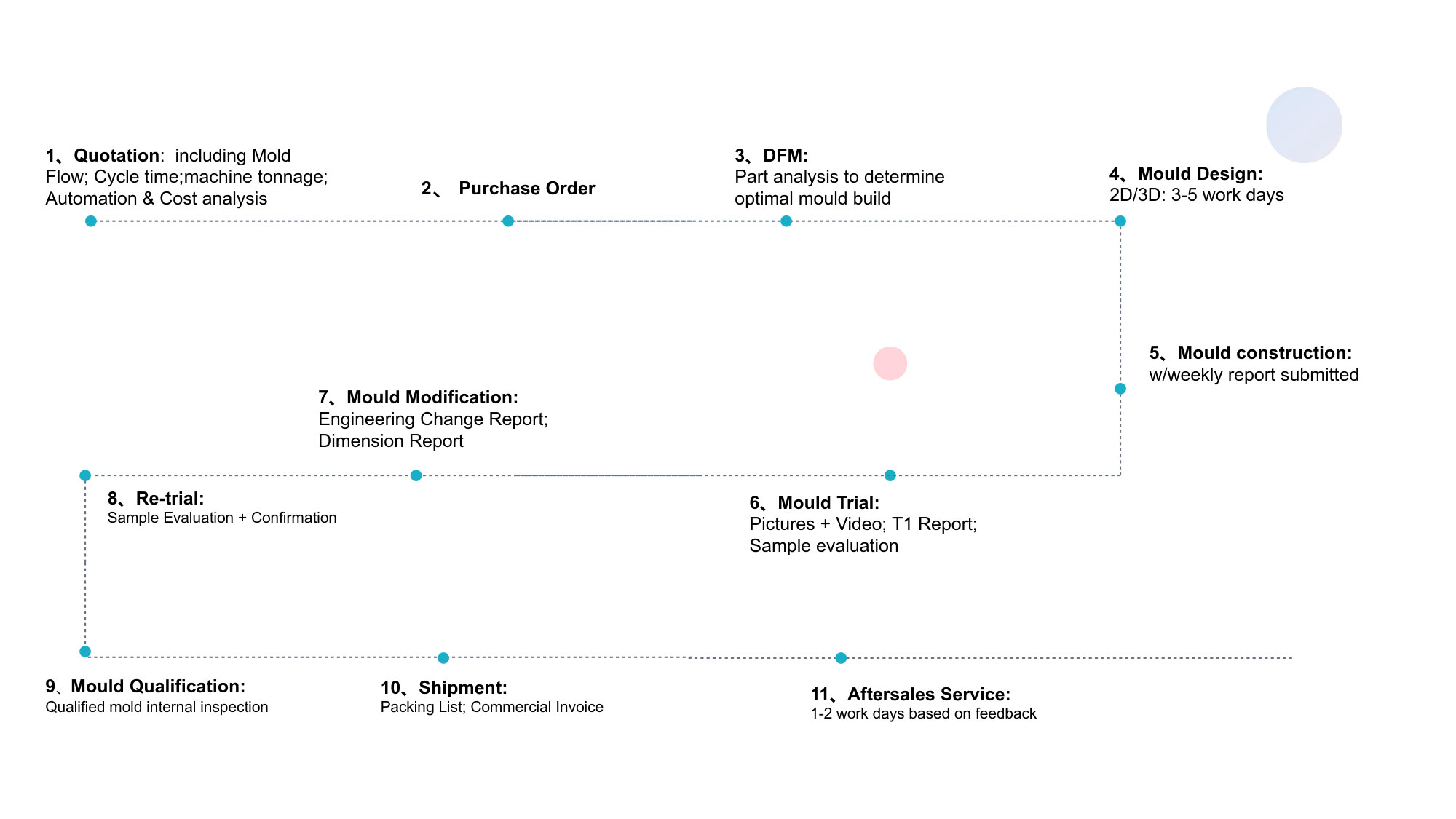
Ansix Tech Limited, a company with over 28 years of injection molding heritage and more than 30,000 mold sets delivered since its founding in 1998, has emerged as a pivotal partner for medical device OEMs worldwide. With a workforce exceeding 1,200 employees — including over 200 design engineers — and four production bases across China and Vietnam occupying approximately 200,000 square meters of manufacturing space, Ansix Tech provides end-to-end solutions that transform the snake bone from a design challenge into a production reality.
This comprehensive industry analysis explores how Ansix Tech addresses the make-or-break challenges of endoscopic snake bone manufacturing — from project initiation and design validation through mass production and delivery — delivering unparallelled value to global medical OEMs by reducing product costs, increasing production capacity, and ensuring uncompromising quality.
-
The Snake Bone Challenge: Why Precision Matters
To understand the significance of Ansix Tech‘s achievements, one must first appreciate the complexity of the snake bone component itself. Typically measuring just a few millimeters in diameter and several centimeters in length, a molded snake bone consists of dozens of individual segments — or "vertebrae" — connected through living hinges or interlocking features that allow controlled articulation in one or two planes.
Within this tiny structure, multiple functions must be integrated. There are channels for steering wires that run the length of the component, allowing the surgeon to deflect the tip. There is a working channel for instruments or suction, and often additional lumens for light guides and imaging cables. The walls between these features can be paper-thin — sometimes less than 0.3 millimeters — yet must possess the strength to withstand tensile and compressive forces during repeated bending cycles.
Traditional manufacturing approaches involving complex metal assemblies are rapidly giving way to high-performance engineering plastics produced in precision multi-cavity molds. But technical hurdles remain formidable: dimensional tolerances often required at ±0.002mm, as even minute deviations can affect steering mechanism performance; complex geometries with slender walls and intricate undercuts prone to warpage or incomplete filling; and material requirements demanding flexibility, strength, and resistance to repeated bending without cracking.
Modern single-use designs increasingly adopt high-performance engineering plastics injection-molded into precision multi-cavity molds. The goal is to create a snake-like structure that integrates channels for steering wires and optical fibers directly into the molded part, eliminating subsequent assembly steps.
Project Initiation: The Co-Engineering Imperative
The journey of an endoscopic snake bone assembly at Ansix Tech begins not with an order but with collaboration. The company‘s “co-engineering” philosophy invites clients to partner from the concept stage, ensuring solutions are technically robust and cost-effective from the outset. This early engagement is particularly critical for snake bone projects, where design decisions have profound implications for manufacturability, performance, and cost.
During initial consultations, Ansix Tech‘s engineering team conducts a comprehensive analysis of market requirements, regulatory standards, and functional needs. The company holds multiple key certifications, including ISO 13485 for medical devices, ensuring all operations are conducted within a regulatory-compliant quality management system framework. For snake bone components, where dimensional accuracy directly correlates to procedural success, this integration is not merely convenient — it is essential.
Design for Manufacturability (DFM): Optimizing Before Steel is Cut
Before any tool steel is ordered or any CAD model is finalized for mold construction, Ansix Tech‘s engineers conduct an exhaustive Design for Manufacturability (DFM) analysis. For snake bone components that may incorporate living hinges, ultra-thin walls, and complex internal channels for guide wires and optical fibers, manufacturability is paramount.
The DFM process at Ansix Tech involves rigorous analysis of every geometric feature. Engineers scrutinize 3D models for potential manufacturing hurdles: wall thickness uniformity to prevent sink marks, adequate draft angles for clean ejection, and the elimination or simplification of features that cannot be molded efficiently. The team carefully examines:
Wall Thickness Uniformity: Ensuring consistent wall thickness throughout the part to prevent sink marks and differential shrinkage that can warp delicate features. Variations in wall thickness create differential cooling rates, leading to internal stresses that manifest as warpage or dimensional instability.
Draft Angles: Verifying sufficient draft angles that allow clean ejection from the mold without damaging fine features. Even subtle undercuts or insufficient draft can cause part damage during ejection, leading to unacceptable scrap rates and production interruptions.
Geometric Simplification: Identifying opportunities to consolidate what might otherwise be multi-component metal assemblies into a single moldable plastic geometry. By integrating features such as snaps directly into the snake bone design, Ansix Tech has helped customers reduce post-molding assembly time by up to 40%.
Critical Tolerances: The typical dimensional accuracy required is often within ±0.002mm, as even minute deviations can affect the functioning of the steering mechanism. Ansix Tech's engineering team ensures that every critical dimension is identified and accounted for in the mold design strategy.
Advanced Simulation: Mold Flow Analysis (CAE) and DFM Integration
With DFM-optimized designs in hand, Ansix Tech advances to the digital prototyping stage. Engineers utilize advanced computer-aided engineering (CAE) software — such as Moldflow or Moldex3D — to conduct comprehensive mold flow analysis (MFA). This digital prototyping approach serves as the most powerful tool for cost control and risk mitigation, allowing the entire injection molding process to be simulated virtually before any physical steel is cut.
Mold Flow Analysis enables engineers to simulate the entire injection molding process digitally, predicting how molten polymer will behave as it fills the cavity, packs out, and cools to final dimensions. For snake bone components with extreme aspect ratios — long, thin parts with length-to-thickness ratios that challenge conventional molding logic — this simulation capability is indispensable.
Through MFA, Ansix Tech optimizes several critical parameters:
Gate Location Optimization: The CAE software analyzes multiple gate placement scenarios to determine the optimal location that ensures uniform fill, minimizes weld lines, and reduces internal stresses. For snake bone geometries that often require multiple gates due to their elongate shape, this analysis prevents short shots and flow imbalances.
Flow Pattern Prediction: Engineers can visualize how the melt front progresses through the cavity, identifying potential issues such as jetting, hesitation, or unfilled extremities before they become costly molding problems.
Warpage and Shrinkage Simulation: The software predicts how the part will behave during cooling, allowing engineers to compensate for differential shrinkage through mold design adjustments before committing to tool steel.
Managing High Aspect Ratios: The extreme length-to-thickness ratio of snake bone components creates flow challenges and warpage risks. MFA identifies these pressure drop points and allows engineers to adjust runner systems and gate locations accordingly.
Cycle Time Estimation: MFA provides accurate estimates of required cooling times based on part geometry and material selection, enabling the design team to optimize cooling channel layout for maximum throughput.
This front-loaded investment in digital validation is the key strategic advantage that Ansix Tech brings to snake bone projects. By catching potential issues in simulation — where changes cost nothing — rather than on the molding press — where mold modifications can cost tens of thousands of dollars and add weeks to project timelines — the company systematically de-risks the entire development process.
Material Selection Science: The Foundation of Performance
For endoscopic snake bone components, material selection is not merely a matter of specification — it is a strategic decision that influences every aspect of manufacturability, performance, and cost. Ansix Tech‘s engineering team selects medical-grade engineering thermoplastics based on a comprehensive evaluation of application-specific requirements, regulatory demands, and production economics.
Primary Material: Medical-Grade POM (Polyoxymethylene)
POM (polyoxymethylene), also known as acetal, is the material of choice for the vast majority of endoscopic snake bone applications. This high-performance engineering thermoplastic offers an ideal combination of properties that align precisely with snake bone functional requirements: low friction for smooth steering wire movement, excellent wear resistance for thousands of articulation cycles, dimensional stability for tight tolerance maintenance, and fatigue endurance for repeated bending without cracking.
Medical-grade POM grades are specifically formulated for healthcare applications, featuring low residual monomers, no animal-derived constituents, and compliance with biocompatibility standards. Among the specific material grades commonly employed:
Ultraform® N2320 003 PRO (BASF): Provides an ideal combination of strength, stiffness, and hardness. Exhibits high tribological strength, high impact resistance, low friction, good abrasion resistance, low material fatigue, and excellent chemical and hydrolysis resistance. This grade is particularly suitable for functional parts requiring long-term reliability in body-fluid contact environments.
Hostaform® MT24U01 (Celanese): A low-melt-viscosity grade designed for fast cycling and thin-walled injection molding. Its low viscosity ensures complete cavity filling even in the most intricate snake bone geometries with wall thicknesses below 0.3mm. Drying is not normally required, provided material is stored under proper conditions, reducing pre-processing handling requirements.
Hostaform® MT® SlideX® 2404 ECO-B (Celanese): A sustainable grade possessing high flow, low friction, and low wear against both plastics and metals. Developed specifically for the medical industry, it exhibits low residual monomers and no animal-derived constituents. The SlideX technology enhances the already low friction properties of POM, making it ideal for applications where silent operation and minimal stick-slip are required.
Ultraform® H 4320 PRO (BASF): An acetal copolymer grade showing excellent chemical resistance, high rigidity, good mechanical strength and elastic properties, high toughness, dimensional stability, and excellent sliding friction properties. This grade is particularly well-suited for snake bone components that must maintain dimensional precision after repeated sterilization exposure.
ColorRx® POM1-1000RX (Americhem): A medium-flow injection molding grade of acetal homopolymer with high mechanical strength and impact resistance. It is biocompatible, fatigue-resistant, and exhibits good impact resistance with high rigidity — characteristics essential for snake bone mechanisms that must endure thousands of bending cycles without failure.
Secondary Materials for Specialized Applications
While POM represents the standard solution for most endoscopic snake bones, certain applications may require alternative material grades:
Transparent Plastic Grades: For visualization pathways integrated directly into snake bone structures, transparent medical-grade polymers are employed. These materials must maintain optical clarity while delivering the mechanical properties required for articulation. The challenges of transparent snake bone molding multiply exponentially: optical clarity must coexist with mechanical strength, and micron-level tolerances must be maintained across thousands of production cycles.
PEEK (Polyether Ether Ketone): For applications requiring higher temperature resistance or enhanced chemical compatibility, PEEK may be specified. This high-performance polymer offers exceptional mechanical properties at elevated temperatures but requires more demanding processing conditions and commands a higher material cost.
Advanced Tooling: The Mold Engineering Ecosystem
Mold Steel Selection and Strategic Allocation
The injection mold is the heart of snake bone production, and its construction begins with strategic steel selection. Ansix Tech‘s mold engineering team considers three primary material attributes:
Wear Resistance (Hardness): The mold cavity must withstand millions of injection cycles without degradation of critical dimensions. Hardened tool steels such as H13, D2, or powder metallurgy steels are selected for cavity inserts that will see the highest wear exposure.
Thermal Conductivity (Cooling Efficiency): Efficient heat transfer from the molten polymer to the cooling system directly impacts cycle time and part quality. Ansix Tech engineers select steel grades with optimal thermal conductivity profiles for each component of the mold stack — high conductivity for cooling-sensitive areas, lower conductivity where thermal isolation is beneficial.
Corrosion Resistance: For parts that will contact aggressive medical cleaning agents or sterilization processes, the mold may require corrosion-resistant materials. For medical components that require flawless, antimicrobial mirror finishes — such as lens housings that may integrate with snake bone assemblies — Ansix Tech specifies high-quality corrosion-resistant stainless steels such as 420SS or S136. These materials maintain perfect cavity surfaces through hundreds of thousands of cycles.
Mold Cooling System: Conformal Cooling for Cycle Time Reduction
Cooling typically accounts for 50% to 80% of the total injection molding cycle time. For high-volume snake bone production where cycle time directly determines production capacity and unit cost, cooling system design is a primary strategic focus.
Traditional machining methods often restrict cooling channels to straight-line drilling patterns, which may not follow the contours of complex part geometries. The result is uneven cooling, longer required cooling times, and increased risk of warpage or dimensional instability. Ansix Tech overcomes these limitations through two advanced approaches:
Conformal Cooling Channels (CCC): Using advanced machining techniques including five-axis CNC or hybrid additive-subtractive manufacturing processes, Ansix Tech produces cooling channels that follow the exact contour of the part geometry. These conformal channels bring cooling directly to the areas that need it most — the thin-walled hinges, the thick bosses, the intricate undercuts — delivering uniform temperature distribution across the entire cavit. Conformal cooling allows for effective heat exchange when molding parts with complicated designs or other challenging characteristics.
The benefits are substantial. Research demonstrates that high-efficiency mold cooling systems can reduce overall cycle time, improve plastic product quality, and reduce the unit molded part cost. By implementing conformal cooling, Ansix Tech achieves:
Reduced cooling time, typically cutting 15% to 30% from overall cycle times
Improved CpK values through uniform shrinkage and reduced warpage
Lower scrap rates due to consistent part quality
Higher tool life through reduced thermal cycling stress on mold components
Runner and Gate System Design
The runner and gate system delivers molten polymer from the injection molding machine nozzle to the cavity. For snake bone production, this seemingly simple task presents significant engineering challenges.
Runner System Configurations: To maximize productivity, Ansix Tech typically designs multi-cavity molds for snake bone components. The challenge lies in balancing flow to all cavities simultaneously. Using MFA validation, engineers design runner systems with precisely calculated diameters and lengths to ensure that each cavity fills at the same rate, under the same pressure, and with the same material temperature. Unbalanced flow can result in cavity-to-cavity variation in part weight, dimensions, and mechanical properties — unacceptable for medical device applications.
Gate Design and Location: The gate is the point where molten polymer enters the cavity — and for thin-walled snake bone components, gate design is critical. Ansix Tech engineers optimize gate geometry to achieve:
Low shear heating that could degrade sensitive engineering polymers
High fill rates that prevent premature freeze-off in thin sections
Gate vestiges that are easily removed or positioned in non-critical areas
Hot Runner Systems: For high-volume production where cycle time and shot-to-shot consistency are paramount, Ansix Tech employs hot runner systems. These systems maintain the polymer in a molten state within the manifold, eliminating sprue waste and reducing cycle time by removing the need to cool and eject runner material.
Ejection System Design
The ejection system must remove the delicate snake bone component from the mold without damage. With features including living hinges less than 0.3mm thick and intricate internal channels, ejection presents a significant risk of part damage.
Ansix Tech‘s mold design incorporates:
Strategically positioned ejector pins that contact only robust part features
Air ejection systems for areas where pin contact is impossible
Stripper plate systems for parts requiring uniform ejection force
Slide and lifter mechanisms for undercuts and internal features
Mold Manufacturing Process: From Design to Steel
The transition from mold design to physical tooling requires precision manufacturing capabilities spanning multiple disciplines. Ansix Tech‘s mold manufacturing process follows a controlled workflow:
Stage 1 — Rough Machining: Blocks of selected tool steel are rough-machined to approximate dimensions using high-speed CNC milling. Approximately 70-80% of material removal occurs in this stage.
Stage 2 — Heat Treatment: For optimal hardness and wear resistance, cavity and core steels undergo heat treatment. Controlled heating and quenching cycles transform the steel microstructure, achieving target hardness levels (typically 48-52 HRC for cavity steels).
Stage 3 — Precision Machining: After heat treatment, components undergo final precision machining. Five-axis CNC machines produce complex three-dimensional geometries including cooling channels, runner systems, and ejection component cavities. High-speed machining maintains tolerances of ±0.005mm on critical features.
Stage 4 — EDM (Electrical Discharge Machining): For features that cannot be produced by conventional machining — such as sharp internal corners, deep ribs, or intricate texturing — EDM provides the necessary capability. Graphite or copper electrodes, themselves machined to precision, erode the workpiece using controlled electrical discharges.
Stage 5 — Surface Finishing: The cavity surface finish directly impacts part release and appearance. Ansix Tech offers a range of finishes from SPI (Society of the Plastics Industry) standards for general applications to optical-grade polishing for transparent components.
Stage 6 — Assembly and Fitting: Individual mold components are assembled, fitted, and tested. Ejection systems are verified for smooth operation. Cooling circuits are pressure-tested for leaks. All moving components are checked for interference.
Stage 7 — Mold Trials and Debugging: Before release to production, the completed mold undergoes trial runs on injection molding machines. Process parameters are dialed in, part quality is verified, and any adjustments are documented and incorporated.
Manufacturing Challenges Unique to Snake Bone Molds
Snake bone components present several specific challenges that demand exceptional mold engineering expertise:
Extreme Feature Complexity: The combination of living hinges, internal channels, and thin walls requires mold designs with multiple slides, lifters, and core pulls. Coordinate the motion of these systems without interference is a significant CAD/CAM challenge.
Material Flow in Thin Sections: With wall thicknesses below 0.3mm in some areas, the molten polymer must travel long distances through extremely restrictive channels. Pressure drops can be severe, potentially resulting in short shots or incomplete filling.
Part Ejection Sensitivity: The delicate nature of snake bone components demands precise ejection timing and force distribution. Improper ejection can damage living hinges or crack thin walls.
Cavity-to-Cavity Consistency: In multi-cavity molds, ensuring identical fill, packing, and cooling across all cavities requires meticulous runner balancing and cooling design.
Process Validation: IQ/OQ/PQ and Statistical Quality Control
For medical device components, process validation is not optional — it is a regulatory requirement. Ansix Tech‘s quality system complies fully with ISO 13485 requirements, ensuring that all critical molding processes are validated to demonstrate process repeatability and capability under production conditions. This includes complete process validation through the IQ/OQ/PQ framework with supporting statistical analysis such as CpK and GR&R.
Installation Qualification (IQ): The IQ phase verifies proper installation of injection molding machines, utilities, tooling, and software, complete with calibration records and environmental conditions verification. All equipment is documented, calibrated, and confirmed to be operating within specified parameters.
Operational Qualification (OQ): The OQ phase establishes the operating limits of the process. Engineers conduct designed experiments to determine the acceptable ranges for key process parameters — melt temperature, injection pressure, holding pressure, cooling time, and others. The process window (the combination of parameters that produces acceptable parts) is defined and documented.
Performance Qualification (PQ): The PQ phase demonstrates that the validated process consistently produces acceptable parts under normal production conditions. Statistical process capability (Cpk) is evaluated on all critical dimensions to verify that the process can maintain specifications within established limits. The objective of the PQ is to simulate production conditions and prove that the mold, process, and established methods can repeatedly produce acceptable product that meets all specified dimensions and success criteria.
Statistical Quality Control in Production
Beyond initial validation, Ansix Tech maintains rigorous statistical quality control throughout production:
Critical-to-Quality (CTQ) Identification: Critical dimensions and functional characteristics are identified for each snake bone component. Typical CTQs include overall part length, hinge thickness, channel diameters, and articulation force requirements.
Cpk Monitoring: Process capability indices (Cpk) are tracked on all CTQs. Medical device applications typically require Cpk ≥ 1.33 for critical dimensions. For the most demanding applications — such as precision alignment features — Cpk ≥ 1.67 may be required.
SPC Charting: Real-time SPC (Statistical Process Control) charts track process parameters and part measurements. Trends indicating process drift trigger corrective action before non-conforming parts are produced.
In-Process Inspection Protocols: Automated inline inspection systems provide 100% dimensional verification at critical stages. Vision systems measure key features at each shot, providing immediate feedback and scrap diversion for non-conforming parts.
Gage R&R: All measurement systems undergo Gage Repeatability and Reproducibility (GR&R) studies to verify that measurement variation does not mask actual process variation.
Injection Molding Process Optimization: Efficiency and Cost Control
Scientific Molding Methodology
Ansix Tech employs the scientific molding methodology — a data-driven approach to establishing and maintaining optimal injection molding processes. Rather than relying on operator experience or “feel,” scientific molding uses instrumentation and measurement to dial in each process parameter:
Viscosity Curve (Rheology Study): The response of the selected polymer to various fill rates is characterized. This data identifies the optimal injection speed that balances part quality with cycle efficiency.
Cavity Balance Study: Using multi-cavity tools, engineers verify that all cavities fill simultaneously and experience identical pressure profiles. Imbalance is corrected through runner modifications before production release.
Pressure Drop Analysis: Pressure transducers positioned at the nozzle, in the runner, and within the cavity enable calculation of pressure losses through the system. Excessive pressure drops indicate runner or gate restrictions that can be optimized.
Gate Seal Study: The gate freeze time is determined to optimize packing pressure duration without over-packing or causing gate blush.
Cooling Time Optimization: The minimum cooling time that still produces dimensionally stable parts is established through controlled experimentation.
Cycle Time Reduction Strategies
For high-volume medical consumables, reducing cycle time by even a few seconds can translate into thousands of additional parts per shift and significant cost savings. Ansix Tech employs multiple strategies:
Optimal Cooling System Design: As detailed previously, conformal cooling channels bring coolant directly to heat-intensive areas, reducing the time required for the part to reach ejection temperature. Industry research shows that optimized cooling can shorten molding cycle times by approximately 50% in some applications, transforming a 100-minute process into a 50-minute process.
Mold Temperature Control: Balanced heating and cooling maintain consistent cavity temperatures shot-to-shot, reducing cure time variation and enabling tighter process control.
Fast-Cycle Materials: For applicable projects, Ansix Tech recommends medical-grade materials formulated for fast cycling — such as Celanese Hostaform® MT24U01 — which offer low melt viscosity for rapid cavity filling and quick freezing for early ejection.
Automated Part Handling: Robotic part removal eliminates waiting for manual operator intervention. Automated systems remove parts at the earliest possible moment, while the part is still warm but sufficiently rigid for handling.
Productivity Optimization Results
By integrating these optimization strategies, Ansix Tech delivers measurable production efficiency improvements. Industry benchmarks demonstrate that integrated automation and process optimization enable cycle times to be reduced by up to 30 percent, output increased by approximately one third, and manufacturing costs per part reduced by a good 20 percent.
Quality Assurance and Control
ISO 13485-Certified Quality Management System
Ansix Tech‘s quality management system operates under ISO 13485 certification — the international standard specifically for medical device quality management. This certification ensures that the company maintains documented procedures for every aspect of manufacturing that could impact product quality, from incoming material inspection through final product release.
Documentation under ISO 13485 includes:
Device master records documenting product specifications, manufacturing procedures, and quality requirements
Device history records documenting actual production data for each batch
CAPA (Corrective and Preventive Action) procedures for addressing non-conformances
Risk management files compliant with ISO 14971 for medical device risk management
First Article Inspection (FAI)
Before any production run is approved, Ansix Tech conducts a comprehensive First Article Inspection according to AS9102 standards (or customer-specified requirements). Every dimension on the print is measured and documented. Material certifications are verified. Functional tests are performed. The FAI report provides the customer complete transparency into part conformance before production begins.
Incoming Material Quality Control
All incoming medical-grade resin shipments undergo inspection before release to production:
Material certification verification against specifications
Moisture content measurement (critical for hygroscopic polymers)
Melt flow index verification for processing consistency
Lot traceability maintenance throughout production
In-Process Quality Verification
During production, quality verification continues at multiple checkpoints:
Machine Side Inspection: Operators measure sample parts at specified intervals, typically every hour. Critical dimensions are verified using calibrated gauges or vision systems.
Automated Vision Inspection: Inline camera systems inspect each shot at full production speed, measuring key features and detecting surface defects using machine vision algorithms trained on acceptable part images.
Cavity Pressure Monitoring: Pressure transducers in each cavity provide real-time data on fill, pack, and hold phases. Deviation from the established reference curve triggers an alarm and scrap diversion.
Statistical Process Control: SPC charts track key process parameters and part measurements. When trending indicates potential drift toward specification limits, corrective action is initiated proactively.
Final Inspection and Release
Before product is released to shipping:
Complete dimensional inspection per the control plan is performed on random sample lots
Functional tests verify articulation force, hinge integrity, and channel patency
Visual inspection under controlled lighting identifies surface defects
All records are compiled into the device history record for traceability
Cleanroom Manufacturing
For medical snake bone components that will contact patient tissue or bodily fluids, cleanroom manufacturing maintains product cleanliness and biocompatibility. Ansix Tech‘s controlled environments follow ISO cleanroom classifications commensurate with the application‘s cleanliness requirements. Robotic automation within cleanroom environments reduces human contamination risks while maintaining production efficiency.
Packaging and Logistics: Integrity from Production to Customer
In-Process Protection
Even before final packaging, snake bone components receive protection from damage and contamination:
Parts are handled by automation where possible, minimizing human contact
Parts are collected in clean containers designed to prevent scratching or deformation
Material lot separation prevents mixing of different production batches
Final Packaging
Medical snake bone components are packaged to protect during transit and storage. Cleanroom-grade packaging maintains sterility readiness when the packaging process is performed in a controlled environment. ISO 11607-compliant packaging materials are validated for medical device applications.
Lot Traceability
Each box of snake bone components carries labeling that enables complete traceability:
Shift and date of production
Machine and mold cavity identification
Material lot number
Quality inspection records linking each lot to its FAI and SPC data
Warehousing and Inventory Management
Ansix Tech maintains warehousing systems that protect product integrity before shipment:
Climate-controlled storage for temperature-sensitive materials
FIFO (First-In-First-Out) inventory rotation
Real-time inventory visibility through ERP systems
Secure access and documented handling procedures
Shipping and Delivery
Global logistics infrastructure ensures timely delivery to customers worldwide:
Multiple shipping options: air freight for urgent orders, ocean freight for cost-sensitive shipments, expedited courier for critical deliveries
Real-time tracking available for all shipments
Customs documentation prepared by experienced logistics staff
Packaging designed to withstand shipping vibration, stacking, and temperature variations
Fast Delivery
Ansix Tech understands that time-to-market is critical for medical device manufacturers launching new products. Through streamlined internal processes and responsive production scheduling:
Hot runner systems enable quick mold changes between production runs
Standardized machine control interfaces reduce setup time
Multiple production bases across Asia provide geographic flexibility for rapid response to regional demand surges
Value Proposition: What Ansix Tech Delivers to Customers
Solving Core Customer Challenges
Endoscopic snake bone manufacturing presents a perfect storm of challenges. Ansix Tech’s integrated approach directly addresses these pain points:
Extreme Precision Requirements: With dimensional tolerances often required at ±0.002mm, conventional contract manufacturers lack the toolmaking precision and process control necessary for consistent conformance. Ansix Tech‘s mold engineering expertise and statistical process control deliver the required precision shot after shot.
Complex Geometry Manufacturing: Snake bone components with living hinges, internal channels, and thin walls defeat conventional molding approaches. Advanced MFA simulation and precision tooling enable successful molding of geometries that others declare unmoldable.
Material Selection Uncertainty: The wrong material choice leads to field failures or excessive production costs. Ansix Tech‘s material science expertise guides customers to optimal material selection based on the specific application requirements.
Scalability Constraints: Manual assembly methods cannot support the volumes demanded by the growing single-use endoscope market. Ansix Tech‘s multi-cavity molds and automated production systems provide the scalability that the market requires.
Quality Consistency Issues: Medical device regulations demand documented, validated, statistically capable processes — not operator-dependent quality. Certificated quality systems and SPC provide the documented evidence that customers require for regulatory submissions.
Delivering Uncompromising Quality
For snake bone components where dimensional accuracy directly correlates to procedural success, Ansix Tech‘s quality assurance systems provide the reliability that medical device OEMs require:
ISO 13485 certification for medical device quality management
Complete IQ/OQ/PQ process validation on all critical molding operations
CpK monitoring on all CTQs with documented capability studies
Lot traceability from incoming material through final shipment
Cleanroom manufacturing for contamination-sensitive components
Increasing Production Capacity
Through advanced tooling optimized for cycle time reduction and production efficiency:
Conformal cooling reduces cycle times, effectively increasing available machine capacity without capital investment in additional presses
Multi-cavity molds produce multiple parts per cycle, multiplying output per machine hour
Hot runner systems eliminate sprue handling and reduce cycle times
Automated part handling and inspection reduce labor requirements per part
Flexible production scheduling across multiple facilities accommodates demand surges
Guaranteeing On-Time Delivery
Multiple production bases across China and Vietnam provide geographic diversity and capacity redundancy. When one facility is at capacity or experiences an interruption, production can shift to alternate locations with minimal disruption. Standardized equipment and processes across all facilities ensure consistent quality regardless of production location.
Expedited production programs for urgent customer needs. When tooling revisions or production re-qualification is required, Ansix Tech‘s resources are concentrated to minimize customer impact.
Cost Reduction: Engineering Value Out of the Supply Chain
Material Cost Optimization
Material costs represent a significant portion of total snake bone component cost. Ansix Tech‘s volume purchasing power secures competitive pricing on medical-grade engineering thermoplastics. By aggregating demand across multiple customer projects, material prices are negotiated that smaller manufacturers cannot achieve independently.
Material efficiency optimization reduces waste. Through MFA-optimized runner design and hot runner systems, scrap rates are minimized. Regrind practices, where applicable and permitted by regulations, recapture value from runners and rejected parts.
Alternative material evaluation for cost savings. For applications where the standard POM grade is over-specified for the actual performance requirements, Ansix Tech identifies and qualifies lower-cost alternatives that still meet functional specifications.
Process Efficiency Optimization
Mold cycle time reduction increases production output per machine hour, distributing fixed costs across more parts. A 20% reduction in cycle time yields a 20% reduction in allocated machine cost per part.
Automated production reduces direct labor costs per part. While the capital investment in automation is significant, the per-part labor savings over millions of cycles more than justify the expense.
Energy-efficient processing reduces utility costs. Optimized processing parameters, insulated barrels, and energy-efficient drive systems (all-electric injection molding machines) reduce electrical consumption per part.
Hard Cost Savings: The Ansix Tech Advantage
The ultimate measure of Ansix Tech‘s value to customers is the total cost of ownership for snake bone components. Through the strategies outlined above — material optimization, process efficiency, quality control, and supply chain integration — the company delivers substantial hard cost savings:
Mold Engineering Integration: Eliminate separate mold design, mold build, and production vendors. Single-source responsibility reduces coordination costs and eliminates finger-pointing delays.
DFM-Driven Design Optimization: Prevent costly mold revisions by catching manufacturability issues in simulation. Each avoided mold revision saves tens of thousands of dollars and weeks of project timeline.
Cycle Time Reduction: A 20% reduction in cycle time yields a 20% reduction in allocated machine cost per part. Over millions of parts, these savings compound significantly.
Material Efficiency: Optimized runner design and hot runner systems reduce scrap. Material cost savings of 10-15% are typical compared to less optimized approaches.
Volume Aggregation: Combining demand across multiple customers drives lower material purchase prices. Savings passed through to customers.
Through this systematic approach to cost optimization, Ansix Tech has demonstrated the ability to reduce customers‘ hard costs — the direct, tangible expenses of materials, production, and quality — by 15-30% compared to conventional supply arrangements.
Strategic Partnership: Beyond the Transaction
Ansix Tech‘s value proposition extends beyond per-part pricing or on-time delivery metrics. The company positions itself as a strategic partner in customers‘ product development and commercialization efforts.
Co-Engineering as a Service: Customers gain access to the engineering expertise without maintaining an in-house team of injection molding specialists. For medical device OEMs whose core competencies lie in device design, regulatory affairs, and clinical applications, this outsourced expertise is invaluable.
Risk Reduction: By validating designs through MFA before tooling, customers avoid the costly scenario of discovering manufacturability issues after tooling is complete. The upfront investment in simulation delivers downstream savings in both money and timeline.
Regulatory Support: Ansix Tech provides documentation packages — including FAI reports, process validation protocols, and material certifications — that support customers‘ regulatory submissions to FDA, CE Mark, and other global authorities.
Scalable Capacity: As customers‘ product volumes grow from clinical trials through market launch to mature production, Ansix Tech scales production capacity accordingly. No need for customers to invest in their own production equipment or navigate the complexities of contract manufacturer transitions.
Single-Source Accountability: With a single vendor responsible for design, tooling, production, assembly, and logistics, customers avoid the coordination headaches and finger-pointing that plague projects where these functions are distributed across multiple suppliers.
Conclusion: The Future of Endoscopic Snake Bone Manufacturing
The transition to single-use endoscopes is not a temporary trend — it is a fundamental shift in how medical procedures are delivered. As the disposable endoscope market continues its projected growth from $2.6 billion to over $5.6 billion, the demand for injection-molded snake bone components will expand correspondingly.
Medical device OEMs face a choice: invest heavily in building in-house injection molding capabilities or partner with specialists who have already mastered the complex challenges of snake bone manufacturing. The economics increasingly favor partnership. The capital investment required for precision mold manufacturing equipment, the learning curve for achieving consistent quality at high volumes, and the difficulty of attracting and retaining specialized talent all argue against in-house development unless snake bone production is a core strategic focus.
Ansix Tech Limited, with over 28 years of manufacturing heritage, more than 30,000 mold sets delivered, and a vertically integrated operating model spanning design, tooling, production, and logistics, offers a compelling alternative. The company‘s commitment to co-engineering, advanced simulation, precision tooling, and systematic cost optimization delivers measurable value to medical device OEMs navigating the transition to single-use endoscopes.
For customers seeking to bring endoscopic snake bone components from concept to commercial reality — on time, on budget, and with uncompromising quality — Ansix Tech stands ready as a strategic engineering partner. The company‘s integrated approach ensures that every decision from material selection to gate location aligns with commercial and technical objectives, producing components that meet demanding performance requirements while systematically reducing the hard costs that determine the economic viability of single-use medical devices.
Ansix Tech Co Ltd
If you have any plans related to Endoscopic snake bone injection mold , you can contact us at any time. We will turn your ideas into reality, let you realize your dreams, and obtain large orders from the market. Our contact information is info@ansixtech.com. Or contact our CTO, mail: stephen@ansixtech.com
#www.ansixtech.com #ansixtech.com #Endoscopic snake bone injection mold #Endoscopic snake bone injection mold #Endoscopic snake bone injection mold moulds #Endoscopic snake bone injection mold molds #Endoscopic snake bone injection mold injection molding companies #Endoscopic snake bone injection mold #Endoscopic snake bone injection mold Canopy Mold injection mold companies #Ansix #Ansix moulds #Ansix china #Ansix tech china #Ansix tech company #Ansix facotry #Endoscopic snake bone injection mold injection molding #Endoscopic snake bone injection mold injection tools #Endoscopic snake bone injection mold injection moulds #Endoscopic snake bone injection mold plastic mould #Endoscopic snake bone injection mold plastic tools #Ansix Tech #Ansix molds #Ansix injection molding #Ansix mold factory #injection molding Endoscopic snake bone injection mold #Ansix mold factory #Endoscopic snake bone injection mold china #Endoscopic snake bone injection mold molds #injection factory #Endoscopic snake bone injection mold injection molding #Endoscopic snake bone injection mold injection molding factory #injection molding company #Endoscopic snake bone injection mold injection mold companies #Endoscopic snake bone injection mold#Endoscopic snake bone injection mold mold limited #Ansix mold china #Ansix companies #Ansix company China #Endoscopic snake bone injection mold facotry #Ansix Tech #Ansix Tech mould #Endoscopic snake bone injection mold injection moulding #injection moulding company #Ansix Endoscopic snake bone injection mold parts injection mold companies #medical injection molding companieschina #Endoscopic snake bone injection mold china factory #Ansix moulding companies #Ansix molding company #Endoscopic snake bone injection mold injection moulding facotry #Ansix Tech mold #Endoscopic snake bone injection mold mould #Endoscopic snake bone injection mold plastic injection molding #ansix plastic mold #Mold manufacturing #Endoscopic snake bone injection mold parts manufacturing #Endoscopic snake bone injection mold plastic parts factory #Endoscopic snake bone injection mold injection parts mold #Endoscopic snake bone injection mold PRECISION MANUFACTURING #Endoscopic snake bone injection mold #China mold #Endoscopic snake bone injection mold injection moulding china #Endoscopic snake bone injection mold mould china #china precision mold #mold in china #Endoscopic snake bone injection mold mold china #Precision molds #High-precision molds #Endoscopic snake bone injection mold #Injection molds #Endoscopic snake bone injection mold Factory #Endoscopic snake bone injection mold Company #Super Large Injection Mold Factory #Large Tonnage Injection Molding Factory #Endoscopic snake bone injection mold Company #Endoscopic snake bone injection mold Factory #2800T Injection Molding Factory #3000 Ton Injection Molding #4500 Ton Injection Molding Factory #Large Mold Injection Molding #Large Plastic Mold Injection Molding Factory #Large Injection Mold Manufacturer #Plastic Mold Factory #Injection Mold #Plastic Mold