



Menstrual cup LSR liquid silicone molding
FEATURES
Tangible Hardware Capabilities – Your Foundation of Trust
Technical infrastructure speaks louder than words. Ansix Tech has invested in a comprehensive suite of precision manufacturing equipment, enabling us to produce molds and molded parts that consistently meet the most stringent specifications.
1.1 Precision Mold Manufacturing Equipment
Five-axis high-speed machining centers with 0.002 mm positioning accuracy, enabling complex curved surfaces with polished parting lines. For menstrual cups, this translates to a seamless inner and outer surface with no flashing or rough edges that could cause discomfort or bacterial harborage.
CNC EDM (electrical discharge machining) capabilities for intricate cavity details, thin-wall features, and micro-textures. Menstrual cup designs often require small air vent holes to prevent suction—typically 1.0 mm to 1.5 mm diameter positioned just below the rim. Our EDM technology achieves these dimensions with exceptional accuracy and consistency.
-
Mold Description
Product Materials:
LSR SILICONE
Soft rubber: LSR
Mold Material:
S136ESR
Number of Cavities:
4
Glue Feeding Method:
Hot runner
Cooling Method:
Water cooling
Molding Cycle
12.5s
- The mold manufacturing process and product material selection
Tangible Hardware Capabilities – Your Foundation of Trust
Technical infrastructure speaks louder than words. Ansix Tech has invested in a comprehensive suite of precision manufacturing equipment, enabling us to produce molds and molded parts that consistently meet the most stringent specifications.
1.1 Precision Mold Manufacturing Equipment
Five-axis high-speed machining centers with 0.002 mm positioning accuracy, enabling complex curved surfaces with polished parting lines. For menstrual cups, this translates to a seamless inner and outer surface with no flashing or rough edges that could cause discomfort or bacterial harborage.
CNC EDM (electrical discharge machining) capabilities for intricate cavity details, thin-wall features, and micro-textures. Menstrual cup designs often require small air vent holes to prevent suction—typically 1.0 mm to 1.5 mm diameter positioned just below the rim. Our EDM technology achieves these dimensions with exceptional accuracy and consistency.
-
Wire EDM (slow wire cutting) capable of producing 0.03 mm narrow slots and fine details without causing deformation in thin-wall sections. This precision ensures that delicate features such as measuring graduations or brand logos are faithfully reproduced on every cup.
In-house electrode machining center and EDM workshop – all mold repairs and modifications are handled internally without outsourcing, reducing turnaround time from days to hours.
Customer value delivered: Superior surface finish reduces post-molding trimming operations, eliminates manual deburring costs, and ensures consistent part quality from the first shot. For a customer producing one million menstrual cups annually, eliminating flash means saving over 2,000 labor hours of manual inspection and trimming work.
1.2 Injection Molding Machine Fleet
Ansix Tech operates a comprehensive fleet of fully electric servo-driven injection molding machines ranging from 30 tons to 400 tons, specifically configured for LSR processing. Our equipment covers all menstrual cup sizes and cavity configurations, from single-cup prototypes to 8-cavity high-volume production tools.
Parameter Specification Value Delivered
Clamping force range 30–400 tons Accommodates menstrual cup sizes from small (15 ml) to large (40 ml+) and multi-cavity configurations
All-servo electric drive Repeatability accuracy ±0.1% Every shot identical—no dimension drift across multi-day production runs
Dedicated LSR screw unit Smooth surface barrel, sealed hopper, air-contact lock system Prevents material contamination and pre-curing; ensures consistent platinum-cure reaction
Integrated dosing system High-precision gear pumps with 1:1 A/B ratio control Eliminates mixing errors that cause incomplete curing or sticky surfaces
Why all-servo matters for your business: Traditional hydraulic machines experience oil temperature fluctuations that affect clamping consistency. All-servo electric drives eliminate this variable entirely. Batch-to-batch weight variation is controlled within ±0.2 grams for a typical 30-gram menstrual cup, directly translating to material savings and dimensional stability. For a 500,000-unit annual order, this precision saves approximately 100 kg of LSR material per year—worth roughly $2,500 annually in direct material cost.
1.3 Quality Inspection and Metrology Equipment
Coordinate Measuring Machines (CMM) – all molds undergo full dimensional inspection prior to shipment, with critical dimensions documented and certified.
Optical measurement systems and vision inspection for detailed feature analysis, including rim diameter, stem length, air hole size, and surface finish evaluation.
Hardness testing equipment (Shore A) to verify material compliance with specified hardness ranges (typically Shore A 20–50 for menstrual cups).
Full dimensional report for every mold shipped, with critical-to-function dimensions maintained at Cpk ≥ 1.33.
Inspection Parameter Method Acceptance Criteria
Cavity dimensions (diameter, height, wall thickness) CMM ±0.02 mm
Air hole diameter and position Optical measurement ±0.03 mm
Rim stiffness zone thickness Ultrasound/contact measurement Within ±0.03 mm
Parting line flash height Vision inspection ≤0.03 mm
Shore A hardness Durometer (Shore A) Target ±3 points
Why Cpk ≥ 1.33 matters: A process with Cpk of 1.33 produces only 64 defects per million parts (DPMO). For a customer ordering 500,000 cups, this means at most 32 defective units—compared to an unvalidated process that might produce 5,000 to 10,000 defects. The cost difference represents tens of thousands of dollars in avoided scrap and rework.
Section 2: Strategic Material Selection – Why LSR Is the Gold Standard
2.1 LSR Material Characteristics for Menstrual Cups
Liquid Silicone Rubber (LSR) is a two-component, platinum-cured elastomer that cures via heat-activated cross-linking. For menstrual cups, LSR offers an unparalleled combination of properties:
Property Specification Why It Matters for Menstrual Cups
Biocompatibility ISO 10993-5 (cytotoxicity), ISO 10993-10 (irritation), ISO 10993-11 (systemic toxicity), USP Class VI Direct and prolonged internal contact – must be non-toxic, non-allergenic
Shore A hardness 20–50 (rim stiffer at 40–50, body softer at 20–30) Comfort during insertion/wear while maintaining structural integrity for seal
Tear strength ≥25 kN/m Repeated folding during insertion/removal cycles – resists tearing
Elongation at break 400–800% Withstands stretching without permanent deformation
Compression set <10% at 22h/175°C Returns to original shape after compression and folding
Puncture recovery Excellent Recovers shape after pinching/puncturing
Transparency High clarity when unpigmented Allows visual inspection for hygiene and cleanliness
Sterilization compatibility Autoclavable (up to 135°C), boilable (100°C), ETO, gamma radiation User sterilization is required – material must withstand repeated cycles
Chemical resistance Inert to bodily fluids, alcohols, hydrogen peroxide Compatible with common sterilants and menstrual fluid
Material compliance: LSR grades suitable for menstrual cups comply with FDA 21 CFR 177.2600 (rubber articles intended for repeated use), ISO 10993 biocompatibility standards, and EU 10/2011 (food contact materials) .
2.2 Recommended LSR Material Grades for Menstrual Cups
Manufacturer Grade Hardness (Shore A) Key Features
Momentive Silopren™ LSR 4050 ~50 USP Class VI, ISO 10993, FDA 21 CFR 177.2600, excellent puncture recovery, high transparency
Momentive Silopren™ LSR 4070 ~70 Higher tear strength for reinforced rim applications
Dow Corning SILASTIC® 7-4850 ~50 Consistent flow, good mechanical properties
Wacker ELASTOSIL® LR 3003/50 ~50 USP Class VI, ISO 10993, good compression set
Wacker SILPURAN® 6610/50 ~50 Designed specifically for healthcare and food-contact applications
Shin-Etsu KE-1950-30 ~30 Higher transparency, softer body applications
Customer value delivered: By selecting the appropriate LSR grade for your specific design requirements (body flexibility vs. rim stiffness, transparency vs. color), we eliminate material-related failures before production begins. Our material certification reports document full lot traceability and compliance evidence, simplifying your regulatory submission process.
2.3 Platinum-Cure vs. Peroxide-Cure LSR – Critical Decision
Characteristic Platinum-Cure LSR Peroxide-Cure LSR
Cure mechanism Addition cure via platinum catalyst Free radical cure via peroxide decomposition
Byproducts None Decomposition byproducts (acetophenone, cumyl alcohol)
Post-cure requirement Minimal to none for non-implantable medical devices Required to remove byproducts
Transparency High clarity May yellow
Medical compliance FDA-compliant, ISO 10993-approved Limited medical approvals
Recommended for menstrual cups ✓ Yes ✗ Not recommended
For menstrual cups, platinum-cure LSR is the mandatory choice. Peroxide-cure materials can leave residues after sterilization and may cause discoloration. All LSR grades we recommend for menstrual cup applications are platinum-cure systems with full biocompatibility certifications .
2.4 Color and Additive Options
Custom pigmentation using LSR-compatible masterbatches to achieve brand colors
Translucent and transparent grades available for hygiene inspection purposes
UV stabilizers for extended service life and color retention under repeated sterilization
Antimicrobial additives (when specified and compliant with medical regulations)
Material cost control: Through strategic sourcing partnerships with major LSR suppliers, Ansix Tech achieves material costs up to 15–20% below market average, depending on volume. We pass these savings directly to customers through per-unit pricing that improves as annual volume commitments increase.
Section 3: Mold Engineering and Manufacturing – Where Value Is Created
A menstrual cup mold is far more than a cavity and a core. It is a precision system of thermal management, material flow control, venting, and ejection mechanisms—all designed to work in perfect harmony. Ansix Tech approaches mold design with a singular focus: delivering a tool that produces consistent, flash-free parts at the lowest total cost of ownership.
3.1 Comprehensive Mold Flow Analysis (DFM – Design for Manufacturability)
Before cutting any steel, Ansix Tech performs full Moldflow simulation for every menstrual cup mold. This CAE analysis predicts material flow, filling behavior, air entrapment points, weld line locations, and curing behavior, allowing us to optimize the design before any hard tooling is created.
Moldflow analysis parameters for LSR menstrual cups:
Analysis Parameter Purpose for Menstrual Cup
Filling pattern analysis Ensure balanced flow from injection point to cup rim and stem tip
Air trap identification Locate venting positions to eliminate bubbles in finished cups
Weld line prediction Position weld lines away from critical stress areas (rim, stem junction)
Pressure distribution Verify adequate fill pressure at extremes of cavity
Temperature distribution Ensure uniform mold temperature across the cup profile for even curing
Curing time optimization Determine optimal vulcanization time to balance quality and cycle efficiency
Real-world application: For a typical menstrual cup design, mold flow analysis typically identifies the optimal gate location at the cup rim or stem tip for balanced filling, predicts three to five critical air entrapment zones requiring venting channels (depth 0.01–0.03 mm), and determines that mold temperature difference must be maintained within ±2°C to prevent uneven curing and warpage .
Customer value delivered:
Reduces tooling rework – design issues are caught virtually, not after steel is cut. Typical cost savings: 5,000–20,000 per tool.
Accelerates time-to-market – virtual validation eliminates 2–3 physical trial cycles, saving 4–6 weeks of development time.
Improves first-pass yield – optimized designs achieve >95% yield from T0 trials, compared to 60–70% without simulation.
Quantifiable example: For a customer who previously experienced 25% scrap from air bubbles and inconsistent wall thickness, our Moldflow-driven approach reduced scrap to 3–5% within 30 days of production start.
3.2 Mold Design Key Focus Areas for Menstrual Cups
3.2.1 Parting Line Design
The parting line is a critical aesthetic and functional feature of a menstrual cup. The mold is designed with micro-tolerances to ensure that any parting line flash is ≤0.03 mm, making it imperceptible to the user. For cup rims, parting lines are positioned on the outer edge rather than the inner surface to avoid irritation.
Precision fit: Parting line surfaces are machined to 0.005 mm tolerance and undergo hand polishing to achieve Ra ≤ 0.1 μm surface finish.
Venting channels: 0.01–0.03 mm deep channels strategically located at flow fronts to allow air escape without material bleed .
Tapered interference fit along parting line shoulders to prevent material bleed during high-pressure injection stages.
Technical precision value: An overly tight parting line increases mold wear and injection pressure requirements; an overly loose parting line creates flash. Our CNC and EDM capabilities produce parting line surfaces with precisely controlled flatness (<0.01 mm variation across the entire cavity face) to eliminate this trade-off entirely.
3.2.2 Cooling System / Water Channel Design
Unlike thermoplastics that require cooling to solidify, LSR cures via heat-activated cross-linking. Cooling channels in an LSR mold serve a different purpose: they control the temperature profile across the cavity to ensure even vulcanization without scorching or under-curing.
Multi-zone independent temperature control – each cold runner nozzle has its own cooling circuit to maintain consistent temperature across all cavities.
Simulated cooling efficiency – CAD-based thermal analysis validates that temperature variation across the cup profile is ≤2°C.
Insulated isolation layer between cavity sections and cold runner systems to prevent heat transfer that would prematurely cure LSR in the runner.
Closed-loop temperature feedback using thermocouples located at each cavity to provide real-time data to the molding machine controller.
Customer value delivered: Even temperature distribution eliminates hard spots, soft zones, and uneven curing. Inconsistent curing results in sticky surfaces, poor tear strength, or brittleness—all of which render menstrual cups unusable. Our cooling system design ensures every square millimeter of the cup cures properly.
3.2.3 Cold Runner / Feed System Design
LSR molds require cold runner systems because LSR will cure (vulcanize) at elevated temperatures. If LSR remains in a hot runner for more than a few seconds, it begins cross-linking, blocking the runner and contaminating subsequent shots. Cold runner systems maintain the LSR at low temperature (typically 20–40°C) until injection into the heated mold cavity .
Cold runner design features for menstrual cup molds:
Needle valve shut-off system at each nozzle to prevent material drool and ensure precise shot size control.
Balanced runner geometry with equal flow lengths to all cavities.
High-precision valve needles (0.5–0.8 mm gate diameter) for fine flow control.
Durable cold runner materials – nozzle tips manufactured from high-quality alloy steel to withstand thermal cycling and provide good insulation.
Individual water cooling channels for each cold nozzle – prevents localized temperature variations that cause inconsistent material rheology.
Material savings impact: Unlike hot runners (which have no runner waste) or cold runners (which generate runner waste that cannot be recycled once cured), Ansix Tech has developed optimized cold runner geometries that reduce runner-to-part ratio to less than 8% per shot. For a customer producing 1 million cups, this runner optimization saves over 2,500 kg of LSR material annually—worth approximately $40,000 at market prices.
3.2.4 Gate Design (Fill System)
The gate design determines how smoothly and uniformly LSR fills the cavity.
Gate Type Application for Menstrual Cups Advantages
Pinpoint gate (cold runner nozzle) Preferred for multi-cavity cup molds Precise flow control, minimal gate vestige
Submarine / tunnel gate Alternative for certain designs Gate automatically shears during ejection, eliminating secondary trimming
Edge gate (stiff rim zone) Where high-pressure fill required at rim zone Better fill for thick sections
Gate design optimization: Using mold flow analysis, we position gates to:
Avoid weld lines at the stem joint (a high-stress zone prone to tearing)
Eliminate jetting-induced air entrapment in thin-wall sections
Ensure balanced filling across multiple cavities (for multi-cavity tools)
Minimize visible gate marks (positioned on the outer rim or stem tip where they are aesthetically acceptable)
3.3 Ejection System Design
Menstrual cups have a hollow, bell-like shape that makes ejection challenging. The cup must be removed from the core without distortion, tearing, or surface marking.
Ejection design features:
Sleeve ejectors arranged around the core to push the cup uniformly off the core without marking the interior surface.
Air-assist ejection – compressed air introduced between core and cup breaks the seal and floats the cup off the core (critical for soft-LSR formulations).
Ejector pin layout on the cup rim land (non-aesthetic area) to distribute ejection force.
Multiple step ejection – partial ejection first breaks the part loose from the core, followed by full ejection.
Demolding angle of 0.5–1° on all vertical surfaces to facilitate clean release.
Mirror-polished core surfaces (Ra ≤ 0.05 μm) to minimize adhesion forces between cured LSR and steel.
Customer value delivered: Proper ejection design eliminates deformation during demolding—a common defect with soft, thin-wall silicone parts. For a customer who previously experienced 8–10% scrap from torn stems and distorted rims caused by poor ejection design, our optimized ejection system reduced this scrap rate to <1%.
3.4 Mold Steel Selection and Material Certification
Steel Grade Application Hardness (HRC) Key Advantages for Menstrual Cup Molds
S136 / 420 ESR Cavity and core for high-precision cups 48–52 Excellent corrosion resistance (important with water-based mold coolants), superior polishability to Ra < 0.05 μm
2343 / H11 Hot runner system components 48–52 High hot hardness, good thermal fatigue resistance
8407 / H13 Cavity components requiring high toughness 46–50 Good toughness for high-cavitation tools
NAK80 Prototype molds, low-volume production (5000–50,000 cycles) 38–42 Excellent machinability, good polishability
P20 Mold base plate, support plates 28–32 Good strength, economical for non-cavity components
DC53 Cold runner shut-off valve components 58–62 High wear resistance for valve needle applications
M340 (4Cr13) Corrosion-resistant applications 48–52 Excellent corrosion resistance for medical/cleanroom molds
For each mold delivered, Ansix Tech provides:
Full steel certification report documenting steel grade, heat treatment parameters, and hardness verification.
Surface finish documentation (Ra measurements) for cavity surfaces.
Heat treatment logs documenting tempering cycles and achieved hardness.
Customer value delivered: The wrong steel selection results in premature mold wear, corrosion, and surface pitting—all leading to costly downtime and mold replacement. By specifying the correct steel for each component (S136 for polished cavities, H13 for high-thermal-cycling components, DC53 for valve needles subject to wear), we deliver molds that maintain dimensional precision over millions of cycles.
3.5 Mold Life Expectancy Commitments
Production Volume Tier Mold Life Expectancy Quality Assurance
Low-volume (<50,000 cycles) 100,000+ cycles with routine maintenance Standard S136/NAK80 materials
Medium-volume (50,000–250,000 cycles) 250,000+ cycles S136 cavity with hardened steel components
High-volume (250,000–1,000,000+ cycles) 1,000,000+ cycles (100% wear-resistant materials) H13/8407 cavity components with hard chrome or PVD coatings
2000-cycle validation test: Every menstrual cup mold undergoes a 2,000-cycle pre-delivery aging test at our facility. We document wear patterns, dimensional stability, and part quality at intervals of 0, 500, 1000, 1500, and 2000 cycles, providing a comprehensive wear report to the customer. This test ensures the mold is ready for volume production before it leaves our facility.
Customer value delivered: No hidden surprises. You know exactly how many cycles to expect before major maintenance is required, enabling accurate production planning and costing.
3.6 Mold Manufacturing Process Flow
The journey from design to finished mold follows a disciplined, ISO-certified process:
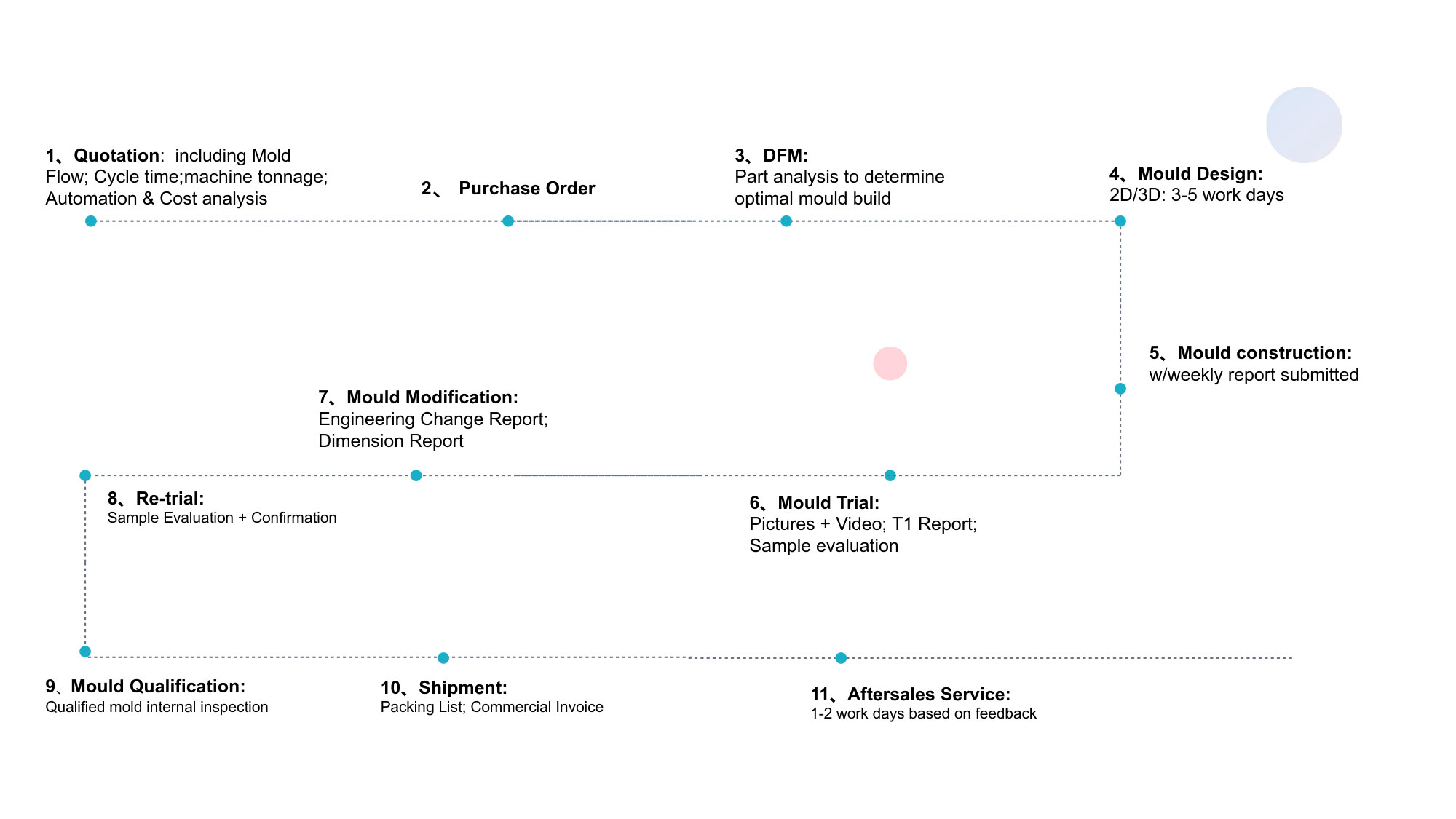
DFM Review (Week 1) – Customer design submitted. Ansix Tech performs mold flow analysis, provides design optimization recommendations (draft angles, gate placement, wall thickness adjustments), and delivers a written DFM report with risk assessment.
Final Design Approval (Week 2) – All mold design details finalized with customer. Includes material selection confirmation, cavity count decision, and runner system selection.
Steel Procurement and Rough Machining (Week 2–3) – Mold base plates and rough stock cut to size; heat treatment performed for required steel grades.
Precision Machining (Week 3–5) – Five-axis CNC roughing and finishing of cavity geometries; EDM for fine details (small radii, sharp corners, micro-textures).
Heat Treatment and Stress Relieving (as required) – Secondary heat treatment cycles applied to relieve machining-induced stresses before final finishing.
Manual Finishing and Polishing (Week 5–6) – Hand polishing of cavity surfaces to Ra ≤ 0.05 μm; texturing applied if required.
Quality Inspection (Week 6) – Full dimensional inspection via CMM; surface finish verification; assembly validation.
2000-cycle Pre-Delivery Validation (Week 6–7) – Aging test on our injection molding machines; final adjustments made as needed.
Documentation and Shipment (Week 7) – Full dimensional report, material certifications, maintenance schedule, and spare parts list delivered with mold.
Standard lead times:
Simple mold (single cavity, basic geometry): 25 days
Standard mold (4–8 cavities, medium complexity): 35–45 days
Complex mold (multiple cavities, intricate cooling channels): 50–60 days
Expedited service – can compress to 20–25 days without skipping validation steps (increased cost due to overtime and prioritized machine scheduling)
The 20-day expedited risk guarantee: When we commit to an expedited delivery, we do not skip any quality or validation steps. The mold still receives full DFM analysis, full dimensional inspection, and full 2000-cycle validation. The expedited timeline is achieved through dedicated machine allocation and shift-based production—never through shortcut testing.
3.7 Mold Types and Configurations
Mold Type Typical Cavity Count Best For Key Benefits
Single-cavity mold 1 Prototyping, validation, low-volume production Lowest initial investment, rapid design iterations
Multi-cavity cold runner mold 4, 6, 8 Medium to high-volume production Reduced per-part cycle time, balanced filling
Family mold (multiple sizes/shapes) 2–4 cavities of different sizes Customers with multiple cup size variants One tool for full product line; reduced capital investment
Hot runner mold 4–12+ Extremely high-volume production (>1 million/year) Minimal material waste, consistent temperature control across all cavities
Multi-cavity mold example: An 8-cavity mold running a 45-second cycle produces one cup every 5.6 seconds (60/45 × 8 = 10.7 units per minute, or 641 units per hour). This same mold running 20 hours/day, 6 days/week produces approximately 77,000 cups per week. At this rate, the mold pays for itself in weeks rather than months.
Customer value delivered: By analyzing your annual demand forecast, we recommend the optimal cavity configuration that balances initial tooling cost against per-unit manufacturing cost. For moderate volumes (100,000–300,000/year), a 4-cavity mold offers the best return. For volumes exceeding 500,000/year, an 8-cavity mold reduces per-unit cost sufficiently to justify the higher upfront investment.
Section 4: LSR Injection Molding Process – The Art and Science of Consistency
4.1 LSR Injection Molding Overview – Why It Differs from Thermoplastics
LSR injection molding differs fundamentally from thermoplastic molding. While thermoplastics are melted and then cooled to solidify, LSR is injected cold and cured via heat-activated cross-linking—in other words, we inject cold material into a hot mold .
Process Parameter LSR Injection Molding Thermoplastic Injection Molding
Material form Two-component liquid (A:B 1:1 mix) Solid pellets (single component)
Feed zone temperature 20–40°C (cooled to prevent pre-cure) 150–300°C (melted)
Mold temperature 120–200°C (curing temperature) 20–80°C (cooling temperature)
Material behavior Cross-linking (vulcanization) Solidification (freezing)
Phase change Irreversible (thermoset) Reversible (thermoplastic)
Cycle time 30–90 seconds per shot 15–60 seconds per shot
Runner system Cold runner required Hot or cold runner options
Key distinction for menstrual cups: Because LSR undergoes chemical cross-linking (vulcanization) rather than physical freezing, precisely controlling mold temperature and curing time is essential. Under-cured cups are sticky, weak, and unhygienic. Over-cured cups are brittle and lose elasticity.
4.2 Metering and Mixing – The First Critical Control Point
The LSR injection molding process begins with the metering and mixing of the two-part LSR system:
High-precision gear pumps meter the A and B components at a precisely controlled 1:1 ratio.
Static mixing element thoroughly blends the two components into a homogenous mixture.
Vacuum degassing removes air bubbles before injection—critical for menstrual cups where internal bubbles compromise strength and aesthetics.
Color dosing unit adds pigment masterbatch to achieve custom colors (accuracy within 0.5% of target).
Mixing quality standard: Ansix Tech verifies that A/B ratio accuracy is maintained within ±0.5% during continuous production runs. Mixing inconsistency is a primary cause of sticky surfaces (incomplete curing) and poor tear strength. Our automated closed-loop mixing system includes real-time flow monitoring and automatic adjustment to maintain ratio accuracy even as material viscosity varies with temperature.
Quality impact: For a customer who previously experienced 12% scrap from sticky surfaces due to inconsistent mixing, our closed-loop system reduced this defect to <1%.
4.3 Injection Parameters for Menstrual Cups
Parameter Typical Range Optimal Setting for Menstrual Cups
Injection pressure 40–150 kg/cm² 80–120 kg/cm² depending on cup thickness
Injection speed Multi-stage control High speed initial fill (to maintain flow front), reduced at completion to prevent flashing
VP (velocity-to-pressure) switch point Position-based or cavity pressure-based Precisely timed to prevent short shots or overpacking
Mold temperature 150–215°C 170–190°C for balanced curing across cup thickness
Curing (vulcanization) time 15–90 seconds 30–50 seconds for typical cup wall thickness (1.5–2.5 mm)
LSR feed temperature 20–40°C 25–30°C to maintain optimal viscosity and prevent pre-cure
Holding pressure 30–70% of injection pressure Applied after VP switch to compensate for material shrinkage during cross-linking
4.4 Multi-Stage Injection Control for Complex Geometries
Menstrual cups are not uniform in thickness. The rim is typically thicker (stiffened for structure) while the body is thinner (soft for comfort). Multi-stage injection control tailors the injection profile to the geometry:
Stage 1 – High-speed initial fill to quickly fill the thick rim section, preventing premature cooling in that zone.
Stage 2 – Reduced-speed fill as material approaches the thinner stem section, preventing overpacking.
Stage 3 – Very low-speed final fill to gently complete stem filling without creating flow marks or air traps.
Why this matters: Without multi-stage control, injection speed that works for the thick rim overpacks the thin stem, causing flashing at the stem tip. Speed optimized for the stem underfills the rim, creating voids and incomplete rim formation. Multi-stage control eliminates this trade-off.
4.5 Mold Temperature Control – Precision Within ±2°C
For LSR, mold temperature consistency directly correlates with cured properties. Mold temperature variation of even 5°C causes differential curing rates across the cup, resulting in:
Uneven hardness – soft spots that tear easily and firm spots that cause user discomfort
Incomplete surface cure – sticky, tacky surfaces that attract bacteria
Warpage and distortion – differential shrinkage during cross-linking
Ansix Tech’s temperature control system:
High-precision hot oil temperature controllers maintain mold temperature within ±2°C across all cavity zones.
Multi-zone independent control – each cavity section (rim, body, stem) can be maintained at a slightly different temperature if required by the part design.
In-mold temperature sensors (thermocouples embedded in the mold) provide real-time feedback to the mold controller.
Closed-loop temperature control automatically adjusts heater output to maintain setpoint within tolerance.
Periodic validation – temperature distribution verified via thermal imaging at scheduled intervals during production.
Customer value delivered: Temperature control within ±2°C ensures that every cup from the first shot of the day to the millionth shot has identical hardness, surface finish, and dimensional properties. Batch-to-batch consistency is not an aspiration—it is a verified outcome.
4.6 Defect Prevention – Proactive Quality Control
Understanding LSR defect mechanisms allows us to prevent them rather than detect and scrap them. Below are the most common defects in LSR menstrual cup molding and how Ansix Tech prevents them:
Defect Root Cause Ansix Tech Prevention Method
Flashing at parting line Excessive injection pressure; poor clamping; worn mold surfaces Optimized injection profiles to reduce pressure spikes; 0.005 mm parting line fit tolerance; automatic mold protection to detect and prevent overpacking
Air bubbles or voids Trapped air during fill; inadequate venting; excessive injection speed causing air entrainment Strategic venting channels at air trap locations (0.01–0.03 mm depth); vacuum-assisted molding; optimized multi-stage injection profiles
Sticky/tacky surface Incomplete curing; incorrect A/B ratio; low mold temperature Real-time A/B ratio monitoring; cure time optimization via DSC analysis; mold temperature within ±2°C setpoint
Short shots (incomplete filling) Insufficient injection pressure; low mold temperature; blocked gate Real-time cavity pressure monitoring; alarm systems for incomplete fill detection; mold cleaning protocols
Warpage/distortion Uneven mold temperature; insufficient cure time; poor gate placement Multi-zone temperature control; optimized cure cycle; mold flow analysis confirming balanced filling prior to build
Tear/weakness at stem Insufficient cross-linking; sharp mold edges Optimized cure time for thick-to-thin transitions; polished and rounded stem core geometry; LSR grade with high green strength
Demolding deformation Part removed before full cure; overly aggressive ejection speed Extended cure time for soft formulations; optimized ejection speed profiles; air-assist ejection system
Color inconsistency Poor pigment dispersion; inconsistent injection parameters Pre-dispersed, medical-grade masterbatches; optimized static mixer design; stabilized injection parameters
4.7 Real-Time Process Monitoring and Closed-Loop Control
All Ansix Tech injection molding machines are connected to a centralized MES (Manufacturing Execution System). This system provides:
Real-time parameter logging – temperature, pressure, speed, and position data recorded for every shot
Statistical Process Control (SPC) – automated alerts when any parameter drifts outside control limits
Manufacturing traceability – each batch of cups linked to specific machine settings, material lot number, and operator ID
Closed-loop process control – sensors embedded in the mold (cavity pressure, temperature) provide feedback that automatically adjusts machine parameters to maintain optimal conditions
Why real-time monitoring matters: Without machine connectivity, process drift goes undetected until defective parts are discovered at final inspection—resulting in thousands of scrapped parts and wasted production time. Our MES system detects parameter drift at the source and can automatically adjust or alert operators before any defective parts are produced.
Quantifiable benefit: For a typical high-volume production line (500,000 cups/year), real-time monitoring and closed-loop control reduce scrap rates from an industry average of 6–8% to less than 2%. At a per-unit cost of 1.50,annualsavings=30,000–$45,000 in avoided scrap.
Section 5: Quality Assurance and Validation – Your Regulatory Gateway
Medical device manufacturing is not about hoping for quality—it is about proving quality through documented evidence. Ansix Tech operates under a comprehensive quality management system aligned with medical device manufacturing standards . For menstrual cup projects (typically categorized as Class I or II medical devices depending on market and claim structure), we provide full validation documentation suitable for regulatory submissions.
5.1 Quality Management System Framework
Standard / Requirement Ansix Tech Compliance Status
ISO 13485:2016 (Medical devices – Quality management systems) Fully implemented QMS with documented procedures for design control, risk management, and corrective action
FDA 21 CFR Part 820 (Quality System Regulation) Documented processes aligned with QSR requirements; supplier qualification protocols
ISO 14971 (Risk management for medical devices) Risk assessment documented for each project
ISO 14644-1 (Cleanroom classification) Class 8 cleanroom environment for medical-grade molding; particulate monitoring
Third-party certifications: Ansix Tech maintains valid ISO 13485 certification for medical device component manufacturing. Certificates and audit reports are available for customer review upon request.
5.2 Process Validation Protocol (IQ/OQ/PQ)
For menstrual cup projects requiring medical device compliance, Ansix Tech follows the established IQ/OQ/PQ validation framework:
Validation Phase Objective Deliverables
IQ (Installation Qualification) Verify that molding equipment and mold are installed correctly according to specifications Equipment installation checklist; mold installation verification report; utility connections validated
OQ (Operational Qualification) Establish process operating windows (temperature, pressure, speed, time) and demonstrate capability within these windows Parameter limit study report; capability analysis (Cpk) for critical dimensions; gauge R&R for measurement systems
PQ (Performance Qualification) Demonstrate consistent production of conforming parts over extended runs 3 consecutive production runs × 300+ parts; full dimensional and functional testing for all runs; statistical summary of quality metrics
PQ acceptance criteria: Cpk ≥ 1.33 for all critical-to-function dimensions; defect rate <1.5% across three production runs.
5.3 In-Process Quality Control (IPQC) Protocol
Checkpoint Frequency Measured Parameters Action if Out of Spec
First article inspection Beginning of each shift / material lot Full dimensions, Shore A hardness, visual inspection Stop production; adjust parameters; requalify before restart
In-process sampling Every 50–100 shots (automated sampling) Key dimensions (rim diameter, body length, wall thickness), visual quality Operator notification; parameter adjustment; increased sampling frequency
Last article inspection End of each shift Full dimensions, visual inspection Compare with first article; identify any drift trends
Hardness verification Every shift / material lot Shore A (3 readings per cup, 5 cups per sample) Verify material lot certification; adjust cure time/temperature
Visual inspection (100%) Continuous (automated vision system) Flash, bubbles, surface defects, color consistency Auto-reject defective parts; data logged for root cause analysis
5.4 Final Product Release Testing
Prior to shipment, each batch of menstrual cups undergoes the following tests:
Test Method Specification
Dimensional verification CMM / optical measurement Within print tolerance (±0.05 mm typical)
Shore A hardness Durometer (Shore A) Target ±3 points
Visual inspection Illuminated inspection booth No flash, bubbles, discoloration, or surface defects
Functional seal test Vacuum/air pressure test Maintains seal under specified pressure
Puncture recovery test Mechanical puncture and recovery measurement Returns to original shape within specified parameters
Biocompatibility (per customer requirement) Third-party testing (ISO 10993 series) Cytotoxicity, sensitization, irritation testing
Sterilization compatibility validation Autoclave cycle testing (121°C, 15 min) No degradation or property loss after 10 cycles
Customer value delivered: Every batch of cups shipped from Ansix Tech is accompanied by:
Certificate of Analysis (C of A)
Material lot traceability report
Dimensional inspection report
Process parameter log for the production run
Sterilization compatibility statement (if applicable)
Certificate of conformance
For regulatory submissions, this documentation provides the evidence needed to demonstrate that your menstrual cup manufacturing process is under control and validated.
5.5 Cleanroom Manufacturing for Medical-Grade Cups
For menstrual cup manufacturing intended for medical device classification, we operate within an ISO Class 8 cleanroom environment (equivalent to 100,000-class) that includes:
HEPA filtration to control airborne particulate concentration
Positive pressure differential to prevent contaminant ingress
Controlled temperature and humidity (temperature 22°C ±2°C, humidity 50% ±10% RH)
Controlled material flow from raw material receiving through finished product packaging
Dedicated cleanroom garments for all production personnel
Regular environmental monitoring (particle counts, surface contamination, air pressure)
Why cleanroom manufacturing matters: Menstrual cups are inserted into the body and must be free from particulate contamination, mold release residues, and biological contaminants. Manufacturing in a non-controlled environment risks product recalls, regulatory action, and user health issues. Our cleanroom infrastructure provides documented evidence of controlled environmental conditions suitable for medical device component production.
Section 6: Post-Processing, Packaging, and Logistics
6.1 Post-Processing Operations
Operation Method Standard
Flash/debris removal Automated trimming + manual inspection (as needed) No visible flash >0.1 mm anywhere on cup
Surface cleaning Deionized water rinse; air knife drying No residues; verified via cleanliness testing
Secondary curing (post-cure) Oven post-cure (160°C, 2 hours) when required by LSR grade Reduces extractables; stabilizes properties
Sterilization (if required) Gamma, ETO, or autoclave (per customer specification) Sterility assurance level (SAL) to customer specification
6.2 Packaging Options
Packaging Type Suitable For Key Considerations
Bulk packaging (polybag, box) High-volume commercial distribution Lowest cost; requires customer final packaging
Individual sterile blister packs Medical/retail ready-to-use products Meets ISO 11607 packaging standards for sterile devices
Retail-ready consumer packaging Direct-to-consumer sales Custom print; multi-language inserts
Cleanroom-sealed bags Customers with in-house sterilization Maintains cleanliness through customer processing chain
6.3 Logistics and Delivery Capabilities
Capability Details
Production capacity Multiple molding machines dedicated to LSR; 8-cavity mold produces ~77,000 cups/week running 20 hours/day, 6 days/week
Standard lead time (mold + first production run) 8–10 weeks from final design approval to first qualified batch
Expedited options Compressed to 5–6 weeks (subject to capacity and design complexity)
Reorder lead time (established mold) 2–4 weeks (depending on order size)
Shipping DAP, FOB Shenzhen, or customer-specified; air and ocean freight options
Inventory management Kanban, consignment, or blanket PO with scheduled releases
Geographic advantage Dongguan manufacturing hub with proximity to raw material suppliers, mold makers, and electronics integrators for rapid prototyping and efficient troubleshooting
Section 7: Total Cost of Ownership (TCO) Analysis – Where Savings Accumulate
Cost is not just the purchase price of the mold or the per-unit manufacturing cost. The true cost of a menstrual cup includes:
Initial tooling investment
Material cost per part
Machine utilization and cycle time
Scrap and rework rates
Post-processing labor
Quality inspection resources
Mold maintenance and repair
Logistics and inventory holding
Ansix Tech’s approach drives savings across every dimension of TCO.
7.1 Tooling Cost Optimization
Strategy Impact
Optimized cavity count (match to annual demand) Avoids over-investment in high-cavity tool for low volume OR under-investment in low-cavity tool causing per-unit costs to be too high
Family mold for multiple sizes One tool produces multiple cup sizes; reduces tooling investment 40–60% compared to separate molds
Modular tooling design Core and cavity inserts replaceable without rebuilding entire mold; lower repair costs
Standardized components Off-the-shelf mold bases and components reduce machining costs compared to fully custom designs
7.2 Material Cost Savings
Strategy Impact
Runner geometry optimization Reduces runner-to-part ratio from 12–15% to <8%
Strategic cold runner design Minimizes material waste that cannot be recycled once cured
Bulk LSR purchasing (aggregated demand) 15–20% material cost reduction through volume purchasing
Thin-wall design assistance (DFM) Reduce cup wall thickness by 0.3 mm = 10–15% material reduction per part
Quantifiable example: A standard menstrual cup of 2.0 mm wall thickness weighing 28 g. Reducing to 1.7 mm (verified via DFM analysis to maintain strength) reduces weight to 24 g. At 1 million cups/year, material savings = 4,000 kg annually. At LSR cost of 16/kg,annualsavings=64,000.
7.3 Cycle Time Optimization (Efficiency)
Strategy Cycle Time Reduction Savings Impact (1 million cups/year)
Optimal cure time validation 5–10 seconds saved (from 45s to 38s) 11% production increase; same machine produces ~110,000 more cups/year
Multi-cavity mold (8-cavity vs 4-cavity) 100% output increase with same cycle time Doubles production without adding machines
Automation integration (robotic part removal) Eliminates operator loading/unloading delays Reduces labor cost per part 20–30%
Optimized cooling channel design Not applicable for LSR (no cooling stage) Better temperature control = fewer rejects
Quantifiable example: Reducing cycle time from 45 seconds to 40 seconds on an 8-cavity mold yields an additional 3,200 parts per day (assuming 20-hour operation). At 1.50perpart,additionaldailyrevenue=4,800. Over one year = $1.44 million in additional throughput from the same equipment.
7.4 Scrap Reduction Savings
Scrap Source Industry Baseline Ansix Tech Achievable Savings (1M cups)
Startup/reject parts 3–5% 1–2% 30,000–45,000
Dimensional out-of-spec 2–4% 0.5–1% 22,500–45,000
Visual defects 2–3% 0.5–1% 22,500–30,000
Total scrap 7–12% 2–4% 75,000–120,000
7.5 Reduced Post-Processing Labor
Post-Processing Operation Industry Baseline Ansix Tech Achievable Labor Savings (1M cups)
Flash trimming 10 seconds per part 0 seconds (flash-free molding) 2,778 hours/year
Visual inspection 5–8 seconds per part Automated vision system 1,389–2,222 hours/year
Rework/rejection handling 30–60 seconds per reject Minimal rejects Varies
Total labor savings — — 4,000–5,000 hours/year
At 20/hourloadedlaborcost,annuallaborsavings=80,000–$100,000.
7.6 Mold Maintenance and Longevity
Parameter Industry Standard Ansix Tech Standard
Cycles between major maintenance 100,000–150,000 200,000–300,000
Spare parts included None or minimal Critical wear parts (valve needles, ejector pins) included
Repair cost after wear 30–50% of new mold cost Warranty coverage for structural defects (3 years)
Lifetime repair cost (1M cycles) 50–70% of initial tooling cost 20–30% of initial tooling cost
7.7 Total Cost of Ownership – Summary Comparison
Cost Component Typical Competitor Ansix Tech Cumulative Savings (1M cups)
Tooling investment 25,000–40,000 (4-cavity) 28,000–38,000 —
Material cost (@ $16/kg, 28g/cup) $448,000 (no optimization) $403,200 (10% reduction via geometry) $44,800
Scrap loss (7–12% vs 2–4%) 55,000–88,000
Post-processing labor 60,000–120,000
Mold maintenance (over life) 6,900–16,600
TOTAL SAVINGS (over typical competitor) —166,700–269,400
Bottom line: Over the life of a 1-million-cup production run, Ansix Tech delivers
166,000to269,000 in total cost savings compared to typical industry alternatives. These savings represent actual value—either captured as higher profit margins or reinvested into product development and marketing.
7.8 Risk Reduction – Value Quantified
Risk reduction is difficult to quantify but is arguably the most valuable service Ansix Tech provides.
Risk Area Industry Typical Ansix Tech Mitigation Risk Reduction Value
Regulatory submission failure Missing validation documentation; need for supplementary studies Full IQ/OQ/PQ validation package; material certification; cleanroom records Avoids 3–6 month submission delays
Product recall due to quality issue >0.5% defect rate reaching customers <0.1% defect rate; automated inspection; lot traceability Avoids 500,000–5M recall costs
Supply chain disruption (mold breakdown) 2–4 weeks downtime for repairs 24-hour repair turnaround (in-house toolroom); spare parts inventory Avoids 50,000–100,000 lost production
Late market entry 14–20 week mold + validation timeline 8–12 week expedited options Captures additional market share; earlier revenue recognition
Biocompatibility liability Limited or no testing documented ISO 10993-compliant material selection and documentation Avoids 250,000–1M+ liability claims
Total risk reduction value (conservative estimate): 800,000–6 million in avoided costs and liability over the life of the program, depending on product class and market scale.
Section 8: Ansix Tech’s Industry Experience – Why Trust Matters
With over 28 years of manufacturing experience, Ansix Tech has built a reputation for delivering precision LSR molding solutions for medical device, healthcare, and consumer product applications. Our portfolio includes:
Medical-grade LSR components – including protective covers for laparoscopic trocar incisions, guide tubes, catheter components, and stapler handle overmolding
Baby care LSR products – baby pacifiers, feeding system components requiring the same soft-touch, biocompatible material properties as menstrual cups
High-precision industrial seals and gaskets – demonstrating our capability to hold tight tolerances on complex geometries
Multi-material overmolding – hard/soft combinations for ergonomic medical device components
For each mold delivered, Ansix Tech provides a complete documentation package including steel grade certification, heat treatment parameters, hardness verification, and dimensional inspection report .
Our design approach integrates with MES systems and quality management frameworks, enabling real-time data access for OEM customer audits . For medical device OEMs requiring full supply chain visibility, our connected manufacturing environment supports ISO 13485 quality management and provides traceable production records suitable for regulatory submission.
Customer endorsement principle: We encourage prospective customers to bring an existing part (including parts currently produced by other suppliers) for a full DFM report evaluation. This exercise demonstrates precisely how we identify and resolve molding risks such as weld line positioning, air trap mitigation, and shrinkage compensation. We let our engineering methodology speak for itself before we ever discuss pricing.
Section 9: The Full-Service Engagement Model
Unlike mold-only shops or pure molding houses, Ansix Tech offers end-to-end project management from concept to delivery:
Phase Activities Deliverables
1. Concept & Design DFM analysis; material selection; mold flow simulation; cost modeling DFM Report; material recommendation; quotation; preliminary timeline
2. Development Detailed mold design; prototype tooling (if applicable); process development 3D mold model; prototype parts (if requested); process parameter recommendations
3. Tooling Full production mold manufacturing; 2000-cycle validation; dimensional certification Production mold; validation report; wear analysis; spare parts kit
4. Validation IQ/OQ/PQ (per medical device requirements); first article inspection; process capability analysis Validation documentation; PPAP package (if required); capability reports
5. Production High-volume LSR injection molding; in-process quality control; packaging Qualified production parts; lot traceability documentation; C of A
6. Logistics Warehousing; inventory management; scheduled releases; international shipping Flexible delivery schedule; shipping documentation; customs clearance support
Single-source value: Managing these phases through separate vendors (design firm, mold maker, molding house, validation lab, logistics provider) typically adds 6–10 months to the development timeline and increases project management overhead by 25–40%. Ansix Tech’s integrated model eliminates coordination friction and accelerates time-to-market by 3–6 months compared to fragmented supply chains.
Section 10: Commitment Guarantee and Post-Delivery Support
Commitment Details
Mold structural warranty 3 years (excluding normal wear components such as ejector pins, valve needles, and seals)
Maintenance support Scheduled mold maintenance every 200,000 cycles (recommended schedule provided)
Repair turnaround Emergency repairs 24 hours; standard repairs 5–7 days
Spare parts Critical wear components provided with mold; additional parts available for order
Technical support Engineering support available for duration of production relationship
Process optimization Annual process review to identify further efficiency/cost improvements
Customer value delivered: When you purchase a mold from Ansix Tech, you are not buying a piece of steel—you are buying a production asset that we support throughout its operational life. If the mold requires repair, our in-house machining and EDM capability means repairs are completed in-house, typically within 24 hours for emergency situations, without shipping the mold to an external repair facility.
Conclusion
Menstrual cup manufacturing is not a commodity service—it is a specialized discipline requiring deep expertise in LSR material science, precision mold engineering, medical-grade process control, and regulatory compliance. Ansix Tech brings over 28 years of this specialized knowledge to every project, delivering:
Quality that protects your brand – Full validation documentation, ISO 13485-aligned processes, and documented capability (Cpk ≥ 1.33) ensure that every cup meets specifications.
Cost savings that improve your margins – Material optimization (10–15% reduction), scrap reduction (from 7–12% to 2–4%), and post-processing elimination deliver
0.17–0.27 in savings per cup.
Speed that captures market opportunity – Integrated project management and expedited tooling options bring qualified product to market 3–6 months faster than fragmented supply chains.
Risk reduction that protects your business – Full IQ/OQ/PQ validation packages, material certifications, cleanroom manufacturing, and lot traceability eliminate regulatory and liability exposure.
Reliability that enables growth – Molds guaranteed for 3 years, with documented 1,000,000-cycle capability and 24-hour emergency repair service.
At Ansix Tech, we do not just build molds—we build production solutions designed to generate value throughout the life of your menstrual cup product line. We invite you to share your current design for a no-obligation DFM review and cost analysis. Let us demonstrate, before you commit a single dollar to tooling, exactly how we would solve your manufacturing challenges and deliver measurable value to your business.
Contact Ansix Tech today to begin your menstrual cup manufacturing program.
Ansix Tech Co Ltd
If you have any plans related to Menstrual cup LSR liquid silicone molding , you can contact us at any time. We will turn your ideas into reality, let you realize your dreams, and obtain large orders from the market. Our contact information is info@ansixtech.com. Or contact our CTO, mail: stephen@ansixtech.com
#www.ansixtech.com #ansixtech.com #Menstrual cup LSR liquid silicone molding #Menstrual cup LSR liquid silicone molding injection molding companies #Menstrual cup LSR liquid silicone molding Canopy Mold injection mold companies #Ansix #Ansix moulds #Ansix china #Ansix tech china #Ansix tech company #Ansix facotry #Menstrual cup LSR liquid silicone molding injection molding #Menstrual cup LSR liquid silicone molding injection tools #Menstrual cup LSR liquid silicone molding injection moulds #Menstrual cup LSR liquid silicone molding plastic mould #Menstrual cup LSR liquid silicone molding plastic tools #Ansix Tech #Ansix molds #Ansix injection molding #Ansix mold factory #injection molding Menstrual cup LSR liquid silicone molding#Ansix mold factory #Menstrual cup LSR liquid silicone molding china #Menstrual cup LSR liquid silicone molding molds #injection factory #Menstrual cup LSR liquid silicone molding injection molding #Menstrual cup LSR liquid silicone molding injection molding factory #injection molding company #Menstrual cup LSR liquid silicone molding injection mold companies #Menstrual cup LSR liquid silicone molding Tooling #Menstrual cup LSR liquid silicone molding mold limited #Ansix mold china #Ansix companies #Ansix company China #Menstrual cup LSR liquid silicone molding facotry #Ansix Tech #Ansix Tech mould #Menstrual cup LSR liquid silicone molding injection moulding #injection moulding company #Ansix Menstrual cup LSR liquid silicone molding parts injection mold companies #medical injection molding companieschina #Menstrual cup LSR liquid silicone molding china factory #Ansix moulding companies #Ansix molding company #Menstrual cup LSR liquid silicone molding injection moulding facotry #Ansix Tech mold #Menstrual cup LSR liquid silicone molding mould #Menstrual cup LSR liquid silicone molding plastic injection molding #ansix plastic mold #Mold manufacturing #Menstrual cup LSR liquid silicone molding parts manufacturing #Menstrual cup LSR liquid silicone molding plastic parts factory #Menstrual cup LSR liquid silicone molding injection parts mold #Menstrual cup LSR liquid silicone molding PRECISION MANUFACTURING #Menstrual cup LSR liquid silicone molding #China mold #Menstrual cup LSR liquid silicone molding injection moulding china #Menstrual cup LSR liquid silicone molding mould china #china precision mold #mold in china #Menstrual cup LSR liquid silicone molding mold china #Precision molds #High-precision molds #Menstrual cup LSR liquid silicone molding #Injection molds #Menstrual cup LSR liquid silicone molding Factory #Menstrual cup LSR liquid silicone molding Company #Super Large Injection Mold Factory #Large Tonnage Injection Molding Factory #Menstrual cup LSR liquid silicone molding Company #Menstrual cup LSR liquid silicone molding Factory #2800T Injection Molding Factory #3000 Ton Injection Molding #4500 Ton Injection Molding Factory #Large Mold Injection Molding #Large Plastic Mold Injection Molding Factory #Large Injection Mold Manufacturer #Plastic Mold Factory #Injection Mold #Plastic Mold