



Molding Die for Medical Stapler Cartridges (LCP Material)
FEATURES
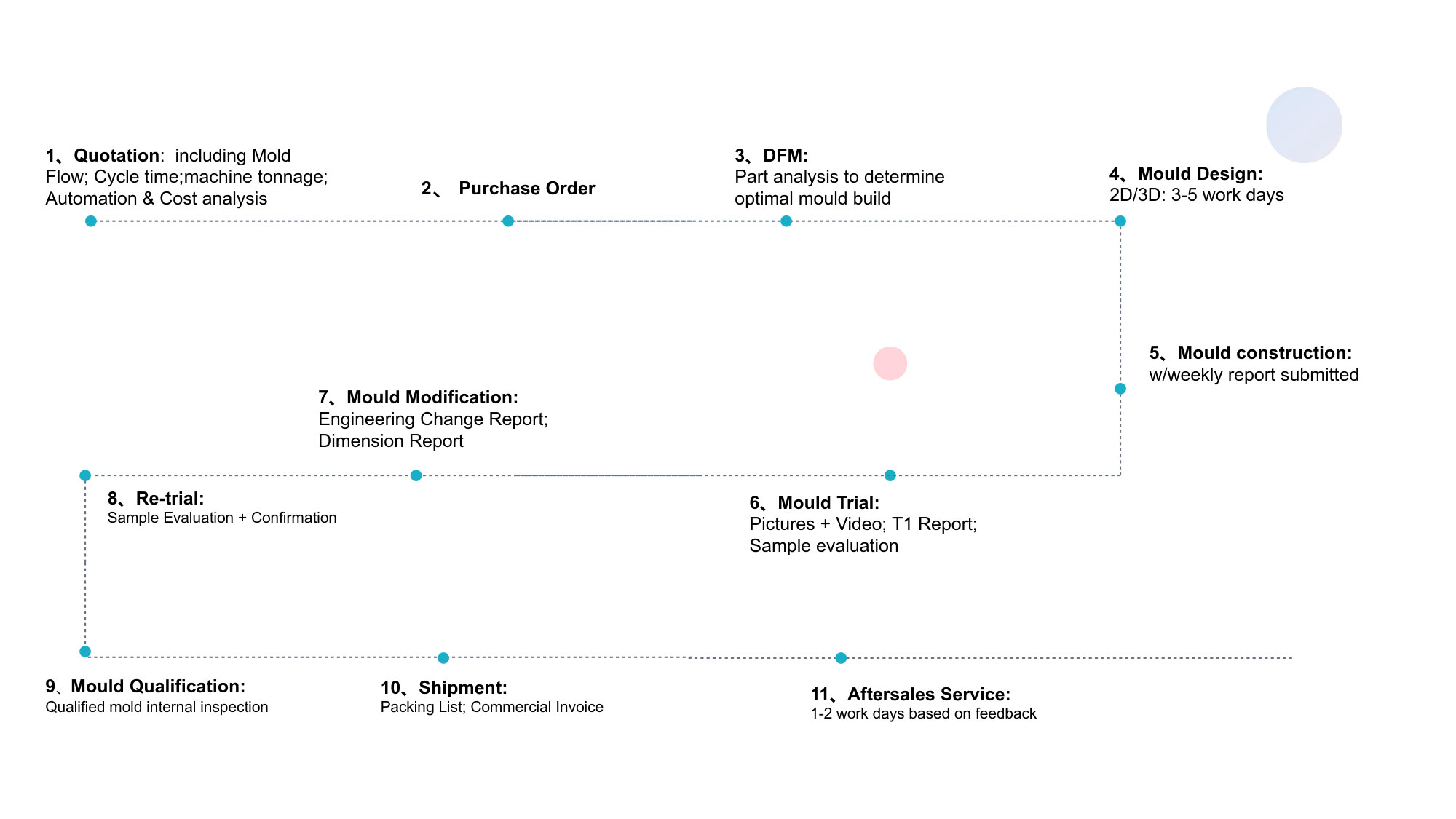
I. The “Hard Power” Foundation: Equipment Infrastructure That Builds Trust
Precision Mold Manufacturing Equipment
Medical stapler cartridges demand micron-level accuracy, and Ansix’s equipment portfolio delivers precisely that. Our facility is equipped with five-axis high-speed machining centers capable of machining complex surface geometries to ±0.002 mm accuracy. This ensures that your cartridge’s parting lines remain smooth and burr‑free—eliminating post‑molding deflashing operations that add cost and risk contamination. Wire EDM (slow-moving wire cutting) allows us to create micro‑features such as 0.03 mm small holes and narrow slots without inducing thin‑wall deformation, a critical capability for the intricate internal channels of stapler cartridges.
-
Mold Description
Product Materials:
LCP
Mold Material:
S136ESR
Number of Cavities:
1
Glue Feeding Method:
COLD runner
Cooling Method:
Water cooling
Molding Cycle
22.5s

Injection Molding Machine Fleet
Our 260 injection molding machines span a clamping force range from 30 tons to 2,800 tons, covering everything from small‑batch prototyping to high‑volume production runs of millions of cartridges. The fleet is dominated by all‑servo electric drive machines, which provide repeatable precision of ±0.1% . This guarantees that the 100th, 10,000th, and 1,000,000th part are identical—essential for medical devices where lot‑to‑lot consistency is mandated by regulators.
Metrology and Quality Inspection Equipment
Every mold and every batch of parts undergoes rigorous inspection. Our CMM (Coordinate Measuring Machine) and optical measurement systems deliver high‑resolution dimensional verification. Before any mold leaves our facility, we perform a full dimensional report comparing all critical features against CAD data. For high‑volume production, we maintain Cpk ≥ 1.33 on all critical‑to‑quality dimensions, providing statistical evidence that your cartridge components will perform reliably across millions of cycles.
-
Core Competitiveness in Mold Manufacturing: Turning Specifications into Guarantees
Mold Life and Material Selection
For medical stapler cartridges molded from fiber‑reinforced LCP, we guarantee 500,000 shots minimum. Our mold bases are constructed from P20 steel, while cavity and core inserts utilize wear‑resistant grades such as S136, 2344, 8407, SKD11/61, DC53, M340, NAK80, and H13. These materials are selected to withstand the high injection pressures (1,500–2,000 bar) and extreme melt temperatures (320–400°C) characteristic of LCP processing. Every steel batch is accompanied by a material certification report and detailed heat treatment curve to validate hardness and microstructure.
Achievable Tolerances
We routinely hold ±0.05 mm for structural features, and for precision mating surfaces—such as staple alignment rails and pusher interfaces—we achieve ±0.005 mm. For medical stapler cartridges, where staple hole positioning directly impacts tissue closure quality, this precision is non‑negotiable.
Mold Types and Configurations
Ansix has extensive experience with hot runner systems (minimizing runner waste—critical for expensive LCP materials), stack molds (doubling output without doubling floor space or machine tonnage), two‑shot/multi‑material molds (for overmolded cartridges with integrated seals), and high‑gloss molds (Ra < 0.05 μm) where surface finish influences friction or adhesion. For cartridge applications, multi‑cavity molds (16, 24, or 32 cavities) are standard, balanced to ensure each cavity fills identically.
Gate and Runner System Optimization
The single greatest determinant of cartridge quality is the gate system. LCP’s directional “fountain flow” behavior and its tendency to form weak knit lines make gate placement a critical engineering decision. Using Autodesk Moldflow and Moldex3D, we predict melt‑front advancement, air trap locations, and weld‑line positions before cutting steel. We optimize gate count and location to ensure balanced cavity filling, eliminating short shots and minimizing scrap.
Standard Lead Times
We offer tiered lead time commitments tailored to project urgency:
Mold Complexity Standard Lead Time Rush Option
Simple (single-cavity, basic geometry) 10 days 7 days
Medium complexity (multi-cavity, slides) 25–45 days 20 days
High complexity (large multi-cavity, hot runner) 45–60 days 35 days
Rush deliveries maintain all validation steps (DFM, mold flow, T0 sample inspection) — nothing is skipped.
III. Injection Molding Process Control: Eliminating Quality Anxiety
Process Standardization and MES Integration
All our injection molding machines are networked and integrated into a MES (Manufacturing Execution System) that locks down critical process parameters—melt temperature, injection pressure and velocity, hold pressure, cooling time. Only authorized engineers can adjust these parameters, and every change is logged. First‑article and last‑article inspection is performed for each batch, comparing key dimensions to ensure statistical stability across the run.
Dimensional Stability Control
LCP’s rapid solidification and anisotropic shrinkage pose significant challenges for dimensional consistency. We address this through zone‑controlled mold temperature regulation — typically running mold temperatures of 120–180°C for LCP, with core and cavity temperatures maintained within 2°C of each other. This minimizes differential shrinkage and warpage. For a typical medical stapler cartridge with 1.0 mm wall thickness, we have demonstrated <0.02 mm fluctuation in critical hole spacing across three consecutive production batches over one week.
Surface Quality and Aesthetic Standards
Medical stapler cartridges are generally functional, not cosmetic. However, surface defects like flow marks, weld lines, or burn marks can compromise structural integrity or interfere with staple deployment. We achieve Ra ≤ 0.4 μm surface finish as standard, eliminating post‑molding polishing. Where specific appearance grades are required, we offer Ra ≤ 0.2 μm high‑gloss finishes. For cartridges requiring printing or labeling, we build dimensional compensation into the mold design, enabling registration accuracy of ±0.1 mm for printed markings—critical for device traceability and expiration dating.
Special Materials Capability
Ansix has deep processing expertise across a wide range of engineering thermoplastics and high‑performance materials: PC/ABS, PC, PPS+40%GF, PEEK, PTFE/PFA, PA6+GF30, PBT, PEI, LCP, and liquid silicone rubber (LSR) . For medical stapler cartridges, our focus is on medical‑grade LCP (e.g., Celanese Zenite® or Ticona Vectra®), which offers UL94 V‑0 flame retardance, compatibility with gamma, EtO, and autoclave sterilization, and excellent dimensional stability. We understand that LCP’s unique processing challenges—low viscosity, rapid freezing, and anisotropic properties—require specialized molding parameters to avoid short shots, flash, and sink marks.
Essential Properties of LCP for Medical Stapler Cartridges
LCP is the material of choice for thin‑wall medical cartridges because of its exceptional combination of properties:
Property Typical Value Why It Matters for Your Cartridge
Melting point 280–350°C Withstands sterilization cycles without deformation
Heat deflection temp 180–300°C (1.82 MPa) Maintains alignment and function under surgical conditions
Tensile strength 150–230 MPa Prevents cartridge fracture during staple firing
Flexural modulus 10–20 GPa Ensures cartridge rigidity for precise staple alignment
Flame resistance UL94 V-0 (inherent, no additives) Meets hospital fire safety standards
Wall thickness capability 0.25–0.5 mm Enables minimally invasive surgical tools
Biocompatibility USP Class VI, ISO 10993 Certifiable for patient‑contact applications
IV. End‑to‑End Service Integration: Reducing Your Total Ownership Cost
Early Engagement: DFM and Design Feasibility
Before you commit to cutting steel, Ansix delivers a comprehensive Design for Manufacturability (DFM) report that includes:
Draft angle recommendations (typically 1–2 degrees for LCP thin‑wall cartridges) to ensure reliable ejection
Wall thickness optimization (uniform cross‑section to minimize sink and warpage)
Gate location and parting line placement to keep aesthetic and functional surfaces defect‑free
Ejector pin mark allowances to avoid damaging critical sealing or mating surfaces
Failure Mode and Effects Analysis (FMEA) to identify and mitigate potential molding risks
This upfront analysis eliminates the costly “mold first, then fix afterward” cycle that plagues less experienced molders.
Prototyping and T‑Sample Iteration
We provide T0 through T3 trial samples, each accompanied by a detailed improvement report. Using modular insert strategies, we can quickly swap core/cavity inserts to test alternative designs without building an entirely new mold. This agile approach reduces tooling iteration costs by up to 40% compared to conventional mold‑rework methods.
Pilot Production and Process Validation
Before full‑scale mass production, we execute a pilot run of 100–500 shots under production‑equivalent conditions. We collect dimensional data, calculate Cpk for critical features, and confirm that process capability meets your specifications. Only after this validation do we transition to high‑volume output, ensuring that “first part = last part” consistency. For Class II medical devices, this validation is documented in a Validation Master Plan (VMP) and is directly usable for FDA/Notified Body submissions.
Maintenance, Spares, and Lifelong Support
Every mold we deliver includes a set of critical spare parts (ejector pins, core inserts, wear plates). We provide documented maintenance procedures and recommend every 200,000 shots for preventative maintenance. Mold repairs—even for molds built by other manufacturers—are handled in‑house, typically within 24 hours for standard repairs. For molds we built, we offer three‑year structural warranty (excluding normal wear on consumables).
V. Differentiated Commitments: Direct Answers to Common Customer Concerns
Our customers arrive with specific fears born of prior negative experiences. We address each one with a quantifiable, verifiable commitment.
Customer Concern Ansix’s Professional Response
“Molds break down constantly, disrupting my supply chain.” We perform a 2,000‑shot aging test before shipping any mold. You receive a wear report documenting condition after this accelerated life test. We then provide a three‑year structural warranty against mold breakage (excluding normal wear on consumables).
“Parts come out with flash, requiring expensive manual trimming.” We machine parting lines to ±0.005 mm fit precision and employ self‑locking clamp force compensation. The result: flash consistently under 0.03 mm — you eliminate the detrimming step entirely.
“Dimensions drift between batches — quality is unpredictable.” All machine parameters are locked in MES; no unapproved changes occur. We install ultrasonic wall‑thickness sensors that provide real‑time feedback and automatically adjust holding pressure to compensate for material viscosity fluctuations. Optional in‑mold temperature and pressure sensors enable closed‑loop control of each shot.
“Mold repairs take weeks; the mold house is slow.” Our in‑house electrode manufacturing and EDM workshop means mold repairs never leave our facility. Standard repairs (weld repair, insert replacement) are completed within 24 hours. Complex repairs typically within 72 hours.
“I’m worried about regulatory documentation for FDA or MDR.” All resin lots are fully traceable to supplier certificates. Process validation follows IQ/OQ/PQ protocols compliant with ISO 13485 and 21 CFR Part 820. We provide Device Master Record documentation and first‑article inspection reports ready for your regulatory submission.
VI. Deep Dive: Mastering LCP Thin‑Wall Cartridge Manufacturing
The Material: LCP (Liquid Crystal Polymer)
Medical stapler cartridges are engineering marvels — micro‑mechanical assemblies that contain precision‑formed staples, a pusher system, and often a cutting blade, all housed within a polymer shell that must maintain perfect alignment during explosive staple firing. The industry demands sub‑0.5 mm walls to enable minimally invasive surgical instruments.
LCP is uniquely suited for this application due to its self‑reinforcing molecular structure (rod‑like polymer chains that align during flow), excellent thermal stability (withstanding repeated sterilization cycles), inherent flame retardance (UL94 V‑0 without additives), and minimal moisture absorption (no post‑mold dimension drift). However, LCP’s rapid solidification and directional flow properties create manufacturing challenges: LCP freezes almost instantly upon contact with the mold wall, demanding high‑speed injection (fill times under 0.5 seconds) and uniform wall thickness to prevent incomplete filling or weak weld lines.
DFM and Mold Flow Analysis
Our process begins with a comprehensive mold flow analysis that simulates LCP melt behavior before any steel is cut. We use Moldex3D or Autodesk Moldflow to predict:
Filling pattern — ensuring all cavities fill completely without short shots
Air trap formation — identifying vent placement to eliminate burn marks
Weld line location and strength — optimizing gate placement to move weld lines to non‑critical areas
Shear heating — controlling melt temperature rise during thin‑wall filling
Cooling uniformity — designing conformal cooling channels that reduce cycle time and minimize warpage
This digital prototyping is the single most effective cost‑control measure in our process. It eliminates mold rework, reduces trial iterations, and ensures “first shot success.”
Mold Design Strategy for LCP Cartridges
Steel Selection
For LCP’s high‑temperature, high‑wear environment, we select premium materials:
Cavity/Core inserts: S136 or 2344 (stainless or high‑hardness tool steel) — chosen for wear resistance and polishability
Slides and cores: SKD61 or H13 — high hot‑hardness for long‑running production
Wear plates: DC53 — ultra‑high wear resistance for sliding surfaces
All steels undergo documented heat treatment and receive nitriding or PVD coating to further extend tool life in LCP’s abrasive conditions.
Cooling System (Conformal Cooling)
LCP’s rapid solidification is a double‑edged sword: it enables short cycle times but can also cause premature freeze‑off and incomplete packing. We design conformal cooling channels that follow the cartridge contour, ensuring even cooling across thin walls and thick bosses. For challenging geometries, we employ additive‑manufactured cooling inserts that provide cooling within 1–2 mm of the cavity surface — reducing cycle time by 15–30% and eliminating hot spots that cause sink marks.
Runner and Gate System
LCP’s low viscosity requires careful runner sizing to prevent “jetting” (uncontrolled flow entering the cavity). We typically specify:
Main runner: 8–12 mm diameter
Branch runners: 4–6 mm diameter
Gates: Fan gates or submarine gates sized to 0.8–1.5 mm thickness, positioned to direct flow along the longest flow path
Hot runner systems are recommended for LCP because they eliminate runner waste (expensive LCP resin) and reduce pressure loss. However, gate freeze‑off behavior must be carefully characterized: LCP solidifies quickly, so hot tip temperature control (±2°C) is essential to prevent premature gate freeze‑off or stringy gate vestiges.
Venting Strategy
LCP generates minimal gas during molding (unlike nylon or ABS), but proper venting remains critical to prevent burn marks and incomplete filling. We machine 0.03 mm deep, 6‑10 mm wide vents along the parting line and on ejector pins. For deep ribs, we add pin‑vent inserts to evacuate trapped air.
Injection Molding Process Optimization
Molding LCP cartridges demands tightly controlled parameters:
Parameter Recommended Range Why This Matters
Barrel temperature (rear) 300–320°C Prevents premature melting
Barrel temperature (middle) 320–340°C Ensures complete melt
Barrel temperature (front/nozzle) 340–380°C Lowers viscosity for thin‑wall filling
Mold temperature 120–180°C Prevents premature freeze‑off
Injection speed 200–500 mm/s Fills thin walls before solidification
Hold pressure 50–80% of injection pressure Packs out thin sections
Cooling time 4–8 seconds Balances cycle time vs. dimensional stability
We use scientific molding protocols — decoupled molding studies, cavity pressure profiling, and gate‑seal studies — to identify the process window that delivers consistent quality. Each machine is equipped with ultrasonic wall‑thickness sensors and mold temperature sensors to provide real‑time feedback to the MES. If wall thickness or temperature drifts beyond control limits, the offending parts are automatically rejected.
Quality Assurance and Validation
Our quality system is built on ISO 13485 and supports FDA 21 CFR Part 820 compliance for Class II medical devices. For each cartridge project, we execute a full validation lifecycle:
1. Installation Qualification (IQ)
Verify machine installation, utilities (e.g., chiller temperature stability ±1°C), and tooling compatibility. Document that all equipment meets specification.
2. Operational Qualification (OQ)
Establish process windows for critical parameters via Design of Experiments (DOE). Determine upper and lower limits for melt temperature, injection pressure, hold pressure, and cooling time that produce conforming parts.
3. Performance Qualification (PQ)
Produce three continuous production runs under standard conditions, each of sufficient duration (typically 2–4 hours) to statistically validate capability. Measure Cpk ≥ 1.33 for all critical dimensions.
Packaging and Rapid Delivery
Once parts exit the molding machine, we handle automated counting, inspection, and packaging in an ISO Class 7 or Class 8 cleanroom depending on your sterility requirements. Parts are packed in clean, sealed bags or trays, labeled with lot‑traceable information, and prepared for sterilization (EtO, gamma, or autoclave) if required. Our integrated logistics ensures rapid delivery — standard tooling delivery within 45 days, with rush options as short as 20 days.
VII. Cost Reduction: The Ansix Advantage
We understand that in the competitive medical device market, cost matters — not at the expense of quality, but as a commercial necessity. Our integrated approach attacks cost from four directions:
1. Material Cost Reduction
Hot runner systems eliminate runner waste, saving 15–30% on expensive LCP resin compared to cold‑runner molds.
Multi‑cavity molds amortize cycle time across more parts per shot. A 32‑cavity mold produces 32 cartridges per cycle instead of four — dramatically reducing per‑part machine time and labor.
Optimal gate design reduces scrap rates from typical 3–5% to under 1%.
2. Process Efficiency
Shortened cycle times via conformal cooling (15–30% reduction) and optimized parameter windows (10–15% reduction) — more parts per day, lower per‑part overhead.
Automated production cells with integrated robotics reduce labor content by 40–60% compared to manual operations.
Statistical process control + automated defect rejection eliminates manual inspection for dimensional attributes — inspection becomes an “exception only” process.
3. Tooling Optimization
DFM upfront eliminates expensive mold rework — changes made in CAD are free; changes made after steel is cut cost 10–50x more.
Modular inserts allow design iteration without building a new mold — 40% lower tooling modification costs.
Longer tool life (500,000+ shots) means fewer replacement tools over the product lifecycle.
4. Supply Chain Efficiency
Single‑source responsibility (design, mold, production, assembly, packaging) eliminates vendor coordination overhead and communication delays.
Local production in China and Vietnam provides competitive labor rates without compromising quality — combined with our ISO 13485 certification for regulatory confidence.
Just‑in‑time delivery reduces your inventory holding costs.
VIII. Industry Experience: Over 28 Years of Medical Molding Excellence
Ansix Tech was established in 1998 in Hong Kong and has grown into a leader in one‑stop injection molding solutions. With ISO 9001, ISO 14001, IATF 16949, and ISO 13485 certifications, we serve customers across automotive, medical and personal care, commercial communications, mobile and wearable devices, and smart home products. We have built over 30,000 molds since our founding, maintain 70% automated machining in our mold shop, and achieve an average of just two mold trials before production readiness.
Our medical portfolio includes:
Disposable anesthetic needle components
Eye drop bottle caps (pharmaceutical packaging)
Surgical stapler cartridges (LCP, thin‑wall)
Medical syringe pump components (gears, housings, fluid channels)
Petri dishes and lab consumables
Ventilator connectors and breathing circuit components
Medical slide storage boxes
IX. Putting It All Together: From Concept to Operating Room
When you partner with Ansix Tech for your medical stapler cartridge project, here is what the end‑to‑end journey looks like:
Step 1 — Early Engagement: We review your CAD model and functional requirements, then deliver a DFM report with gate placement, draft angle, and wall thickness recommendations — often uncovering production risks before you’ve seen them.
Step 2 — Material Selection: We help you select the right LCP grade (e.g., Celanese Zenite®, Ticona Vectra®, Sumitomo Sumikasuper) based on your sterilization method, mechanical requirements, and cost targets.
Step 3 — Mold Flow Analysis: We run full simulation to validate gate placement, ensure balanced filling, and identify weld line locations.
Step 4 — Mold Design & Build: We design and manufacture the mold to your exact specifications, with multi‑cavity configuration, conformal cooling, and hot runner system as needed.
Step 5 — Pilot Production & Validation: We run T0 through T3 trials, provide samples for your testing, and execute IQ/OQ/PQ validation to documented protocols.
Step 6 — Mass Production: We run high‑volume production on our 260‑machine fleet, with MES‑locked parameters, real‑time SPC, and automated defect rejection.
Step 7 — Post‑Molding & Packaging: Parts are cleaned, inspected, assembled (if required), and packaged in cleanroom conditions, ready for sterilization and shipment.
Step 8 — Logistics & Delivery: We coordinate shipping to your facility or contract sterilizer, with full lot‑traceable documentation included.
X. Conclusion: A Mold Is Not a Block of Steel — It Is a Revenue Engine
At Ansix Tech, we believe that the injection mold for your medical stapler cartridge is not a capital expense to be minimized — it is a manufacturing asset that determines your product’s quality, cost, and speed to market. Every design decision we make — from steel selection and gate location to cooling channel design and process parameter windows — is oriented toward one goal: getting your product to the operating room faster, at lower cost, with zero quality surprises.
We do not just deliver molds. We deliver the peace of mind that comes with proven process validation, documented traceability, and a three‑year structural warranty. We invite you to experience the Ansix difference firsthand: bring us an existing product or a new concept, and allow us to walk you through a comprehensive DFM report that demonstrates how we identify and eliminate molding risks before your project goes into production. Let us show you how technical precision translates directly into business value.
Contact Ansix Tech today to schedule your DFM review.
Ansix Tech Co Ltd
If you have any plans related to Molding Die for Medical Stapler Cartridges (LCP Material) , you can contact us at any time. We will turn your ideas into reality, let you realize your dreams, and obtain large orders from the market. Our contact information is info@ansixtech.com. Or contact our CTO, mail: stephen@ansixtech.com
#www.ansixtech.com #ansixtech.com #Molding Die for Medical Stapler Cartridges (LCP Material) #Molding Die for Medical Stapler Cartridges (LCP Material) moulds #Molding Die for Medical Stapler Cartridges (LCP Material) molds #Molding Die for Medical Stapler Cartridges (LCP Material) injection molding companies #Molding Die for Medical Stapler Cartridges (LCP Material) Canopy Mold injection mold companies #Ansix #Ansix moulds #Ansix china #Ansix tech china #Ansix tech company #Ansix facotry #Molding Die for Medical Stapler Cartridges (LCP Material) injection molding #Molding Die for Medical Stapler Cartridges (LCP Material) injection tools #Molding Die for Medical Stapler Cartridges (LCP Material) injection moulds #Molding Die for Medical Stapler Cartridges (LCP Material) plastic mould #Molding Die for Medical Stapler Cartridges (LCP Material) plastic tools #Ansix Tech #Ansix molds #Ansix injection molding #Ansix mold factory #injection molding Molding Die for Medical Stapler Cartridges (LCP Material) #Ansix mold factory #Molding Die for Medical Stapler Cartridges (LCP Material) china #Molding Die for Medical Stapler Cartridges (LCP Material) molds #injection factory #Molding Die for Medical Stapler Cartridges (LCP Material) injection molding #Molding Die for Medical Stapler Cartridges (LCP Material) injection molding factory #injection molding company #Molding Die for Medical Stapler Cartridges (LCP Material) injection mold companies #Molding Die for Medical Stapler Cartridges (LCP Material)#Molding Die for Medical Stapler Cartridges (LCP Material) mold limited #Ansix mold china #Ansix companies #Ansix company China #Molding Die for Medical Stapler Cartridges (LCP Material) facotry #Ansix Tech #Ansix Tech mould #Molding Die for Medical Stapler Cartridges (LCP Material) injection moulding #injection moulding company #Ansix Molding Die for Medical Stapler Cartridges (LCP Material) parts injection mold companies #medical injection molding companieschina #Molding Die for Medical Stapler Cartridges (LCP Material) china factory #Ansix moulding companies #Ansix molding company #Molding Die for Medical Stapler Cartridges (LCP Material) injection moulding facotry #Ansix Tech mold #Molding Die for Medical Stapler Cartridges (LCP Material) mould #Molding Die for Medical Stapler Cartridges (LCP Material) plastic injection molding #ansix plastic mold #Mold manufacturing #Molding Die for Medical Stapler Cartridges (LCP Material) parts manufacturing #Molding Die for Medical Stapler Cartridges (LCP Material) plastic parts factory #Molding Die for Medical Stapler Cartridges (LCP Material) injection parts mold #Molding Die for Medical Stapler Cartridges (LCP Material) PRECISION MANUFACTURING #Molding Die for Medical Stapler Cartridges (LCP Material) #China mold #Molding Die for Medical Stapler Cartridges (LCP Material) injection moulding china #Molding Die for Medical Stapler Cartridges (LCP Material) mould china #china precision mold #mold in china #Molding Die for Medical Stapler Cartridges (LCP Material) mold china #Precision molds #High-precision molds #Molding Die for Medical Stapler Cartridges (LCP Material) #Injection molds #Molding Die for Medical Stapler Cartridges (LCP Material) Factory #Molding Die for Medical Stapler Cartridges (LCP Material) Company #Super Large Injection Mold Factory #Large Tonnage Injection Molding Factory #Molding Die for Medical Stapler Cartridges (LCP Material) Company #Molding Die for Medical Stapler Cartridges (LCP Material) Factory #2800T Injection Molding Factory #3000 Ton Injection Molding #4500 Ton Injection Molding Factory #Large Mold Injection Molding #Large Plastic Mold Injection Molding Factory #Large Injection Mold Manufacturer #Plastic Mold Factory #Injection Mold #Plastic Mold