



PA12 Micro-Precision Medical Components
FEATURES
SHENZHEN, GUANGDONG, CHINA – In a significant move addressing the medical device industry’s growing demand for miniaturization and high reliability, Ansix Tech has officially launched its dedicated PA12 Micro-Precision Medical Components project. The initiative establishes a comprehensive end-to-end platform spanning product design, mold engineering, process validation, and large-scale manufacturing, setting new standards for cost-effective, high-volume production of medical-grade polyamide 12 components.
With over 28 years of manufacturing experience and more than 30,000 molds built to date, Ansix Tech brings formidable technical depth to this specialized field. The company operates four production bases across China and Vietnam, housing 260 injection molding machines ranging from 30 tons to 2,800 tons, with a total building area of approximately 200,000 square meters and a workforce exceeding 1,200 including more than 200 design engineers. Certifications including ISO 13485:2016, IATF 16949, ISO 9001, and ISO 14001 underscore the company’s commitment to medical device quality management standards and regulatory compliance.
-
Mold Description
Product Materials:
PA12
Mold Material:
S136ESR
Number of Cavities:
1*2
Glue Feeding Method:
COLD runner
Cooling Method:
Water cooling
Molding Cycle
18.5s
-
“Quality cannot be inspected into a product; it must be designed in from the very beginning,” says Dr. Lena Chen, Chief Engineering Officer at Ansix Tech. “Our PA12 Micro-Precision Medical Components initiative is built on this fundamental principle. We are not just a supplier of parts; we are an integrated engineering partner that systematically drives out cost while building in uncompromising reliability.”
The Growing Imperative for PA12 Micro-Precision Medical Components
Medical device manufacturers worldwide face converging pressures: the relentless push toward device miniaturization, stricter regulatory requirements, and persistent cost constraints. Micro-precision injection molding of PA12 components has emerged as a critical manufacturing technology for addressing these challenges, particularly for minimally invasive surgical instruments, drug delivery systems, diagnostic devices, and implantable components.
-
PA12 (polyamide 12, also known as Nylon 12) has become the material of choice for high-performance medical components due to its unique property profile. With a density of approximately 1.02 g/cm³, it offers an exceptional strength-to-weight ratio ideal for wearable or implantable medical devices. Its remarkably low moisture absorption—approximately 1.6% at equilibrium—ensures dimensional stability and consistent mechanical performance in humid or fluid-contact environments, a critical requirement for components that must maintain precise fit and sealing force across varying conditions.
Additional advantages include excellent chemical and hydrolysis stability, inherent biocompatibility, high toughness and fatigue resistance, and compatibility with multiple sterilization methods including autoclave, gamma irradiation, and ethylene oxide (EtO) gas. These properties make PA12 particularly suitable for applications such as catheter components, needle hubs, protective caps, microfluidic device housings, and diagnostic equipment parts.
Leading medical-grade PA12 resins available in the market include EMS-Grivory’s Grilamid L20G and TR90 LXS, Arkema’s Rilsamid AESNO MED, and Evonik’s VESTAMID Care ML67, among others. The table below summarizes key medical-grade PA12 materials commonly used in precision injection molding applications:
Material Grade Supplier Key Characteristics Typical Medical Applications
Grilamid L20G / TR90 LXS EMS-Grivory High transparency, chemical resistance, durability Medical caps, connectors, eyeglass frames
Rilsamid AESNO MED Arkema High viscosity, rigid, designed for extrusion (can be adapted for injection molding) Minimally invasive devices, catheters, medical tubes
VESTAMID Care ML67 Evonik Low viscosity, heat and light stabilized, body fluid resistant Catheters, housing parts, monitoring and imaging devices
PA12 7033 SA01 MED Arkema Medical grade, low wear Medical and nursing supplies
In micro-precision applications, PA12 exhibits excellent flow characteristics that enable filling of thin walls and complex micro-features. However, its semi-crystalline nature and relatively slow cooling rate compared to other nylons demand meticulous process control to achieve optimal crystallization, dimensional accuracy, and mechanical properties.
The material’s shrinkage rate of 0.5% to 1.2% must be carefully accounted for in both mold design and process parameter optimization. Recommended processing temperatures typically range from 170°C to 220°C across barrel zones, with mold temperatures of 40°C–80°C for general applications and 60°C–80°C for precision components. Thorough drying is essential—Ansix Tech employs dehumidifying dryers at 80°C–90°C for 4–6 hours prior to processing, maintaining hopper conditions at 70°C–80°C to prevent moisture reabsorption.
2. Customer Value Proposition: What Ansix Tech Delivers
Ansix Tech’s PA12 Micro-Precision Medical Components initiative is structured around five core value pillars designed to address the most pressing concerns of medical device OEMs: design collaboration and rapid validation, quality assurance and regulatory compliance, cost reduction through systematic optimization, scalable manufacturing capacity, and reliable delivery performance.
2.1 From Concept to Validation: Integrated Design and Development
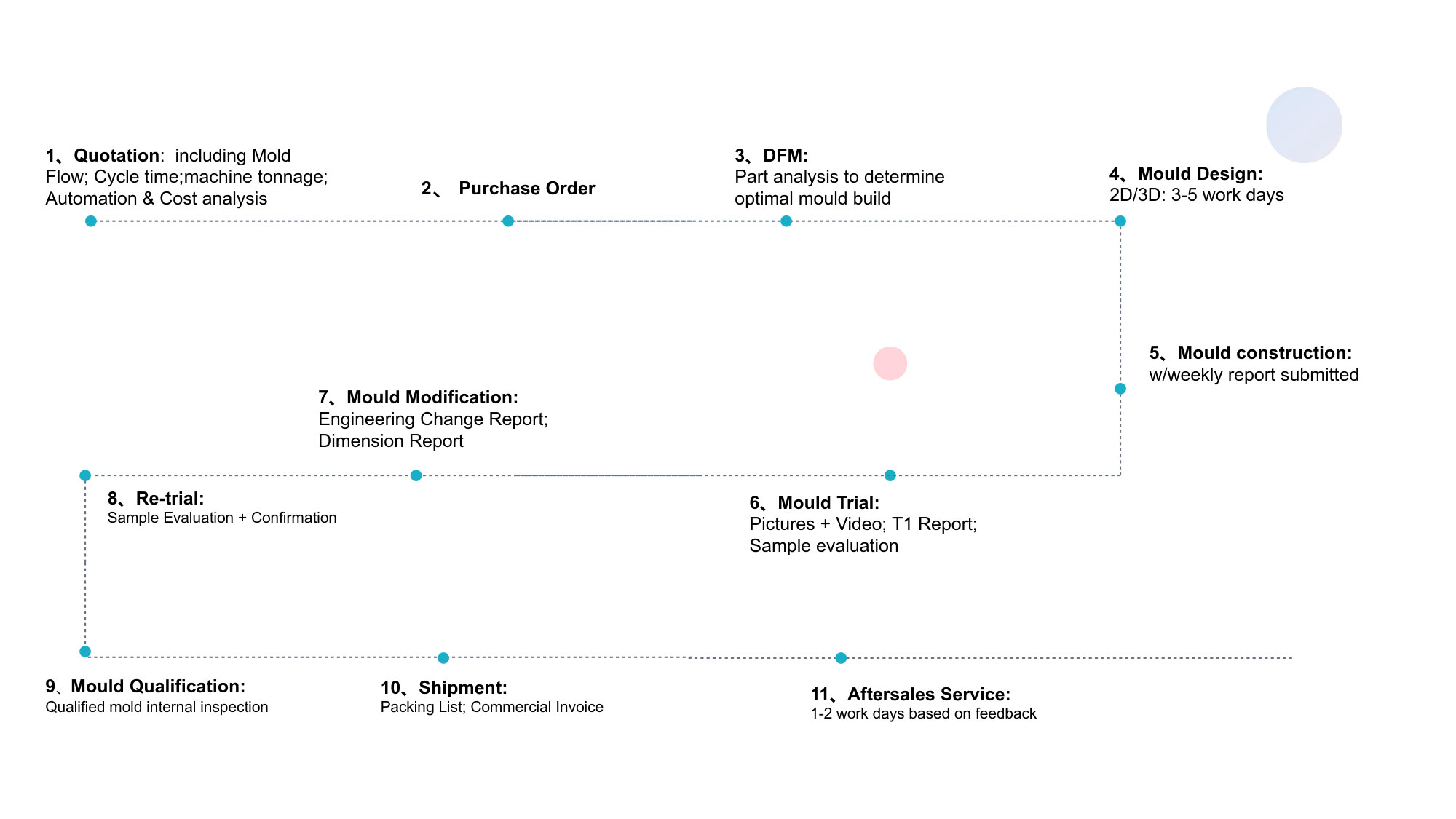
The journey begins long before steel is cut. Ansix Tech’s integrated workflow encompasses everything from product design and prototyping through mold manufacturing, high-volume production, secondary processing, and assembly. This end-to-end integration eliminates communication gaps, accelerates project timelines, and ensures consistency from concept to delivery.
The company’s Design for Manufacturability and Assembly (DFM/A) process represents a critical early-stage value driver. During the product concept phase, Ansix Tech’s engineers collaborate closely with customers, applying the lens of injection molding physics to analyze part designs. Key DFM considerations for PA12 medical components include:
Uniform wall thickness: Maintaining consistent wall thickness—typically 1–3 mm—prevents sink marks and warpage caused by uneven cooling and differential shrinkage.
Draft angles: Every vertical wall requires slight taper (at least 0.5°–1° per side) to facilitate clean ejection and prevent surface damage during part removal.
Gate placement optimization: Strategic gate location ensures balanced cavity filling, minimizes weld lines at critical functional surfaces, and reduces internal stress that could compromise dimensional stability.
Rib and boss design: Proper rib-to-wall thickness ratios (typically 0.5–0.7 times base wall thickness) prevent sink marks while maintaining structural integrity.
Using advanced Moldflow simulation software, Ansix Tech creates digital twin models of both the mold and the melt flow behavior before any physical tooling work begins. This virtual prototyping stage predicts potential defects including trapped air, weld lines, uneven cooling, and warpage, allowing engineers to optimize gate location, runner dimensions, and cooling layouts digitally—avoiding costly and time-consuming physical trial-and-error iterations.
Following digital validation, prototype tooling—typically machined from softer materials such as aluminum—enables physical verification of critical features including thin-wall filling, micro-geometry replication, and ejector system performance. Multi Jet Fusion (MJF) 3D printing technology using PA12 powder, combined with precision machining, provides functional prototypes whose material properties closely approximate final injection-molded parts, enabling rigorous dimensional, form, and function testing before mold manufacturing commits to steel.
2.2 Mold Engineering: Precision Tooling for High-Volume Production
The injection mold is the “DNA” of the final product—any defect in the tool, whether misaligned cooling channels or imperfect gating, will be replicated thousands of times in production. For an anesthetic needle component, even a minor deviation can affect the concentricity of the needle or the integrity of a seal, making perfection the only acceptable outcome.
Mold Flow Analysis (DFM): Ansix Tech deploys advanced simulation software to predict melt front advancement, pressure distribution, temperature gradients, and shear stress within the cavity. For PA12 components, this analysis is particularly critical given the material’s semi-crystalline behavior and sensitivity to cooling rates. The analysis predicts potential issues including air traps, weld line formation at undesirable locations, uneven cooling leading to warpage, and excessive shear-induced material degradation.
Runner and Gate System Design: For high-cavity count applications where annual volumes can reach 20–50 million components, the runner system must balance flow precisely across every cavity. Ansix Tech employs naturally balanced hot runner systems with equal-length flow channels and symmetrical cavity layouts to ensure uniform filling and pressure distribution. Typical gate designs for PA12 micro-precision components include pinpoint gates for thin-wall sections, submarine gates for automatic degating, and valve gates for sequential filling of complex geometries.
Cooling system design represents the “efficiency system” of the mold—proper cooling accounts for up to 60–80% of total cycle time in injection molding. For PA12, which cools more slowly than PA66, efficient cooling is especially essential. Ansix Tech integrates conformal cooling channels designed via additive manufacturing and simulation to encircle the cavity as evenly and fully as possible. Uniform mold temperature distribution prevents warpage, reduces internal stress, enhances crystallization and toughness, and accelerates cycle time.
The mold manufacturing process employs high-precision CNC machining with automated machining rates reaching 70% and tolerances as tight as ±0.002 mm—capabilities that take years to develop. Ansix Tech has produced over 30,000 mold sets since its founding, with an average mold trial count of just 2 iterations before production qualification—a testament to the precision of its digital simulation and toolmaking processes.
Ejection system design: For micro-precision parts weighing less than a gram—components smaller than a pinhead—ejector pin placement must be precisely engineered to avoid part distortion or surface marking. Ansix Tech employs strategic ejector placement, often complemented by air-assist ejection or specialized release coatings, to ensure clean release without damage to delicate micro-features.
2.3 Process Validation and Quality Assurance: Meeting ISO 13485 and FDA Standards
In the medical device industry, process validation is not optional—it is required. All critical molding processes must be validated to demonstrate process repeatability and capability under production conditions. Ansix Tech’s validation framework follows the established IQ/OQ/PQ protocol:
Installation Qualification (IQ): Verification that tooling, auxiliary equipment, and injection press are properly installed and calibrated to specification. This includes confirming that the mold’s cooling circuits, ejector system, and hot runner controllers are functioning as designed.
Operational Qualification (OQ): Establishment of process parameter windows—including melt temperature, injection pressure, holding pressure, cooling time, and mold temperature—through designed experiments (DOE). For PA12 micro-precision components, this phase identifies the acceptable range for each parameter that yields dimensionally conforming parts.
Performance Qualification (PQ): Confirmation that the process produces conforming parts over multiple production lots under routine operating conditions, backed by statistical capability analysis including CpK and GR&R studies.
Ansix Tech’s quality management system complies with ISO 13485:2016, the globally recognized QMS standard for medical device component manufacturing. The company maintains documented SOPs for machine setup, tool changeovers, and in-process inspections, with full lot-level traceability from raw material through finished part.
Biocompatibility compliance: For PA12 components that contact human tissue or body fluids, compliance with ISO 10993 series standards is mandatory. Key assessments include cytotoxicity (ISO 10993-5), sensitization and irritation (ISO 10993-10), systemic toxicity (ISO 10993-11), and chemical characterization (ISO 10993-18). Ansix Tech sources only certified medical-grade PA12 resins with preliminary biocompatibility testing, and conducts extractable and leachable studies on finished components to account for potential material changes induced by the injection molding process itself—such as high-temperature exposure and shear-induced degradation.
Advanced inspection capabilities: In-process and final inspection employs coordinate measuring machines (CMMs) for high-precision dimensional verification, vision inspection systems for micro-feature measurement, and automated optical inspection for surface defect detection. For micro-precision components where tolerances may be as tight as ±0.005–0.025 mm, measurement method validation—including GR&R studies for each inspection tool—is critical.
Cleanroom production: Where applicable, manufacturing is conducted in certified ISO Class 7 or Class 8 cleanrooms with HEPA filtration, positive pressure differentials, validated environmental monitoring, and strict personnel gowning protocols.
2.4 Systematic Cost Reduction: Delivering Hard Savings Across the Value Chain
Cost reduction in medical component manufacturing cannot be achieved through piecemeal efforts; it requires systematic optimization across materials, processes, and design. Ansix Tech has developed a multi-pronged cost reduction methodology that has delivered significant savings for OEM partners.
Material cost optimization: Ansix Tech’s engineering team works closely with customers to evaluate whether alternative medical-grade PA12 resins can meet performance requirements at lower material cost. While premium grades like Grilamid TR90 LXS or VESTAMID Care ML67 offer exceptional qualification records, Ansix Tech’s consultants assess each application’s specific property demands—including mechanical strength, chemical resistance, sterilization compatibility, and dimensional stability—to identify cost-effective alternatives that fully comply with regulatory standards. This advisory approach directly reduces material costs without compromising part safety or function.
Process efficiency and cycle time reduction: Cycle time dominates cost in high-volume medical molding. Ansix Tech’s process optimization methodology targets cycle time reduction through:
Conformal cooling channel design that can reduce cooling time by 20–30% compared to conventional straight-drilled channels
Advanced temperature control systems that stabilize mold temperature profiles to within ±1°C
Optimized injection and holding pressure profiles that minimize fill time while preventing flash or short shots
Automation integration including robotic part removal and conveyor-based handling systems that reduce overhead and labor requirements
Industry data shows that optimized cooling design and process parameters can reduce unit costs by over 50% in certain high-volume medical applications. Ansix Tech’s integrated approach similarly targets substantial cost reductions through cycle time compression and yield improvement.
Tooling amortization through multi-cavity design: For high-volume PA12 components with annual production requirements in the millions, multi-cavity molds (commonly 8, 16, 32, or 64 cavities) dramatically lower cost per part through cycle time efficiency and tooling amortization. A 64-cavity mold producing a 15-second cycle can theoretically generate over 130,000 parts per hour—a per-part cost structure that machining or additive manufacturing cannot approach. However, multi-cavity molds require flawless cavity-to-cavity consistency in filling, pressure, and cooling to achieve uniform part quality across all cavities. Ansix Tech’s demonstrated capability in balanced multi-cavity mold design and validation—with average mold trials of just two iterations—directly enables this economic scaling.
Reduced scrap through robust process control: High-yield production is essential for cost competitiveness. Ansix Tech’s real-time process monitoring systems track key process parameters including melt temperature, injection pressure, mold temperature, and cooling time for each cycle, with automated detection and rejection of non-conforming parts. Statistical process control (SPC) and capability analysis (CpK monitoring) enable early detection of process drift before non-conforming parts are produced, reducing scrap and rework.
Vertical integration eliminating supply chain overhead: Unlike fragmented service providers that outsource mold design, injection molding, and assembly to multiple vendors, Ansix Tech’s unified offering eliminates communication gaps and supply chain markups. All stages from design and prototyping through mold manufacturing, high-volume production, secondary processing, and assembly operate under one roof, enabling:
Single-source accountability for quality and delivery performance
Elimination of multiple vendor margin stacking
Faster issue resolution without cross-supplier coordination delays
Simplified supplier qualification and auditing for medical device OEMs
3. Scalable Manufacturing Capacity and Delivery Assurance
Ansix Tech’s four production bases across China and Vietnam are strategically located to support global medical device OEMs with responsive, scalable manufacturing capacity. The 260 injection molding machines—ranging from 30 tons for micro-precision components to 2,800 tons for larger medical device housings—provide tremendous flexibility in production configuration.
For PA12 Micro-Precision Medical Components specifically, the company has allocated dedicated molding cells equipped with:
Electric and hybrid injection molding presses with precise shot size control (critical for micro-precision parts where shot sizes may be below 1 gram)
Dehumidifying drying systems maintaining <0.1% moisture content prior to processing
Temperature-controlled molding environments for consistent ambient conditions year-round
Automated handling systems for delicate micro-parts including anti-static handling devices
The company’s 200-person design engineering team enables concurrent engineering across multiple customer projects, with capacity to handle simultaneous tooling development for up to several hundred active programs. Over 30,000 molds produced to date represent a knowledge base that directly accelerates new program development lead times.
Delivery reliability: Medical device OEMs cannot tolerate supply chain disruptions that delay product launches or cause patient care interruptions. Ansix Tech maintains:
Strategic raw material inventory of certified medical-grade PA12 resins from multiple suppliers (Arkema, EMS-Grivory, Evonik)
In-region production capability through multiple facility locations, reducing geopolitical and logistics risks
Systematic capacity planning that matches production output to customer ramp schedules week over week
95% on-time delivery rate maintained consistently across high-volume programs
Rapid qualification builds: For time-sensitive programs, Ansix Tech offers expedited prototype and production qualification timelines through digital simulation, rapid tooling, and concurrent process development. Lead times from design freeze to production-ready components are significantly compressed compared to fragmented supply chain models requiring multiple vendor handoffs.
Supply chain transparency: Ansix Tech provides customers with real-time production monitoring and traceability data, enabling demand forecasting and inventory optimization. Lot-level traceability from raw material resin batch to finished component supports field recall readiness—a non-negotiable requirement for ISO 13485 compliance and regulatory submissions worldwide.
4. Industry Experience and Proven Reliability
Ansix Tech’s lineage in precision injection molding spans more than 28 years and encompasses thousands of successful medical component programs. The company has established a diversified medical device customer base across surgical instruments, drug delivery systems, diagnostics, respiratory care, and personal care medical products.
Recent program successes demonstrate the company’s capability in PA12 medical components:
PA12 medical caps: Ansix Tech mastered the complex journey from initial design to mass production validation for medical caps requiring hermetic seals, sterilization compatibility, and structural integrity. Through scientific molding principles, rigorous DFM analysis, and vertically integrated process control, the company delivered components that are not only compliant and reliable but also highly cost-effective.
Disposable anesthetic needle components: The company developed injection molding dies for anesthetic needle components including hubs, protective caps, and connectors—each requiring micron-level tolerances that affect patient safety and surgical success rates. The integrated solution from initial design to rapid delivery established new benchmarks for quality and efficiency while substantially reducing production costs for global medical device OEMs.
Complex PA12 medical device components: Ansix Tech navigated a complete project lifecycle from addressing ISO 10993 biocompatibility requirements and selecting optimal PA12 grades to pioneering mold designs incorporating conformal cooling and data-driven process optimization. The company’s commitment to digital transparency—from advanced DFM analysis to real-time production monitoring—reduced risk, accelerated time-to-market, and significantly lowered component costs without compromising medical industry standards.
Technical expertise depth: Ansix Tech’s engineering team possesses specialized knowledge in:
PA12 material science and processing behavior
Micro-precision mold design and manufacturing
Scientific molding principles and DOE-based process optimization
Automation integration for high-volume production
Medical device regulatory pathways (FDA, EU MDR, NMPA)
The company’s tooling capability includes high-speed CNC machining, EDM (electrical discharge machining), wire EDM, and precision grinding, enabling fabrication of molds with micro-features and tight-tolerance shut-offs. The 0.002 mm mold accuracy and 70% automated machining ratio are not marketing claims but measurable capabilities validated through years of production data.
Collaborative engineering partnership: Medical device OEMs benefit from Ansix Tech’s advisory approach—the company provides recommendations on design modifications that reduce tooling complexity, accelerate cycle times, or enable multi-cavity production, even when such modifications require upfront investment in engineering time. This “customer success” orientation ensures that component pricing reflects the lowest possible total cost of ownership rather than merely competitive piece pricing.
Continuous improvement and innovation: Ansix Tech invests systematically in new molding technologies including conformal cooling, in-mold sensing for real-time process control, and Industry 4.0 production monitoring systems. The company’s R&D focus includes exploring advanced PA12 formulations including glass-filled grades for increased stiffness and modified surface finishes for enhanced lubricity or adhesion. Recent equipment acquisitions include electric injection molding machines with precision metering for micro-shot applications, enabling even tighter control over micro-precision part quality.
5. Conclusion
Ansix Tech’s PA12 Micro-Precision Medical Components initiative represents a strategic response to the medical device industry’s need for high-quality, cost-effective components produced at scale. By integrating design, simulation, tooling, process validation, and mass production within a unified ISO 13485-certified ecosystem, the company provides medical device OEMs with a single, accountable partner capable of delivering on the industry’s most demanding requirements.
The value delivered extends beyond component pricing. Medical device OEMs gain:
Accelerated time-to-market through integrated, parallel workflows rather than sequential vendor handoffs
Reduced technical risk via digital simulation and rigorous validation protocols that catch issues before steel cutting
Lower total cost of ownership through material optimization, cycle time compression, multi-cavity economics, and high-yield production
Regulatory confidence through ISO 13485 compliance, ISO 10993 documentation, and full traceability
Scalable, reliable supply through geographically distributed manufacturing capacity and strategic raw material inventory
For over 28 years, Ansix Tech has specialized not merely as a supplier but as an integrated engineering partner that systematically drives out cost while building in unyielding reliability. The PA12 Micro-Precision Medical Components initiative extends this commitment, offering medical device OEMs a clear path from concept to cost-effective mass production without compromise on quality or compliance.
As Dr. Chen concludes: “In medical device manufacturing, there are no short cuts. But there are smarter paths. Our integrated approach to PA12 micro-precision components is the smarter path—one that delivers the reliability patients need, the compliance regulators require, and the cost structure OEMs demand. That is the value we bring to every partnership.”
About Ansix Tech
Founded in Hong Kong in 1998, Ansix Tech Limited has grown into a leading one-stop injection molding solution provider in China, specializing in injection mold design, manufacturing, and mechanical design and production of injection-molded components. The company holds ISO 9001, ISO 14001, IATF 16949, and ISO 13485 certifications, operating four production bases in China and Vietnam with 260 injection molding machines, 200+ design engineers, and a total workforce exceeding 1,200. Ansix Tech has built over 30,000 molds with accuracy down to 0.002 mm and maintains an average of just two mold trials before production qualification. The company’s mission is to “Make Our Customers Successful.” For more information, visit www.ansixtech.com.
The information contained in this document is for general informational purposes only. All material grades and specifications referenced are trademarks of their respective manufacturers. Actual performance should be validated for each specific application.
Ansix Tech Co Ltd
If you have any plans related to PA12 Micro-Precision Medical Components , you can contact us at any time. We will turn your ideas into reality, let you realize your dreams, and obtain large orders from the market. Our contact information is info@ansixtech.com. Or contact our CTO, mail: stephen@ansixtech.com
#www.ansixtech.com #ansixtech.com #PA12 Micro-Precision Medical Components #Syringe mold moulds #Syringe mold molds #Syringe mold injection molding companies #PA12 Micro-Precision Medical Components Canopy Mold injection mold companies #Ansix #Ansix moulds #Ansix china #Ansix tech china #Ansix tech company #Ansix facotry #Syringe mold injection molding #Syringe mold injection tools #Syringe mold injection moulds #Syringe mold plastic mould #Syringe mold plastic tools #Ansix Tech #Ansix molds #Ansix injection molding #Ansix mold factory #injection molding Syringe mold #Ansix mold factory #Syringe mold china #Syringe mold molds #injection factory #Syringe mold injection molding #Syringe mold injection molding factory #injection molding company #Syringe mold injection mold companies #Syringe mold#Syringe mold mold limited #Ansix mold china #Ansix companies #Ansix company China #Syringe mold facotry #Ansix Tech #Ansix Tech mould #Syringe mold injection moulding #injection moulding company #Ansix Syringe mold parts injection mold companies #medical injection molding companieschina #Syringe mold china factory #Ansix moulding companies #Ansix molding company #Syringe mold injection moulding facotry #Ansix Tech mold #Syringe mold mould #Syringe mold plastic injection molding #ansix plastic mold #Mold manufacturing #Syringe mold parts manufacturing #Syringe mold plastic parts factory #Syringe mold injection parts mold #Syringe mold PRECISION MANUFACTURING #Syringe mold #China mold #Syringe mold injection moulding china #Syringe mold mould china #china precision mold #mold in china #Syringe mold mold china #Precision molds #High-precision molds #Syringe mold #Injection molds #Syringe mold Factory #Syringe mold Company #Super Large Injection Mold Factory #Large Tonnage Injection Molding Factory #Syringe mold Company #Syringe mold Factory #2800T Injection Molding Factory #3000 Ton Injection Molding #4500 Ton Injection Molding Factory #Large Mold Injection Molding #Large Plastic Mold Injection Molding Factory #Large Injection Mold Manufacturer #Plastic Mold Factory #Injection Mold #Plastic Mold