



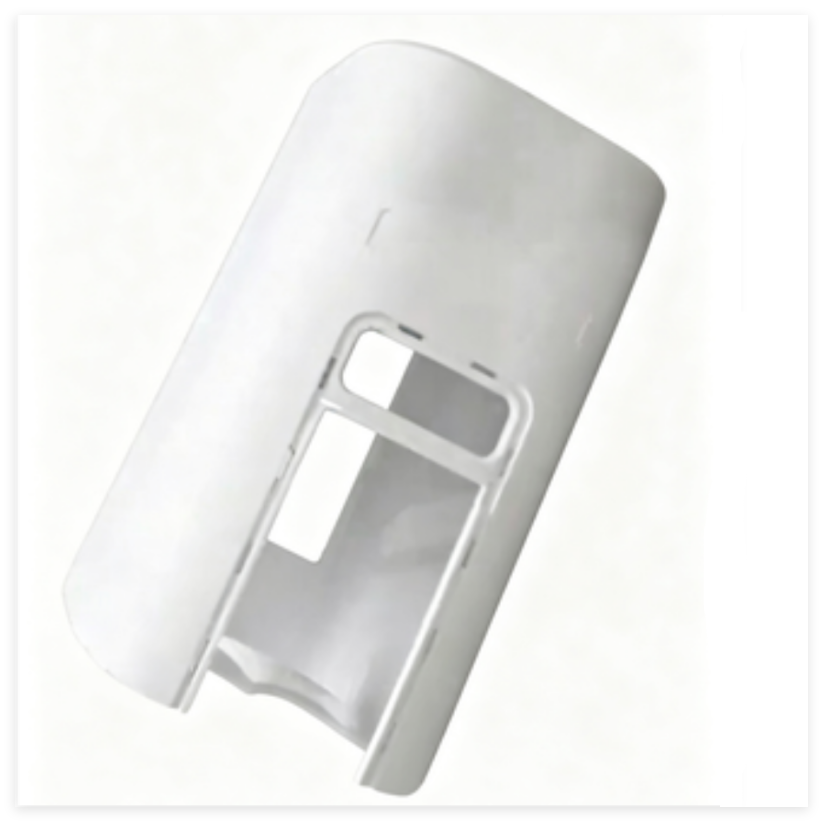
Kalın kesitlere yakın yerlerde (çökme riski bölgeleri) soğutma işlemi uygulayın.
Su hatları, türbülanslı akışa (Reynolds sayısı >4.000) göre boyutlandırılır ve sıcak bölümleri atlamayan bir devre şeklinde döşenir.
Yolluk sistemi tasarımı. Yolluklar, erimiş plastiği döküm kanalından (veya sıcak yolluk manifoldundan) kalıp giriş noktalarına taşır. AnsixTech tasarımları:
Çoklu boşluklu kalıplar için her boşluğa dengeli yolluk uzunlukları.
-
Kesit boyutları, basınç düşüşünü en aza indirirken kayma ısısı üretimini en üst düzeye çıkaracak şekilde belirlenmiştir.
Soğuk plastik toplama hazneleri, boru uçlarında daha soğuk plastiği yakalamak için tasarlanmıştır.
Malzeme reolojisi için optimize edilmiş koşucu kesitleri (yamuk, tam yuvarlak veya kısmen yuvarlak).
Kapı sistemi tasarımı. Kapı konumu, tipi ve geometrisi parça kalitesini belirler. Seçenekler şunlardır:
Kapı Tipi
Başvuru
Özellik
Kenar kapısı
Çoğu standart parça

- Kolayca delinir, kenarında görünür kalıntılar kalır.
Denizaltı/tünel kapısı
Otomatik degrasyon
Fırlatma sırasında kapak kırılır ve görünmeyen bir yüzeyde küçük bir iz bırakır.
Sıcak ipucu kapısı
Sıcak yolluk sistemleri
Minimum kalıntı, hassas malzeme kapatma
Vana kapısı
Sıcak yolluk, büyük parçalar
Geniş alan dolumu için ardışık kapılama, kalıntı yok
Giriş noktası konum seçimi şu dengeleri sağlar: parça genelinde dolum dengesi, kaynak hattı kontrolü (kaynak hatlarını kritik olmayan bölgelere yerleştirme), hava tahliyesi (akış cephelerinde hava sıkışmasını önleme), kozmetik yüzey sınırları (giriş noktalarını yüksek görünürlüğe sahip yüzeylerden uzak tutma) ve fırlatma ve parça taşıma müdahalesi (giriş noktalarını fırlatma yolundan uzak tutma).
-
Fırlatma sistemi tasarımı. Doğru fırlatma, güvenilir otomatik çalışma için çok önemlidir. Fırlatma sistemi tasarımları şunları içerir:
Çıkarma pimi dizileri: ince veya esnek bölümlere değil, yapısal yüzeylere baskı yapacak şekilde boyutlandırılmıştır.
Manşon ejektörleri: çekirdek etrafına kalıplanmış parçalar için.
Sıyırma plakaları: geniş düz yüzeylere veya derin oluklara sahip parçalar için.
Hava tahliyesi: çok ince veya kırılgan parçalar için
Çıkarma pimi işaretinin konumu, kalıp yapımından önce müşteri onayına sunulmak üzere belgelenir; böylece bitmiş parçalarda sürpriz yaşanmaz.
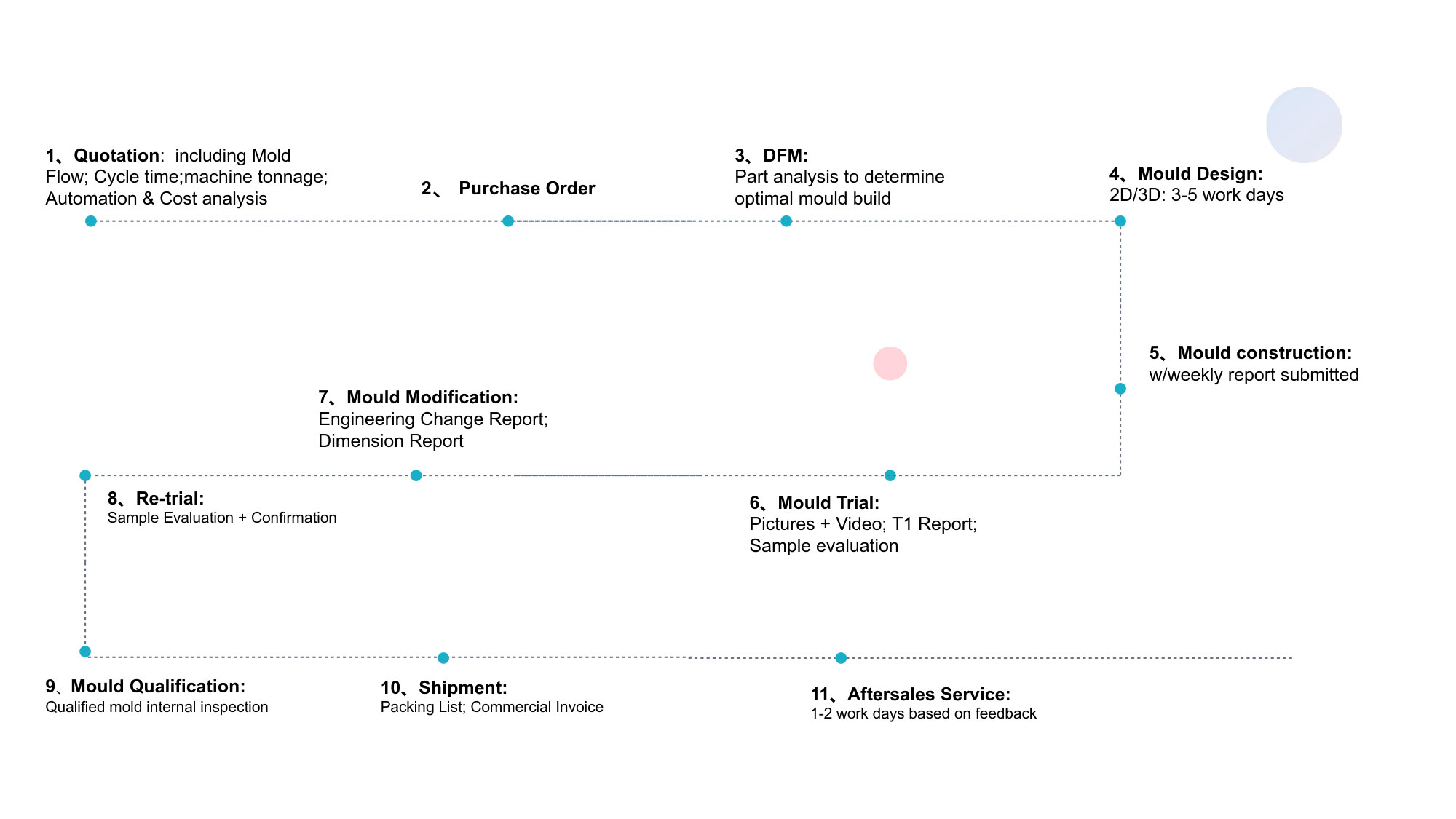
Kalıp Üretim Süreci Akış Şeması
Tamamen şirket içi kalıp üretim süreci:
CAD tasarımı ve kalıp akış analizi – giriş kanalları, yolluklar, soğutma, ejektörlerin tasarımı
CAM programlama – tüm CNC ekipmanları için işleme yolları oluşturma
Kaba işleme – kalıp tabanından ana malzemeyi çıkarın ve boş parçaları yerleştirin.
Isıl işlem – gerekirse (H13, 8407 HRC48-52'ye; S136 HRC50-53'e)
Yarı son işlem işleme – son boyutlara yaklaşma, son işlem geçişleri için malzeme bırakma
EDM (gerektiğinde) – detaylı özellikler oluşturma (keskin iç köşeler, dar yuvalar)
Son işlem – son boyutlar ve yüzey kalitesi
Elle son işlem / parlatma / doku oluşturma – istenen yüzey pürüzlülüğünü veya doku derinliğini elde etme
Kalıp montajı – tüm parçaları yerleştirin, kızak ve ejektör hareketini kontrol edin.
Kalıp denemesi (T0) – enjeksiyon presinde ilk test atışı
Muayene ve CMM doğrulaması – tam boyut raporu
T1/T2/T3 optimizasyonu – deneme sonuçlarından gerektiği gibi iyileştirme
Aşınma testi (2.000 döngü) – ilk aşınmayı hızlandırın, durumu belgeleyin
Son kontrol ve sertifikasyon – müşteri onayına hazır
Enjeksiyon Kalıplama Prosesi Optimizasyonu – Verimlilik ve Maliyet Kontrolü
İşlem süresinin azaltılması. AnsixTech, aşağıdaki yöntemlerle işlem süresini sistematik olarak azaltır:
Hızlı ısı uzaklaştırma için konformal soğutma kanalları
Optimize edilmiş soğutma suyu sıcaklığı ve akış hızı (giriş/çıkış arasında ΔT
Soğutma süresi, parçanın deforme olmadan kalıptan çıkarılması için gereken minimum seviyeye indirildi.
Kalıp açma/kapama hızları optimize edildi (hızlı yaklaşma, yavaş kalıp koruma, hızlı kapanma).
Fırlatma hızları, parçanın temizlenmesi için yeterince hızlı ancak hasar vermeyecek şekilde ayarlanmıştır.
Robotik parça alma işlemi, kalıp açma işleminin tamamlanmasıyla eş zamanlı olarak gerçekleştirildi.
Enerji verimliliği. Tamamen elektrikli servo makineler, hidrolik muadillerine göre %40-70 daha az elektrik tüketir. Hızlı ısıtma-hızlı soğutma kalıp sıcaklık kontrolü (yaklaşık %8 elektrik tasarrufu) ve ısı geri kazanım sistemleriyle birleştiğinde, parça başına toplam tesis enerji tüketimi sektör ortalamasının önemli ölçüde altındadır.
Malzeme verimliliği. Sıcak yolluk sistemleri, yolluk atıklarını tamamen ortadan kaldırır. Soğuk yolluk kalıplarının kaçınılmaz olduğu durumlarda, geri dönüşüm sistemleri ve kapalı devre hurda yönetimi, müşteri tarafından onaylanan geri dönüşüm yüzdesi sınırlamalarına tabi olarak, yolluk atıklarını kullanılabilir malzemeye dönüştürür.
Hurda miktarını azaltır. Kapalı devre proses kontrolü, parçaların tüm üretim süreçleri boyunca spesifikasyonlara uygun kalmasını sağlar. Yüksek CpK uygulamaları için, parça-parça varyasyonu çoğu boyutta denetim ayıklamasını ortadan kaldıracak kadar düşüktür ve bu da üretimin %100'ünün süreç içi kalite kontrollerinden geçmesini sağlar.
Kalite Kontrol ve Güvence Sistemi
AnsixTech'in kalite sistemi, her aşamada belgelenmiş prosedürleri takip eder:
Sahne
Kalite Faaliyeti
Standart / Alet
Gelen ham maddeler
MFI doğrulaması, nem testi, renk kontrolü
ASTM D1238, ISO 1133
Üretme
Her vardiyada ilk ürün denetimi, istatistiksel süreç çizelgelemesi, döngü tamamlandığında %100 görsel denetim.
ANSI/ASQ Z1.4, tescilli yapay zeka görüntüleme sistemi
Toplu işlem tamamlanması
Son makale incelemesi, ilk makaleyle karşılaştırma
CMM, optik karşılaştırıcı
Parti sevkiyatı
Analiz sertifikası, boyut özet raporu, malzeme izlenebilirliği
ISO 9001:2015 uyumlu
Proses içi SPC grafikleme. Kritik boyutlar X-bar ve R kontrol grafiklerinde işaretlenir. Cp ve CpK değerleri periyodik olarak hesaplanır. Kontrol limitlerine yaklaşıldığında eylemler tetiklenir.
Sertifikasyon seviyeleri. AnsixTech standart olarak şunları sağlar: ISO 9001:2015 kalite yönetim sistemi sertifikası. Talep üzerine: IATF 16949 (otomotivle ilgili uygulamalar için tasarlanmış cihaz parçaları için otomotiv sınıfı PPAP dokümantasyonu), ISO 13485 (tıbbi cihaz uygulamaları için tasarlanmış cihaz parçaları için tıbbi sınıf dokümantasyon).
Ambalaj ve Lojistik – Hızlı Teslimat Uygulaması
Fabrika içi paketleme. Parçalar, otomatik konveyörlerden veya robotik paketleme hücrelerinden doğrudan müşteri tarafından belirtilen kaplara (taşıma kutuları, tepsiler, kutular, Gaylord kutuları) paketlenir. Paketleme sayımları ağırlık veya görsel sayım ile doğrulanır. Etiketler müşteri spesifikasyonuna göre uygulanır.
Üretim planlaması / envanter yönetimi. MES, gerçek zamanlı üretim ilerlemesini takip eder ve tam zamanında lojistik planlaması için yeterince doğru bir şekilde tamamlanma tarihlerini tahmin eder. Müşteriler, API veya rapor dışa aktarımları yoluyla MES verilerini kendi planlama sistemlerine entegre edebilirler.
Lojistik yöntemleri. AnsixTech gemileri:
Hava yoluyla – kalıp sevkiyatı için (ağır aletler, hava kargo)
Deniz yoluyla – büyük hacimli üretim parçası siparişleri için, fabrikadan varış limanına konteynerle yükleme yapılır.
Karayolu/demiryolu ile – ülke içi tesislerden bölgesel dağıtım için
Teslim süresi taahhüdü: Basit kalıp takımları: Tasarım tamamlanmasından T0 deneme üretimine kadar 10 gün. Orta karmaşıklıkta kalıplar: 25-45 gün. Seri üretim parça siparişleri: Kalıp boşluğu sayısına, müşteri programına ve lojistik yöntemine bağlıdır. AnsixTech, her sipariş kabulünde yazılı teslimat onayı sağlar.
Sektör Deneyimi ve Güvenilirlik Değeri
28 yılı aşkın süredir ev aletleri kasaları üretiminde faaliyet gösteren AnsixTech, kapsamlı ve çeşitli kategorilerde deneyim kazanmıştır:
*Yer tasarrufu sağlayan elektrikli ev aletleri (elektrikli süpürgeler, pil şarj cihazları). Büyük beyaz eşyalar (buzdolapları, derin dondurucular, çamaşır makineleri, kurutucular). İklimlendirme cihazları (klimalar, nem alma cihazları, vantilatörler, ısıtıcılar). Küçük mutfak aletleri (kahve makineleri, su ısıtıcıları, blenderler, mutfak robotları, pirinç pişiriciler, mikrodalga fırınlar). *Akıllı ev kontrol panelleri (dokunmatik paneller, ekran çerçeveleri, sensör muhafazaları). Elektrikli el aletleri ve bahçe aletleri (iyi kavrama ergonomisine sahip gövdeler ve sap muhafazaları).
Bu derinlik, AnsixTech'in kalıp akış analizi başlamadan önce malzeme davranış modellerini, giriş hassasiyetini, soğutma davranışını ve parça geometrisi risk faktörlerini tanımasını sağlayarak, her yeni uygulama için geliştirme süresini ve deneme üretimlerini azaltır.
Özet – Ev Aletleri Muhafazaları İçin Neden AnsixTech?
AnsixTech, hassas kalıp üretimini (0,002 mm işleme kapasitesi, 500.000-1.000.000 atışlık kalıp ömrü), geniş enjeksiyon kalıplama kapasitesini (260 makine, 30-2.800 ton), akıllı üretimi (MES entegrasyonu, yapay zeka destekli görüntü denetimi, kapalı devre proses kontrolü), proses kararlılığını (sıcaklık farkı ≤2°C, CpK≥1,33 kapasitesi), eksiksiz malzeme portföyünü (UL94 V-0, UV kararlılığı, mühendislik termoplastikleri ve LSR üst kalıplama), toplam maliyet avantajını (%15-30 daha düşük maliyet, malzeme, proses ve atık optimizasyonu yoluyla) ve tam hizmet desteğini (DFM ön analizi, numune denemeleri, seri üretim, montaj, bakım) bir araya getiriyor. Ev aletleri muhafazaları için güvenilir, uzun vadeli ve tam hizmet sunan bir ortak arayan müşteriler, mevcut ürün tasarımlarını gözden geçirmek, kalıp özelliklerini görüşmek ve DFM incelemesi ve maliyet tahmini de dahil olmak üzere özelleştirilmiş bir teklif almak için AnsixTech ile iletişime geçmelidir.
Bu teknik teklif, AnsixTech'in ev aletleri kasa kalıbı imalatı, enjeksiyon kalıplama malzemesi seçimi, akıllı üretim altyapısı, proses kalite kontrolü, maliyet düşürme metodolojisi, doğrulama protokolleri ve müşteri değeri sunumu konularındaki kapsamlı yeteneklerini kapsamaktadır. Belirli proje sorularınız veya bir DFM (Üretilebilirlik için Tasarım) gösterimi düzenlemek için lütfen AnsixTech'in mühendislik ekibiyle iletişime geçin.
Ansix Teknoloji Şirketi Ltd.
Ev Aletleri Muhafaza Sistemleri ile ilgili herhangi bir planınız varsa, istediğiniz zaman bizimle iletişime geçebilirsiniz. Fikirlerinizi gerçeğe dönüştürecek, hayallerinizi gerçekleştirmenize ve piyasadan büyük siparişler almanıza yardımcı olacağız. İletişim bilgilerimiz info@ansixtech.com adresindedir. Veya CTO'muzla iletişime geçin, e-posta: stephen@ansixtech.com
#www.ansixtech.com #ansixtech.com #Ev Aletleri Muhafazaları #Ev Aletleri Muhafaza Kalıpları #Ev Aletleri Muhafaza Enjeksiyon Kalıplama Şirketleri #Ev Aletleri Muhafaza Kanopi Kalıbı Enjeksiyon Kalıplama Şirketleri #Ansix #Ansix Kalıpları #Ansix Çin #Ansix Tech Çin #Ansix Tech Şirketi #Ansix Fabrikası #Ev Aletleri Muhafaza Enjeksiyon Kalıplama #Ev Aletleri Muhafaza Enjeksiyon Aletleri #Ev Aletleri Muhafaza Enjeksiyon Kalıpları #Ev Aletleri Muhafaza Plastik Kalıp #Ev Aletleri Muhafaza Plastik Aletleri #Ansix Tech #Ansix Kalıpları #Ansix Enjeksiyon Kalıplama #Ansix Kalıp Fabrikası #Enjeksiyon Kalıplama Ev Aletleri Muhafazaları #Ansix Kalıp Fabrikası #Ev Aletleri Muhafazaları Çin #Ev Aletleri Muhafaza Kalıpları #Enjeksiyon Fabrikası #Ev Aletleri Muhafaza Enjeksiyon Kalıplama #Ev Aletleri Muhafaza Enjeksiyon Kalıplama Fabrikası #Enjeksiyon Kalıplama Şirketi #Ev Ev Aletleri Muhafazaları Enjeksiyon Kalıplama Şirketleri #Ev Aletleri Muhafazaları #Ev Aletleri Muhafazaları Kalıp Limited Şirketi #Ansix Kalıp Çin #Ansix Şirketleri #Ansix Şirketi Çin #Ev Aletleri Muhafazaları Fabrikası #Ansix Tech #Ansix Tech Kalıp #Ev Aletleri Muhafazaları Enjeksiyon Kalıplama #Enjeksiyon Kalıplama Şirketi #Ansix Ev Aletleri Muhafazaları Parça Enjeksiyon Kalıplama Şirketleri #Tıbbi Enjeksiyon Kalıplama Şirketleri Çin #Ev Aletleri Muhafazaları Çin Fabrikası #Ansix Kalıplama Şirketleri #Ansix Kalıplama Şirketi #Ev Aletleri Muhafazaları Enjeksiyon Kalıplama Fabrikası #Ansix Tech Kalıp #Ev Aletleri Muhafazaları Kalıp #Ev Aletleri Muhafazaları Plastik Enjeksiyon Kalıplama #ansix Plastik Kalıp #Kalıp Üretimi #Ev Aletleri Muhafazaları Parça Üretimi #Ev Aletleri Muhafazaları Plastik Parça Fabrikası #Ev Aletleri Muhafazaları Enjeksiyon Parça Kalıbı #Ev Aletleri Muhafazaları Hassas Üretim #Ev Aletleri Muhafazaları #Çin Kalıp #Ev Ev Aletleri Muhafazaları Enjeksiyon Kalıplama Çin #Ev Aletleri Muhafazaları Kalıp Çin #Çin Hassas Kalıp #Çin'de Kalıp #Ev Aletleri Muhafazaları Kalıp Çin #Hassas Kalıplar #Yüksek Hassasiyetli Kalıplar #Ev Aletleri Muhafazaları #Enjeksiyon Kalıpları #Ev Aletleri Muhafazaları Fabrikası #Ev Aletleri Muhafazaları Şirketi #Süper Büyük Enjeksiyon Kalıp Fabrikası #Büyük Tonajlı Enjeksiyon Kalıp Fabrikası #Ev Aletleri Muhafazaları Şirketi #Ev Aletleri Muhafaza Fabrikası #2800 Ton Enjeksiyon Kalıp Fabrikası #3000 Ton Enjeksiyon Kalıplama #4500 Ton Enjeksiyon Kalıp Fabrikası #Büyük Kalıp Enjeksiyon Kalıplama #Büyük Plastik Kalıp Enjeksiyon Kalıp Fabrikası #Büyük Enjeksiyon Kalıp Üreticisi #Plastik Kalıp Fabrikası #Enjeksiyon Kalıp #Plastik Kalıp
İlgili ürünler
01
Kahve Makinesi Plastik Destek Parçası
01
Pirinç Pişirme Cihazı Gövdesindeki Kalıp 0 Derece Kalıptan Çıkarma
01
Mutfak gereçleri plastik regülatör parçaları ayar kapağı kalıbı
01
Yüksek Hızlı Blender Kabı
01
Elektrikli Ev Aletleri Enjeksiyon Kalıplama Mutfak ve Banyo Çıkış Vanası Aksesuarları
Ansix, plastik kalıp ve ürünlerinin Ar-Ge, tasarım, üretim, satış ve servis hizmetlerinde uzmanlaşmış bir kalıp üreticisi ve imalatçısıdır. Ansix'in Çin ve Vietnam'da dört üretim üssü bulunmaktadır. Toplamda 260 enjeksiyon kalıplama makinemiz ve en küçük 30 tondan en büyük 2800 tona kadar enjeksiyon kapasitemiz mevcuttur.
bilgi
Ansix Profili
AnsixTech için albüm
Vizyon ve Temel Değerler
Sıkça Sorulan Sorular Haberler Bize Ulaşın
Ürün Kategorileri Tıbbi Cihaz Üretimi Hassas Kalıp ve İki Bileşenli
Otomotiv Parçaları için Kalıp İçi Dekorasyon Ev Aletleri ve Elektrikli Ürünler Kalıp ve Enjeksiyon Kozmetik ambalaj ürünleri ve PET PreformCap
Plastik CNC İşleme Parçaları Bize Ulaşın Tel:+86 158 1869 2114
E-posta: info@ansixtech.com Skype: Stephenhuang2010 Whatsapp: +86 13530645990
Adres: F Binası, Guanlan Weiyecheng Sanayi Bölgesi, Longhua İlçesi, Shenzhen, Çin Telif hakkı © 2024 Tüm Hakları Saklıdır Site Haritası
-
EN İYİ BLOG
-
En Önemli Konu
Şıklık ve koruma için tasarlanmış dayanıklı ev aletleri kutularını keşfedin. Ev aletlerinizi güvenli ve düzenli tutarken alanınızı güzelleştirin. Hemen alışverişe başlayın!
Ev Aletleri Muhafazaları, Özel Tasarım Alet Kapakları, Ticari Alet Muhafazaları, Alet Koruma Kılıfları, Endüstriyel Alet Muhafazaları, Güvenilir Alet Muhafaza Çözümleri
Hot Runner Systems. For high-volume enclosures, AnsixTech implements hot runner injection systems. Unlike cold runners that create solid sprue and runner waste after each cycle – often 15-30% of shot weight – hot runner systems maintain plastic in a molten state continuously, eliminating runner waste completely. Value delivered: lower resin consumption per part, reduced regrind management, shorter cycle times, and better filling control through individual nozzle temperature regulation.
Stack Molds. For high-output applications where mold size is constrained by machine platen dimensions, stack molds place two parting lines in a single mold base, effectively doubling cavity count without increasing clamping force requirement. Value delivered: output capacity doubled with same machine investment, lower per-part manufacturing cost, and reduced capital expenditure for additional machines.
Two-Shot / Multi-Material Molds. For enclosures requiring multiple materials – for example, a rigid PC/ABS frame with a soft-touch TPE or LSR seal overmolded in a single cycle – two-shot molds eliminate secondary assembly steps. This reduces part cost, eliminates separate purchasing and inventory of seal components, ensures perfect alignment between materials, and improves product reliability.
High-Gloss / Mirror-Finish Molds. For transparent or high-gloss appliance parts – such as refrigerator shelf trims, display windows, or decorative control panels – diamond-grade polished cavities achieve Ra<0.05μm surface finish. This eliminates secondary polishing operations for clear parts and paint adhesion preparation for painted parts.
Mold Materials Selection in Detail
Material Grade Key Properties Typical Application Expected Life
P20 (e.g., 1.2311, 1.2312) Good machinability, moderate wear resistance Mold base plates, support structures, non-wear surfaces As base, indefinite
S136 / 4Cr13 / 9Cr18 Corrosion resistance, mirror polish, thermal stability High-gloss cavities, transparent parts, corrosive plastics (PVC, etc.) 1,000,000+ shots
2344 / H13 / 8407 High-temperature strength, thermal fatigue resistance, good hot hardness Cores/cavities for glass-filled plastics, high-temperature thermoplastics (PPS, PEEK, LCP) 500,000-1,000,000 shots
2343 / SKD61 Erosion resistance, toughness, polishability General-purpose cavities, moderate-glass materials 500,000-800,000 shots
SKD11 / DC53 Wear resistance, high hardness (HRC58-62) High-wear inserts, sliding surfaces, shut-off areas 300,000-800,000 shots
NAK80 Pre-hardened (HRC37-43), no post-heat treat distortion, uniform structure over large areas Large cavity plates, high-gloss parts, moderate-volume production 300,000-500,000 shots
M340 / 1.2083 Stainless properties, corrosion resistance Medical-related appliance parts, humid environment enclosures 500,000+ shots
Material Certification. Every mold is supplied with material certificates and heat treatment curves documenting hardness, microstructure, and processing conditions. This traceability is essential for customers operating under ISO 9001, IATF 16949, or other quality system requirements.
Section 3: Injection Molding Process Control – Reducing Customer Quality Anxiety
Home appliance manufacturers consistently report the same molding-related fears: Sink marks visible on aesthetic surfaces. Flash requiring manual deflashing. Dimensions shifting between production runs. Batch-to-batch color variation. AnsixTech’s molding process controls are designed to eliminate these anxieties systematically.
Process Standardization
MES Parameter Lockdown. All injection molding machines are connected to our centralized Manufacturing Execution System (MES). Every process parameter – melt temperature profile (measured at barrel zones), injection pressure ramping profile (multistage with specific setpoints), injection velocity profile (fill rate control stages), holding pressure switching position and pressure levels, cooling duration, mold temperature (core and cavity independently), screw backpressure and rotational speed – is stored in the MES database and digitally locked.
Only authorized engineering personnel, verified through digital identity authentication, are permitted to modify any parameter. Every parameter change is time-stamped and logged with the operator’s electronic signature, providing full process traceability for quality audits and recall investigations.
Batch Verification Protocol. Every production batch is initiated with a certified first-piece sample – inspected against dimensions, appearance, and functional test criteria. At batch completion or mold changeover, a last-piece sample is extracted and compared against the first-piece record to confirm dimensional and visual stability across the entire production run.
Dimensional Stability Control
Temperature management is the single most important factor influencing part stability:
Independent Core/Cavity Temperature Control. AnsixTech applies mold temperature controllers with independent circuits for core (moving half) and cavity (stationary half). Temperature differential between core and cavity is maintained at ≤2°C (3.6°F). This eliminates differential shrinkage that drives part warpage.
Conformal Cooling. For complex enclosure geometries, AnsixTech implements conformal cooling channels – water lines that follow the contour of the part rather than staying in straight machined passages. The conformal approach reduces cooling time and minimizes hot spots, producing parts with lower residual stress and higher dimensional stability.
Process Capability Demonstration. For a typical home appliance control panel frame – a product with critical hole spacing that must align with PCB mounting bosses – AnsixTech demonstrates: hole spacing fluctuation ≤0.02mm across three consecutive weeks of production, part flatness variation ≤0.10mm across week-long runs, and consistent assembly fit with mating parts without selective sorting.
Visual Quality Grading
AnsixTech delivers cosmetic grades matching customer requirements:
Premium Visible Grade (Class A). For front-facing appliance panels, no visible defects when viewed under specified lighting at standard viewing distance. Surface roughness Ra≤0.2μm, free of flow marks, weld lines, gas streaks, splay, or gloss variation.
Commercial Grade (Class B). For surfaces that may be visible but not primary focal points, minor cosmetic imperfections allowed within agreed boundaries.
Functional Grade (Class C). For interior or hidden surfaces, no defects affecting part strength or function.
Transparent Parts. For parts such as appliance display windows, water filter housings, or light guides: no visible bubbles, flow lines, or contamination. High-clarity materials (PC, PMMA, clear ABS) processed with dedicated machine conditions and material handling systems.
Paint-Ready / Electroplating-Ready Parts. For parts destined for painting, printing, or vacuum metallization: gas streaks and splay eliminated, surface sealed to prevent outgassing during paint cure, and dimensional stability maintained through thermal cycles. For printing applications, AnsixTech can engineer compensated mold designs that account for deformation, delivering printed registration accuracy controlled to ±0.1mm.
Electronics-Integrated Parts. For enclosures requiring PCB mounting, display window alignment, or sensor positioning: insert molding compatibility for threaded inserts, brass nuts, or metal brackets molded directly into plastic.
Special Engineering Material Capabilities
AnsixTech maintains extensive production experience with the full spectrum of engineering thermoplastics required for home appliance enclosures. Each material demands specific mold design considerations and processing conditions:
PC/ABS (Polycarbonate/Acrylonitrile Butadiene Styrene blend). The most common choice for home appliance enclosures requiring impact resistance, heat deflection capability, and aesthetic appearance. Challenges include sensitivity to moisture (requires thorough drying) and tendency to splay at high shear rates. AnsixTech experience: extensive production across control panels, front bezels, and structural housings.
PC (Polycarbonate). High transparency and high impact strength for windows, lenses, and clear housings. Challenges include high melt viscosity requiring high injection pressures, moisture sensitivity, and tendency toward internal stress cracks. AnsixTech transparent part experience includes refrigerator shelf trim, water filter housings, and display covers.
PPS+40%GF (Polyphenylene Sulfide with 40% Glass Fiber). High-temperature stability (continuous service to 240°C/464°F), chemical resistance, and dimensional stability for hot air paths, pump housings, and high-performance appliance components. Challenges include high abrasiveness (wears mold steel) and stiff flow characteristics requiring high injection pressures. For glass-filled materials, AnsixTech commits 500,000+ shot mold life when appropriate steel (8407, 2344, H13) is specified.
PEEK (Polyetheretherketone). Premium high-performance material for extreme service conditions – mechanical strength at elevated temperatures, chemical resistance, and wear resistance. Used for bearings, seals, and high-reliability appliance mechanisms.
PA6+GF30 (Nylon 6 with 30% Glass Fiber). High strength-to-weight ratio and good chemical resistance for structural components, fan blades, and mechanical housings. Challenges include hydroscopic nature (requires dry processing) and tendency toward flash at high injection pressures.
PBT (Polybutylene Terephthalate). Good electrical insulation properties, dimensional stability, and chemical resistance for electrical connectors, coil bobbins, and electronic components used within appliances.
PEI, PPS, LCP (Polyetherimide, Polyphenylene Sulfide, Liquid Crystal Polymer). High-temperature thermoplastics for component carriers, wave-soldering compatible parts, and strength-to-weight critical structures. Experienced in small/medium volume applications demanding precise repeatability.
LSR (Liquid Silicone Rubber). Dedicated injection molding cells (Arburg two-component presses) produce silicone seals, gaskets, buttons, and sealing components that can be overmolded directly onto appliance enclosures, eliminating secondary seal assembly. Overmolded LSR provides perfect sealing geometry without separate gasket handling.
Regulatory Certifications. AnsixTech materials comply with UL94 V-0 flame retardancy for electrical enclosure applications. For materials requiring outdoor exposure resistance, we can provide test documentation for UV stability up to 3,000 hours (accelerated weathering) without significant discoloration or mechanical property loss.
Closed-Loop Process Control
For applications demanding highest stability, AnsixTech implements closed-loop control systems:
Ultrasonic Wall Thickness Feedback. Ultrasonic sensors mounted on mold cavity walls continuously monitor fill front advancement across the part geometry. The signal provides real-time feedback on actual wall thickness achieved during injection. The machine control automatically adjusts holding pressure and injection speed to compensate for material viscosity variations or temperature fluctuations, maintaining consistent thickness between cavities and across batches.
In-Mold Pressure and Temperature Sensors. Cavity pressure sensors and thermocouples provide direct monitoring of internal mold conditions. Closed-loop algorithms adjust packing pressure, holding time, and mold temperature instantly to bring conditions back within specification. This eliminates the traditional reliance on external part measurement after molding.
Section 4: Full-Service Lifecycle Support – Reducing Customer Total Management Cost
Many mold suppliers quote a mold, build it, deliver it, and then become unavailable for engineering support until something breaks. AnsixTech takes the opposite approach – full-service lifecycle support that reduces customers’ management cost through engineering partnership.
Early Engagement (Pre-Signing DFM Report)
Before committing tooling funds, AnsixTech delivers a Design for Manufacturing (DFM) analysis report covering:
Draft angle recommendations. Minimum draft for each surface based on texture depth and material shrinkage
Wall thickness optimization. Identifying sections that are too thick (sink risk) or too thin (fill risk)
Gate location proposals. With justification for final location based on fill balance and cosmetic requirements
Ejector placement planning. Mark positions agreed with customer appearance requirements (preventing visible marks on Class A surfaces)
Mold configuration options. Hot runner vs. cold runner, number of cavities, parting line placement
Potential defect risk identification. Weld line positions, air trap locations, sink areas predicted by mold flow
Customer value. No unpleasant surprises after mold steel is cut. No engineering changes costing time and money. No “this won’t work” discovery during initial trials.
Trial Shots and Sample Development
AnsixTech provides T0 through T3 sample shots, with accompanying improvement reports at each stage:
T0 (First Trial). Unmodified mold performance baseline. Issues documented.
T1 (First Improvement). Corrective actions applied based on T0 findings.
T2 (Second Improvement). Fine-tuning and optimization.
T3 (Completion). Approved sample ready for customer sign-off.
Quick-change insert capability. For applications requiring comparison of different gate designs or runner configurations, interchangeable mold inserts allow rapid A/B testing without remaking entire mold base.
Small-Batch Pre-Production Validation
Before committing to full mass production, AnsixTech offers 100- to 500-shot pre-production validation runs. Deliverables include:
Statistical process capability (Cp/Cpk) data for critical dimensions
First-pass yield data
Cycle time optimization recommendation
Material consumption verification
Customer value. No scaling up an unstable process. No factory-wide quality problems caused by undetected molding issues. Customer chooses to proceed to mass production only after seeing proven capability data.
Repair, Maintenance, and Spare Parts
Spare parts delivery. Spare ejector pins, core inserts, sliding wear plates, and other consumable components are shipped with the initial mold order, eliminating urgent procurement of common wear items. Customers receive initial spare inventory at delivery, then replenish as needed.
Preventive maintenance intervals. AnsixTech provides factory maintenance at 200,000-cycle intervals. Service includes full mold cleaning, lubrication, wear inspection, component replacement as needed, and dimensional re-verification.
Cost-based repairs beyond warranty. After warranty period, repairs are charged at material cost with minimal labor markup, ensuring mold refreshment does not become a budget-breaking event.
On-site repair capability. Customers with large mold fleets can negotiate on-site training and spare inventory programs.
Section 5: Differentiated Comparison – Directly Addressing Common Industry Pain Points
Rather than generic claims of being “better,” AnsixTech addresses specific customer complaints commonly reported from other mold manufacturers.
Customer Complaints in Industry AnsixTech Commitment
Molds require frequent repair, interrupting production schedules. AnsixTech molds undergo 2,000-cycle accelerated wear testing before shipment, with documented wear report upon completion. We offer three-year structural warranty on molds (excluding normal wear of ejector pins and sliding components).
Flash is consistently present, requiring expensive manual deflashing. Parting lines machined to 0.005mm fit accuracy. Servo-driven clamping force compensation maintains closing force during injection, delivering flash controlled to ≤0.03mm across production batches – eliminating manual deflashing entirely for typical applications.
Dimensions change unpredictably between production runs. Ultrasonic wall thickness sensors provide real-time thickness monitoring and automatic holding pressure compensation. In-mold pressure and temperature sensors enable closed-loop control for highest stability applications. Alternatively, statistically controlled processes without full closed-loop deliver batch-to-batch stability within acceptable ranges (<0.02mm critical dimensions).
Mold repair lead times are unacceptable – weeks of downtime. In-house electrode manufacturing center and EDM cell allow mold rework without leaving our facility. Standard repairs (electrode rework, core insert changes, weld repair with re-machining) typically 24-hour turnaround.
Mold performance depends on operator skill – results not repeatable across shifts. All machines networked with MES system. Process parameters locked and only accessible to authorized engineers. No operator parameter adjustments. Full shift-to-shift reproducibility.
Our philosophy:
“To us, a mold is not a block of steel. It is a money-printing machine. We design molds with production flow, venting paths, and thermal balance planned from day one. When our mold arrives at your production line, it produces good parts from the first cycle – no extended ramp-up, no trial-and-error adjustments, no daily operator fiddling. We invite you to bring an existing product for a full demonstration of our DFM process, where we walk through how AnsixTech identifies every weld line, air trap, and sink risk before cutting a single piece of steel.”
AnsixTech Value Summary – What We Deliver, What Problems We Solve
Customer Value Delivery
Our Capability Problem We Solve Cost & Risk Impact
Mold flow analysis and DFM feasibility reports prior to tooling commitment Prevent “can’t mold” geometry, eliminate design changes after steel is cut Saves $15,000-50,000+ in canceled mold charges and engineering rework time
Precision mold machining (0.002mm five-axis capability, 0.005mm parting line fit accuracy) Eliminate flash that requires manual trimming, prevent mismatch on assembled parts Saves $5,000-20,000+ annually in manual deflashing labor across multi-year production
500,000-1,000,000 shot mold life commitment Prevent mold replacement costs mid-production Saves $30,000-200,000+ in unplanned mold replacement costs across program life
In-mold pressure/temperature sensors with closed-loop process control Eliminate dimensional drift between batches, prevent out-of-tolerance parts Reduces scrap rate 70-90% for critical tolerances
MES parameter lockdown – no operator adjustment Eliminate shift-to-shift process variation Reduces CpK-intervention events 80-95% versus manual control
Small-batch pre-production validation (100-500 shots) with CpK data Prevent scaling unstable processes to mass production Avoids $10,000-100,000+ in mass production scrap and rework
UL94 V-0 certification, UV 3,000-hour stability, comprehensive material track records Eliminate certification delays, prevent material-related field failures Avoids product safety violations and recall costs
Spare parts delivered with mold, 24-hour repair turnaround, cost-price maintenance after warranty Eliminate production stoppages from minor repairs Reduces downtime cost by tens of thousands in prevented idle machine hours
Quality Validation Workflow That Customers Can Trust
AnsixTech implements a four-stage quality validation system that provides full visibility and documented confirmation at every step:
Stage Activity Deliverable to Customer
Stage 1: Design Validation DFM analysis, mold flow analysis, gate/runner optimization study DFM Report, Mold Flow Report, Gate Position Recommendation
Stage 2: Manufacturing Validation In-process inspection (CMM, optical measurement) at each machining step Partial dimensional reports as relevant
Stage 3: Pre-Production Validation T0-T3 trial shots, 100-500 shot small-batch validation with CpK data Sample parts, Dimensional Full Report, CpK Capability Study
Stage 4: Production Validation First-article inspection each batch, last-article comparison, SPC charting Certified FAIR, Process Stability Data
Cost Reduction Strategy (How AnsixTech Reduces Customer Hard Cost)
AnsixTech pursues cost reduction through multiple integrated levers:
Cost Driver Reduction Method Typical Savings
Material cost Volume resin purchasing across 4 factories, optimized material selection matching performance requirements (no over-spec) 8-15% material spend reduction
Mold cost amortization 500k-1,000k shot life spreads mold cost across longer production life 30-50% lower amortized mold cost per part
Processing efficiency Hot runner eliminates runner waste (15-30% material savings), stack mold doubles output on same machine 15-30% reduction in material cost per part
Cycle time reduction Conformal cooling, optimized process parameters, automated part retrieval 15-40% shorter cycle time = more parts per machine hour
Energy reduction All-electric servo machines (40-70% lower energy than hydraulic), fast-heat fast-cool (approx. 8% energy savings) Lower electricity cost per part
Waste reduction Closed-loop process control eliminates off-spec production, ≤0.03mm flash eliminates manual deflashing 90%+ reduction in scrap and manual finishing labor
Logistics cost Combined assembly and packaging designed with part, container utilization optimized 5-15% landed cost reduction
Typical total cost impact. Home appliance customers working with AnsixTech typically achieve 15-30% reduction in total landed cost across full program life compared to alternative sourcing options.
Manufacturing Process Details (Comprehensive)
Raw Material Selection and Material Characteristics
Material selection for home appliance enclosures requires balancing multiple factors:
Mechanical requirements. Load-bearing enclosures may require glass-filled nylons for strength and stiffness. Decorative panels may prioritize surface appearance and impact resistance (PC/ABS). High-heat housings require PPS, PEI, or LCP to withstand oven or exhaust temperatures.
Cosmetic requirements. High-gloss painted parts require mold surfaces finished to mirror quality. Textured surfaces require consistent grain depth across entire cavity. Transparent parts require crystal-clear material (PC, PMMA) processed with dedicated dryers and clean material handling systems.
Regulatory requirements. Electrical enclosures require UL94 V-0 flame retardant ratings. Food-contact parts must comply with FDA or LFGB food contact regulations. Outdoor enclosures require UV stability certification.
Production requirements. High-volume programs can justify hot runner systems and expensive mold steels. Low-volume programs may use less complex tooling approaches.
AnsixTech material portfolio examples (specific grades):
PC/ABS – Bayer/LG/SABIC grades for impact resistance (typically 500-600 J/m notched Izod), heat deflection temperature 100-120°C (212-248°F). Used for: control panel bezels, appliance front housings, small appliance bodies.
PC – SABIC Lexan or equivalent grades for transparency (88-91% light transmission at 3mm) and impact strength (700-900 J/m). Used for: display windows, water filter housings, light guides.
PPS+40%GF – DIC, Toray, or Celanese grades for high-temperature capability (continuous service to 240°C/464°F), chemical resistance, and dimensional stability (low CTE). Used for: pump housings, hot air handling ducts, high-reliability enclosures in heat-generating appliances.
PA6+GF30 – BASF Ultramid or equivalent for strength-to-weight ratio (tensile strength 150-180 MPa). Hydroscopic – requires desiccant drying before molding. Used for: fan blades, structural brackets, high-load components.
LSR – Momentive, Dow, Wacker grades for shore hardness A20-A80, compression set resistance, and biocompatibility. Two-component LSR/plastic overmolding for integrated seals and gaskets.
Mold Flow Analysis (DFM) – Comprehensive Coverage
For every home appliance enclosure project, AnsixTech performs mold flow analysis addressing:
Melt front progression – ensures all cavities fill simultaneously without hesitation or race tracking
Weld line prediction – identifies weld positions; allows gate relocation to move weld lines to non-aesthetic surfaces
Air trap prediction – identifies trapped air zones; guides venting placement to prevent burn marks
Pressure distribution – ensures cavity pressure remains within machine capability; prevents short shots in thin sections
Temperature distribution – identifies hot spots and cold zones; guides cooling channel placement
Shear rate and stress – ensures material remains within recommended shear limits; prevents degradation and splay
Shrinkage and warpage – predicts final part dimensions after cooling; allows mold geometry compensation in CAD
Value to customer. Reduced physical trial shots. Shorter development schedules. Predictable part quality from T1 onward.
Mold Design Focus Areas for Home Appliance Enclosures
Cooling system / water channel design. Efficient cooling is the most important factor in cycle time and part stability. AnsixTech designs cooling layouts to:
Maintain core/cavity temperature differential ≤2°C
Target uniform cooling across all part sections
Use conformal cooling for complex 3D surfaces (where design permits)
Position cooling close to thick sections (sink risk zones)
Water lines are sized for turbulent flow (Reynolds number >4,000) and routed in a circuit that does not bypass hot sections.
Runner system design. Runners deliver molten plastic from sprue (or hot runner manifold) to gate locations. AnsixTech designs:
Balanced runner lengths to each cavity for multi-cavity molds
Cross-sections sized to minimize pressure drop while maximizing shear heat generation
Cold slug wells to capture cooler plastic at runner ends
Runner cross-sections (trapezoidal, full-round, or partially round) optimized for material rheology
Gate system design. Gate location, type, and geometry determine part quality. Options include:
Gate Type Application Feature
Edge gate Most standard parts Easy to degate, visible vestige remains on edge
Submarine/tunnel gate Automatic degating Gate shears during ejection, leaves small vestige on non-visible surface
Hot tip gate Hot runner systems Minimal vestige, precise material shutoff
Valve gate Hot runner, large parts Sequential gating for large-area filling, no vestige
Gate location selection balances: fill balance across part, weld line control (place weld lines in non-critical zones), air evacuation (avoid trapping air at flow fronts), cosmetic surface limits (keep gates away from highly visible surfaces), and ejection and part handling interference (keep gates away from ejection path).
Ejector system design. Proper ejection is essential for reliable automatic operation. Ejector designs include:
Ejector pin arrays: sized to push on structural surfaces, not thin or flexible sections
Sleeve ejectors: for parts molded around cores
Stripper plates: for parts with large flat surfaces or deep ribs
Air ejection: for very thin or fragile parts
Ejector pin mark position is documented for customer approval before tool construction – no surprises on finished parts.
Mold Manufacturing Process Flow
Complete in-house mold manufacturing process:
CAD design and mold flow analysis – design gates, runners, cooling, ejectors
CAM programming – generate machining paths for all CNC equipment
Rough machining – remove bulk material from mold base and insert blanks
Heat treatment – if required (H13, 8407 to HRC48-52; S136 to HRC50-53)
Semi-finish machining – approach final dimensions, leaving stock for finish passes
EDM (where needed) – create detailed features (sharp internal corners, narrow slots)
Finish machining – final dimensions and surface finish
Manual finishing / polishing / texturing – achieve required surface roughness or texture depth
Mold assembly – fit all components, check slide and ejector movement
Mold tryout (T0) – first test shot on injection press
Inspection and CMM verification – full dimensional report
T1/T2/T3 optimization – improve as needed from trial results
Wear testing (2,000 cycles) – accelerate initial wear, document condition
Final inspection and certification – ready for customer approval
Injection Molding Process Optimization – Efficiency and Cost Control
Cycle time reduction. AnsixTech systematically drives cycle time down through:
Conformal cooling channels for rapid heat removal
Optimized cooling water temperature and flow rate (maintaining ΔT<0.5°C between in/out)
Cooling time reduced to minimum required for part demolding without deformation
Mold opening/closing speeds optimized (fast approach, slow mold protection, fast close)
Ejection speeds set fast enough for part clearance but not damaging
Robotic part retrieval timed to coincide with mold opening completion
Energy efficiency. All-electric servo machines consume 40-70% less electricity than hydraulic equivalents. Combined with fast-heat fast-cool mold temperature control (approx. 8% electricity savings) and heat recovery systems, total facility energy consumption per part is substantially lower than industry average.
Material efficiency. Hot runner systems eliminate runner waste entirely. Where cold runner molds are unavoidable, regrind systems and closed-loop scrap management return runner waste to usable material, subject to customer-approved regrind percentage limitations.
Scrap reduction. Closed-loop process control keeps parts within specification across entire runs. For high-CpK applications, part-to-part variation is low enough to eliminate inspection sorting for most dimensions, allowing 100% production to pass in-process quality gates.
Quality Control and Assurance System
AnsixTech’s quality system follows documented procedures at every stage:
Stage Quality Activity Standard / Tool
Incoming raw materials MFI verification, moisture test, color check ASTM D1238, ISO 1133
Production First-article inspection each shift, statistical process charting, 100% vision inspection at cycle completion ANSI/ASQ Z1.4, proprietary AI vision system
Batch completion Last-article inspection, compare vs. first-article CMM, optical comparator
Lot shipment Certificate of Analysis, dimensional summary report, material traceability ISO 9001:2015 compliant
In-process SPC charting. Critical dimensions plotted on X-bar and R control charts. Cp and CpK calculated periodically. Actions triggered when control limits approached.
Certification levels. AnsixTech provides as standard: ISO 9001:2015 quality management system certification. On request: IATF 16949 (automotive-grade PPAP documentation for appliance parts destined for automotive-adjacent applications), ISO 13485 (medical-grade documentation for appliance parts with medical device applications).
Packaging and Logistics – Rapid Delivery Execution
In-plant packaging. Parts are packed into customer-specified containers (totes, trays, boxes, Gaylord boxes) directly from automated conveyors or robotic packing cells. Packing counts verified by weight or vision counting. Labels applied per customer specification.
Production planning / inventory management. MES tracks real-time production progress and predicts completion dates accurately enough for just-in-time logistics planning. Customers can integrate MES data into their own planning systems via API or report exports.
Logistics modes. AnsixTech ships:
By air – for mold shipment (heavy tools, air freight)
By ocean – for large-volume production part orders, container-loaded from factory to destination port
By land/rail – for regional distribution from in-country facilities
Lead time commitment: Simple mold tooling: 10 days from design completion to T0 trial. Medium-complexity mold: 25-45 days. Mass production part orders: based on mold cavity count, customer schedule, and logistics mode. AnsixTech provides written delivery confirmation with each order acceptance.
Industry Experience and Reliability Value
With over 28 years in home appliance enclosure manufacturing, AnsixTech has accumulated comprehensive cross-category experience:
*Space-saving electrical appliances (vacuum cleaners, battery chargers). Large white goods (refrigerators, freezers, washers, dryers). Climate control appliances (air conditioners, dehumidifiers, fans, heaters). Small kitchen appliances (coffee makers, kettles, blenders, food processors, rice cookers, microwaves). *Smart home control panels (touch panels, display bezels, sensor housings). Power tools and garden appliances (housings and handle enclosures with good grip ergonomics).
This depth ensures that AnsixTech recognizes material behavior patterns, gate sensitivity, cooling behavior, and part geometry risk factors before mold flow analysis begins, reducing development time and trial shots for each new application.
Summary – Why AnsixTech for Home Appliance Enclosures
AnsixTech combines precision mold manufacturing (0.002mm machining capability, 500k-1,000k shot mold life), extensive injection molding capacity (260 machines, 30-2,800 tons), smart manufacturing (MES integrated, AI vision inspection, closed-loop process control), process stability (temperature differential ≤2°C, CpK≥1.33 capability), complete material portfolio (UL94 V-0, UV stability, engineering thermoplastics plus LSR overmolding), total cost advantage (15-30% lower cost through material, process, and waste optimization), and full-service support (DFM pre-analysis, sample trials, mass production, assembly, maintenance). Customers looking for a trusted, long-term, full-service partner for home appliance enclosures should contact AnsixTech to review their current product design, discuss mold specifications, and receive a customized proposal including DFM review and cost estimate.
This technical proposal covers AnsixTech’s comprehensive capabilities in home appliance enclosure mold manufacturing, injection molding material selection, smart manufacturing infrastructure, process quality control, cost reduction methodology, validation protocols, and customer value delivery. For specific project inquiries or to arrange a DFM demonstration, please contact AnsixTech’s engineering team.
Ansix Tech Co Ltd
If you have any plans related to Home Appliance Enclosures , you can contact us at any time. We will turn your ideas into reality, let you realize your dreams, and obtain large orders from the market. Our contact information is info@ansixtech.com. Or contact our CTO, mail: stephen@ansixtech.com
#www.ansixtech.com #ansixtech.com #Home Appliance Enclosures #Home Appliance Enclosures moulds #Home Appliance Enclosures injection molding companies #Home Appliance Enclosures Canopy Mold injection mold companies #Ansix #Ansix moulds #Ansix china #Ansix tech china #Ansix tech company #Ansix facotry #Home Appliance Enclosures injection molding #Home Appliance Enclosures injection tools #Home Appliance Enclosures injection moulds #Home Appliance Enclosures plastic mould #Home Appliance Enclosures plastic tools #Ansix Tech #Ansix molds #Ansix injection molding #Ansix mold factory #injection molding Home Appliance Enclosures #Ansix mold factory #Home Appliance Enclosures china #Home Appliance Enclosures molds #injection factory #Home Appliance Enclosures injection molding #Home Appliance Enclosures injection molding factory #injection molding company #Home Appliance Enclosures injection mold companies #Home Appliance Enclosures#Home Appliance Enclosures mold limited #Ansix mold china #Ansix companies #Ansix company China #Home Appliance Enclosures facotry #Ansix Tech #Ansix Tech mould #Home Appliance Enclosures injection moulding #injection moulding company #Ansix Home Appliance Enclosures parts injection mold companies #medical injection molding companieschina #Home Appliance Enclosures china factory #Ansix moulding companies #Ansix molding company #Home Appliance Enclosures injection moulding facotry #Ansix Tech mold #Home Appliance Enclosures mould #Home Appliance Enclosures plastic injection molding #ansix plastic mold #Mold manufacturing #Home Appliance Enclosures parts manufacturing #Home Appliance Enclosures plastic parts factory #Home Appliance Enclosures injection parts mold #Home Appliance Enclosures PRECISION MANUFACTURING #Home Appliance Enclosures #China mold #Home Appliance Enclosures injection moulding china #Home Appliance Enclosures mould china #china precision mold #mold in china #Home Appliance Enclosures mold china #Precision molds #High-precision molds #Home Appliance Enclosures #Injection molds #Home Appliance Enclosures Factory #Home Appliance Enclosures Company #Super Large Injection Mold Factory #Large Tonnage Injection Molding Factory #Home Appliance Enclosures Company #Home Appliance Enclosures Factory #2800T Injection Molding Factory #3000 Ton Injection Molding #4500 Ton Injection Molding Factory #Large Mold Injection Molding #Large Plastic Mold Injection Molding Factory #Large Injection Mold Manufacturer #Plastic Mold Factory #Injection Mold #Plastic Mold