



Blood collection tube mold
FEATURES
Ansix Tech Launches State-of-the-Art Blood Collection Tube Mold Project: Engineering Precision, Efficiency, and Cost Leadership from Concept to Rapid Delivery
SHENZHEN, GUANGDONG, April 27, 2026 – In the high-stakes arena of global medical device manufacturing, where patient safety and diagnostic accuracy hinge on components produced to micron-level tolerances, a new benchmark in blood collection tube mold engineering has been set. Ansix Tech, a precision injection molding leader with over 28 years of industry experience, has announced the formal launch of its dedicated blood collection tube mold project, an initiative designed to deliver end-to-end value for medical device OEMs worldwide—from project initiation and design for manufacturing (DFM) through to high-volume production, rigorous validation, and rapid delivery.
-
Mold Description
Product Materials:
GPPS
Mold Material:
S136ESR
Number of Cavities:
1*96
Glue Feeding Method:
Hot runner
Cooling Method:
Water cooling
Molding Cycle
22.5s
Since its establishment in Hong Kong in 1998, Ansix Tech has grown into a one-stop injection molding solutions provider, integrating product design, prototyping, mold manufacturing, high-volume production, secondary processing, and assembly under a unified platform [9†L7-L12]. With four production bases across China and Vietnam, a total building area of approximately 200,000 m², 260 injection molding machines ranging from 30 to 2,800 tons, and a workforce of over 1,200 employees including more than 200 dedicated designers, the company has built a diversified global customer base spanning medical devices, automotive, consumer electronics, and smart home products [9†L14-L22]. The company has built over 30,000 sets of molds since its inception, achieving machining accuracy of 0.002mm, an automated machining ratio of 70%, and an average mold trial count of just two times [9†L26-L27]. Its quality management systems are certified to ISO 9001, ISO 14001, IATF 16949, and critically for medical applications, ISO 13485:2016
-
Project Initiation: Addressing Unmet Medical Manufacturing Needs
The decision to launch a dedicated blood collection tube mold project stems from a clear understanding of the pressures facing modern medical device manufacturers. Blood collection tubes, though seemingly simple consumables, are in fact precision-engineered products where dimensional accuracy, wall thickness uniformity, surface finish, and vacuum integrity directly determine test result reliability and patient safety
-
“Every year, billions of blood collection tubes are used globally for diagnostics, disease monitoring, and research. Yet the manufacturing of these critical devices presents persistent challenges—cycle time inefficiencies, quality inconsistencies, high per-unit costs, and supply chain fragmentation,” said a senior engineering director at Ansix Tech. “Our new project is built to solve these problems systematically, not piecemeal.”
The project initiative was driven by market demand for higher cavitation molds that can produce tubes at scale without compromising quality, the need for precise temperature management during molding to ensure consistent wall thickness and optical clarity, and the imperative to reduce total manufacturing cost while maintaining strict regulatory compliance [15†L4-L6][5†L31-L36].
Customer Value Proposition: What Ansix Tech Delivers
For medical device OEMs and healthcare brands, Ansix Tech’s blood collection tube mold solution offers multi-dimensional value:
End-to-End Integration. Unlike fragmented service providers that require customers to manage separate vendors for design, tooling, production, and assembly, Ansix Tech provides a unified platform [9†L52-L56]. This eliminates communication gaps, accelerates timelines, and ensures design intent is preserved from concept through to finished product.
Regulatory Readiness. With ISO 13485:2016 certification, an ISO Class 8 cleanroom, and strict adherence to medical device quality management standards, Ansix Tech produces molds and molded components that are ready for the FDA, CE, and other global regulatory pathways [7†L4-L5][10†L13-L15].
Demonstrated Technical Expertise. The company has successfully delivered high-precision medical molding projects ranging from anesthesia machine connectors to insulin pump microfluidic valves and endoscopic stapler safety screws, proving its capability to meet the most demanding medical specifications [8†L7-L11][10†L3-L6].
Strategic Manufacturing Footprint. With 260 injection molding machines and 200,000 m² of production space, Ansix Tech has the installed capacity to scale from prototyping to millions of units per month without re-tooling or capacity bottlenecks [9†L15-L17].
Material Selection: The Foundation of Medical Quality
The selection of raw materials for blood collection tube molds and the tubes themselves requires deep expertise in polymer science and medical regulatory requirements.
For the molded blood collection tube components, the industry standard material is Polyethylene Terephthalate (PET) [2†L13-L17]. PET offers shatter-resistance, light weight for transport, reduced risk of breakage during centrifugation and transit, and compatibility with incineration for disposal [2†L15-L17]. Some double-wall tube configurations employ an outer tube of PET combined with an inner tube of Polypropylene (PP), where the PP inner wall prevents evaporation of anticoagulant and additive solutions while the PET outer ensures a long shelf-life for the vacuum seal [2†L5-L10][2†L27-L32].
Medical-grade PET raw material must meet ISO 10993 biocompatibility standards, ensuring no cytotoxicity and no sensitization reactions [5†L5-L8]. For Ansix Tech’s blood collection tube mold project, the company works with certified suppliers to source polymers that deliver dimensional stability, transparency, and resistance to chemical interactions with additives such as EDTA, sodium citrate, heparin, and clot activators [5†L5-L8][10†L16-L21]. The materials are also selected to withstand gamma or E-beam sterilization without degradation [10†L12].
DFM and Mold-Flow Analysis: Digital Validation Before Steel is Cut
Prior to any machining or mold manufacturing, Ansix Tech’s engineering team performs comprehensive DFM analysis using advanced Moldflow simulation software [11†L13-L14]. This digital twin approach models the injection molding process—from melt temperature and fill rate to pressure distribution and cooling—before the first toolpath is programmed.
For blood collection tube molds, Moldflow simulation is used to predict potential defects such as air traps, weld lines, unbalanced filling, uneven cooling, and warpage [11†L15-L17]. The analysis also assesses shear stress and molecular orientation to predict part shrinkage and ensure final dimensional accuracy within ±0.01mm of design specifications [5†L27-L30]. Ansix Tech engineers leverage these simulation results to optimize gate location, runner geometry, and cooling channel layouts digitally, avoiding costly trial-and-error iterations on physical molds [11†L17-L18].
After digital refinement, the company typically produces aluminum prototype molds to validate design assumptions physically. This stage verifies critical features such as ejection mechanics, thread formation (where applicablke), and overall part function before committing to production-grade steel tooling [11†L18-L20].
Blood Collection Tube Mold Design Essentials: Engineering for High-Volume Production
The design of a high-performance blood collection tube mold requires solving several interdependent engineering challenges:
Cavitation Strategy. Blood collection tube molds typically range from 16 to 64 cavities, with high-volume applications utilizing up to 96 or even 128 cavities [5†L43-L48][15†L16-L18]. For a project launched at Ansix Tech, a 16-cavity design was selected as the baseline, balancing throughput with process control. The cavity layout must ensure uniform distribution of flow and cooling across every cavity to maintain consistent part quality [13†L4-L5].
Hot Runner System. To achieve balanced filling across multiple cavities, a hot runner system is essential. Advanced hot runner technologies such as needle-valve gates provide independent control over each cavity’s filling profile and can reduce barrel bow—a common defect in long, thin tubular parts—by as much as 90%, improving part quality tolerances beyond industry standard limits [5†L44-L48][3†L19-L23]. The hot runner design must also ensure uniform heating and rapid color change capability for production flexibility [3†L6-L10].
Runner and Gate Design. The runner system must be balanced to deliver identical melt pressure and velocity to each cavity simultaneously. Unbalanced runner designs—particularly asymmetrical layouts or pressure drops at runner ends—can lead to inconsistent fill rates, flash, and deformation [13†L15-L17]. The Ansix Tech approach employs symmetrical H-type balanced runners optimized through computational fluid dynamics simulation.
Cooling System Design. Cooling accounts for the majority of the total cycle time in injection molding. For blood collection tubes, where thin walls and high aspect ratios make uniform cooling particularly critical, the mold incorporates conformal cooling channel designs. Independent cooling circuits for each cavity zone prevent “flow stealing” where one cavity region draws cooling away from others [13†L6-L8]. Conformal cooling—where cooling channels follow the contour of the mold cavity rather than straight drilled lines—can reduce thermal gradients, minimize warpage, and shorten cycle time.
Ejection System. Blood collection tubes are long, hollow parts that require careful ejection system design to avoid part deformation, scratching, or sticking. The ejection system must provide uniform force distribution across the tube’s length, typically through a combination of ejector pins and air-assist blow-off to release parts cleanly at the end of each molding cycle.
Mold Steel Selection and Manufacturing Processes
The choice of mold steel directly determines tool longevity, part quality consistency, and total cost of ownership. For Ansix Tech’s blood collection tube molds, the preferred material is S136 high-corrosion-resistant stainless steel, typically supplied by Swedish producers such as ASSAB [14†L8-L10][14†L14-L17].
S136 is selected for its exceptional combination of properties: high hardness (typically HRC 50–56 after vacuum quenching), excellent corrosion resistance against cooling water and certain polymer off-gassing, superior polishability (capable of achieving mirror finishes below Ra 0.025μm), and long service life—typically not less than 3 million to 5 million molding cycles [14†L23-L25][14†L8-L10][16†L31-L33]. The steel undergoes electro-slag refining (ESR) to achieve a pure, fine-grain microstructure that provides superior toughness and polishability [14†L30-L32].
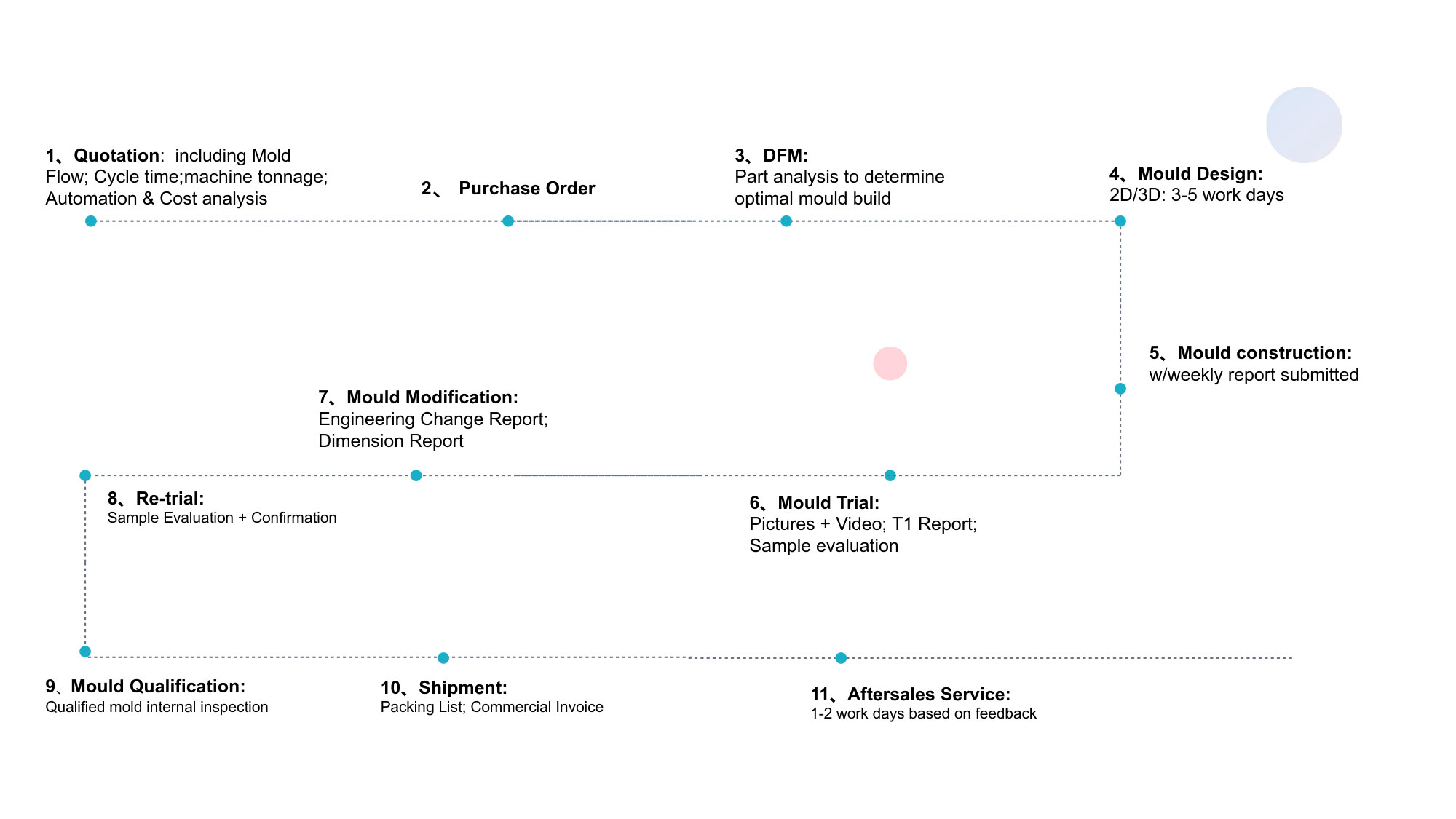
The mold manufacturing process follows a precision workflow:
CNC roughing and finishing performs the initial material removal and final profiling of mold plates and components, with advanced 5-axis machining centers achieving the required geometries [16†L8-L13].
EDM (Electrodischarge Machining) creates complex internal features such as cooling channel intersections, runner systems, and fine details that cannot be accessed by conventional cutting tools [16†L4-L6].
Wire EDM produces precise slots, shut-off surfaces, and cavity details with micron-level accuracy.
High-precision grinding achieves dimensional accuracy on critical fit surfaces and parting lines.
Mirror polishing of cavity and core surfaces—to Ra 0.025μm or better—is essential for achieving the optical clarity required for diagnostic tube applications and for ensuring clean part release [16†L31-L33].
Assembly and fitment ensures that all moving components—slides, ejector pins, hot runner components—operate smoothly and precisely.
Throughout the manufacturing process, Ansix Tech’s 70% automated machining ratio ensures consistent quality and rapid turnaround [9†L26].
Injection Molding Process Validation and Production Challenges
The transition from mold validation to production presents significant technical challenges specific to blood collection tubes:
Wall Thickness Uniformity. Blood collection tubes require wall thickness to be maintained within very tight tolerances around the entire circumference—typically less than ±0.1mm variation [17†L22-L23]. Deviations can affect vacuum retention, centrifuge performance, and dimensional stability. Core offset during mold filling—where the core pin is displaced by melt flow forces—is a particular challenge for long, thin tubular geometries [15†L25-L27]. Advanced hot runner technology can reduce core offset from 1.5mm to 0.15mm, a 90% improvement [3†L21-L23][3†L31-L33].
Vacuum Integrity. The finished tube must maintain vacuum integrity for specified shelf-lives—typically 18 to 24 months. This requires dimensional stability across the tube’s neck and mouth to ensure a perfect seal with the rubber stopper. Any deviation in collar roundness, neck geometry, or mouth flatness can compromise the vacuum seal [15†L4-L6].
Optical Clarity and Surface Finish. For visual inspection and analyzer compatibility, the tube must exhibit excellent transparency with no haze, flow marks, or surface defects. This requires precise melt temperature control, optimized injection speeds, and clean mold cavity surfaces.
Cycle Time and Throughput. The global medical industry targets cycle times in the range of 5.3 to 7 seconds for high-performance blood collection tube molding systems [4†L6-L9][4†L25-L28]. Husky’s integrated ICHOR system, for example, advertises a 5.3-second cycle at 97% efficiency [4†L6-L8]. Ansix Tech’s process optimization strategies focus on simultaneously reducing cooling time (which dominates the cycle), balancing fill and packing phases to minimize hold time, and optimizing mold opening and ejection speed.
Weight Consistency. Part weight variation is a critical quality metric in medical molding because it directly correlates with wall thickness consistency and mechanical properties. Integrated molding systems monitor weight in real time and reject out-of-tolerance parts automatically [4†L10-L14][4†L42-L47].
Process Optimization: Maximizing Efficiency, Minimizing Cost
Ansix Tech’s commitment to cost reduction is embedded in its engineering philosophy rather than treated as an afterthought. The company has demonstrated the ability to reduce customer manufacturing costs by up to 30% through systematic material, process, and efficiency optimization across its precision injection molding operations [8†L4-L6].
For the blood collection tube mold project, cost reduction strategies include:
Material Cost Optimization. Through strategic vendor relationships and volume purchasing power—the company consumes hundreds of tons of medical-grade polymer annually—Ansix Tech secures competitive raw material pricing. More importantly, its DFM process reduces scrap rates by identifying and eliminating material waste at the design stage [9†L48-L51]. Advanced simulation predicts and eliminates short shots, flash, and burn marks before production begins.
Process Efficiency Optimization. Each production parameter is analyzed for cost impact. For example, cooling time—typically 50–70% of total cycle time—can be reduced through conformal cooling design that improves heat transfer. For blood collection tube production, reducing cooling time from 12 seconds to 8 seconds increases output by 33% on the same machine, directly lowering per-part overhead and amortized tooling costs. Advanced hot runner valve gating eliminates runner waste, saving both material cost and eliminating regrind handling.
Energy Efficiency. With 260 injection molding machines operating across its facilities, Ansix Tech has implemented energy management systems to reduce per-part power consumption. Medical molding requires precise temperature control, but servo-driven machine designs and insulated hot runner systems can reduce energy use by 20–30% compared to conventional equipment.
Multi-Cavity Tooling. High cavitation molds produce more parts per cycle, directly spreading tooling cost and machine overhead across greater unit volumes. A 64-cavity mold producing the same number of tubes as a 32-cavity mold in half the machine hours achieves approximately 50% lower machine-related costs per part—though this must be balanced against higher initial tooling investment and the complexity of maintaining uniform quality across more cavities.
Predictive Maintenance and Process Stability. Every unplanned stoppage—whether for tool cleaning, hot runner repair, or injection unit maintenance—adds cost. Ansix Tech’s rigor in validation and ongoing condition monitoring mean fewer interruptions and more consistent up-time, reducing total cost of ownership for customers.
In-House Validation and Testing. By maintaining all testing and validation capabilities in-house, Ansix Tech eliminates third-party testing delays and costs. This vertical integration extends to secondary operations such as assembly, packaging, and quality inspection.
Quality Control and Validation: Meeting Medical Standards
Quality is systematically verified at every stage of production. The ISO 13485-certified quality management system requires documented validation protocols including Installation Qualification (IQ), Operational Qualification (OQ), and Performance Qualification (PQ) [18†L16-L21]. At a minimum, the validation sequence for a blood collection tube mold project includes:
IQ verifies the mold is installed correctly in the injection molding press and all systems—cooling, hot runner, ejection, safety interlocks—function as designed. OQ runs the mold through its intended operating range, typically varying injection speed, packing pressure, melt temperature, and cooling time to establish process window limits. This phase identifies where the process is robust and where it is sensitive to variation. PQ demonstrates that the mold, operating within the established process window, consistently produces parts meeting all specifications—typically over three consecutive production runs of defined duration.
Statistical Process Control monitors critical-to-quality parameters including part weight (target variation <1% across a run), wall thickness (checked via laser or ultrasonic gauge at defined intervals), visual defects (automated vision inspection at cycle rates), and dimensional checks (CMM or optical measurement on sample pieces).
After molding, finished blood collection tubes undergo sterility testing to verify the absence of any viable microorganisms—bacteria, yeast, molds—that could compromise patient safety [5†L9-L15]. The sterility assurance level is verified through validated sterilization processes.
Packaging and Rapid Delivery: Completing the Supply Chain
Ansix Tech’s scope for this project extends beyond molding to include automated packaging and logistics. Sterile blood collection tubes require packaging that maintains sterility through transport, storage, and handling. The packaging process is integrated directly with molding: as tubes emerge from the molding press, they are transported via automated conveyor to packaging stations, eliminating manual handling and reducing contamination risk. Automated bagging and cartoning run at cycle rates matched to machine output, with visual inspection stations scanning for defects before final pack-out.
The company’s strategically located production facilities—spanning China and Vietnam—position it to serve global medical markets with reduced delivery lead times [9†L14-L15]. The combination of in-house tooling, in-house molding, and in-house packaging eliminates logistics handoffs, accelerating time-to-market from initial design inquiry to first shipment of finished components.
Industry Experience and Proven Reliability
Ansix Tech brings deep medical sector experience to the blood collection tube mold project. The company has successfully delivered injection molding solutions for anesthesia machine connectors in PPSU, endoscopic stapler safety screws manufactured to U.S. specifications, insulin pump microfluidic valves with ±0.01mm tolerances, and disposable anesthetic needle molds [8†L2-L6][8†L18-L24][10†L3-L6][11†L3-L8]. This track record demonstrates the company’s capability to handle the most demanding medical-grade applications in high-volume production.
Across these projects, the company has refined its integrated approach: early collaboration on material selection, rigorous DFM and mold-flow analysis, strategic material and process cost optimization, in-house quality validation, and vertically integrated production. Every project is backed by the company’s corporate mission: “Make Our Customers Successful” [9†L18-L19].
Conclusion: A New Standard for Blood Collection Tube Mold Manufacturing
With the official launch of its blood collection tube mold project, Ansix Tech has positioned itself as a single-source solution for medical device manufacturers seeking to improve quality, reduce cost, ensure supply chain security, and accelerate speed to market. The company’s integrated capabilities—from digital design and precision mold making through high-cavitation injection molding, quality validation, and automated packaging—offer a comprehensive alternative to fragmented supplier models.
For medical OEMs evaluating blood collection tube manufacturing partners, the choice increasingly comes down to integration, reliability, and cost. Ansix Tech’s 28 years of experience, ISO 13485-certified quality system, 260 machines, and proven medical molding track record make a compelling case. As global healthcare demand continues to rise and cost pressures intensify, Ansix Tech’s precision-driven, integrated approach to blood collection tube mold engineering is not just a competitive advantage—it is becoming the new industry standard.
Media Contact:
Ansix Tech Limited
www.ansixtech.com
*Ansix Tech is a precision injection molding leader providing end-to-end solutions for medical devices, automotive components, consumer electronics, and smart home products, with over 28 years of industry experience and ISO 13485:2016 certification.
Ansix Tech Co Ltd
If you have any plans related to Blood collection tube mold , you can contact us at any time. We will turn your ideas into reality, let you realize your dreams, and obtain large orders from the market. Our contact information is info@ansixtech.com. Or contact our CTO, mail: stephen@ansixtech.com
#www.ansixtech.com #ansixtech.com #Blood collection tube mold #Blood collection tube mold #Blood collection tube mold moulds #Blood collection tube mold molds #Blood collection tube mold injection molding companies #Blood collection tube mold #Blood collection tube mold Canopy Mold injection mold companies #Ansix #Ansix moulds #Ansix china #Ansix tech china #Ansix tech company #Ansix facotry #Blood collection tube mold injection molding #Blood collection tube mold injection tools #Blood collection tube mold injection moulds #Blood collection tube mold plastic mould #Blood collection tube mold plastic tools #Ansix Tech #Ansix molds #Ansix injection molding #Ansix mold factory #injection molding Blood collection tube mold #Ansix mold factory #Blood collection tube mold china #Blood collection tube mold molds #injection factory #Blood collection tube mold injection molding #Blood collection tube mold injection molding factory #injection molding company #Blood collection tube mold injection mold companies #Blood collection tube mold#Blood collection tube mold mold limited #Ansix mold china #Ansix companies #Ansix company China #Blood collection tube mold facotry #Ansix Tech #Ansix Tech mould #Blood collection tube mold injection moulding #injection moulding company #Ansix Blood collection tube mold parts injection mold companies #medical injection molding companieschina #Blood collection tube mold china factory #Ansix moulding companies #Ansix molding company #Blood collection tube mold injection moulding facotry #Ansix Tech mold #Blood collection tube mold mould #Blood collection tube mold plastic injection molding #ansix plastic mold #Mold manufacturing #Blood collection tube mold parts manufacturing #Blood collection tube mold plastic parts factory #Blood collection tube mold injection parts mold #Blood collection tube mold PRECISION MANUFACTURING #Blood collection tube mold #China mold #Blood collection tube mold injection moulding china #Blood collection tube mold mould china #china precision mold #mold in china #Blood collection tube mold mold china #Precision molds #High-precision molds #Blood collection tube mold #Injection molds #Blood collection tube mold Factory #Blood collection tube mold Company #Super Large Injection Mold Factory #Large Tonnage Injection Molding Factory #Blood collection tube mold Company #Blood collection tube mold Factory #2800T Injection Molding Factory #3000 Ton Injection Molding #4500 Ton Injection Molding Factory #Large Mold Injection Molding #Large Plastic Mold Injection Molding Factory #Large Injection Mold Manufacturer #Plastic Mold Factory #Injection Mold #Plastic Mold