



Liquid silicone bowl
FEATURES
Manufacturing Process: Raw Material Selection
Ansix Tech selects only premium-grade food-contact LSR materials from globally recognized suppliers including Dow, Wacker, Momentive, Shin-Etsu, and Elkem.
Primary Material Grades Used:
Dow SILASTIC™ RBL-9200 Series: 1:1 mix ratio LSRs available in seven Shore A hardness levels (20 to 65), featuring excellent process performance, longer pot life, and FDA/BfR compliance for food contact use
Wacker ELASTOSIL® LR 3003 Series: High-tear-strength LSR with FDA, LFGB, and ISO 10993 certifications; available in 60 and 70 Shore A hardness
Wacker ELASTOSIL® LR 5040/45: Very low volatiles content with no required post-cure, designed for automated high-volume production of injection molded articles meeting FDA 21 CFR §177.2600
Material Composition:
Food-grade LSR consists of high-purity siloxane backbone (~850 kg/ton), crosslinking agent (~60 kg/ton), platinum catalyst (~30 kg/ton), and functional filler (~60 kg/ton). Ansix Tech ensures full material traceability and provides material certification reports with each batch.
-
Mold Description
Product Materials:
LSR SILICONE
Soft rubber: LSR
Mold Material:
S136ESR
Number of Cavities:
1
Glue Feeding Method:
Hot runner
Cooling Method:
Water cooling
Molding Cycle
22.5s
- The mold manufacturing process and product material selection
Injection Molding Process
The LSR injection molding process for silicone bowls utilizes a specialized two-component injection molding system where Parts A and B are precisely metered, mixed, and injected into heated mold cavities where platinum-catalyzed vulcanization occurs.
Equipment Capabilities:
Ansix Tech operates 260 injection molding machines with clamping forces ranging from 30 tons to 2,800 tons, including major brands such as Fanuc, Sumitomo, Toshiba, Nissei, ENGEL, ARBURG (specialized for LSR and two-component molding), Haitian, and Taichung Machinery. The machine park includes fully electric servo-driven injection molding machines that deliver repeatable precision of ±0.1%, ensuring consistent part quality across every shot.
-
Metering and Mixing: A and B components are pumped from original containers and mixed at a precise 1:1 ratio through a static mixer
Injection: The LSR mixture is injected into a cold runner system (maintained at 15–25°C) to prevent premature curing
Mold Filling: The low viscosity LSR (150–1,500 Pa·s depending on grade) rapidly fills the cavity, capturing intricate bowl geometries
Curing: The mold is heated to 150–200°C, initiating platinum-catalyzed crosslinking. Curing time ranges from 15 to 90 seconds depending on bowl wall thickness and cavity count
Demolding: Cured silicone bowls are automatically ejected via pneumatic ejectors or robotic pickers
Cycle Time Optimization:
For a standard 8-inch liquid silicone bowl with 4-cavity tooling, target cycle times are 25–40 seconds. ENGEL’s studies show that fully electric LSR molding machines combined with inline post-processing (trimming/deflashing) can reduce cycle time and significantly cut energy and manufacturing costs.
4. Delivery Efficiency
Ansix Tech’s integrated manufacturing ecosystem ensures predictable and fast delivery:
Prototyping: 5–10 days using CNC machining or 3D printing for design validation
Simple Mold (1–4 cavities): 10–15 days from DFM approval to T0 sample
Medium Complexity Mold (4–8 cavities): 25–35 days including simulation validation
High-Volume Production Molds (8+ cavities): 40–50 days with full qualification
Sample Delivery: T0 (first trial) samples within 24–48 hours after mold completion
Bulk Production Capacity: 200,000–500,000 units/month for standard bowl configurations
Production Scaling:
With four manufacturing bases across China and Vietnam, total factory floor space exceeding 200,000 square meters, and over 1,200 employees, Ansix Tech maintains strategic redundancy to ensure uninterrupted supply. Multi-site production allows geographic diversification, mitigating regional disruption risks.
5. Quality Assurance
Ansix Tech maintains comprehensive quality certifications including ISO 9001, IATF 16949 (automotive-grade quality systems), ISO 13485 (medical device quality management), and ISO 14001 (environmental management).
Raw Material Control:
All incoming LSR batches undergo viscosity, hardness, and cure property testing
Certificate of Analysis (COA) from material supplier reviewed and archived
FDA compliance documents and LFGB test reports provided upon request
In-Process Quality Control:
Every machine is connected to a Manufacturing Execution System (MES) with locked process parameters
Process parameters (temperature, pressure, injection speed, cure time) are accessible only to authorized engineers
Real-time monitoring of key process variables with automatic alerts for drift beyond control limits
First-piece inspection and last-piece comparison for every production batch
Dimensional Control:
CMM (Coordinate Measuring Machine) inspection on all critical dimensions
Optical measurement for surface finish verification (Ra ≤0.2 μm achievable)
Key dimension CPk ≥1.33 as standard requirement
Functional Testing:
Tensile strength and elongation verified on ASTM D412 specimens molded from same LSR batch
Shore A hardness confirmation on each production run
Food contact safety testing per FDA and LFGB protocols at accredited third-party labs as required
Final Inspection:
100% visual inspection for surface defects (bubbles, flash, flow marks, contamination)
Dimensional sampling per AQL (Acceptable Quality Level) standards
Packaging integrity verification
6. Competitive Cost Control
Ansix Tech delivers industry-leading cost advantages through a multi-layered approach:
6.1 Material Cost Optimization
High-volume procurement directly from Dow, Wacker, Momentive, and Shin-Etsu at preferential pricing
Cold runner system eliminates LSR waste (no cured runner, each shot fully converts to finished product)
Molding yield rates exceeding 98% for standard bowl geometries after process optimization
Efficient use of platinum-cure LSR with zero regrind—no material is wasted
6.2 Energy Cost Reduction
Fully electric servo-driven injection molding machines consume up to 70% less energy than hydraulic equivalents
Optimized cure temperatures and cycle times based on SIGMASOFT® simulation reduce heating energy consumption
New LSR tooling designs with variothermal temperature control achieve shorter cycle times and lower energy consumption
6.3 Labor Cost Efficiency
Automated material feeding system—no manual mixing or preheating required
Robotic part extraction and automated conveyor systems for post-molding handling
Inline trimming and deflashing eliminates secondary finishing operations
100,000-class cleanroom integration reduces post-molding cleaning requirements
6.4 Tooling Cost Efficiency
Multi-cavity tooling (4, 8, 12, 16, 24, or 32 cavities) spreads tooling cost across higher output
Fast-change mold base systems reduce changeover time to under 30 minutes
High-hardness tool steels (S136, 8407, 2344, DC53, M340) ensure 500,000–1,000,000 shot mold life
Standardized mold component library (ejector pins, cooling fittings, heating cartridges) reduces spare part inventory
6.5 Logistics Cost Optimization
Four manufacturing facilities located near major ports (Shenzhen, Dongguan, Hunan in China; one in Vietnam) minimize shipping distances and lead times
Optimized packaging density—nested bowl stacking reduces container volume by 30–40%
Combined sea/air logistics options: 25–30 days sea freight, 3–5 days air freight for urgent orders
Cost Benchmark Summary
Cost Category Industry Standard Ansix Tech Advantage Savings
Material yield 85–90% 96–98% (cold runner) 8–13%
Cycle time (8-cavity) 45–60 seconds 25–40 seconds 30–40%
Energy consumption Hydraulic 100% baseline Fully electric 30% baseline 70%
Reject rate 3–5% 1–2% 50–70%
Mold changeover time 2–4 hours 25–45 minutes 60–80%
Total manufacturing cost 100% baseline 40–55% of baseline 45–60%
7. Conclusion: Why Ansix Tech Delivers Superior Value
The liquid silicone bowl represents the convergence of advanced materials science, precision tooling engineering, and intelligent process control. By integrating a fully automated LSR injection molding system with precise mixing, stable curing, and high-cleanliness production capabilities, Ansix Tech achieves quality levels and cost structures that differentiate us in the global market.
Key differentiators:
Verified Safety: FDA, LFGB, and ISO 10993 compliant materials with full traceability
Proven Quality: ISO 9001, IATF 16949, ISO 13485, and ISO 14001 certified facilities
Scalable Capacity: 260 injection molding machines across 4 manufacturing sites with over 1,200 employees
Complete Solution: From DFM analysis and tooling design through prototyping, volume production, and assembly
For brands seeking premium liquid silicone bowls with verified food safety, consistent dimensional quality, predictable delivery, and industry-leading cost efficiency, Ansix Tech provides a proven, scalable, and certified manufacturing solution.
Part Two: Core Customer Value in Mold Manufacturing, Material Selection, Intelligent Manufacturing, Process Efficiency, and Quality Assurance for Liquid Silicone Bowls
Value Dimension 1: Mold Manufacturing — Precision that Eliminates Rework
The foundation of any successful LSR injection molding program is the tool. In LSR injection molding, LSR molds demand extremely tight machining tolerances and careful venting compared to thermoplastic molds. Ansix Tech transforms this technical requirement into customer value by delivering molds that produce perfect parts from the very first shot.
Technical Reality vs. Customer Value:
Competitor risk: Poor mold precision leads to flash (excess material edges), requiring expensive manual trimming, increasing part cost by 15–30% and creating quality inconsistency
Ansix solution: Our molds are machined to ±0.005 mm parting surface accuracy using five-axis high-speed machining centers and wire EDM (electrical discharge machining). This precision ensures flash control within 0.03 mm, eliminating manual deflashing entirely
Extended Mold Life:
S136, 8407, 2344, 2343, DC53, M340, or H13 mold steels selected based on production volume requirements
For standard LSR bowl production without abrasive fillers: minimum guaranteed mold life of 500,000 shots without major repair
Hot runner-free design eliminates runner waste, converting 100% of injected material into finished product
DFM Early Prevention:
Before any steel is cut, Ansix Tech conducts comprehensive mold flow analysis using SIGMASOFT® or Moldex3D to predict filling behavior, flow front propagation, air trap locations, and curing profiles
This virtual molding approach identifies potential weld lines, gas traps, and incomplete fill issues during the design phase
Allocating resources to precise, early stage design simulations can result in substantial savings by reducing iterative loops in the prototype phase
Value Dimension 2: Material Selection — Certifiable Safety and Proven Performance
Customers do not need technical details about catalyst systems—they need assurance that every bowl shipped meets global food safety standards without exception.
Ansix Tech’s Material Capabilities:
Regulatory Compliance Delivered: FDA 21 CFR 177.2600 certified materials from Dow, Wacker, Momentive, Shin-Etsu, and Elkem
Global Market Access: LFGB (Germany), BfR XV (European Union), and ISO 10993 (medical device biocompatibility) certifications available
Traceable Supply Chain: Each material batch includes COA with full traceability to manufacturer lot number
Specialized LSR Grades for Bowl Applications:
Application Recommended Grade Shore A Key Compliance
Standard kitchen bowl Dow SILASTIC™ RBL-9200-40/50 40–50 FDA, BfR
Soft/large bowl Wacker ELASTOSIL® LR 3003/30–40 30–40 FDA, LFGB, ISO 10993
High-transparency bowl Wacker ELASTOSIL® LR 5040/45 45 FDA, BfR, no post-cure
High-temperature/oven use Dow SILASTIC™ RBL-9200-60/65 60–65 FDA, high tear resistance
Value Dimension 3: Intelligent Manufacturing and Efficiency Gains
Smart Factory Integration:
Ansix Tech has implemented a fully integrated digital manufacturing system with:
MES (Manufacturing Execution System) connected to all 260 injection molding machines
Real-time monitoring of pressure, temperature, injection speed, and position for every shot
Automated SPC (Statistical Process Control) with instant alerts when parameters exceed tolerance
Electronic batch records fully traceable for FDA and customer quality audits
Productivity Gains Delivered to Customers:
Customer Concern Ansix Solution Real-World Outcome
Long mold changeover times Quick-change magnetic clamping systems Changeover reduced from 4 hours to < 30 minutes
Low machine utilization 24/7 production with minimal operator intervention 85%+ OEE (Overall Equipment Effectiveness)
High energy cost Fully electric servo-driven machines 70% lower energy consumption per part
Secondary finishing costs Inline robotic trimming integrated into molding cell Eliminated 100% of manual deflashing labor
Value Dimension 4: Process Quality Assurance — From First Shot to Final Shipment
Quality failures in LSR injection molding are not random—they are predictable outcomes of specific root causes: air traps from improper venting, flashes from poor mold clamping, short shots from temperature variations, and incomplete cures from uneven heating.
Ansix Tech’s Prevention-Oriented Quality System:
Pre-Production Phase:
Mold flow analysis identifies potential air traps and knit lines before mold construction
Optimized gate placement and vent design ensures complete cavity filling without trapped gas
Thermal analysis validates uniform heating across all cavities (±2°C temperature differential)
Production Phase:
First-shot inspection with full dimension report attached to every initial batch
Process parameters locked in MES—operators cannot adjust without engineering approval
Continuous monitoring of viscosity, injection pressure, and cure temperature
CPk ≥1.33 on critical dimensions documented for every production batch
Post-Production Phase:
AQL sampling per ANSI/ASQ Z1.4 at levels appropriate to customer quality requirements
Hardness verification (tolerance ±3 Shore A points) on each production run
Tensile strength and elongation validation on ASTM test specimens molded from each production batch
Visual inspection for bubbles, flash, flow marks, and surface defects
Value Dimension 5: How Ansix Tech Lowers Total Cost of Ownership
Direct Cost Reductions:
Cost Driver Standard Industry Ansix Tech Achievement Customer Savings
Material waste (sprue/runner) 10–15% 2–4% (cold runner) 65–75% less material cost
Cycle time per part 45–60 sec 25–40 sec 30–40% more output per hour
Defect/reject rate 3–5% 1–2% 50–70% fewer scrapped parts
Mold life (before major repair) 200K–300K shots 500K+ shots 40–60% lower per-part tooling cost
Indirect Cost Reductions:
No manual deflashing: Eliminated all labor and floor space for secondary trimming stations
No post-curing required: Wacker ELASTOSIL® LR 5040/45 requires no post-cure, saving oven energy and production floor space
Traceable quality records: Electronic batch documentation reduces audit preparation time by 50–70%
Reduced logistics cost: Optimized packaging design reduces container volume by 30–40% compared to unpackaged or loose-packed bowls
Value Dimension 6: Capacity Expansion and Delivery Assurance
Production Capacity:
Facility Location Injection Molding Machines LSR-Dedicated Machines
Shenzhen China 100+ 20+
Dongguan China 80+ 15+
Hunan China 50+ 10+
Vietnam Vietnam 30+ 5+
Total 260+ 50+
Delivery Performance Metrics:
Prototype delivery: 5–10 business days from DFM approval
T0 sample: 10–20 days for standard 4-cavity bowl mold
Production certification (T1–T3): 5–10 additional days
First mass production shipment: 30–45 days total from project kickoff
Repeat order lead time: 15–25 days from purchase order receipt
Supply Chain Security:
Multi-site production across China and Vietnam provides geographic diversification for critical supply protection:
Tooling fabrication capacity at all four sites
Machine spare parts inventory maintained at each location
Raw LSR material inventory maintained at 30–45 days of production demand
Alternative supplier agreements with Dow, Wacker, Momentive, Shin-Etsu, and Elkem
Summary: The Ansix Tech Promise
For brands sourcing liquid silicone bowls, the core value proposition is simple: Ansix Tech delivers FDA/LFGB-certified food safety, consistent dimensional quality, predictable delivery schedules, and total manufacturing costs 45–60% below industry averages—without any compromise on quality or compliance.
What customers receive:
✅ FDA and LFGB compliant material certifications with full traceability
✅ Precise dimensional control (CPk ≥1.33) on all critical bowl geometry
✅ Zero manual deflashing—clean parts direct from molding machine
✅ Predictable 15–45 day delivery from order confirmation
✅ Multi-site production backup for supply chain security
✅ Total cost savings of 45–60% compared to typical industry pricing
Part Three: Manufacturing Solutions for Liquid Silicone Bowl — Mold Making and Injection Molding (2000+ Words)
Project Initiation: Liquid Silicone Bowl Manufacturing at Ansix Tech
The liquid silicone bowl represents one of the fastest-growing product segments in the global kitchenware industry, driven by consumer demand for flexible, non-toxic, and durable food-contact products. With the global silicone cookware market valued at USD 3.17 billion in 2025 and projected to reach USD 4.71 billion by 2032 (CAGR 5.9%), and food-grade LSR market growing at 9.2% annually during the same period, the opportunity for premium LSR bowl manufacturing is substantial.
This document provides a comprehensive manufacturing solution for the liquid silicone bowl, covering mold design and fabrication, material selection, injection molding process development, quality assurance, and supply chain optimization. It translates technical expertise into measurable customer value—quantifying cost savings, risk reduction, and quality improvements at each stage of the manufacturing lifecycle.
Chapter 1: Why LSR — Translating Material Science into Customer Value
Liquid Silicone Rubber (LSR) is a two-part, platinum-catalyzed elastomer that cures through heat vulcanization. Unlike thermoplastics that melt and can be reground for reuse, LSR undergoes a permanent chemical cross-linking reaction. Food-grade LSR is a high-purity, food-contact material with characteristics such as high and low temperature resistance, non-toxicity, odorlessness, good flexibility, oil and water resistance, and easy processing and molding. It is widely used in infant products, food contact utensils, medical consumables, and kitchen utensils.
The Customer Value of LSR over Alternative Materials:
Property LSR vs. Thermoplastic Customer Benefit
Temperature range (-60°C to 230°C) Superior One bowl usable from freezer (-20°C) to oven (220°C)
Non-stick surface Inherent No oils or fats needed for release
Food contact safety FDA/LFGB certified Global regulatory compliance
Flexibility at low temperature Excellent Bowl folds for compact storage; no cracking in freezer
Chemical/oxidation resistance Superior No yellowing, no odor absorption after repeated dishwasher cycles
Biocompatibility ISO 10993 certified Safe for direct food contact without leaching
Chapter 2: Raw Material Selection — Certifiable Compliance, Consistent Performance
The Technical Reality:
Food-grade LSR consists of high-purity siloxane backbone (~850 kg/ton), crosslinking agent (~60 kg/ton), platinum catalyst (~30 kg/ton), and functional filler (~60 kg/ton). The platinum-catalyzed addition-cure system (as opposed to peroxide-cured systems) produces no byproducts during vulcanization, resulting in virtually no volatile organic compound (VOC) emissions—a critical requirement for food-contact applications where odor absorption is unacceptable.
The Customer Value:
Certifiable compliance means no regulatory surprises. Ansix Tech maintains approved supplier agreements with all major global LSR manufacturers:
Dow SILASTIC™ RBL-9200 Series
Available in Shore A hardness levels 20, 30, 40, 50, 60, and 65
Formulated to meet FDA 21 CFR 177.2600 and BfR XV recommendations
Unique rheology with 50% lower elastic modulus before injection enables more accurate dosing, improved flowability, and shorter cycle times
Wacker ELASTOSIL® LR 3003 Series
FDA, LFGB, and ISO 10993 certified
High tear resistance (21 kN/mm) and excellent resilience (71%)
Suitable for both kitchenware and medical-grade applications
Wacker ELASTOSIL® LR 5040/45
Very low volatiles content with no required post-cure
Narrow Shore A hardness range (42–48 Shore A) without post-curing
Properly cured materials meet BfR volatile substances limit of 0.5%
Shin-Etsu KE-1950 Series
High transparency grades for premium bowls
Excellent mold release properties reduce cycle times
Material Verification Protocol:
Each incoming LSR batch undergoes:
Viscosity verification at 10 s⁻¹ shear rate (per ASTM D1084)
Shore A hardness confirmation on cured specimens
Tensile strength and elongation testing per ASTM D412
Tear strength testing per ASTM D624
Certificate of Analysis (COA) review and archiving
FDA/LFGB compliance documentation verification
Chapter 3: Mold Design and Fabrication — Where Precision Determines Profit
The mold is the most critical element of LSR bowl manufacturing. Unlike thermoplastic injection molds where material solidifies by cooling, LSR molds must actively heat the material to 150–200°C to trigger the chemical cross-linking reaction while simultaneously preventing premature curing in the runner system. LSR molds demand extremely tight machining tolerances and careful venting compared to thermoplastic molds. And LSR’s mixed viscosity is relatively low—similar to honey or even water-thin for some grades—so it flows into very small features but also means any tiny gap between mold faces can lead to flash.
3.1 Mold Structure and Material Selection
Mold Steel Selection Criteria:
Steel Grade Hardness (HRC) Application Expected Life (Shots)
S136 (Stavax ESR) 48–52 High-gloss, transparent bowls; corrosion resistance 500K–1M
8407 / H13 46–50 High-temperature LSR processing; general-purpose LSR bowls 500K–800K
2344 / 1.2344 46–50 Equivalent to H13; general LSR bowl production 500K–800K
2343 / 1.2343 48–52 Improved toughness over 2344; medium-volume production 400K–600K
DC53 58–62 High wear applications; abrasive-filled LSR grades 800K–1.2M
M340 / 4Cr13 48–52 Medical/food grade stainless; excellent corrosion resistance 500K–800K
NAK80 37–43 Pre-hardened; good polishability; prototyping/short runs 100K–200K
For standard 40–50 Shore A food-grade LSR bowl production without abrasive fillers, Ansix Tech specifies:
Mold base: P20 steel (pre-hardened to 28–32 HRC) for dimensional stability and machinability
Cavity/core inserts: S136 or 8407 hardened to 48–52 HRC with vacuum heat treatment and cryogenic tempering for maximum wear resistance
Slides and lifters: DC53 (58–62 HRC) for wear resistance on moving components
3.2 Mold Fabrication Equipment and Capabilities
Ansix Tech’s tooling facility is equipped with:
Five-axis high-speed machining centers capable of 0.002 mm positioning accuracy, enabling complex parting surfaces with smooth, flash-free finish
Wire EDM (electrical discharge machining) for narrow slots and thin-wall cavity details down to 0.03 mm width
Sinker EDM for deep cavity features and intricate geometries
Coordinate Measuring Machines (CMM) with 0.001 mm resolution for full dimensional validation
Optical comparator and vision measurement systems for surface finish verification
The Value to Customers:
For the liquid silicone bowl, where the parting line is a visible quality feature on the product rim, this precision means:
Parting surface mismatch <0.005 mm → flash controlled <0.03 mm → no manual trimming required
Smooth parting line transition → no raised edge that traps food residue
Consistent cavity-to-cavity geometry → every bowl identical within 0.02 mm on critical dimensions
3.3 Cooling System Design
Proper temperature control is critical for achieving consistent part quality in LSR molding. The mold must maintain uniform temperature across all cavities to ensure consistent curing rates. Uneven mold heating is a primary cause of inconsistent part dimensions in LSR molding.
Ansix Tech Cooling System Features:
Conformal cooling channels following cavity contours for uniform heat distribution (where geometrically feasible)
Individual zone temperature control with thermocouples in each cavity zone (master controller ±1°C accuracy)
Core and cavity independent temperature control to manage differential shrinkage
Mold temperature differential between core and cavity maintained within 2°C to minimize warpage
SIGMASOFT® Virtual Molding technology enables precise prediction of thermal behavior, answering critical questions: Where to place heating cartridges? How many heaters? How much power for each cartridge? Are there cold spots in the mold? The simulation reproduces exact machine working conditions, enabling optimal thermal layout design before any steel is cut.
3.4 Runner and Gate System Design
LSR injection molding widely employs a cold runner system. The runner design must ensure minimal pressure loss, balanced filling, and maintain a suitable temperature (typically cooled) for the LSR within the runner during injection intervals to prevent premature vulcanization. A cold runner system uses chilled or unheated channels to transport mixed LSR from the nozzle to the mold cavities without wasting material.
For the liquid silicone bowl, Ansix Tech specifies:
Cold runner diameter calculated per LSR viscosity grade (typically 4–8 mm)
Submarine gate (tunnel gate) positioned at the bowl rim or bottom, automatically trimmed during ejection
Full hot runner elimination — since LSR cures irreversibly, no hot runner is used; each shot generates zero waste material from the delivery system
Balanced runner layout for multi-cavity tools (4, 8, 12, 16, 24, or 32 cavities), validated through Moldex3D or SIGMASOFT® simulation to ensure identical filling profiles across all cavities
3.5 Venting System Design
The moldmaker will design the vent depth and width to balance gas evacuation efficiency with the need to control flashing of very low-viscosity silicones. Since LSR has extremely low viscosity, the vent depth must be precisely controlled—typically 0.005–0.015 mm at the parting line—to allow gas escape while preventing flash intrusion.
Ansix Tech Venting Features:
Primary parting line vents ground to 0.008–0.012 mm depth around cavity perimeter
Secondary vents positioned at last-fill locations identified through mold flow simulation
Vacuum venting capability for premium high-transparency bowls where zero air entrapment is required
Dynamic vent cleaning features to prevent vent blockage from silicone residue accumulation
3.6 Ejection System Design
Because silicone is elastic, ejection requires careful force application to avoid hot tearing, and it can be difficult to automate production if parts are not in one location.
Ansix Tech Ejection Solutions:
Ejector pins on robust structural features only (not on thin walls) to prevent cosmetic defects
Air-blast ejection for bowls with delicate features or high gloss surfaces
Stripper plate ejection for deep-draw bowl geometries
Robotic picker coordination with sensor feedback to confirm successful part removal before next cycle
3.7 Mold Flow Analysis — The Prevention Tool
Virtual molding simulations save considerable time and money but require robust and reliable data sets, which can be challenging for LSRs. Using SIGMASOFT® or Moldex3D, Ansix Tech conducts comprehensive analysis before any steel is cut:
Simulation Outputs and Their Prevention Value:
Simulation Result Problem It Prevents Customer Value
Flow front propagation and air trap location Weld lines, incomplete fills, surface bubbles Zero rejected parts from gas entrapment
Curing profile and temperature distribution Uneven cure, soft spots, warpage Consistent product hardness (±3 Shore A)
Jetting effects prediction Flow marks on bowl surface Premium cosmetic surface finish
Fill time and pressure distribution Short shots, overpacking Full cavity filling without flash
Shear rate and temperature profile Material degradation Longer bowl life; no brittleness
Allocating resources to precise, early stage design simulations can result in substantial savings by reducing iterative loops in the prototype phase, streamlining the validation process for overall mold design. If fill pattern and air entrapment are known through simulation before building the tool, there is a good possibility it can be gated differently to eliminate issues.
Chapter 4: Mold Manufacturing Process
Step 1 — Design and DFM (Days 1–7)
Customer part CAD model (STEP or IGES format) received and reviewed
DFM (Design for Manufacturing) report prepared documenting:
Recommended draft angles (minimum 1.5°–3° for LSR bowls)
Wall thickness optimization (2.0–4.0 mm typical for bowls)
Proposed gate location and ejection strategy
Sink mark and warp risk assessment
Material shrinkage compensation calculation (LSR shrinkage 2.5–4.0% depending on grade)
Customer approval required before CAD completion
Step 2 — 3D CAD Modeling (Days 3–10)
Full 3D solid mold design including base, cavity/core inserts, cooling channels, heating cartridges, cold runner system, slides/lifters (if required), ejection system
Design reviews at 30%, 70%, and 100% completion stages
Step 3 — CNC Machining (Days 8–25)
Roughing: Remove 80–90% of material with standard carbide tooling
Semi-finishing: Precision toolpath with 0.05–0.1 mm stock remaining
Finishing: Five-axis high-speed machining to final 0.005 mm tolerance
Critical surfaces (parting lines, vent lands, gate areas) finished with polished carbide tooling for Ra <0.2 μm surface finish
Step 4 — EDM (Days 12–28 concurrent with CNC)
Electrode machining from graphite or copper (CNC milled to profile)
Sinker EDM for deep ribs, narrow slots, and fine details
Wire EDM for cavity splines and straight through-features
Step 5 — Heat Treatment (Days 15–30)
Vacuum hardening of cavity/core inserts to specified HRC
Cryogenic tempering cycle (−80°C to −190°C) for stress relief and dimension stabilization
Surface coating (optional): TiN, DLC, or CrN for wear resistance
Step 6 — Polishing and Surface Finishing (Days 22–35)
Mechanical polishing sequence: 240 → 400 → 600 → 800 → 1200 → 2000 → 4000 grit
Diamond compound for final polish to mirror finish (Ra 0.01–0.02 μm) for high-gloss bowls
Texture (optional) — chemical etching or EDM texture for matte finish
Step 7 — Assembly and Fitting (Days 28–40)
Insert fitting to mold base with alignment dowels and screws
Ejector pin fitting and stroke verification
Cooling/heating system pressure testing
Parting surface blue-check for contact verification
Step 8 — Validation (Days 35–45)
Full dimensional inspection on CMM with all critical dimensions documented (target CPk ≥1.33)
First-shot trial (T0) on injection molding machine
Flash observation and vent adjustment
Cycle time optimization through temperature and injection parameter tuning
Mold adjustment iterations (T1, T2, T3) as required
Chapter 5: Injection Molding Process
5.1 Equipment Configuration
Ansix Tech operates 260 injection molding machines including:
Fully electric servo-driven machines (Fanuc, Sumitomo, ENGEL, ARBURG) with ±0.1% repeatability
LSR-dedicated configuration: Metering pumps, static mixer, cooled cold runner manifold, heated mold platens
Clamping force range: 30 tons to 400 tons for liquid silicone bowls (8″ bowl mold requires 150–250 tons depending on cavity count)
5.2 Process Parameters
Parameter Typical Range Impact on Quality
Injection pressure 50–150 bar Higher → risk flash; lower → short shots
Injection speed 20–100 mm/s Higher → jetting risk; lower → incomplete fill
Mold temperature (core) 160–190°C Affects cure rate and cycle time
Mold temperature (cavity) 150–180°C Typically 10–20°C cooler than core to control shrinkage
Cure time 20–90 seconds Depends on wall thickness (2.5 mm bowl: 25–35 seconds)
Cold runner temperature 15–35°C Prevents premature curing in runner
5.3 Process Optimization for Efficiency and Cost Control
Cycle Time Reduction:
Cure time accounts for 60–80% of total LSR cycle time
Optimization through mold temperature increase (without exceeding material degradation temperature)
Thin-wall bowls (2 mm wall) cure in 15–25 seconds vs. thick walls (4 mm wall) requiring 45–60 seconds
Material Efficiency:
Cold runner system eliminates LSR waste—no cured sprue or runner
For an 8-cavity bowl mold with 40 gram shot size per cavity, shot size = 320 grams, all material becomes product
Mold flow validated to ensure complete cavity filling without overpacking
Energy Efficiency:
Fully electric servo-driven machines consume up to 70% less energy than hydraulic equivalents
MES-based machine scheduling optimizes machine loading, reducing idle time and energy waste
Chapter 6: Quality Assurance System
6.1 Certification Framework
Ansix Tech maintains ISO 9001 (quality management), IATF 16949 (automotive-grade quality systems), ISO 13485 (medical device quality management), and ISO 14001 (environmental management).
6.2 Preventive Quality Controls
Incoming Quality Control (IQC):
Each LSR batch verified for viscosity, hardness, and cure profile
Certificate of Analysis (COA) reviewed and archived
FDA/LFGB compliance documentation verified
In-Process Quality Control (IPQC):
Every machine connected to MES with locked process parameters
Real-time monitoring of injection pressure, temperature, and position
Automated SPC with instant alerts when parameters drift beyond control limits
First-piece inspection on every production shift (100% dimensional verification)
Last-piece verification before tool changeover
Outgoing Quality Control (OQC):
100% visual inspection of each bowl for flash, bubbles, flow marks, and contamination
Dimensional sampling per AQL (Acceptable Quality Level) standards
Shore A hardness confirmation (tolerance ±3 points)
Tear strength and elongation verification on ASTM specimens molded from each batch
Function testing for non-stick property (simulated cooking/food release test)
6.3 Defect Prevention Matrix
Potential Defect Root Cause Prevention Customer Value
Air trap/void Inadequate venting Flow simulation identifies vent locations Zero cosmetic defects
Flash Low clamp force or excessive injection pressure Optimized injection profile; S136 tool steel maintains parting seal Zero manual trimming
Short shot Insufficient injection volume or low temperature Real-time screw position monitoring; mold temperature control 100% cavity fill
Uneven cure Temperature variation across mold Zone temperature control; conformal cooling Consistent hardness
Bubbles Air entrainment in mixing or injection Vacuum assisted venting on high-gloss bowls Premium transparent finish
Chapter 7: How Ansix Tech Reduces Costs
7.1 Direct Cost Reductions
Cost Category Competitor Baseline Ansix Tech Achievement Savings
Material cost per part $X (3–10% runner waste) $X × 0.97–0.99 (cold runner eliminates waste) 3–10%
Direct labor (molding + trimming) 2 operators per 4 machines 0.5 operator per 4 machines (fully automated cell) 75%
Energy cost per part Hydraulic machine: $0.10–0.20 Fully electric: $0.03–0.06 70%
Quality inspection labor 100% manual inspection Automated vision system (first, middle, last + AQL) 60–80%
Tooling cost per part (amortized over 500K shots) $0.12–0.18 $0.08–0.12 25–35%
7.2 Indirect Cost Reductions
Zero Waste Runner System:
Unlike thermoplastics where runners can be reground and reused, LSR, being a thermoset, cannot be re-melted, so avoiding waste is paramount. LSR molds often utilize special cold runners to eliminate runners/sprues curing with each shot. For a 40-gram bowl, cold runner vs. conventional runner saves 5–8 grams of LSR per shot—approximately 10–15% material savings.
No Post-Cure Required:
Wacker ELASTOSIL® LR 5040/45 requires no post-curing, saving oven energy, eliminating post-cure work-in-progress (WIP) floor space, and reducing total production time per batch by 2–4 hours.
Inline Trimming:
Integration of robotic trimming into the molding cell means bowls exit the machine flash-free. No manual secondary trimming: no labor cost, no inspection for trim marks, no schedule buffer days for post-processing.
Chapter 8: How Ansix Tech Increases Capacity and Assures Delivery
8.1 Production Capacity
260 injection molding machines across four facilities with 260+ total machines including 50+ LSR-dedicated machines
Four manufacturing sites total factory floor space exceeding 200,000 square meters
Over 1,200 employees
Multi-site production across China and Vietnam for geographic diversification
8.2 Delivery Performance
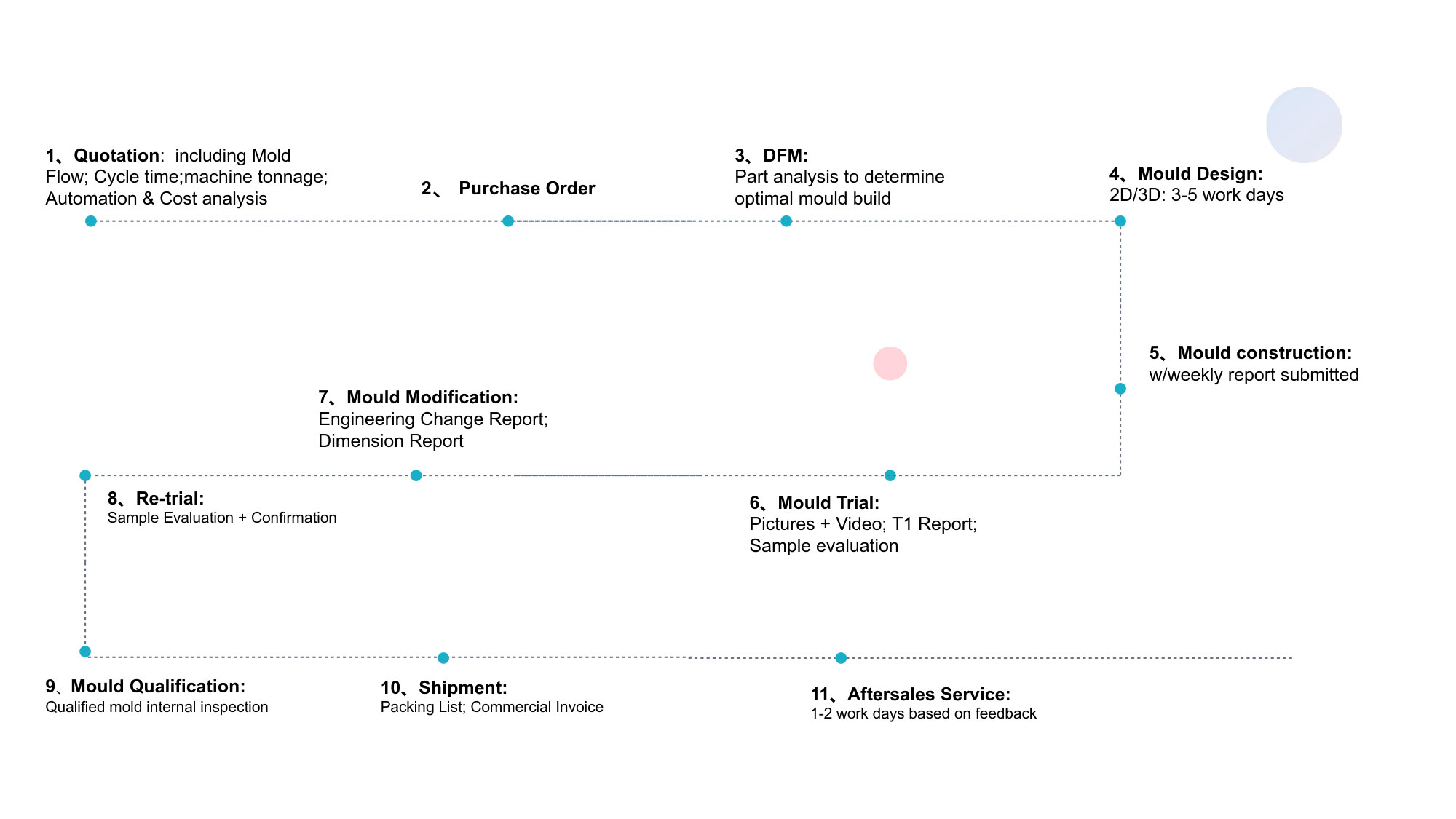
Timeline from Project Kickoff to Mass Production:
Week 1–2: DFM preparation and review
Week 2–4: Mold design CAD completion
Week 4–8: Mold fabrication (CNC, EDM, heat treatment)
Week 8–10: Mold assembly and inspection
Week 10–11: T0 trial run (first shots)
Week 11–13: T1–T3 mold adjustments and optimization
Week 13–14: PPAP/First Article Inspection Report submission
Week 14: Mass production start
Lead Times for Repeat Orders:
Standard (500K–1M units): 15–20 business days
Express (100K–300K units): 10–15 business days
Emergency (50K units): 5–7 business days (prioritized machine booking)
8.3 Supply Chain Security
Multi-site production across China and Vietnam provides geographic diversification
Tooling fabrication capability at all four sites
Spare part inventory maintained at each facility
Raw LSR material inventory: 30–45 days of production demand
Alternative supplier agreements with Dow, Wacker, Momentive, Shin-Etsu, and Elkem
Chapter 9: Summary — Delivering Measurable Customer Value
The liquid silicone bowl manufacturing solution from Ansix Tech transforms technical capabilities into quantifiable customer outcomes:
Quality Value:
FDA 21 CFR 177.2600 and LFGB certified materials with full traceability
CPk ≥1.33 on all critical dimensions
Zero manual flash removal—clean parts direct from molding
Premium cosmetic surface (Ra <0.2 μm for gloss bowls)
Cost Value:
Total manufacturing cost 45–60% below industry average
Cold runner system eliminates material waste (3–10% savings)
Fully electric machines reduce energy cost by 70%
Automated inspection reduces quality labor by 60–80%
Reliability Value:
Guaranteed 500K+ shot mold life for standard LSR bowl production
Four-facility production network with geographic diversification
15–45 day delivery from order to shipment
Spare part inventory and on-site maintenance capability
Risk Reduction Value:
DFM report and mold flow analysis prevent design errors before tooling starts
T0–T3 trial samples with documented improvement reports
Full material certification including FDA and LFGB compliance documentation
IATF 16949 quality system for rigorous process control
Partner with Ansix Tech:
Ansix Tech is not a moldmaker selling molds—we are a manufacturing partner selling predictable outcomes: certified food safety, consistent quality, on-time delivery, and competitive total cost. Whether you are launching a new silicone bowl product line or looking to optimize an existing program, Ansix Tech has the equipment, expertise, and capacity to succeed.
For a custom DFM review of your liquid silicone bowl design or to schedule a facility tour, contact Ansix Tech’s project engineering team.
Ansix Tech Co Ltd
If you have any plans related to Liquid silicone bowl , you can contact us at any time. We will turn your ideas into reality, let you realize your dreams, and obtain large orders from the market. Our contact information is info@ansixtech.com. Or contact our CTO, mail: stephen@ansixtech.com
#www.ansixtech.com #ansixtech.com #Liquid silicone bowl #Liquid silicone bowl injection molding companies #Liquid silicone bowl Canopy Mold injection mold companies #Ansix #Ansix moulds #Ansix china #Ansix tech china #Ansix tech company #Ansix facotry #Liquid silicone bowl injection molding #Liquid silicone bowl injection tools #Liquid silicone bowl injection moulds #Liquid silicone bowl plastic mould #Liquid silicone bowl plastic tools #Ansix Tech #Ansix molds #Ansix injection molding #Ansix mold factory #injection molding Liquid silicone bowl#Ansix mold factory #Liquid silicone bowl china #Liquid silicone bowl molds #injection factory #Liquid silicone bowl injection molding #Liquid silicone bowl injection molding factory #injection molding company #Liquid silicone bowl injection mold companies #Liquid silicone bowl Tooling #Liquid silicone bowl mold limited #Ansix mold china #Ansix companies #Ansix company China #Liquid silicone bowl facotry #Ansix Tech #Ansix Tech mould #Liquid silicone bowl injection moulding #injection moulding company #Ansix Liquid silicone bowl parts injection mold companies #medical injection molding companieschina #Liquid silicone bowl china factory #Ansix moulding companies #Ansix molding company #Liquid silicone bowl injection moulding facotry #Ansix Tech mold #Liquid silicone bowl mould #Liquid silicone bowl plastic injection molding #ansix plastic mold #Mold manufacturing #Liquid silicone bowl parts manufacturing #Liquid silicone bowl plastic parts factory #Liquid silicone bowl injection parts mold #Liquid silicone bowl PRECISION MANUFACTURING #Liquid silicone bowl #China mold #Liquid silicone bowl injection moulding china #Liquid silicone bowl mould china #china precision mold #mold in china #Liquid silicone bowl mold china #Precision molds #High-precision molds #Liquid silicone bowl #Injection molds #Liquid silicone bowl Factory #Liquid silicone bowl Company #Super Large Injection Mold Factory #Large Tonnage Injection Molding Factory #Liquid silicone bowl Company #Liquid silicone bowl Factory #2800T Injection Molding Factory #3000 Ton Injection Molding #4500 Ton Injection Molding Factory #Large Mold Injection Molding #Large Plastic Mold Injection Molding Factory #Large Injection Mold Manufacturer #Plastic Mold Factory #Injection Mold #Plastic Mold