



PC mold for ventilator leakage valve
FEATURES
Market Context: Why Ventilator Leakage Valves Demand Precision Excellence
The global medical injection molding market is experiencing robust growth, projected to expand from USD 27.32 billion in 2025 to USD 29.42 billion in 2026, representing a CAGR of 7.7%. Within this dynamic landscape, PC components for respiratory devices—particularly leakage valves that regulate airflow and ensure patient safety—stand among the most mission-critical applications.
Ventilator leakage valves require exceptional dimensional accuracy, consistent sealing performance, and absolute material integrity. Even micron-level deviations can compromise proper valve seating, leading to leakage and potentially life-threatening device malfunction. For OEMs serving intensive care units, emergency departments, and home-care settings, reliable leakage valve performance is non-negotiable.
-
Mold Description
Product Materials:
PC
Mold Material:
S136ESR
Number of Cavities:
1+1
Glue Feeding Method:
cold runner
Cooling Method:
Water cooling
Molding Cycle
22.5s
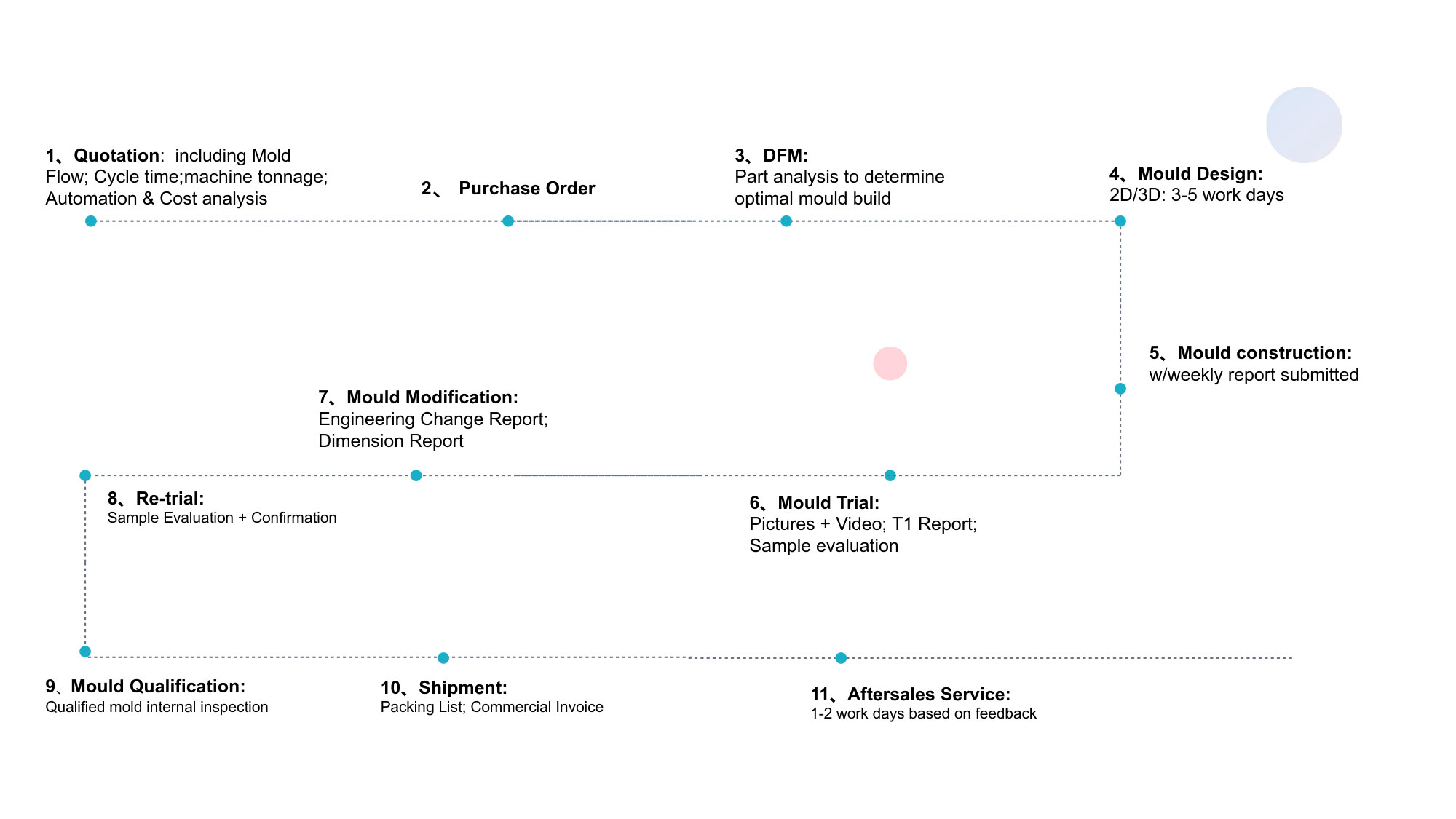
From Concept to Reality: Ansix Tech’s Project Initiation and Design-for-Manufacturing Advantage
The Ansix Tech PC mold for ventilator leakage valve project begins with a structured project initiation phase that prioritizes collaboration. Unlike conventional mold makers that merely quote from provided drawings, Ansix Tech engages OEM partners in a rigorous design-for-manufacturing (DfM) conversation before the first steel is cut.
Ansix Tech’s DfM protocol encompasses: uniform wall thickness engineering (typically 1–3 mm range for PC) to prevent sink marks and warpage; precise draft angles (1–3° or greater for textured surfaces) ensuring clean part ejection without mold damage; and strategic rib and gusset placement that enhances strength without increasing wall thickness, thereby reducing per-part material weight—a cost-saving measure that accumulates significantly over millions of production cycles.
-
“When OEM partners bring concepts to us, our engineers immediately initiate design dialogue,” explained a senior project lead at Ansix Tech. “We don’t merely quote from drawings; we analyze how every draft angle, wall thickness, and fillet radius will perform in production.” This early-stage collaboration is the cornerstone of cost control, preventing expensive and time-consuming mold modifications that commonly plague projects where design and manufacturing operate in silos.
Following DfM optimization, Ansix Tech employs advanced prototyping technologies, including micro-additive manufacturing for sophisticated features. These functional prototypes undergo rigorous design validation—including assembly confirmation, form verification, and initial functional testing—de-risking the project before significant capital is committed to production-grade mold steel.
Processing Excellence: DFM, Moldflow Analysis, and Advanced Simulation
Central to Ansix Tech’s engineering methodology is comprehensive Moldflow simulation and DFM analysis. Leveraging industry-leading simulation platforms, Ansix Tech conducts:
RFQ Studies and DFM Evaluations: Ensuring parts are fillable and manufacturable from the outset, significantly reducing downstream risks.
Pressure, Temperature, and Venting Analysis: Identifying potential concerns before mold fabrication, guiding optimal mold and cooling system design.
Design of Experiments (DOE) Optimizations: Enabling detailed analysis of critical process parameters, allowing engineers to resolve part instability issues and validate results with physical trials.
This digital-first approach accelerates development timelines while ensuring that physical production outcomes consistently align with simulation predictions—closing the loop between virtual validation and real-world manufacturing.
Material Selection: Precision Engineering Begins with the Right PC Resin
The comprehensive selection of polycarbonate raw materials for ventilator leakage valves is fundamental to component success. Ansix Tech partners with leading global resin suppliers to offer a portfolio of medical-grade PC materials, each selected for specific application requirements:
For high-temperature steam sterilization applications, Ansix Tech recommends Covestro Apec® 1745 RE, a medical-grade high-heat polycarbonate (PC-HT) with exceptional temperature resistance. This material supports superheated steam sterilization up to 143°C, exhibits a Vicat softening temperature of 170°C, and features excellent mold release properties. It is specifically formulated for applications including respiratory safety valve components and boasts USP Class VI certification and RoHS compliance.
For biocompatible device applications, SABIC LEXAN™ Healthcare HPS1R offers a high-flow polycarbonate with ISO 10993 or USP Class VI biocompatibility certification. With an MVR (300°C/1.2kg) of 23, this grade is optimized for gamma and electron-beam sterilization and incorporates enhanced mold release properties specifically formulated for medical devices and pharmaceutical applications.
For applications requiring enhanced chemical resistance and ductility, SABIC LNP™ ELCRES™ CRX9411 is a polycarbonate copolymer that provides medium flow, UL V0 flame rating at 1.6mm, and high ductility combined with excellent chemical resistance—particularly valuable in critical care environments where exposure to cleaning agents and disinfectants is routine.
For cost-optimized medical applications, CHI MEI WONDERLITE® PC-115P offers biocompatibility certification with excellent dimensional stability, making it suitable for blood dialyzers, infusion valve connectors, and respiratory device components.
Ansix Tech’s material expertise extends to verifying biocompatibility (ISO 10993 or USP Class VI compliance), sterilization compatibility (EtO, steam, gamma, and electron-beam), and application-specific requirements including transparency, impact resistance, heat resistance, and electrical insulation properties.
Mold Engineering Excellence: Design, Materials, and Advanced Cooling Systems
The design and fabrication of PC molds for ventilator leakage valves demand exceptional engineering sophistication. Ansix Tech employs a comprehensive design and manufacturing protocol that addresses:
Runner System Design: Medical multi-cavity molds require precise runner balance between flow and pressure. Ansix Tech employs both geometric symmetry and rheological balancing principles, adjusting runner diameters at each level to compensate for pressure differentials. Where part geometry permits, hot runner systems are deployed to eliminate sprue waste and shorten cycle times, with valve gate placements strategically selected to minimize witness marks on critical sealing surfaces.
Gating System Configuration: For leakage valve components, gate location is critical. Ansix Tech places gates to promote balanced cavity filling while avoiding direct impingement on sealing surfaces. Submarine gates or edge gates are strategically positioned to facilitate automatic degating during ejection, reducing secondary operations and labor costs.
Cooling System Engineering: Thermal management directly influences cycle time, part quality, and dimensional stability. Traditional straight-through cooling channels are inadequate for demanding medical deformation control requirements. Ansix Tech employs conformal cooling strategies—including, where justified, 3D-printed cooling channels—that follow complex part contours, reducing cooling time by up to 40% and deformation by up to 60% compared to conventional designs. Each cavity receives independent cooling circuits with CFD-optimized flow rates to prevent “water stealing” and ensure uniform thermal distribution.
Ejection System Design: Reliable part ejection without damage requires precision synchronization. Ansix Tech’s ejection systems incorporate guide pins and balancing blocks with tolerance control within ±0.015mm; vent slots of 0.05mm depth at ejector pin heads to prevent vacuum adhesion; and, for complex geometries, hydraulically driven segmented ejection to minimize ejector force fluctuations.
Mold Material Selection: Medical molds demand materials that withstand corrosive polymers (including certain PC additives and cleaning agents) while maintaining surface finish requirements of Ra0.2μm or better. Ansix Tech selects from premium mold steels including S136 (stainless mold steel with excellent corrosion resistance), NAK80 (pre-hardened steel offering superior polishability and dimensional stability), and DLC-coated surfaces where enhanced wear resistance and reduced friction (up to 60% friction coefficient reduction, 40% demolding force reduction) are required.
Manufacturing Process Flow: Ansix Tech’s mold fabrication workflow proceeds through: CAD model development and DFM review; CNC rough machining; heat treatment (where applicable); precision CNC finishing; EDM for complex features; hand polishing and surface finishing to Ra0.2μm or better; assembly and fitting; mold trial and sample validation; and production release.
Quality Validation Framework: IQ/OQ/PQ and Beyond
For medical device components such as ventilator leakage valves, regulatory compliance and patient safety demand rigorous process validation. Ansix Tech operates under a quality management system aligned with ISO 13485:2016 and follows FDA-aligned validation protocols, including:
Installation Qualification (IQ): Verifying proper installation of injection molding machines, auxiliary equipment, tooling, and software, complete with calibration records and environmental condition documentation.
Operational Qualification (OQ): Defining and challenging operating limits including melt temperature, injection pressure, cooling time, and cycle time. Ansix Tech frequently employs design of experiments (DOE) to establish robust processing windows.
Performance Qualification (PQ): Confirming that under routine production conditions with specified operator training and process controls, the process consistently produces parts meeting all tolerance and quality requirements across multiple production runs. Statistical measures including Cpk ≥ 1.33 are documented in the Validation Master Plan.
Continued Process Verification (CPV): Once qualified, ongoing monitoring tracks output data, detects emerging trends, and initiates corrective actions when processes drift from predefined limits.
Additional validation elements include: material biocompatibility testing to ISO 10993 or USP Class VI standards; dimensional inspection using coordinate measuring machines (CMMs) for full part geometry verification; functional performance testing for seal integrity and airflow regulation; cleaning validation to remove residues to predetermined risk-based limits; and sterilization compatibility validation for intended sterilization methods (autoclave, EtO, gamma).
All validation activities are supported by comprehensive documentation, including Validation Master Plan, individual IQ/OQ/PQ protocols, executed validation reports, change control records, and audit-ready documentation for regulatory inspections.
Injection Molding Optimization: Cycle Efficiency and Cost Control
PC mold for ventilator leakage valve injection molding presents specific technical challenges due to PC’s inherent material characteristics. Polycarbonate is an amorphous thermoplastic with a relatively high melt viscosity and sensitivity to moisture absorption. Key molding challenges include:
Moisture Sensitivity: PC requires thorough pre-drying (typically 120°C for 2–4 hours to achieve moisture content below 0.02%) to prevent hydrolysis during processing, which degrades mechanical properties and causes surface splay.
High Melt Temperature Requirements: PC requires melt temperatures typically between 280°C and 320°C, demanding robust barrel heating and precise temperature control.
Viscosity Management: High melt viscosity requires adequate injection pressure and optimized gate design to achieve complete cavity filling without excessive shear-induced degradation.
Mold Temperature Control: Proper mold temperature (typically 80–120°C) promotes stress relaxation and reduces internal stresses that could compromise leakage valve sealing performance.
Warpage Control: PC’s relatively high shrinkage and glass transition temperature require precise cooling system design to maintain dimensional stability.
Ansix Tech addresses these challenges through systematic process optimization:
Drying Protocol Verification: Incoming resin moisture verification and controlled drying with dew-point-monitored dryers ensure consistent feed material quality.
Melt Temperature Optimization: Barrel temperature profiling and nozzle temperature control maintain melt homogeneity while minimizing thermal degradation.
Injection Profile Optimization: Multi-stage injection velocity profiles are developed to achieve balanced cavity filling—typically slower initial fill to stabilize melt front, rapid middle fill to reduce cycle time, and controlled final fill to prevent flash and ensure complete packing.
Packing and Holding Optimization: Packing pressure is set to compensate for material shrinkage (PC shrinkage range: 0.5–0.7% depending on grade) at gate locations, with holding time extended until gate freeze-off to prevent back-flow.
Cooling Optimization: Mold temperature controllers maintain consistent cavity surface temperature, with cooling time optimized based on part thickness and material specifications. Conformal cooling designs, where implemented, can reduce cycle times by 30–40% compared to traditional cooling layouts.
Through these optimizations, Ansix Tech achieves:
Cycle time reduction: 15–30% shorter cycles through optimized cooling and injection parameters
Scrap rate reduction: Below 1% for stabilized production runs through in-process SPC monitoring
Energy efficiency: Reduced energy consumption per part through shorter cycles and optimized process parameters
A Commitment to Customer Value: Quality, Reliability, and Cost Reduction
For OEMs in the respiratory medical device industry, Ansix Tech’s PC mold for ventilator leakage valve project delivers five core value propositions:
1. Absolute Quality Assurance: Through validated processes, statistically controlled production, ISO 13485-certified quality management, and full batch traceability on every shipment, Ansix Tech ensures that every leakage valve component meets predetermined specifications.
2. Comprehensive Cost Reduction: Ansix Tech systematically reduces customer’s total cost of ownership through multiple levers:
Material cost optimization: Matching the precise PC grade to application requirements—whether heat-resistant PC for autoclavable components, high-flow PC for complex thin-wall geometries, or cost-optimized PC for non-critical applications
Cycle efficiency improvements: Reducing per-part processing time and energy consumption through optimized injection parameters
Scrap reduction: Minimizing rejects through robust process control and in-line quality monitoring
Mold life extension: Premium mold materials and proper maintenance extending mold service life to over 1.5 million cycles, amortizing mold costs over higher production volumes
The cumulative effect typically reduces per-part hard costs by 15–30% compared to non-optimized manufacturing approaches.
3. Enhanced Production Capacity and Reliable Delivery: Multi-cavity mold designs capable of producing 4, 8, 16, or more parts per cycle, combined with optimized cycle times, deliver monthly production capacities exceeding 500,000 units from a single mold. Ansix Tech’s integrated supply chain management—covering raw material procurement, injection molding, assembly, testing, packaging, and logistics—ensures consistent on-time delivery even during demand surges.
4. Reduced Time-to-Market: Concurrent engineering with DFM analysis and Moldflow simulation before tooling begins, coupled with quick-turn prototyping capabilities, accelerates development timelines. OEMs receive production-ready components months faster than conventional sequential development approaches.
5. Regulatory and Supply Chain Risk Reduction: Through validated biocompatible materials, FDA-aligned process validation documentation, ISO 13485-certified manufacturing, and risk management per ISO 14971, Ansix Tech simplifies OEM regulatory submissions. End-to-end production control minimizes quality and supply chain risks, providing OEMs with reliable, traceable, compliant components.
Industry Leadership and Proven Track Record
With over 28 years of specialized experience in PC mold design and production, Ansix Tech has established itself as a trusted partner for global medical device OEMs. The company’s expertise spans the entire product lifecycle: from initial concept consultation and DFM analysis through prototyping, mold fabrication, injection molding, assembly, validation testing, packaging, and just-in-time delivery.
Ansix Tech’s rigorous validation protocols—including comprehensive IQ/OQ/PQ implementation, biocompatibility verification, sterilization validation, risk-based change control, and continual process monitoring—ensure that every component leaving its facility meets the stringent requirements of ISO 13485 and applicable FDA quality system regulations.
Looking Forward
As ventilator technology advances toward portable, home-care, and AI-integrated systems, the demand for precision PC leakage valve components will continue growing. Ansix Tech is committed to staying at the forefront of mold engineering, process optimization, and material science to support the respiratory medical device industry’s evolving needs.
For medical device OEMs seeking not merely a mold supplier but a strategic manufacturing partner capable of delivering uncompromising quality, systematic cost reduction, and reliable high-volume capacity, Ansix Tech’s PC mold for ventilator leakage valve project represents a definitive solution.
About Ansix Tech
Ansix Tech is a specialized manufacturer of polycarbonate molds and injection-molded components for medical devices, with over 28 years of production experience. The company provides end-to-end services from design and prototyping through high-volume production and assembly validation, operating under ISO 13485-certified quality management and validated process controls. Headquartered in Shenzhen, China, Ansix Tech serves global medical device OEMs with precision engineering, cost optimization, and reliable delivery.
Media Contact:
Ansix Tech
Email: [sales@ansixtech.com]
Website: www.ansixtech.com
Ansix Tech Co Ltd
If you have any plans related to PC mold for ventilator leakage valve , you can contact us at any time. We will turn your ideas into reality, let you realize your dreams, and obtain large orders from the market. Our contact information is info@ansixtech.com. Or contact our CTO, mail: stephen@ansixtech.com
#www.ansixtech.com #ansixtech.com #PC mold for ventilator leakage valve #Syringe mold moulds #Syringe mold molds #Syringe mold injection molding companies #PC mold for ventilator leakage valve Canopy Mold injection mold companies #Ansix #Ansix moulds #Ansix china #Ansix tech china #Ansix tech company #Ansix facotry #Syringe mold injection molding #Syringe mold injection tools #Syringe mold injection moulds #Syringe mold plastic mould #Syringe mold plastic tools #Ansix Tech #Ansix molds #Ansix injection molding #Ansix mold factory #injection molding Syringe mold #Ansix mold factory #Syringe mold china #Syringe mold molds #injection factory #Syringe mold injection molding #Syringe mold injection molding factory #injection molding company #Syringe mold injection mold companies #Syringe mold#Syringe mold mold limited #Ansix mold china #Ansix companies #Ansix company China #Syringe mold facotry #Ansix Tech #Ansix Tech mould #Syringe mold injection moulding #injection moulding company #Ansix Syringe mold parts injection mold companies #medical injection molding companieschina #Syringe mold china factory #Ansix moulding companies #Ansix molding company #Syringe mold injection moulding facotry #Ansix Tech mold #Syringe mold mould #Syringe mold plastic injection molding #ansix plastic mold #Mold manufacturing #Syringe mold parts manufacturing #Syringe mold plastic parts factory #Syringe mold injection parts mold #Syringe mold PRECISION MANUFACTURING #Syringe mold #China mold #Syringe mold injection moulding china #Syringe mold mould china #china precision mold #mold in china #Syringe mold mold china #Precision molds #High-precision molds #Syringe mold #Injection molds #Syringe mold Factory #Syringe mold Company #Super Large Injection Mold Factory #Large Tonnage Injection Molding Factory #Syringe mold Company #Syringe mold Factory #2800T Injection Molding Factory #3000 Ton Injection Molding #4500 Ton Injection Molding Factory #Large Mold Injection Molding #Large Plastic Mold Injection Molding Factory #Large Injection Mold Manufacturer #Plastic Mold Factory #Injection Mold #Plastic Mold