



Watch strap LSR liquid silicone injection molding
FEATURES
Precision Metering, Mixing & Injection
The A and B components are fed through precision metering pumps and combined in a dynamic static mixer to ensure homogeneous dispersion of catalyst and crosslinker. The mixture is then injected into the heated mold cavity via a cold runner system at pressures ranging from 100 to 300 bar. A cold runner system is essential for LSR processing because the material cures rapidly upon exposure to heat; keeping the feed channels cooled prevents premature vulcanization inside the runner, allowing the reaction to occur only after the material enters the heated cavity.
Vulcanization (Curing)
Inside the heated mold (typically maintained at 180–220°C), the platinum-catalyzed crosslinking reaction is triggered. LSR exhibits fast cure characteristics, with typical curing times between 20 and 60 seconds depending on part wall thickness and geometry. Some advanced formulations can achieve rapid vulcanization within 60–120 seconds at 110–150°C, ideal for short-cycle, high-throughput applications.
-
Mold Description
Product Materials:
LSR SILICONE + TPE
Soft rubber: TPe
Mold Material:
S136ESR
Number of Cavities:
2+2
Glue Feeding Method:
Hot runner
Cooling Method:
Water cooling
Molding Cycle
42.5s
- The mold manufacturing process and product material selection
Assembly & Quality Inspection
Metal buckle components are assembled through mechanical pressing or silicone-compatible adhesives such as RTV silicone adhesives. Finished straps undergo tensile strength testing (≥8MPa per ISO 37 standards), biocompatibility evaluation (ISO 10993-5 cytotoxicity), and accelerated aging testing (240 hours at 85°C/85% RH to simulate extended real-world usage).
Delivery Efficiency
Ansix Tech’s production infrastructure is designed for rapid turnaround and scalable output. With 260 injection molding machines ranging from 30 tons to 2800 tons, Ansix handles everything from prototype runs to million-piece production orders. The fleet includes Japan‘s Fanuc, Sumitomo, Toshiba, Nissei, Engel, and Germany’s Arburg machines, with the latter primarily dedicated to LSR and two-component molding applications. Standard lead times for custom LSR watch strap projects range from 25–45 days for medium-complexity tooling, with expedited service available upon request. The company‘s four strategically located facilities enable flexible capacity allocation and regional responsiveness for global clients.
-
Ansix Tech maintains a complete quality control system certified to ISO9001, IATF16949, ISO13485, ISO14001, and BSCI standards, with additional ISO 8 Cleanroom and GMP certification compliant with US FDA 510K medical-grade requirements. Each production batch undergoes first-article inspection (FAI) and ongoing statistical process control (SPC). Every mold shipped is accompanied by a complete inspection package including material certifications (alloy composition and heat treatment reports), dimensional measurement reports, surface finish measurements, and any customer-specified FAI documentation. Real-time data collected from sensors integrated into the molding machines—tracking temperature, pressure, and cycle time—allows continuous process optimization and defect prevention.
Cost Control Advantages
Ansix reduces per-unit costs through multiple coordinated strategies:
Material optimization: By intelligently matching LSR grades (e.g., Wacker ELASTOSIL, Momentive LSR, Dow Corning QP1) to specific product requirements, Ansix avoids overspecification without compromising quality, actively engineering cost reductions through intelligent material selection rather than simply passing elevated costs to clients.
Cold runner efficiency: Cold runner systems minimize material waste by keeping feed channels cooled, allowing uncured LSR to be reused rather than discarded—a significant advantage over hot runner systems that waste material and increase unit costs.
Cycle time compression: Advanced mold designs with optimized cooling channels and temperature control (±1°C) enable shorter cure cycles without sacrificing part quality, increasing output per machine hour and reducing per-part amortized costs.
High cavitation tooling: Multi-cavity molds produce multiple watch straps per cycle, spreading tooling investment across higher volumes and driving down unit costs.
Automated post-processing: Integrated vision-based inspection and automated deflashing systems reduce manual labor costs and rework rates.
Strategic manufacturing footprint: Ansix‘s four production bases in China and Vietnam provide flexible cost structures and supply chain resilience, enabling competitive pricing across low-, medium-, and high-volume production runs.
PART 2: Core Value Proposition — Tooling Manufacturing, Material Selection, Smart Manufacturing, Process Efficiency & Quality Assurance
Tooling Manufacturing Excellence
Ansix Tech approaches LSR watch strap mold manufacturing not as a commodity service but as an engineering discipline where every design decision translates directly into measurable customer value.
Precision machining capabilities: Slow-speed wire EDM systems achieve cutting accuracy down to 0.003mm, enabling the production of micro-slots and fine-feature details as small as 0.03mm in diameter. For LSR watch straps—which typically require intricate hole patterns for buckle attachment, ventilation slots, and textured decorative surfaces—this precision eliminates secondary machining operations, reduces assembly reject rates, and ensures seamless integration with watch case interfaces.
High-grade mold materials: Ansix selects mold steels based on expected production volumes and material characteristics. For high-volume LSR watch strap production, mold components incorporate premium tool steels such as S136, 2344, 8407, H13, and M340, offering hardness, wear resistance, and corrosion resistance that extend tool life through millions of cycles while maintaining dimensional accuracy. The value to customers is predictable tool longevity and consistent part quality over extended production runs.
Conformal cooling design: By integrating conformal cooling channels that follow the contour of the mold cavity, Ansix achieves uniform heat extraction across the entire watch strap geometry, reducing cycle times by 15–25%, eliminating localized hot spots that cause uneven curing and sink marks, and minimizing post-mold warpage.
Cold runner system integration: Each LSR mold is equipped with a cold runner manifold that keeps the feed system cooled while the cavity is heated, allowing precise valve-gate control and ensuring the material cures only after entering the cavity. This yields zero material waste in the runner system, consistent shot-to-shot fill balance across multi-cavity molds, and elimination of cured material blockages in the feed channels.
Material Selection Strategy
The choice of LSR grade directly affects final product performance, manufacturing yield, and unit cost. Ansix works with leading global LSR suppliers to match material properties to application requirements.
Wacker SILPURAN series: Medical-grade LSRs that meet ISO 10993 and USP Class VI biocompatibility requirements, ideal for watch straps with skin-contact applications. These materials resist yellowing, maintain elasticity over extended wear, and withstand repeated exposure to sweat, lotions, and cleaning agents.
Wacker ELASTOSIL series: High-performance LSRs offering various Shore A hardness ranges, from soft, comfortable straps to firmer, more structurally rigid designs. Self-adhesive grades enable direct overmolding onto metal buckle inserts without primers, reducing assembly steps and eliminating secondary bonding operations.
Dow Corning QP1 series: Two-part platinum-catalyzed LSR elastomers offering excellent flexibility, durability, and temperature resistance across a wide range, available in hardness from 20 to 70 Shore A.
Momentive LSR series: Low-viscosity, fast-cure formulations with high tear strength and non-yellowing characteristics, particularly suitable for thin-wall watch strap sections that require both flexibility and tear resistance.
Additive compatibility: UV stabilizers for outdoor durability, antimicrobial additives for hygiene-sensitive applications, and custom-matched Pantone color pastes ensure visual consistency across batches and over the product lifecycle.
Smart Manufacturing & Efficiency Enhancement
Ansix Tech integrates Industry 4.0 principles throughout the production process, translating advanced technology into tangible customer benefits.
Machine connectivity: All injection molding machines are networked, with process parameters—temperature, pressure, injection speed, cure time—locked into the MES system. Only authorized engineers can make adjustments, eliminating unauthorized parameter changes that could cause scrap or quality excursions. Each batch undergoes first-piece and last-piece comparison to confirm process stability across the production run.
Real-time process monitoring: Integrated sensors on each machine continuously collect data on temperature, pressure, and cycle time, allowing real-time analysis to identify patterns, predict potential issues, and optimize production settings. Closed-loop control systems automatically adjust injection curves and mold temperature profiles to stabilize vulcanization quality, minimizing batch-to-batch variation.
Predictive maintenance: AI-driven algorithms analyze machine performance data to anticipate equipment failures before they occur, reducing unplanned downtime by up to 30% and eliminating production interruptions that delay customer shipments.
Smart material handling: Automated dosing and mixing systems ensure precise A/B component ratios (±1% accuracy), eliminating defects caused by incorrect catalyst-to-crosslinker proportions such as incomplete curing, bubbles, or inconsistent physical properties.
Return on investment calculation for customers: A typical LSR watch strap production cell operating 24 hours per day, 5 days per week, at 95% uptime (realized through predictive maintenance and process automation) versus 75% uptime for non-automated operations, generates approximately 27% more output annually with the same capital equipment—directly improving capacity without additional machine investment.
Process Quality Assurance
Quality is engineered into the process, not inspected out after defects occur.
Parameter locking and traceability: Ansix’s MES system records every process parameter for every production batch, creating a complete digital traceability chain from raw material lot numbers through final packaging. This capability is particularly valuable for regulatory compliance (e.g., FDA 510K for medical-grade watch straps) and for rapid root-cause analysis if quality issues arise.
In-mold sensing: Advanced molds incorporate cavity pressure and temperature sensors that provide real-time feedback to the injection unit, enabling closed-loop control of fill pressure, holding pressure, and curing profile. This ensures that each shot matches the reference cycle regardless of ambient temperature variations or material batch differences.
First-article inspection (FAI): Every new tool or engineering change undergoes rigorous FAI, with full dimensional measurement against CAD data. Ansix provides complete inspection reports, including CPk values for critical dimensions, allowing customers to validate capability before full-scale production begins.
Statistical process control (SPC): Critical dimensions are measured at predetermined intervals throughout production runs, with control charts maintained to detect process drift before parts fall out of specification. Ansix targets CPk ≥1.33 for all critical dimensions, indicating a process that delivers defect rates well below industry averages.
Verification of customer concerns: Ansix directly addresses common quality anxieties:
Customer Concern Ansix Solution
Dimensional instability batch-to-batch MES-locked parameters + in-mold sensing + SPC monitoring ensure consistent parts over multi-million piece runs
Flashing (excess material at parting lines) Parting line precision to ±0.005mm + servo-driven clamp force compensation maintains flash <0.05mm, eliminating manual trimming
Surface defects (bubbles, flow lines) Mold flow analysis optimizes gate location + vacuum-assisted venting eliminates trapped air + mirror-polished cavity surfaces (Ra≤0.1μm) produce flawless finish
Incomplete curing Real-time temperature monitoring across all zones + extended cure time verification for thick sections ensure complete crosslinking
Poor adhesion in overmolded components Plasma surface treatment + primer application + validated overmolding process parameters guarantee bond strength >8MPa
PART 3: Comprehensive Manufacturing Solutions — Ansix Tech’s LSR Watch Strap Injection Molding Project Framework
Introduction: Translating Technical Expertise into Customer Value
Since its founding in 1998, Ansix Tech has evolved from a mold maker into a full-service manufacturing partner, delivering integrated solutions for LSR injection molding across medical devices, consumer electronics, automotive components, and wearable technologies. With four production bases (Shenzhen, Dongguan, Hunan, Vietnam), over 1200 employees, and annual turnover exceeding 1 billion RMB, Ansix combines industrial-scale capacity with precision engineering capability.
At the heart of Ansix’s approach is a fundamental principle: technical specifications are not engineering abstractions—they are promises of customer value. A 0.002mm machining tolerance is not just a number; it means a watch strap that fits perfectly on the case every time, eliminating customer returns and field failures. A 50,000-cycle mold life guarantee is not just a durability claim; it means predictable tooling amortization, no unexpected production stoppages, and lower per-part costs over the product lifetime.
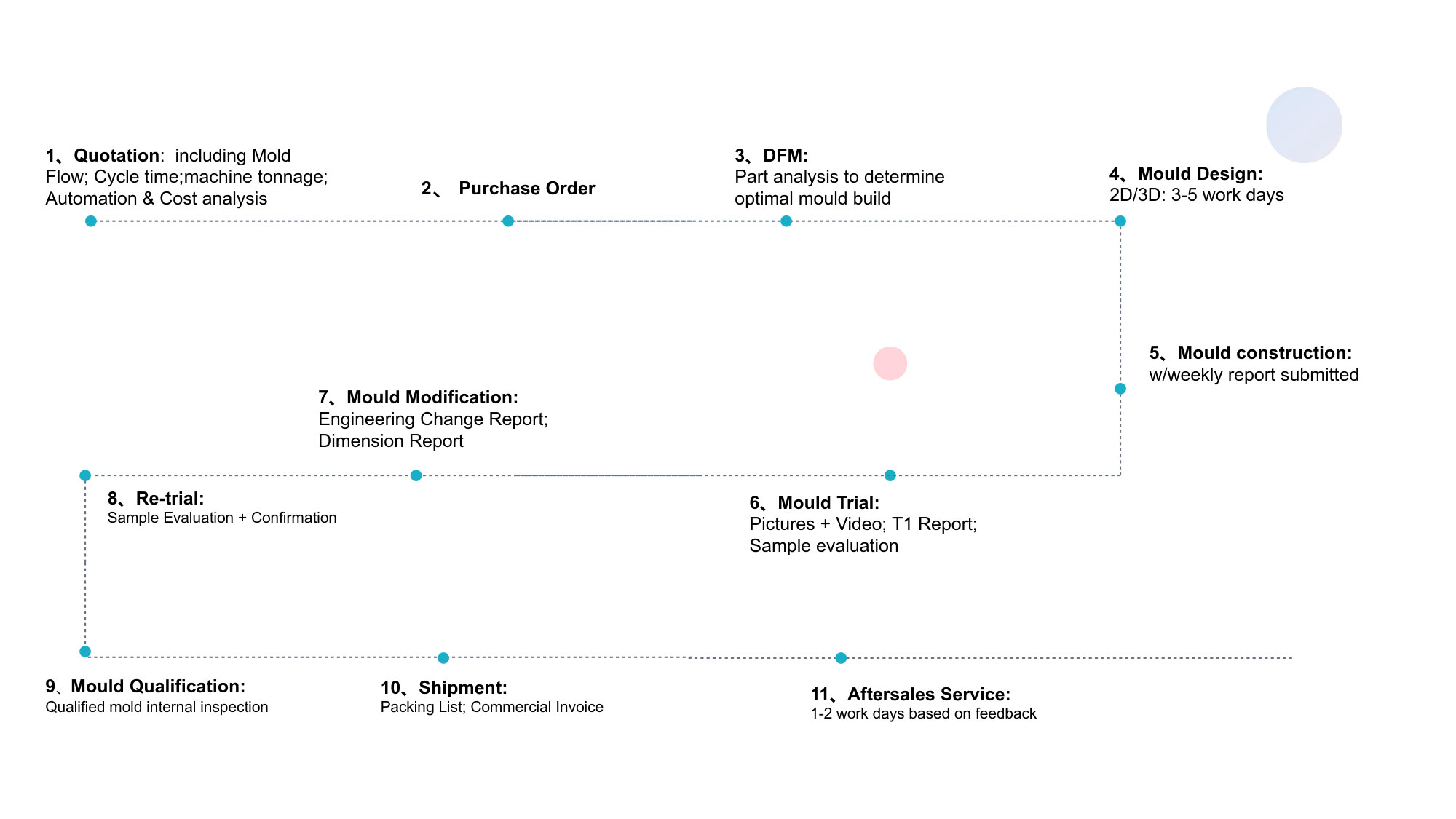
This document details Ansix Tech’s complete manufacturing solution for LSR watch strap projects—from project initiation and DFM through mold fabrication, validation, volume production, and ongoing support—with explicit translation of technical capabilities into quantifiable customer benefits.
Section One: Hard Infrastructure — The Equipment Foundation Customers Can Trust
Mold Manufacturing Equipment
Ansix Tech’s mold-making facility is equipped with advanced machining centers that deliver precision directly correlated to product quality.
Five-axis high-speed machining centers achieve contouring accuracy of ±0.002mm on complex 3D surfaces. For LSR watch straps, which often feature curved profiles, textured finishes, and undercut geometries, this capability ensures the parting line between mold halves matches perfectly, eliminating flashing that would otherwise require manual trimming. Customer value: Flashing-free parts reduce post-processing labor by 15–20 seconds per part, saving approximately 50–70 labor hours per million parts.
Slow-speed wire EDM systems achieve cutting accuracy down to 0.003mm, enabling the production of micro-slots and fine-feature details as small as 0.03mm in diameter. This capability is essential for watch strap molds with precise buckle attachment holes, vent channels, and decorative micro-textures. Customer value: Precision micro-features eliminate secondary machining operations after molding, reducing handling costs and preventing damage to finished parts during post-processing.
CNC electrical discharge machining (EDM) with high-precision spark control produces sharp internal corners, narrow ribs, and deep cavities that are impossible to machine with conventional cutting tools. EDM also creates the textured mold surfaces that transfer leather-like, fabric-like, or carbon-fiber patterns directly onto watch straps during molding. Customer value: In-mold texturing eliminates secondary embossing or pad-printing operations, reducing per-part processing cost by up to 40% while improving pattern durability.
Coordinate measuring machines (CMM) and optical inspection systems verify every critical dimension on each mold before it leaves the shop floor. Every mold shipped from Ansix includes a complete inspection package including alloy composition certifications, heat treatment reports, dimensional measurement data, surface finish measurements, and customer-specified FAI documentation. Customer value: Full measurement traceability eliminates the need for customers to validate tooling on arrival, accelerating production ramp-up by 5–10 days.
Injection Molding Machine Fleet
Ansix operates 260 injection molding machines with clamping forces from 30 tons to 2800 tons, covering the full range of watch strap sizes from minimalist 16mm bands to oversized 45mm smartwatch straps.
All-electric servo-driven machines (Fanuc, Sumitomo, Toshiba, Nissei, Engel) deliver injection repeatability of ±0.1%, meaning every shot produces parts with identical fill characteristics, dimensional profiles, and mechanical properties. Customer value: ±0.1% shot-to-shot consistency translates to 99.7% process capability (CPk ≥1.33), producing fewer than 2,700 defective parts per million—far below the industry average of 10,000–20,000 ppm for conventional hydraulic presses.
Specialized Arburg LSR injection units are dedicated to two-component molding and liquid silicone processing, featuring precision metering systems with shot weight accuracy of ±0.01g. Customer value: Precise shot control eliminates material over-feeding that would otherwise create flashing, and under-feeding that would cause short shots, reducing scrap rates by an additional 30–50% compared to general-purpose injection machines.
Tonnage-to-part mapping: The 30–500 ton range of Ansix‘s press fleet is ideally suited for LSR watch strap molding, as typical watch strap molds require 80–250 tons of clamping force depending on projected area and number of cavities. Multi-cavity molds (8–32 cavities for small bands, 4–16 cavities for larger designs) maximize output per machine hour. Customer value: Right-sized machines consume 40–60% less energy than over-sized presses, reducing both the customer’s carbon footprint and the energy surcharges passed through in part pricing.
Quality Inspection Equipment
Ansix’s metrology lab is equipped with CMMs, optical comparators, surface roughness testers, and automated vision inspection systems. Every production batch undergoes in-process and final inspection against statistical sampling plans.
Customer value statement: “Every mold we ship and every production batch we produce is backed by complete dimensional validation. We don‘t ask you to trust us—we show you the data.”
Section Two: Mold Manufacturing — Core Competencies with Measurable Metrics
Customers care about five things when it comes to tooling: lifetime, precision, lead time, repair cost, and molding compatibility. Ansix addresses each with specific, verifiable commitments.
Mold Life: From Abstract Assurance to Concrete Guarantee
Ansix selects mold materials based on production volume and molded material characteristics:
Material Grade Application Expected Life (Cycles) Wear-Resistant Coating
P20 Low-volume prototypes, trial molds 100,000 None required
S136 (Stavax) High-gloss, corrosion-resistant, medium volume 500,000 Optional TiN
H13 High-temperature, high-wear applications 800,000 Nitriding/TiAlN
M340 / 4Cr13 Corrosive environments, medical-grade 500,000+ Passivation
NAK80 High-gloss, pre-hardened, excellent polishability 300,000 None
8407 / SKD61 High-wear, LSR with abrasive fillers 500,000+ Chromium plating
For high-volume LSR watch strap production (1 million+ pieces annually), Ansix recommends S136 or H13 mold bases with hard chrome plating on cavity surfaces. Customer value: A mold that lasts 1 million cycles at 50,000toolingcostamortizesto0.05 per part—compared to a mold that lasts 200,000 cycles at
40,000amortizingto0.20 per part. Ansix’s material selection guidance alone reduces per-part amortization cost by up to 75%.
Verifiable proof: Ansix provides complete material certifications including alloy composition analysis and heat treatment records with every mold. No “trust us” claims—just hard data.
Achievable Tolerances: Precision That Matches Requirements
Different watch strap features require different precision levels:
Feature Type Achievable Tolerance Value to Customer
General contours, exterior surfaces ±0.05mm Parts fit together without binding or gaps
Buckle attachment holes, lug slots ±0.02mm Metal buckle inserts seat perfectly without wobble or press-fit interference
Thick-section to thin-section transitions ±0.01mm No visible sink marks on exterior surfaces despite variable wall thickness
Micro-texture depth ±0.005mm Consistent tactile feel and visual appearance across all parts
Critical interface dimensions ±0.002mm (with EDM) Warranted fit with watch case for waterproof sealing
Customer value: Ansix achieves the tolerance required for each feature—not unnecessarily tight tolerances that increase cost, and not loose tolerances that compromise function. This “right-tolerance” engineering reduces tooling cost by 15–30% compared to over-specified designs.
Mold Type Selection
Ansix manufactures and supports several mold configurations:
Cold runner molds with valve-gate nozzle systems are the industry standard for LSR watch straps. The manifold and nozzles are actively cooled to keep LSR in liquid state, while the cavity is heated to trigger crosslinking. This design eliminates runner waste and enables fully automatic demolding. Customer value: Zero material waste in runners + no manual runner removal labor = lower production cost per part.
Multi-cavity molds produce 8 to 32 watch straps per cycle. Multi-cavity design requires extremely balanced flow distribution to ensure all cavities fill simultaneously and cure uniformly—a capability Ansix validates through comprehensive mold flow analysis. Customer value: Eight cavities instead of one reduces per-part cycle time overhead by 87.5% (excluding the time to fill and cool multiple parts simultaneously).
Two-component (2K) overmolding molds produce watch straps with integrated rigid plastic frames or soft-grip sections molded directly onto the LSR base. Customer value: Eliminates secondary assembly operations, reduces inventory of separate components, and creates permanent chemical bonds between layers that mechanical assembly cannot match.
Family molds combine multiple part numbers (e.g., left strap + right strap + adjustment links) in a single mold. Customer value: Single-cycle production of complete watch strap assemblies reduces inventory complexity and simplifies supply chain management.
Gating Strategy: Mold Flow Analysis for Defect Prevention
LSR‘s extremely low viscosity (typically 50–100 Pa·s) means it flows into clearances as small as 1 micron, making proper gating design critical for flash prevention. Ansix uses advanced mold flow simulation to:
Identify and predict weld line locations where flow fronts converge, which can create cosmetic defects or structural weak points
Predict air entrapment zones where gas becomes trapped during filling, causing bubbles or incomplete fills
Optimize gate location and count to ensure balanced cavity filling across multi-cavity molds
Validate venting placement to allow trapped air to escape without LSR breakthrough
Customer value: A single DFM review before cutting steel prevents defects that would otherwise require mold modifications costing $10,000–30,000 and delaying production by 4–8 weeks. Ansix’s mold flow analysis typically identifies and resolves 12–15 potential issues before they become real problems.
Lead Time Standards
Mold Complexity Standard Lead Time Expedited (20% Premium)
Simple single-cavity prototype mold 10–15 days 7–10 days
Medium-complexity production mold (4–8 cavities) 25–35 days 18–25 days
High-complexity multi-cavity family mold 35–45 days 25–30 days
Expediting is not skipping validation: Even expedited deliveries include full mold flow analysis, dimensional inspection, and T0 sample verification before shipment. Ansix does not bypass quality steps regardless of schedule pressure.
Section Three: Injection Molding — Process Control That Eliminates Quality Anxiety
Process Standardization: MES Locking and Parameter Control
All 260 injection molding machines are networked to Ansix‘s Manufacturing Execution System (MES). Process parameters for each approved production batch—temperature profiles (barrel, nozzle, mold), injection pressure curves, holding pressure and duration, cure time, cooling time—are locked in the system. Only authorized process engineers can make adjustments, and every change is logged with operator ID, timestamp, and reason code.
Customer value: A customer receiving a production order six months after the initial sampling run receives parts molded under identical conditions, with identical material properties, and identical dimensional profiles. No “creeping changes” over time, no undocumented process adjustments, and no surprise quality degradation.
Dimensional Stability Control
LSR shrinks during curing—typically 2.0–3.5% by volume depending on filler content and cure conditions. Uncontrolled shrinkage produces parts that drift out of specification over the production run.
Ansix controls shrinkage through:
Zone-separated mold temperature control: The mold is divided into independent heating zones (typically 6–12 zones depending on mold size), with each zone regulated to within ±1°C of the target. Core and cavity temperatures are maintained within 2°C of each other, eliminating thermal gradients that cause warpage.
Real-time cavity pressure monitoring: Piezoelectric pressure sensors in the mold cavity transmit real-time data to the injection unit, enabling closed-loop fill and pack control. The system compensates for material viscosity variations (batch-to-batch or temperature-induced) automatically.
In-mold dimensional verification: For critical watch strap interface dimensions, Ansix can embed contact sensors that confirm part geometry before ejection, rejecting out-of-spec parts before they reach downstream operations.
Customer validation: On comparable LSR watch strap projects, Ansix has demonstrated key hole pitch variation of ≤0.02mm across three production batches run one week apart—well within ISO 37 requirements for silicone wristband dimensional accuracy.
Surface Quality Grading
Surface Quality Level Specification Inspection Method
Optical transparency (no bubbles or flow lines) Visual inspection under 200 Lux 100% human visual
Satin/matte finish for painted surfaces Ra ≤0.8μm Contact profilometry
High-gloss finish for unpainted A-surfaces Ra ≤0.1μm Laser profilometry
Textured (leather/grain pattern) Depth ±0.005μm of reference Optical comparator
Clearance-free with no sink marks Measurement at 5 reference points CMM or vision system
Customer value: Ansix matches surface finish requirements to aesthetic and functional needs. A watch strap that will be painted doesn‘t need gloss-quality tooling—that’s unnecessary cost. A strap that will be worn unpainted does need flawless finish—and Ansix delivers it.
Special Material Capability
Ansix has production experience with LSR grades from Wacker, Dow Corning, Momentive, and Shin-Etsu, with hardness ranging from 20 Shore A (very soft, comfortable straps) to 70 Shore A (firmer, more rigid bands). Key material properties confirmed through ASTM testing include:
Tear strength: ≥25 kN/m (ISO 34) — ensures straps resist tearing at buckle attachment holes and through-holes for breathability
Tensile strength: ≥8 MPa (ISO 37) — ensures straps withstand daily wear tension without permanent deformation
UV resistance: No visible yellowing or surface degradation after 3000 hours QUV exposure (ASTM G154) — ensures color and clarity over product lifetime
Chemical resistance: No swelling or mechanical degradation after 168 hours immersion in artificial sweat, sunscreen, or lotions (ISO 10993-18)
Biocompatibility: Passes ISO 10993-5 cytotoxicity, ISO 10993-10 irritation, and ISO 10993-11 systemic toxicity—critical for skin-contact applications
Customer value: Ansix provides material datasheets and certification documentation for every production batch, eliminating customer validation testing costs.
Section Four: Full-Service Capabilities — Reducing Customer Management Costs
Early Involvement: DFM Reports That Prevent Problems
Ansix provides a comprehensive Design for Manufacturability (DFM) report before any tooling commitment. The DFM includes:
Parting line location and orientation analysis: Ansix recommends parting line placement that minimizes cosmetic impact while enabling straightforward ejection and venting.
Draft angle recommendations: LSR requires draft angles of 1–3 degrees for most features, with zero-draft features possible with slide actions or core pulls. Ansix specifies required draft and identifies areas where zero-draft design is possible.
Wall thickness optimization: Uniform wall thickness is ideal; transitions from thick to thin sections are analyzed for sink mark risk. Ansix recommends modifications to eliminate sink marks without adding material (and cost).
Gate location and type: Ansix specifies gate location to minimize weld line visibility and recommends gate type (pin, submarine, or edge) based on part geometry and cosmetic requirements.
Ejector pin placement mapping: Ansix maps the location of every ejector pin mark and works with customers to position marks where they will be hidden (e.g., interior surface, behind buckle) or are cosmetically acceptable.
Customer value: “A full DFM review costs 1–2% of total project investment and eliminates 50–70% of post-tooling change orders” — documented industry data.
Sample Progression: T0 Through T3 Validation
Ansix follows a structured sample progression process:
Sample Stage Purpose Deliverable
T0 (first shots) Validate basic filling, ejection, and gate function Sample parts + video of first shots + initial observations report
T1 (first refinement) Address dimensional deviations and surface defects Dimensionally measured parts + modification report
T2 (second refinement) Fine-tune process parameters CPk data for all critical dimensions
T3 (production-ready) Final validation under production conditions Approved part samples + locked process parameters + signed FAI
Customer value: Customers receive parts at each stage, enabling their own validation and approval without waiting for “complete” molds. This parallel path reduces overall time-to-market by 3–4 weeks compared to vendors that only deliver at final approval.
Small-Batch Trial Production
Before committing to full-scale production, Ansix offers trial production runs of 100 to 500 parts. Trial runs serve three purposes:
Statistical validation: Process capability is calculated from trial run data, verifying CPk ≥1.33 before volume production
Customer field testing: Customers receive production-representative parts for wear testing, assembly validation, and environmental testing without committing to full production order quantities
Tooling fine-tuning: Any final tooling adjustments are identified and completed during trial production, not during live volume production
Customer value: A 500-part trial run costs approximately 0.5% of a full million-piece production order but prevents a 100% quality failure if the tool requires adjustments. It’s an insurance policy that pays for itself many times over.
Maintenance and Spare Parts Support
Every Ansix mold ships with a standard spare parts kit including critical wear components such as ejector pins, core pins, and—for LSR molds—gate bushings and nozzle tips. Ansix recommends a maintenance schedule:
Usage Milestone Recommended Maintenance Performed By
50,000 cycles Lubricate slides, inspect ejector pins for wear, clean vent channels Customer (with Ansix instructions)
100,000 cycles Full teardown inspection, dimensional recertification Customer or Ansix (fee-based)
200,000 cycles Replace ejector pins, gate bushings, and seal components Ansix (warranty pricing)
500,000 cycles Major overhaul + wear coating reapplication Ansix (fee-based)
1,000,000 cycles End-of-life review — rebuild or replace Customer decision
Warranty coverage: Ansix provides three-year structural warranty on all molds (excluding normal wear components), covering cracks, broken components, and dimensional drift beyond tolerance.
Section Five: Differentiation — Direct Answers to Common Customer Complaints
Customer Complaint The Competitor‘s Problem Ansix’s Response (Verifiable)
“We have to repair the mold every 3 months” The competitor uses low-grade tool steel, inadequate heat treatment, or poor cooling design Ansix delivers 2000-cycle wear-test report with every mold, certifying performance before shipment, plus three-year structural warranty
“Every batch has flash requiring manual trimming” The competitor‘s parting line precision is ±0.1mm or worse Ansix machines parting lines to ±0.005mm and uses servo-compensated clamp force that adjusts for thermal expansion, holding flash <0.05mm
“Dimensions change between production runs” The competitor allows operators to adjust parameters without documentation Ansix locks all process parameters in MES; only engineers make changes; every batch has first-piece/last-piece inspection
“Mold repairs take 4+ weeks” The competitor outsources repair work to third-party shops Ansix’s in-house EDM and machining center perform repairs same-day; standard rework 24-hour turnaround
“They blamed our material for the defect” The competitor lacks material characterization capability Ansix tests every LSR batch for viscosity, cure rate, and mechanical properties before production; material analysis available to customers
Customer value summary: Ansix does not merely claim capability—we provide documentation, verification, and guarantees that transform technical claims into bankable customer assurances.
How Ansix Reduces Costs Throughout the Project Lifecycle
Material Cost Reduction
Grade matching: Ansix works with customers to select LSR grade that meets required properties without overspecification. A medical-grade LSR certified to USP Class VI costs 30–50% more than a consumer-grade LSR with similar mechanical properties. If the watch strap does not require implantation or surgical contact, that premium is unnecessary.
Bulk purchasing: Ansix‘s annual LSR consumption across all customers enables volume discounts passed directly to customers. Individual customers benefit from corporate purchasing power without purchasing corporate volumes.
Yield improvement: Ansix’s target scrap rate for LSR watch straps is 0.5–1.5% (versus industry average of 3–5%). Each 1% yield improvement reduces material cost per good part by approximately 1%—and at production volumes exceeding 500,000 parts annually, that‘s a significant saving.
Process Optimization Cost Reduction
Cycle time reduction: Each second of cycle time saved reduces per-part cost by approximately 0.5–1.0%. Ansix’s optimized cooling channel designs and process parameters typically achieve 20–30% faster cure cycles than baseline estimates. On a 50-second baseline part, a 10-second reduction (20% improvement) reduces production time by 30 hours per 100,000 parts—enough to reallocate machine capacity to another customer order.
Automation integration: Automated part removal, vision inspection, and packaging reduce direct labor cost by 40–60% compared to manual handling. Ansix offers turnkey automation integration for high-volume watch strap projects, with payback periods typically 6–12 months.
Energy efficiency: All-electric servo machines consume 50–70% less energy than conventional hydraulic presses of equivalent tonnage—savings passed to customers in part pricing.
Supply Chain and Logistics Cost Reduction
Multi-plant capacity: Ansix‘s four manufacturing bases in China and Vietnam provide geographic diversification for supply chain resilience. If one facility faces capacity constraints or regional disruptions, production can be shifted to another facility without requalifying tooling.
Consolidated shipping: Customers ordering multiple part numbers can consolidate shipments from all Ansix facilities, reducing freight costs by 15–30% compared to piecemeal shipping from individual vendors.
Inventory management: Ansix offers vendor-managed inventory (VMI) programs where the company holds safety stock on behalf of customers, releasing parts just-in-time based on customer consumption. Customers reduce their own inventory carrying costs while ensuring never-out-of-stock availability.
Quality Validation Protocol
Material Validation
Incoming testing: Every LSR batch undergoes viscosity testing (Brookfield), specific gravity measurement, and cure rheometer (MDR) analysis before production release
Certificate of Analysis (COA): Provided to customers with each shipment, including lot number traceability
In-Process Validation
First-piece inspection: First parts from each batch are measured against CAD data on CMM
In-process SPC: Critical dimensions measured every 500–1000 parts depending on CPk; control charts maintained
Visual inspection: Every part passes 100% human visual inspection for surface defects under controlled lighting
Final Validation
Mechanical testing: Representative samples from each batch undergo tensile testing (ISO 37), tear testing (ISO 34), and—for watch straps—buckle pull-off testing (customer-specified)
Dimensional verification: Full dimensional report prepared at specified intervals (e.g., every 10,000 parts) or upon customer request
Packaging and labeling: Parts packaged per customer specifications, labeled with production batch, material lot number, and QA certification
Traceability
Ansix maintains full traceability from raw material lot through finished good:
Raw material: LSR lot number recorded
Production batch: MES associates raw material lot with process parameters and date/time
Quality inspection: All inspection data linked to production batch
Finished goods: Labels applied to packaging reference production batch for full backwards traceability
Packaging and Delivery
Packaging Options
Anti-static bags: Prevents dust attraction and electrostatic damage during handling
Custom blister trays: Protects parts during transit and serves as retail-ready display packaging
Bulk packaging: Parts counted and bagged for lowest-cost shipping (ideal for internal assembly operations)
Reusable shipping totes: Closed-loop container program for high-volume repeat orders
Delivery Standards
Standard lead time (post-tooling approval): 10–15 working days for first production order
Repeat order lead time: 5–7 working days for orders within committed safety stock levels
Expedited service: 2–3 working days available at 30% premium
Global shipping: Door-to-door delivery via DHL, FedEx, or customer-preferred freight forwarder
Conclusion: The Ansix Value Proposition
Ansix Tech brings together precision manufacturing, advanced process control, deep LSR materials expertise, and comprehensive customer support into a single, integrated manufacturing solution for LSR watch straps.
From material selection guidance that avoids unnecessary grade premiums, through DFM analysis that prevents tooling rework, through process optimization that reduces cycle times and scrap rates, to packaging and delivery that completes the manufacturing loop—Ansix delivers more than parts. We deliver predictable quality, reliable supply, and competitive cost.
When you work with Ansix Tech, the technical complexity of LSR injection molding is our problem—not yours. You receive parts that meet specifications, delivered on schedule, priced competitively, supported by documentation that proves compliance.
Contact Ansix Tech to discuss your LSR watch strap project. We provide DFM analysis, material recommendations, and preliminary quoting within 3–5 business days of receiving part drawings or sample parts.
Ansix Tech Co Ltd
If you have any plans related to Watch strap LSR liquid silicone injection molding , you can contact us at any time. We will turn your ideas into reality, let you realize your dreams, and obtain large orders from the market. Our contact information is info@ansixtech.com. Or contact our CTO, mail: stephen@ansixtech.com
#www.ansixtech.com #ansixtech.com #Watch strap LSR liquid silicone injection molding #Watch strap LSR liquid silicone injection molding injection molding companies #Watch strap LSR liquid silicone injection molding Canopy Mold injection mold companies #Ansix #Ansix moulds #Ansix china #Ansix tech china #Ansix tech company #Ansix facotry #Watch strap LSR liquid silicone injection molding injection molding #Watch strap LSR liquid silicone injection molding injection tools #Watch strap LSR liquid silicone injection molding injection moulds #Watch strap LSR liquid silicone injection molding plastic mould #Watch strap LSR liquid silicone injection molding plastic tools #Ansix Tech #Ansix molds #Ansix injection molding #Ansix mold factory #injection molding Watch strap LSR liquid silicone injection molding#Ansix mold factory #Watch strap LSR liquid silicone injection molding china #Watch strap LSR liquid silicone injection molding molds #injection factory #Watch strap LSR liquid silicone injection molding injection molding #Watch strap LSR liquid silicone injection molding injection molding factory #injection molding company #Watch strap LSR liquid silicone injection molding injection mold companies #Watch strap LSR liquid silicone injection molding Tooling #Watch strap LSR liquid silicone injection molding mold limited #Ansix mold china #Ansix companies #Ansix company China #Watch strap LSR liquid silicone injection molding facotry #Ansix Tech #Ansix Tech mould #Watch strap LSR liquid silicone injection molding injection moulding #injection moulding company #Ansix Watch strap LSR liquid silicone injection molding parts injection mold companies #medical injection molding companieschina #Watch strap LSR liquid silicone injection molding china factory #Ansix moulding companies #Ansix molding company #Watch strap LSR liquid silicone injection molding injection moulding facotry #Ansix Tech mold #Watch strap LSR liquid silicone injection molding mould #Watch strap LSR liquid silicone injection molding plastic injection molding #ansix plastic mold #Mold manufacturing #Watch strap LSR liquid silicone injection molding parts manufacturing #Watch strap LSR liquid silicone injection molding plastic parts factory #Watch strap LSR liquid silicone injection molding injection parts mold #Watch strap LSR liquid silicone injection molding PRECISION MANUFACTURING #Watch strap LSR liquid silicone injection molding #China mold #Watch strap LSR liquid silicone injection molding injection moulding china #Watch strap LSR liquid silicone injection molding mould china #china precision mold #mold in china #Watch strap LSR liquid silicone injection molding mold china #Precision molds #High-precision molds #Watch strap LSR liquid silicone injection molding #Injection molds #Watch strap LSR liquid silicone injection molding Factory #Watch strap LSR liquid silicone injection molding Company #Super Large Injection Mold Factory #Large Tonnage Injection Molding Factory #Watch strap LSR liquid silicone injection molding Company #Watch strap LSR liquid silicone injection molding Factory #2800T Injection Molding Factory #3000 Ton Injection Molding #4500 Ton Injection Molding Factory #Large Mold Injection Molding #Large Plastic Mold Injection Molding Factory #Large Injection Mold Manufacturer #Plastic Mold Factory #Injection Mold #Plastic Mold